


Waiting between ovulation and an expected period or pregnancy test can make every cramp, breast change or shift in discharge feel important. This interval is commonly called the two-week wait, or TWW. The sensations can be real, but they cannot reliably separate a pregnant cycle from a non-pregnant one because post-ovulation experiences, premenstrual symptoms and early pregnancy can overlap.
A more useful plan is to treat days past ovulation as an estimate, use the expected period or a fertility clinic’s test date as the main guide for when to test, and respond to symptoms according to their pattern and severity rather than scoring them as pregnancy signs.
Quick answers about the two-week wait
Do symptoms during the two-week wait mean pregnancy?
No. Cramps, bloating, breast tenderness, tiredness, nausea, discharge changes, spotting or no symptoms can occur in cycles that do and do not become pregnant. Use symptoms to guide comfort or care, not to confirm implantation or predict a test.
When should I take a pregnancy test?
A home test is generally more useful from the day your period is due. If you test earlier, follow the exact device instructions and treat a valid negative as provisional. After IUI, IVF, embryo transfer or an hCG trigger, use the clinic’s nominated date.
When should abdominal pain or bleeding be assessed?
Mild, brief cramps that settle are not automatically an emergency. Abdominal or pelvic pain that is worsening or lasts several hours, or pain with fever or persistent vomiting, needs urgent medical attention. Severe pain, heavy bleeding, shoulder-tip pain, marked dizziness, fainting or feeling very unwell needs immediate emergency assessment at the nearest emergency department or by calling 000.
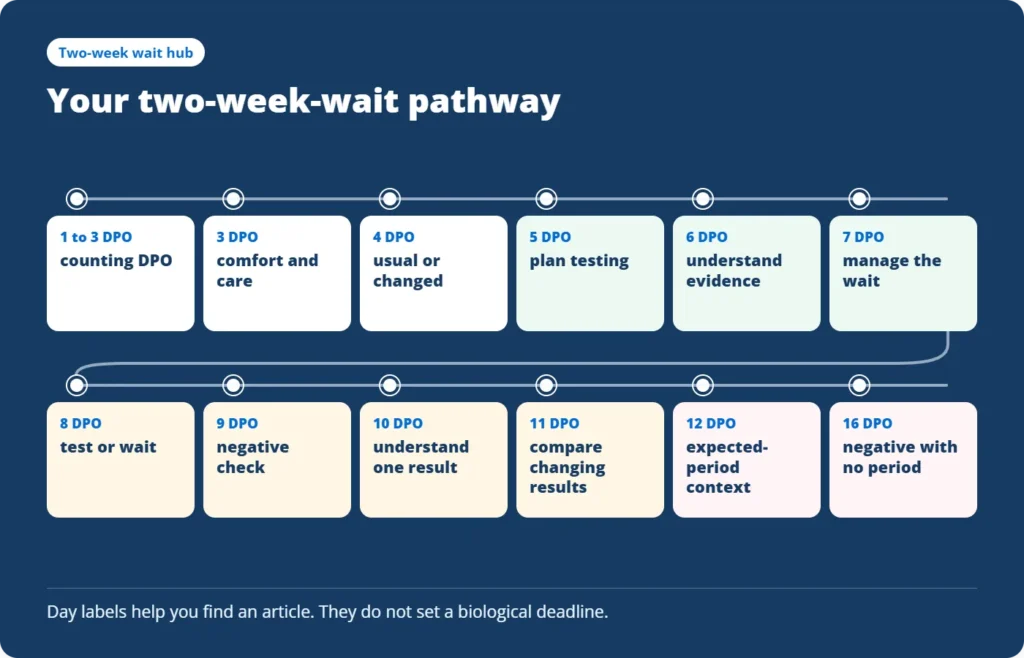
What does the two-week wait mean, and is it always 14 days?
The term describes the interval after ovulation and before the next period or a useful pregnancy-test result. It is a useful nickname, not a promise that every cycle has a 14-day wait. Ovulation and luteal-phase length can vary, and a treatment cycle may use a clinic-set schedule rather than an ordinary cycle date.
DPO means days past ovulation. An app or calculator predicts from cycle information, a urinary LH test identifies a hormone rise that usually comes before ovulation, and a basal body temperature shift mainly supports that ovulation has passed. None provides an exact ovulation timestamp at home. When the clues disagree, keep the day count approximate. You can estimate your current stage with the DPO testing calendar from the information you have, while still using the expected period or clinic date for the next decision.
If you choose to track a later cycle, you can compare ovulation-test formats for a future cycle. An LH result remains an ovulation clue; it is not a pregnancy result.
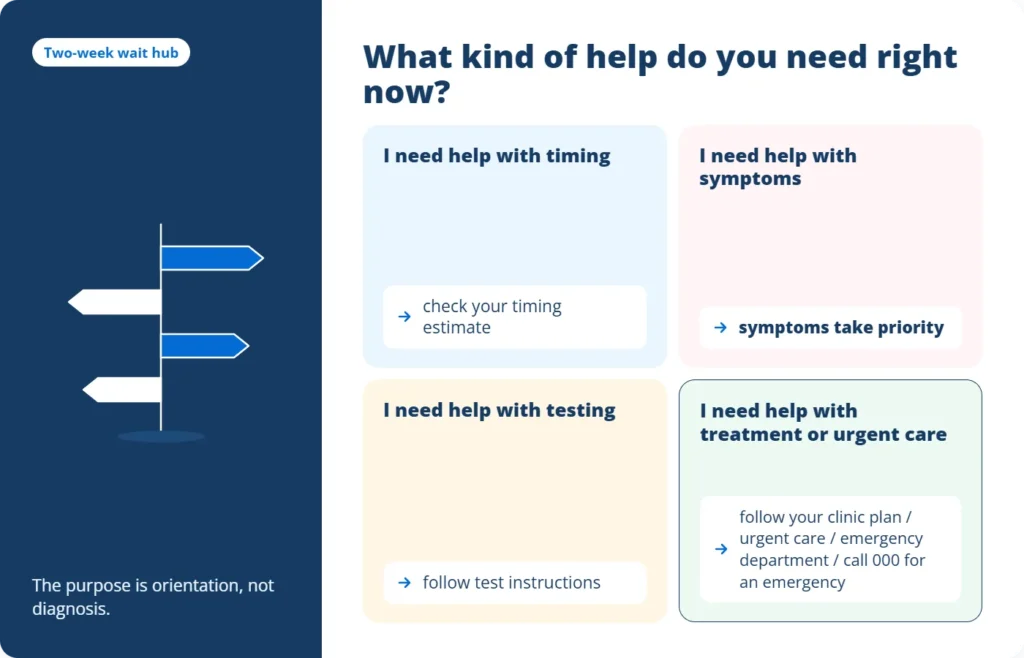
Which next step fits your stage of the two-week wait?
The stage bands below organise the decisions that commonly change across the wait. They do not assign a fixed implantation date, guarantee a biological milestone or predict a pregnancy result.
| Estimated stage | What the timing can tell you | What to do next |
|---|---|---|
| Early wait, about 1 to 5 DPO | The ovulation date may be approximate, symptoms are not a pregnancy test, and a urine result is generally too early to answer the pregnancy question. | Do not test for today’s answer. Check how ovulation was estimated, choose a later testing point and continue ordinary care. For more detail, use the first 72 hours after estimated ovulation overview, the focused 3 DPO symptom guide, the 4 DPO cycle-change comparison or the 5 DPO test-date planning guide. |
| Middle of the wait, about 6 to 8 DPO | Biological timing differs between pregnancies. Cramps, spotting or no symptoms cannot establish whether implantation has occurred, and a urine negative can still be too early. | Keep the planned test date instead of changing it because of a symptom. Use the 6 DPO guide to implantation research and home testing, the 7 DPO uncertainty guide or the 8 DPO test-or-wait guide for optional timing detail. |
| Early testing, about 9 to 10 DPO | Some people choose to test, but an early valid negative remains provisional. Timing uncertainty, urine concentration and the test’s detection threshold still matter. | If you test, use the exact device instructions and decide in advance how you will handle a negative or unclear result. See the 9 DPO early-negative pathway or the 10 DPO guide to reading one test result for more detail. |
| Closer to the expected period, about 11 to 12 DPO | A later correctly used test may be more informative when timing is well supported. The expected-period date helps plan and interpret testing but does not alter the hCG measured in the sample. | Compare the result with the available timing evidence rather than the DPO number alone. The 11 DPO changing-results guide and 12 DPO expected-period context guide cover those specific decisions. |
| Expected-period window | This is generally a clearer home-testing anchor than a guessed ovulation date. A symptom list still cannot replace a correctly used test. | Use the exact device or clinic instructions. After any valid positive, including a faint result that the device instructions classify as positive, arrange confirmation and follow-up with a GP or fertility clinic. An invalid result needs a fresh device. After a valid negative, use the retesting or clinical plan for your timing and symptoms. |
| Late period or unresolved result | An absent period with repeated negative tests needs a separate timing and care review. A negative result does not explain why the period has not started. | Recheck the ovulation estimate, collection method, control and reading window. If the period remains absent or results do not fit the clinical picture, arrange GP advice. For a missed period without a reliable DPO estimate, use the no-period and negative-test guide. The 16 DPO no-period and negative-test guide addresses that specific estimated-day question. |

The two week wait is not one situation. What is worth knowing at day three is different from day nine and different again from day fourteen. This locates you and sends you to the stage-specific resource, with the detection reference table for the whole window.
Where are you, and what is worth knowing there?
Read the guide
Where you are, and what is worth knowing there
Your waiting and testing guide
Days past ovulation (DPO) is an estimate when the ovulation date is uncertain. Symptoms alone cannot tell you whether implantation or pregnancy has happened.
- Choose a useful test day. An early negative can be too soon to answer your question. Follow your exact test's instructions, or the test date your fertility clinic gave you.
- Make the result usable. Check the expiry date, required control indicator and instructions for collecting the sample. Read the result after the required wait and before the final cutoff. A later change does not replace the result read on time.
- Keep a short record. Note the test date, brand and result. Line darkness cannot tell you whether a pregnancy is progressing normally.
- Decide what happens next. If your period stays absent or results remain unclear, ask your GP or clinic about follow-up. A previous valid positive followed by a negative or unclear result needs prompt advice. Keep your clinic's medicine and follow-up plan.
Your personal next step is shown in your result. New or worsening symptoms can change what help you need; use the tool's Get advice option rather than waiting for another test.
Every outcome this tool can reach
All 5 outcomes are shown in full below. Each one names the answer that leads to it, so you can read the whole decision path without working through the questions.
Days 1 to 5: nothing is detectable yet
You see this when you answer “Roughly 1 to 5 days” to “How far past ovulation are you”.
Implantation has not occurred in this window, so no hCG exists to detect. A test now is not an early test, it is a test before the thing it measures. The only useful action is to work out the date testing becomes possible.
Days 6 to 10: possible, but rarely detectable
You see this when you answer “Roughly 6 to 10 days” to “How far past ovulation are you”.
This is the implantation window: 84 per cent of ongoing pregnancies implant on days 8, 9 or 10. Detection lags implantation by about three to four days, which is why a positive is uncommon in this window even when implantation has happened. A negative here excludes very little.
Day 11 onward: a negative starts to mean something
You see this when you answer “Roughly 11 days or more” to “How far past ovulation are you”.
From day 11 a negative begins to carry weight, and its weight increases each day toward the expected period. By that date roughly nine in ten pregnancies have implanted; a week past it, almost all have. Even so, about a quarter of real pregnancies still test negative on the first day of a missed period, so one negative here is strong evidence but not the end of the question.
Without an ovulation date there is no stage
You see this when you answer “I do not know” to “How far past ovulation are you”.
Every figure in this window is counted from ovulation, so without that date there is no position to locate. Counting from the first day of your last period and assuming day 14 is the most common source of error, because ovulation day varies with cycle length.
If a result would change what you do next, a GP-arranged blood test answers independently of cycle dates.
- A positive LH test places ovulation within a day or two
- A sustained temperature rise confirms it afterwards
- An app prediction alone can be several days out
- Cycle length changes the ovulation day; day 14 is not universal
Get the care you need
You see this when you answer “I have symptoms that worry me” to “How far past ovulation are you”.
Severe abdominal or pelvic pain, heavy bleeding, shoulder-tip pain, marked dizziness, faintness or feeling very unwell need urgent medical assessment. Go to an emergency department. Call 000 for an emergency.
Worsening pain or pain lasting several hours needs urgent assessment. Abdominal pain with fever or persistent vomiting also needs urgent assessment. Get help immediately if vomiting means you cannot keep water down.
A sudden severe headache, or headache with vomiting, confusion, neck stiffness or vision changes, needs an emergency department or 000.
Do not wait for a pregnancy test. Healthdirect can help you choose care if you are unsure.
How do you know your ovulation date
This applies to Days 1 to 5: nothing is detectable yet; Days 6 to 10: possible, but rarely detectable; Day 11 onward: a negative starts to mean something.
- If you answered "An app or calendar prediction" to "How do you know your ovulation date": Your ovulation date came from a prediction, not an observation. App predictions commonly differ from actual ovulation by several days, so your true DPO may be lower than you think. Treat every date here as the centre of a range, not a fixed day.
- If you answered "A positive ovulation (LH) test" to "How do you know your ovulation date": A positive LH test places the surge within a day or two, and ovulation usually follows it. It narrows the estimate considerably but does not confirm an egg was released.
- If you answered "A sustained temperature rise confirmed it afterwards" to "How do you know your ovulation date": A sustained temperature rise is retrospective confirmation, the firmest anchor available at home. The dates here carry less uncertainty than any prediction.
- If you answered "I am not certain" to "How do you know your ovulation date": Without a reliable ovulation marker these dates are indicative only. If a negative result would change what you do next, a GP-arranged blood test answers independently of your cycle dates.
Worked examples
Each card shows the answers that lead to one outcome, and links to the full wording. There are 5, one for every outcome. They describe the tool, not real people, and are not medical advice.
Days 1 to 5: nothing is detectable yet
This answer leads here:
| Question | Answer given |
|---|---|
| How far past ovulation are you? | Roughly 1 to 5 days |
Days 6 to 10: possible, but rarely detectable
This answer leads here:
| Question | Answer given |
|---|---|
| How far past ovulation are you? | Roughly 6 to 10 days |
Day 11 onward: a negative starts to mean something
This answer leads here:
| Question | Answer given |
|---|---|
| How far past ovulation are you? | Roughly 11 days or more |
Without an ovulation date there is no stage
This answer leads here:
| Question | Answer given |
|---|---|
| How far past ovulation are you? | I do not know |
A positive LH test places ovulation within a day or two
Get the care you need
This answer leads here:
| Question | Answer given |
|---|---|
| How far past ovulation are you? | I have symptoms that worry me |
Call 000 for an emergency
Scroll or swipe left and right to see every example.
What this guide can tell you
This orients you in time. It does not estimate an outcome at any stage.
Explore your next step
Choose a guide that helps with what you want to know next.
 8 DPO Symptoms and Pregnancy Tests: Test Today or Wait?Decide whether to test now or wait, and put symptoms in context.
 Faint Line on a Pregnancy Test: Is It Positive?Check the reading window and understand a faint pregnancy-test line.
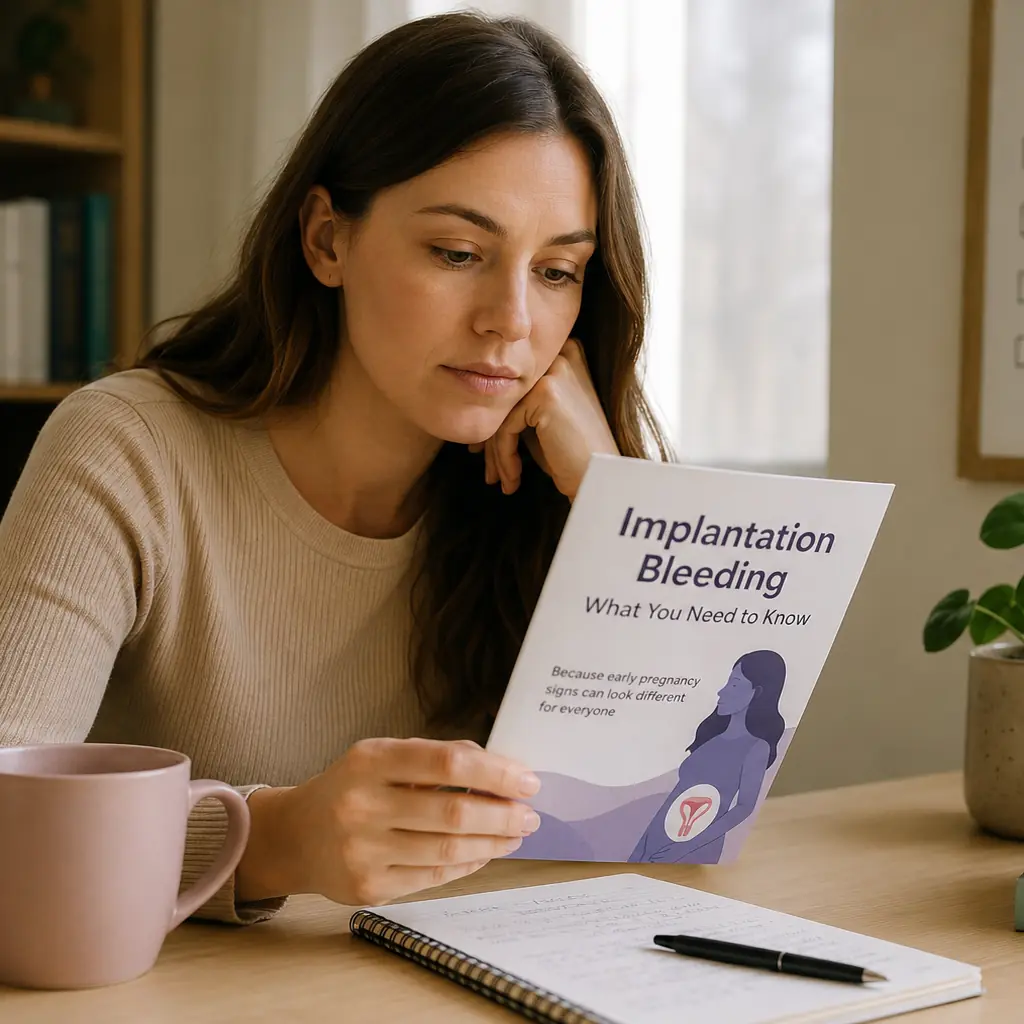 Implantation Bleeding: Colour, Flow, Timing and When to TestUnderstand what spotting can and cannot tell you.
 How Long Does Ovulation Last? Fertile Window and Best Days to ConceiveUnderstand the fertile window and the limits of timing estimates.
Your pregnancy-test instructions
Choose the brand on your pack.
These instructions are not available here yet.
How to check your test instructions
Use the leaflet supplied with your pack for how to take the test and when to read it. A pharmacist can help if you do not have it. Instructions can differ between models, even within the same brand.
How can you find the right guide for your two-week-wait question?
The two-week wait can create a new question every day. Choose the question that fits now, take one practical next step and use the relevant guide for more detail.
Choose one DPO stage or question and continue to the article that explains it in detail.
This interactive guide keeps answers in the browser and does not diagnose pregnancy or replace medical care.
Why can two-week-wait symptoms feel convincing?
Experiences during the wait can have several possible explanations. Post-ovulation and premenstrual changes may contribute to some symptoms, while early pregnancy and unrelated health or day-to-day factors can produce similar sensations. This makes cramps, bloating, tiredness, nausea, breast tenderness, discharge changes and spotting non-specific.
Feeling completely normal is equally inconclusive. A lack of symptoms does not provide a negative answer.
A later positive test shows that hCG became detectable. It does not retrospectively prove that an earlier cramp, spot of blood or other sensation was caused by pregnancy. A more useful purpose for symptom tracking is to notice comfort needs and changes that warrant medical care.
When does a pregnancy test become useful?
Home pregnancy tests detect human chorionic gonadotropin, or hCG, in urine. Before the expected period, an early valid negative remains provisional. The false-negative pregnancy test guide explains the timing, sample and device factors that can prevent detection.
Choose one sensible testing point instead of reconsidering the decision each morning. The expected period is generally a clearer guide for home testing than a guessed DPO, while a fertility clinic’s nominated date takes priority after treatment. The pregnancy test timing calculator can place the available dates on one practical timeline.
If testing is now appropriate and you need a device, you can compare Australian pregnancy-test formats when testing is useful. Use the chosen device only within its own instructions.
Follow the collection, control and reading instructions for the exact test. Use the stage map above to find the next step for your result. If the control is valid but the result is unclear, follow the device’s guidance. Symptoms that need medical care should be assessed regardless of a home result.
What can you do to support your health during the two-week wait?
While pregnancy is possible but not confirmed, ordinary Australian preconception guidance is a reasonable baseline. Avoid alcohol. If you smoke or vape, ask a GP, pharmacist or quit-support service for help. Folic acid is recommended before and during early pregnancy, but the suitable supplement or dose can vary, so ask a GP or pharmacist when you have a medical condition, take regular medicines or may need a higher dose.
Keep total caffeine to no more than 200 mg a day from all sources and check the amount rather than relying on a fixed number of cups. Do not stop a prescribed medicine on your own; ask the prescriber or pharmacist about pregnancy safety. Suitable physical activity can continue in an uncomplicated situation, but pain, bleeding, another medical condition, a recent procedure or a fertility-clinic restriction can change what is appropriate.
These actions support general health. Food, supplements, rest, stress control and routine activity cannot guarantee implantation or explain why a cycle succeeds or does not.

What changes after IUI, IVF, an embryo transfer or an hCG trigger?
A treatment-cycle two-week wait may not match spontaneous-cycle DPO. Insemination, egg collection, transfer timing, medicines and monitoring can change how the days are counted and when a result should be checked. Use the clinic’s nominated test date and medicine plan rather than replacing them with a general DPO chart.
An hCG-containing trigger can affect a pregnancy test. Keep taking prescribed progesterone and other fertility medicines unless the treating service advises a change.
Contact your fertility clinic immediately if abdominal pain or swelling is worsening, vomiting persists, you pass only small amounts of urine, or a leg becomes swollen and tender. These features need urgent medical assessment. If you cannot reach the clinic, go to a hospital emergency department and tell staff about your recent fertility treatment.
Chest pain or breathlessness requires immediate medical assessment and should not wait for a routine callback. Go to an emergency department, or call 000 if symptoms are severe or you need an ambulance.
How can you make a practical plan for the emotional wait?
The purpose of a waiting plan is to reduce avoidable decisions, not to control implantation or require you to stay calm.
Choose the next meaningful date: write down the expected-period test date or the clinic’s nominated test or contact date.
Choose how others can check in: decide who may check in, what updates you want to share and what you would prefer to keep private.
Choose how you want to receive the result: decide where and with whom you would prefer to check or receive the result, plus one flexible activity or support contact for that day.
You can change the plan if your needs change. If the wait is affecting sleep, work, relationships or your ability to cope, contact your GP, fertility clinic, counsellor or another appropriate support service.

When should you seek medical care in Australia?
When should you arrange GP or fertility-clinic advice during the two-week wait?
Arrange advice for medicine questions, an absent period with repeated negative tests, or a fertility-treatment result or instruction that remains unclear. Arrange GP assessment for bleeding between periods or after sex, even if it is light. A clinician can assess the pattern without treating a DPO estimate as a diagnosis.
Which symptoms during the two-week wait need urgent medical attention?
Seek urgent medical attention if abdominal or pelvic pain is worsening or has lasted several hours. Urgent medical attention is also needed when abdominal or pelvic pain occurs with a temperature of 38°C or higher or persistent vomiting. If timely primary care is unavailable, go to an emergency department.
Which symptoms during the two-week wait need emergency care?
When pregnancy is possible, severe abdominal or pelvic pain, heavy bleeding, shoulder-tip pain, marked dizziness, fainting or feeling very unwell needs immediate emergency assessment. Go to the nearest emergency department or call 000 for an ambulance. You do not need to wait for a positive pregnancy test, and a later negative home result does not make concerning symptoms safe to watch at home.
If the concern is the length of time you have been trying rather than an acute symptom, an Australian GP can assess both partners and discuss when to see a fertility specialist.
Frequently asked questions about the two-week wait in Australia
Does first-morning urine matter for a pregnancy test?
It can be useful, especially when testing early, because urine is often more concentrated after sleep. Avoid drinking a large amount immediately before testing and follow the collection instructions for the exact device.
What should I do with an invalid or unclear pregnancy test?
If the required control does not appear, the test is invalid and has not produced a positive or negative result. Use a fresh device according to its instructions. If the control is valid but the result is still unclear, follow that device’s guidance or ask a GP or fertility clinic. The 10 DPO guide to reading one test result organises the validity and reading-window checks.
Can progesterone or an hCG trigger affect a pregnancy test?
Progesterone is a different hormone from hCG, so taking progesterone does not itself add hCG to the sample. Ovidrel contains choriogonadotropin alfa and may interfere with serum or urine hCG testing for up to ten days after administration. Follow the clinic’s test date and do not stop prescribed progesterone without advice.
Can spotting during the two-week wait confirm implantation?
No. Spotting has several possible causes, and its timing, colour or amount cannot confirm implantation. Arrange GP assessment for bleeding between periods or after sex, even if it is light. Call 000 for very heavy bleeding or if you feel faint or may pass out.
Can a late period during the two-week wait have a non-pregnancy cause?
Yes. Later ovulation and ordinary cycle variation can delay a period, and stress, weight or exercise changes, medicines, breastfeeding and hormonal conditions can also affect timing. Repeat pregnancy testing as directed and see a GP if late or irregular periods persist or concern you.
Should I compare my symptoms or test lines with other people’s stories?
Personal stories can provide emotional recognition, but they cannot give your individual pregnancy odds or validate a test result. Different timing, devices and fertility treatments change the context, so use your own test instructions and care plan.
Next Steps in Australia
Use the stage map as a return point rather than a daily scorecard. Read the row that matches today’s question and open a day-specific guide only when you need its timing detail; there is no requirement to monitor every DPO in sequence.
Return when you have a new decision to make, such as receiving a result, reaching the next step in your clinic’s plan or noticing a symptom pattern that needs assessment. This keeps the focus on information you can act on rather than interpretations the timing cannot support.
Last reviewed: 20 September 2026
Next scheduled review: September 2027
References
Fertility2Family articles are researched using Australian Government health guidance, professional clinical recommendations and peer-reviewed medical literature. The references below were used to research and medically review this article and provide additional reading for readers who want to explore the evidence in more detail.
Pregnancy, Birth and Baby Ovulation and fertility
Australian guidance on cycle variation, ovulation calculators, urinary LH testing, temperature and discharge changes, and the limits of home methods for assigning an exact ovulation time.
Healthdirect Australia Fertility awareness (natural family planning)
Australian guidance on calendar, cervical mucus and temperature methods, including how irregular cycles, illness, sleep changes, alcohol and other factors can reduce tracking reliability.
Human Reproduction Variations in ovulation time and menstrual cycle characteristics: analysis of a prospective long-term cohort study
A 2026 analysis of prospectively collected historical records showing within-person variation in estimated ovulation timing across repeated cycles, used to support uncertainty rather than individual prediction.
Better Health Channel Pregnancy – signs and symptoms
Victorian public health guidance describing common early pregnancy experiences and the limitation that nausea, tiredness, breast changes and other symptoms can also have non-pregnancy causes.
Pregnancy, Birth and Baby Pregnancy tests
Australian consumer guidance on urine and blood pregnancy testing, expected-period timing, early false negatives, following the exact test instructions and seeking confirmation after a positive result.
Healthdirect Australia Human chorionic gonadotropin (hCG) test – pregnancy
Australian guidance on urine and blood hCG testing, first-morning urine, dilution, early false negatives, repeat testing when a period is absent and clinical follow-up for uncertainty.
Better Health Channel Pregnancy testing
Victorian guidance that any positive home pregnancy test, including a faint positive, should be confirmed through a GP or family planning clinic, with device instructions followed carefully.
Therapeutic Goods Administration Meeting clinical evidence requirements for in-vitro diagnostic (IVD) medical devices
Australian regulatory guidance using pregnancy-test controls as an example: when the required control does not appear, the result is invalid and another device should be used.
Healthdirect Australia Planning for your pregnancy
Australian preconception guidance on folic acid, avoiding alcohol, smoking and vaping, medicine review, emotional wellbeing and when fertility concerns should be discussed with a doctor.
Pregnancy, Birth and Baby Caffeine during pregnancy and breastfeeding
Australian guidance recommending no more than 200 mg of caffeine a day from all sources and explaining that caffeine amounts vary between drinks, foods and medicines.
Pregnancy, Birth and Baby Medicines during pregnancy
Australian guidance on prescription, pharmacy and complementary medicines when pregnancy is possible, including seeking advice before stopping or changing prescribed treatment.
Australian Government Department of Health, Disability and Ageing Recommendations for pregnancy
Current Australian recommendations on physical activity during pregnancy, including modification for pain or discomfort and individual advice when medical conditions, complications or treatment restrictions apply.
Pregnancy, Birth and Baby All about in vitro fertilisation (IVF)
Australian consumer guidance on ovarian stimulation, egg collection, embryo development and transfer, supporting the distinction between clinic-led treatment timing and spontaneous-cycle DPO estimates.
Australian Commission on Safety and Quality in Health Care Ovidrel Pen
Current Australian product information for choriogonadotropin alfa, including fertility-treatment use, serious OHSS and thromboembolic risks, and hCG-test interference for up to ten days after administration.
Australian Commission on Safety and Quality in Health Care Progesterone BNM 200
Current Australian medicine information identifying progesterone as the active ingredient, documenting use during assisted reproductive treatment and directing patients not to stop or reduce it without advice.
Victorian Assisted Reproductive Treatment Authority Ovarian hyperstimulation syndrome
Victorian fertility-treatment guidance on worsening pain, vomiting, low urine, breathing difficulty, leg swelling and chest pain, plus emergency-department attendance when the IVF clinic cannot be reached.
Healthdirect Australia Abdominal pain – causes, self-care and treatments
Australian guidance requiring urgent medical attention for worsening or several-hour pain and pain with fever or persistent vomiting, with emergency-department or ambulance access for severe pain.
Healthdirect Australia Ectopic pregnancy
Australian guidance on abdominal or pelvic pain, shoulder-tip pain, bleeding, dizziness, faintness and feeling unwell in possible pregnancy, including emergency-department or ambulance access.
Healthdirect Australia Irregular periods
Australian guidance on menstrual-cycle variation, later or missed periods, possible contributing factors and when persistent, changing or concerning irregularity should be discussed with a doctor.
Healthdirect Australia Bleeding between periods
Australian guidance on spotting and intermenstrual bleeding, GP assessment for bleeding between periods or after sex even when light, and emergency action for very heavy bleeding or faintness.