
Australian-owned since 2009
Longstanding Australian support for people testing and tracking at home.
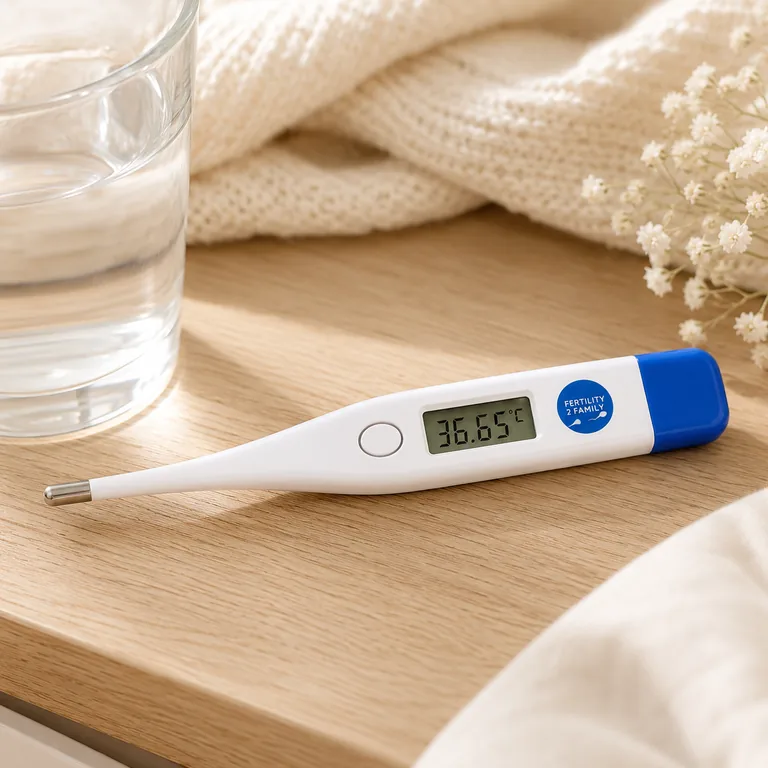
Basal body thermometer for cycle tracking
If you are trying to conceive and comparing BBT thermometer Australia options, a basal body thermometer helps record waking temperature each morning and review the pattern after ovulation. Compare temperature charting with ovulation tests, learn when BBT helps, and choose a simple reusable thermometer for home tracking in Australia.
Choose your basal thermometer
Basal body temperature tracking works best when the routine is simple enough to repeat every morning. Choose a simple basal body thermometer if you want a low-cost, reusable way to record morning temperature and support cycle charting.
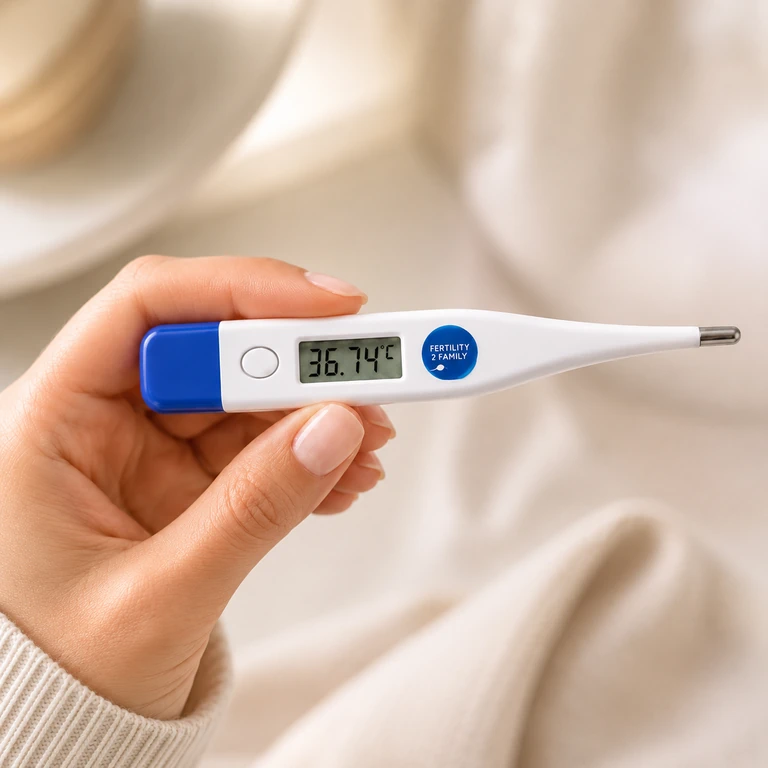
Best for daily waking-temperature tracking, basal body temperature charting and reviewing patterns after ovulation.
$15.00 GST incl.
Secure checkout through Fertility2Family, with discreet Australia-wide delivery and clear product directions.
Why buy from Fertility2Family?
Fertility2Family is an Australian fertility testing brand for people who want practical, clear and private cycle-tracking support at home. This basal body thermometer Australia guide is written for local shoppers comparing home fertility tracking tools.
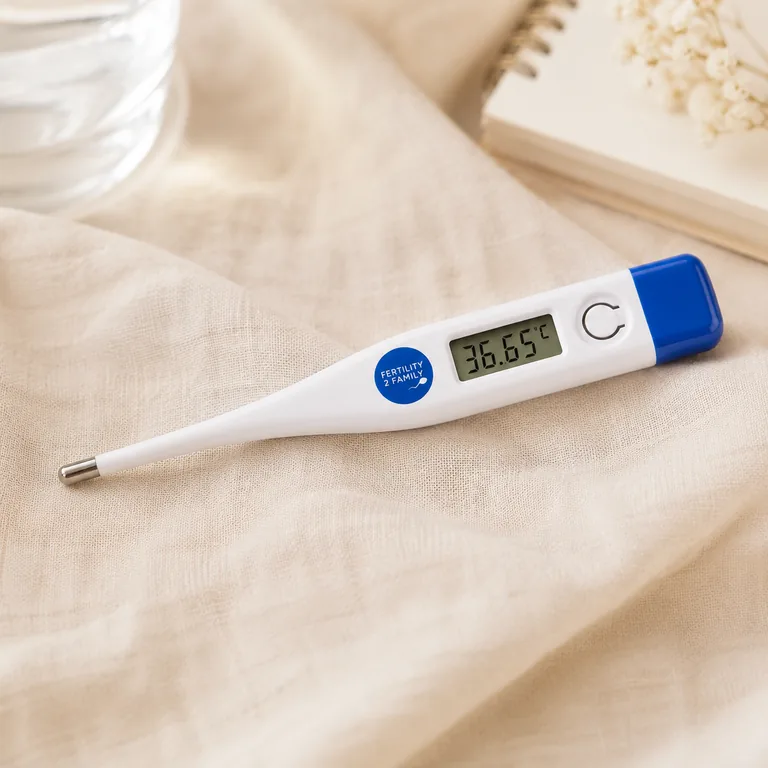
Longstanding Australian support for people testing and tracking at home.
Designed to support the small daily changes that matter when recording basal body temperature.
Simple education about when to test, what to record and what BBT can and cannot show.
Discreet packaging and delivery across Australia.
Customer reviews
Fertility2Family customer feedback about the Basal Ovulation Thermometer, temperature tracking, cycle timing, value and ease of use.
Sar001
I purchased a Major Fertility Pack to have a basal thermometer, ovulation strips and pregnancy strips. I use the thermometer every day and have been able to accurately track when ovulation has happened for months now.
Bon, NSW
Accurate to 2 decimal places. Easy to use. The most effective way for us to track ovulation, especially as hormonal tracking did not work for us- and now a handy thermometer for our little one!
Baby BK, SA
The Basal thermometer I have found to be very precise and super accurate because it has the 2 decimal places.
Kimberley
I have been using this thermometer daily for the last 6 months to track my ovulation cycle and have found it to be great! Accurate & consistent, also easy to use.
Anniyah P., VIC
I brought one of the packs which came with ovulation, pregnancy tests and BBT. Instructions are easy I am still learning how to track my BBT but has helped me confirm that I have ovulated which is nice to know.
Bianca, VIC
I have been using this thermometer for a while now to track my Basal temps and it has made it so easy to keep track of whats happening inside my body and when I have ovulated.
Melissa, NSW
I've used this Thermometer for 5 months and it has made it easier to read my body so I can know when I am going to ovulate.

Kia, WA
Thermometer works great, have never had a problem with it. I highly recommend this product and Fertility2Family. Very affordable too.
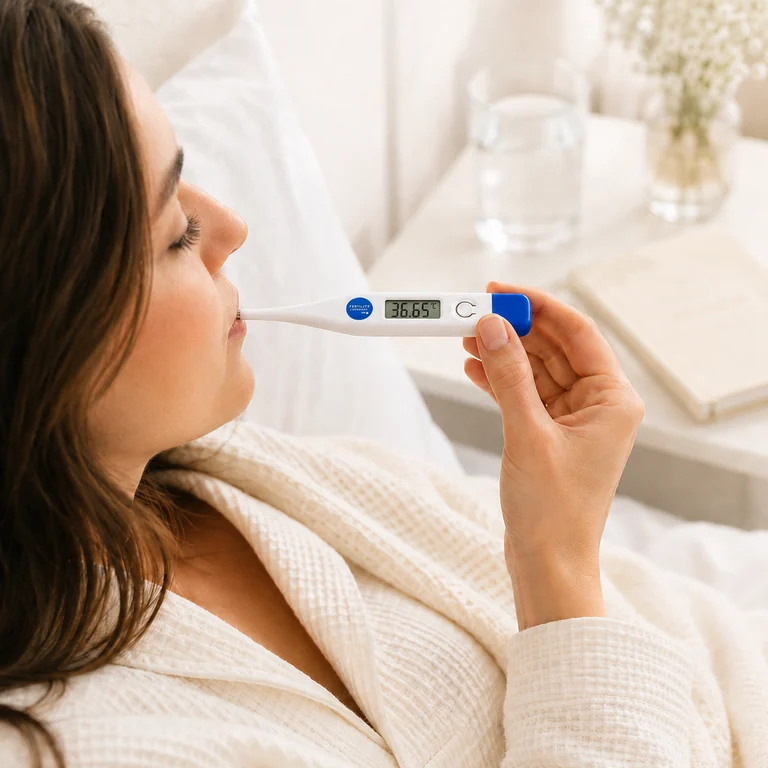
Rachel
Then I heard about these basal thermometers so I started using them and charting my results and then I conceived in 4 cycles.
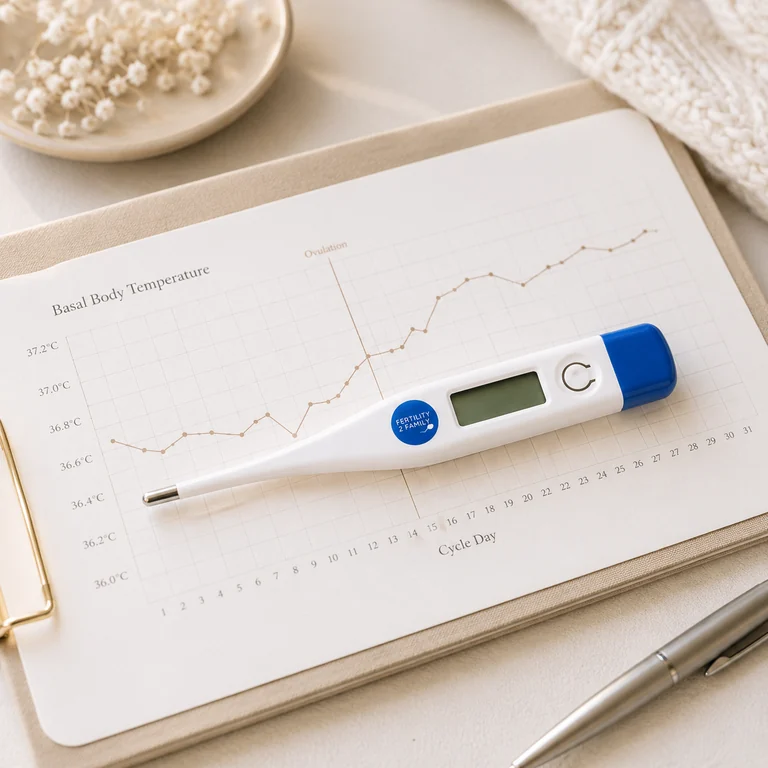
Cait, QLD
My naturopath recommended this to me, it has been so great to track my ovulation. Accurate and easy to use.
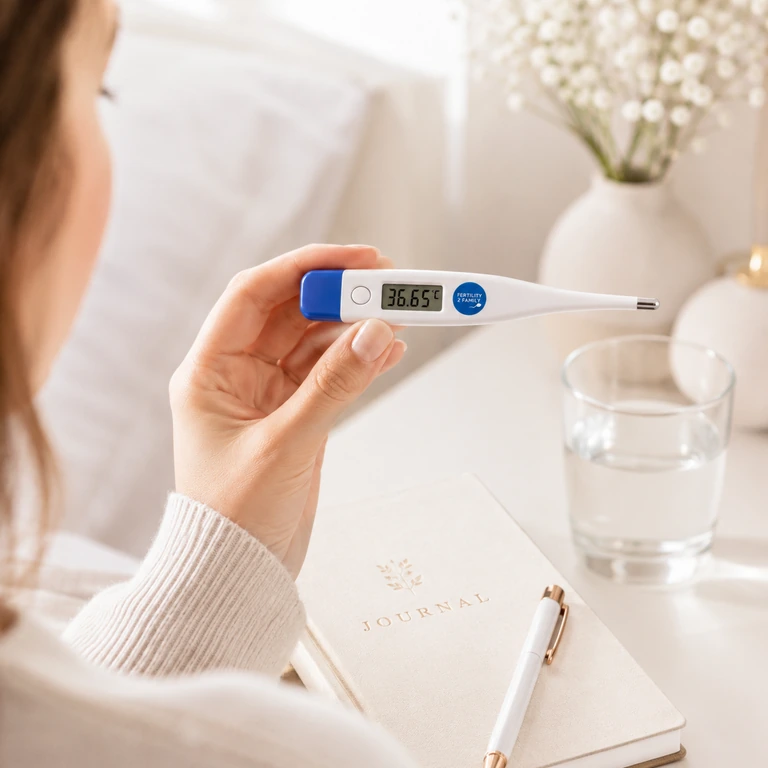
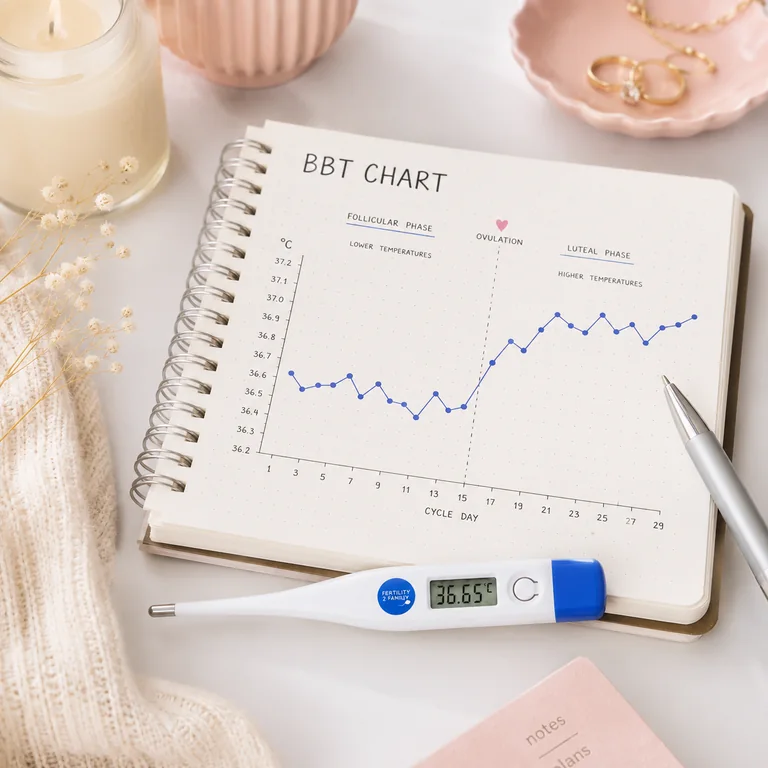
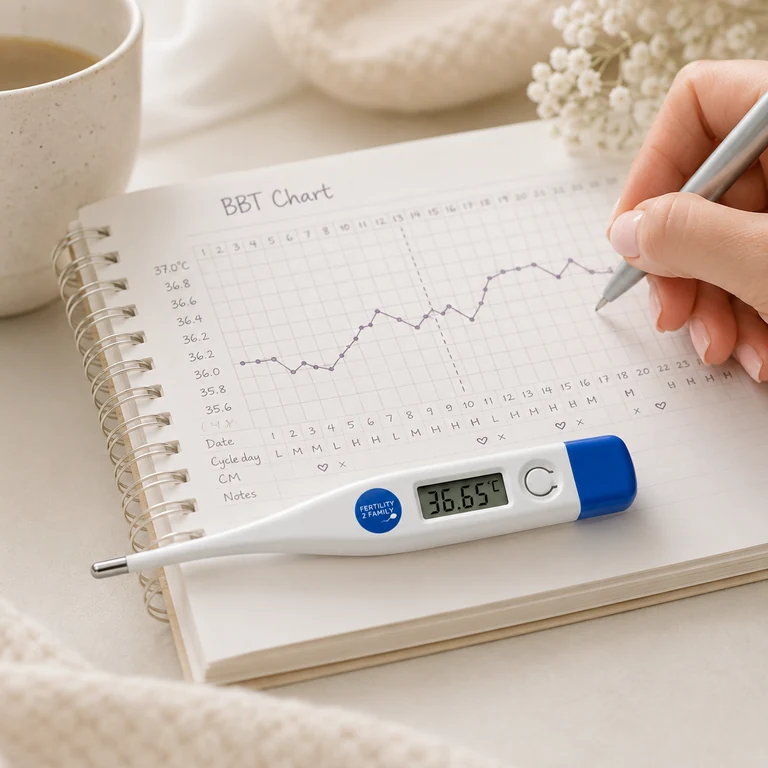
BBT chart example
Simplified 28-day cycle example. Timings vary. Here, the fertile window is cycle days 9-14, the key fertile days are cycle days 12-14, LH peaks around cycle day 13, ovulation is around cycle day 14, and the BBT rise begins after ovulation around cycle days 15-16.
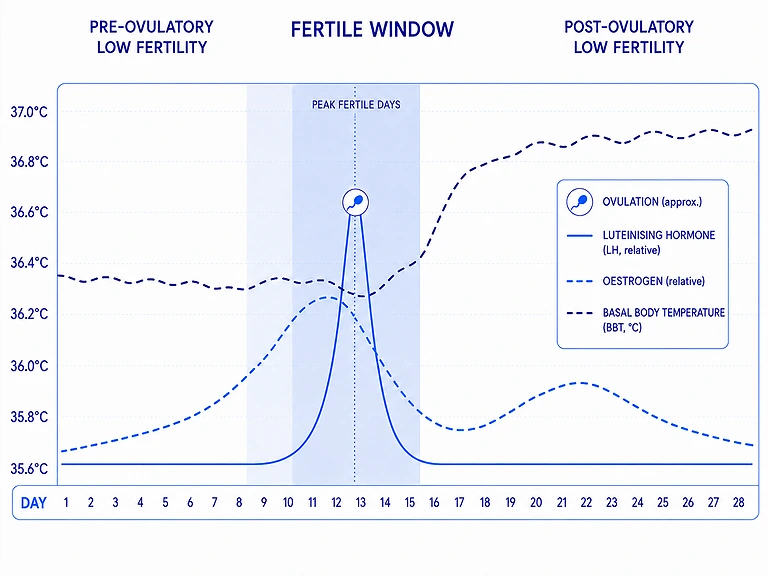
For this 28-day example, the fertile window is around cycle days 9-14, with the key fertile days around cycle days 12-14.
LH peaks around cycle day 13 in this example. Ovulation is around cycle day 14, although real cycles can shift earlier or later.
BBT rise begins after ovulation, around cycle days 15-16. A simple example may move from about 36.3-36.6°C before ovulation to 36.7-37.0°C afterwards.
Oestrogen tends to rise before ovulation, fall after ovulation, then show a smaller second rise in the luteal phase.
Chart examples
These BBT chart examples show common temperature patterns. In this page's 28-day example, pre-ovulation temperatures often sit around 36.3-36.6°C and the post-ovulation pattern may sit around 36.7-37.0°C. Illness, alcohol, travel, shift work and inconsistent testing can all change the chart.
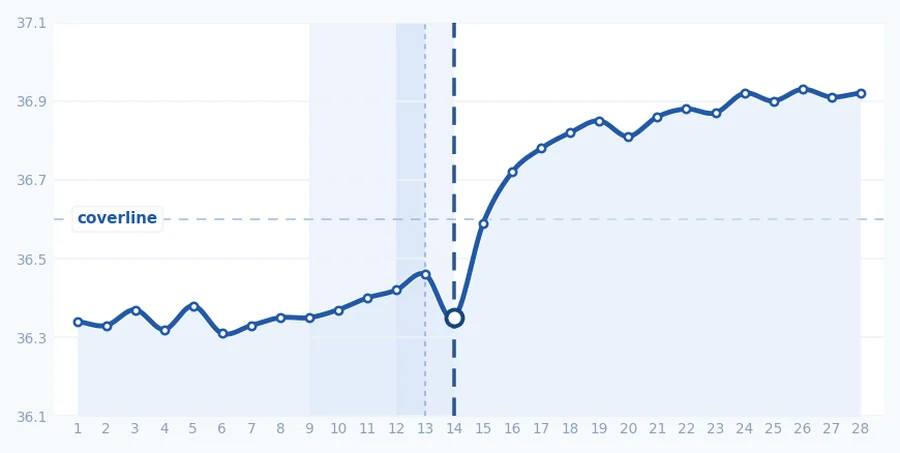
A sustained higher pattern may begin after ovulation, around cycle days 15-16 in this 28-day example. Review several days, not one reading.
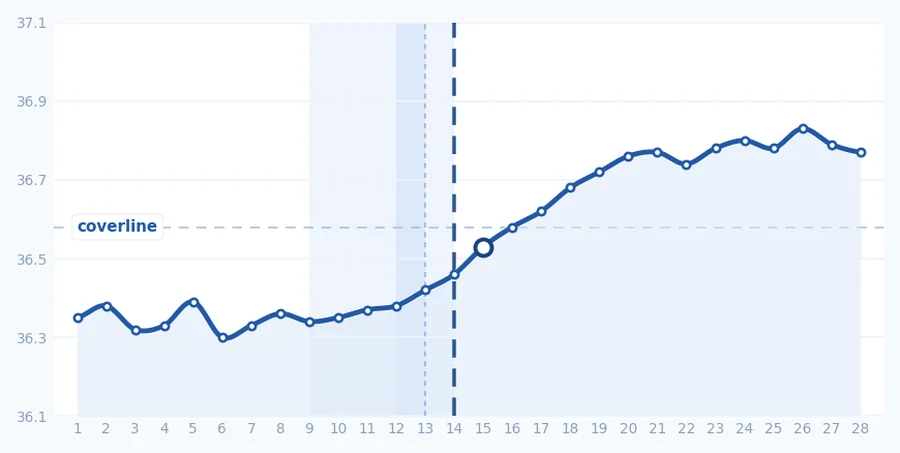
Some charts rise gradually rather than sharply. This can still be useful if the higher pattern becomes sustained after ovulation.
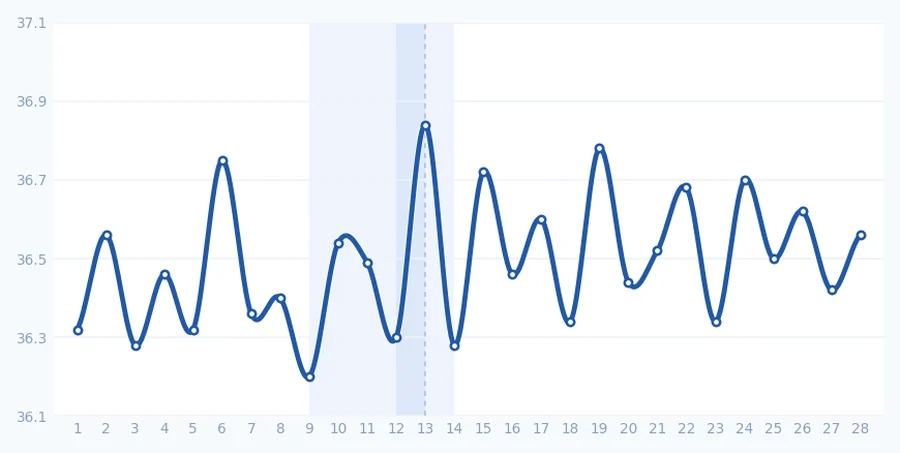
Illness, alcohol, poor sleep, shift work, travel or inconsistent testing can make the line jump around and hide the true pattern.
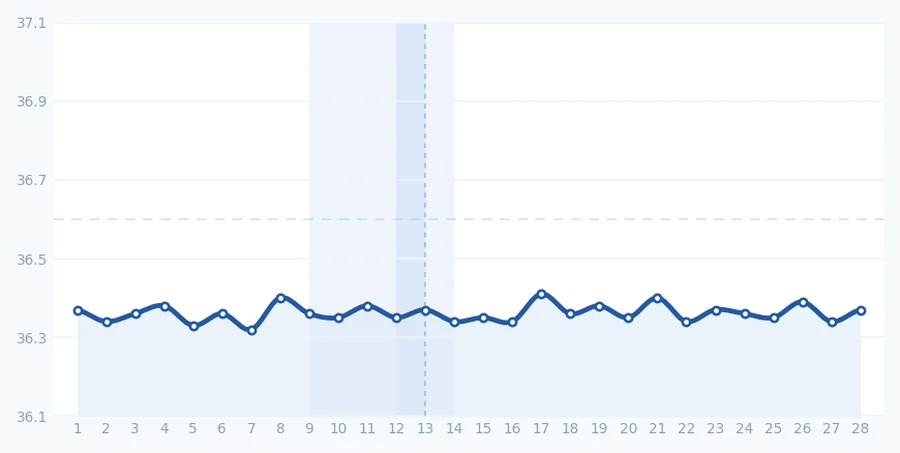
A flat or unclear pattern may mean ovulation was later than expected, the routine was disrupted, or the chart is not clear enough to interpret.
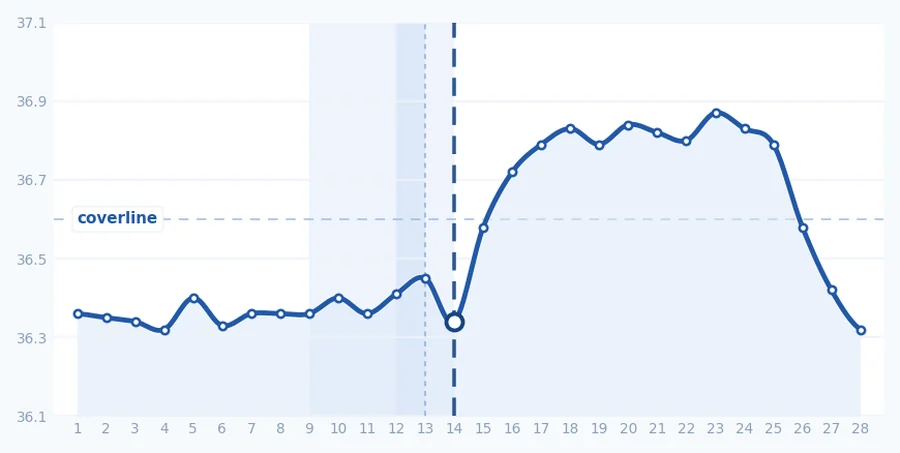
Some charts drop before bleeding. This is not a pregnancy test and should not be used to diagnose pregnancy or fertility concerns.
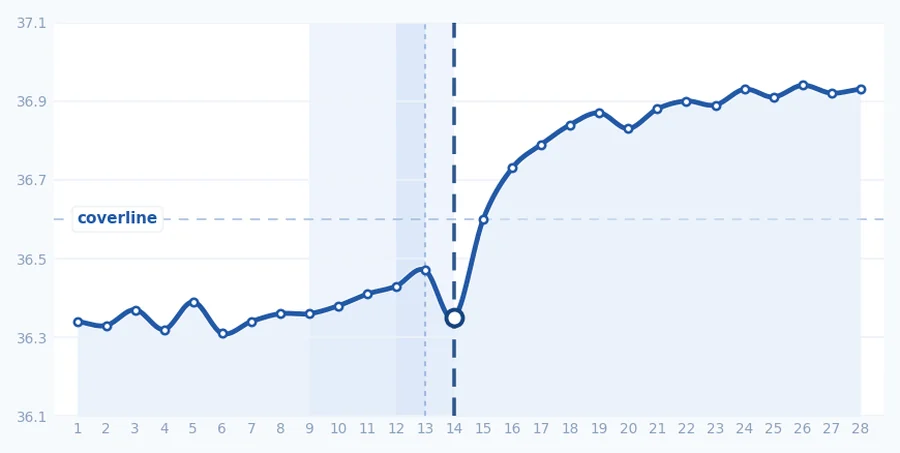
A sustained higher pattern can happen after ovulation. If pregnancy is possible, use a pregnancy test at the right time; BBT cannot confirm pregnancy.
Basal thermometer vs ovulation test
Ovulation tests detect the LH surge before ovulation is likely. A basal thermometer records waking temperature so you can review whether a sustained rise happened after ovulation. In this 28-day example, the fertile window is days 9-14, LH peaks around day 13, ovulation is around day 14, and the BBT rise begins around days 15-16.
A positive ovulation test suggests ovulation is likely soon. In this example, LH peaks around cycle day 13.
A basal thermometer records waking temperature so you can review for a sustained rise around cycle days 15-16 in this example.
Ovulation tests help with timing before ovulation; BBT helps you review the temperature pattern after ovulation across cycles.
BBT is retrospective. It cannot confirm pregnancy or diagnose whether ovulation definitely occurred. Use a pregnancy test for hCG, and seek clinical advice if charts are repeatedly unclear or cycles are very irregular.
How to take basal body temperature
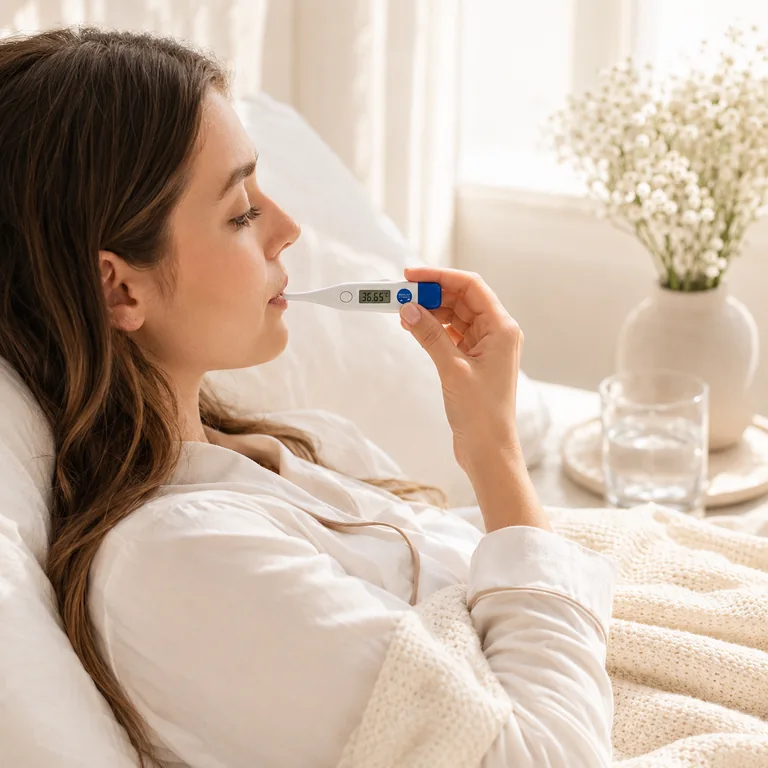
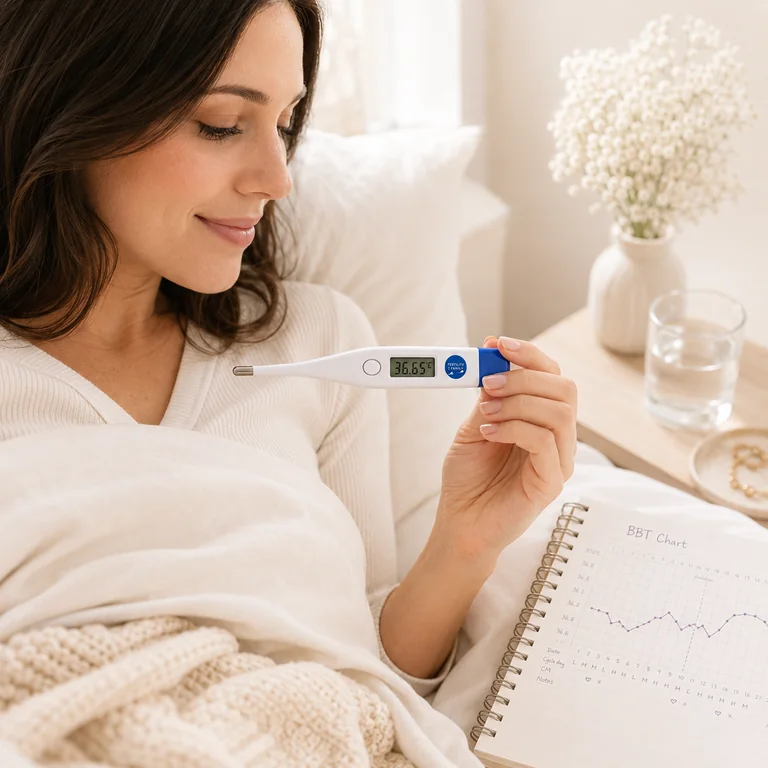
For useful BBT charting, keep the routine repeatable. Take your reading as soon as you wake, before getting out of bed, and record any factors that could affect that morning temperature.
Place the basal thermometer beside your bed so you can test before standing, eating, drinking or moving around.

Measure after your main sleep block and before using your phone, showering or starting the day. Mark unusual wake times on the chart.
Use the measurement method directed for your thermometer, and keep that method the same each day. Switching methods can distort the pattern.
Write down the temperature, cycle day, time, sleep quality, illness, alcohol, travel, stress and ovulation test result if used.
For the example 28-day cycle, look for a sustained rise after ovulation around cycle days 15-16. Do not diagnose ovulation, pregnancy or fertility concerns from one reading.
Reading quality check
Before reading too much into one high, low or missing temperature, check whether it was taken under similar conditions to the rest of the chart.
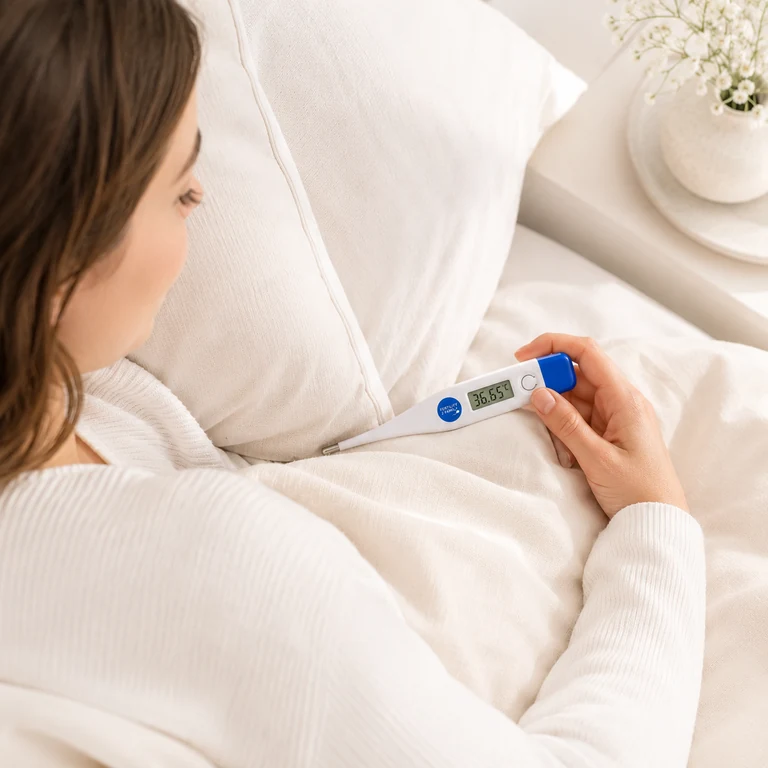
If you got up, showered, ate, drank or moved around first, mark the reading as possibly affected.
A reading taken much earlier or later than usual can sit outside your normal pattern.
Short sleep, waking overnight, shift work or travel can make a BBT chart harder to read.
Illness, fever, alcohol, stress, an electric blanket or a changed room environment may affect waking temperature.
Do not interpret one isolated temperature alone. Look for patterns across several days.
Unclear temperature chart
In the example 28-day cycle, a BBT rise would usually start after ovulation around cycle days 15-16. A missing or unclear temperature rise does not automatically mean something is wrong; first check whether the chart is consistent enough to interpret.
Different testing times, getting up before testing, missed readings or changing method can make patterns unclear.
Illness, alcohol, stress, travel, electric blankets, poor sleep and shift work can affect waking temperature.
Ovulation may have happened later than expected, or a cycle may not show a clear pattern. An anovulatory BBT chart cannot diagnose a fertility issue.
Basal body thermometer vs regular thermometer
A regular thermometer is useful for fever checks, but basal body temperature charting depends on small daily changes. A basal body thermometer is selected for cycle tracking because it shows small shifts more clearly.
Basal thermometer Australia buying guide
If you want a basal thermometer you can buy online in Australia, choose a simple Fertility2Family fertility thermometer made for daily basal body temperature charting. The routine stays clear: take the reading, record it, and review the pattern across the cycle.
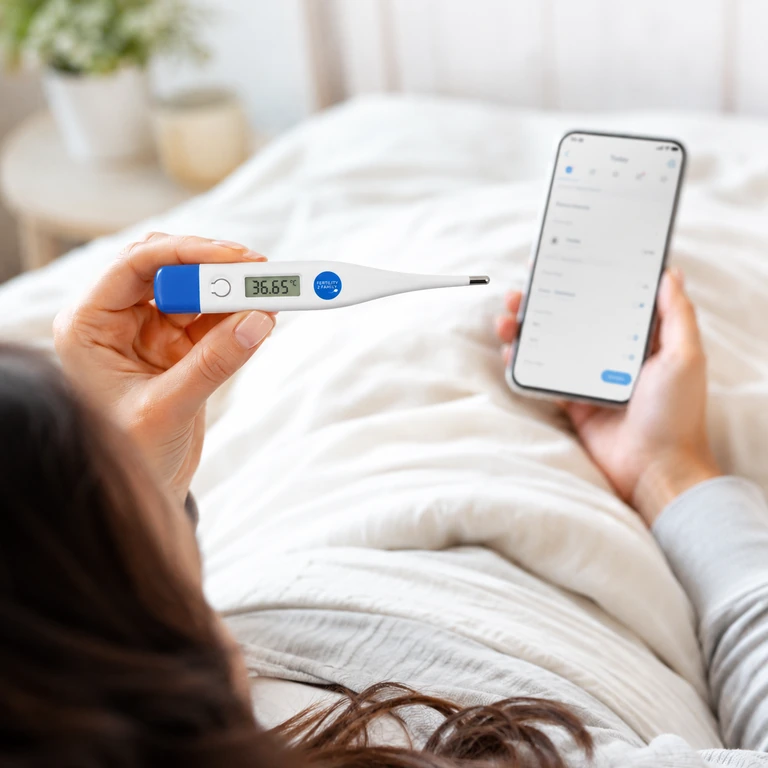
Designed to support small waking-temperature shifts for basal body temperature tracking.
One thermometer can be used across cycles, making it a low-waste option for morning temperature tracking.
Daily-use features and clear directions support a consistent bedside BBT routine.
Fertility2Family provides discreet Australia-wide delivery and clear education for trying-to-conceive tracking.
FAQs
Quick answers about buying and using a basal body thermometer for cycle charting in Australia.
A basal thermometer, also called a basal body thermometer, is used to record resting temperature immediately after waking. It is commonly used for cycle charting when trying to conceive.
Basal body temperature is your resting temperature. For cycle tracking, it is measured first thing in the morning before getting out of bed.
Take your temperature immediately after waking, before standing, eating, drinking or moving around. Use the same thermometer and method each day.
Take it as soon as you wake, ideally around the same time each morning after a block of sleep. Mark disrupted sleep, illness, travel or shift work on your chart.
A regular thermometer may be useful for fever checks, but may not show small daily changes clearly enough for BBT charting. A basal thermometer designed for small changes is better suited to cycle tracking.
A BBT chart shows waking temperatures across your cycle. It may help you review whether a sustained higher-temperature pattern appeared after ovulation.
BBT after ovulation often shows a small sustained rise. Review several higher readings rather than one isolated temperature.
Check testing time, sleep, illness, alcohol, travel, stress, shift work and whether ovulation may have occurred later than expected. If unclear patterns repeat, speak with your GP.
BBT is usually more useful after ovulation because the temperature shift is retrospective. Ovulation tests are better suited to detecting the LH surge before ovulation.
Many people use both. Ovulation tests help identify the LH surge before ovulation, while BBT helps review the temperature pattern afterwards.
No. A basal thermometer cannot confirm pregnancy. If pregnancy is possible, use a pregnancy test to check for hCG at the appropriate time.
Illness, disrupted sleep, alcohol, stress, travel, shift work, electric blankets, inconsistent testing times and changing measurement method can all affect BBT readings.
BBT is one sign used in some fertility awareness methods. On this page, it is explained as a trying-to-conceive tracking tool. For contraception or natural family planning guidance in Australia, speak with an appropriately trained clinician or instructor.
You can buy a BBT thermometer online from Fertility2Family and use the product page for current price, stock status, delivery information and checkout.
Look for a basal thermometer that supports small temperature changes, a simple morning routine, clear directions, and an Australian seller that provides fertility charting guidance.
No. A BBT chart cannot confirm pregnancy. Some people notice higher temperatures after ovulation, but a pregnancy test is needed to check for hCG when your period is due, late or testing is appropriate.
Yes, but BBT may be harder to interpret when cycles are irregular, sleep is disrupted or wake times change often. Ovulation tests and temperature charts can both be less straightforward for some people with PCOS, so seek clinical advice if patterns remain unclear.
More customer comments
The comments below relate to cycle tracking products, including ovulation tests used alongside temperature charting.
Helped me to learn my unique cycle
The strips helped me immensely in understanding my cycle, which was not quite the standard.
Best LH tests I have tried
I have a fairly short lasting LH peak so it can be difficult to catch.
The best I have used
After months of tracking I soon had accuracy of ovulation to the day, as confirmed by FS with bloods and scans.
Our editorial and medical review policy explains how we research and check our health articles.
General information only. Always read the label and follow the directions for use. Temperature charting supports cycle awareness but does not confirm pregnancy, diagnose fertility concerns, prove the exact day of ovulation or replace care from your GP or fertility specialist.
Last reviewed: April 2026. Next review: April 2027.