
Australian-owned since 2009
Longstanding Australian fertility testing support for people using ovulation tests at home.
Home ovulation testing
Buy ovulation tests online in Australia
Trying to find the right ovulation test for your cycle? Compare ovulation test strips and midstream ovulation tests below, then choose the format and pack size that suit your budget and routine.
Choose your ovulation test
Choosing an ovulation test should be simple. Pick the format you can use consistently: ovulation test strips for repeat LH testing, or a midstream / in-stream ovulation test when you want a no-cup, direct urine stream option.
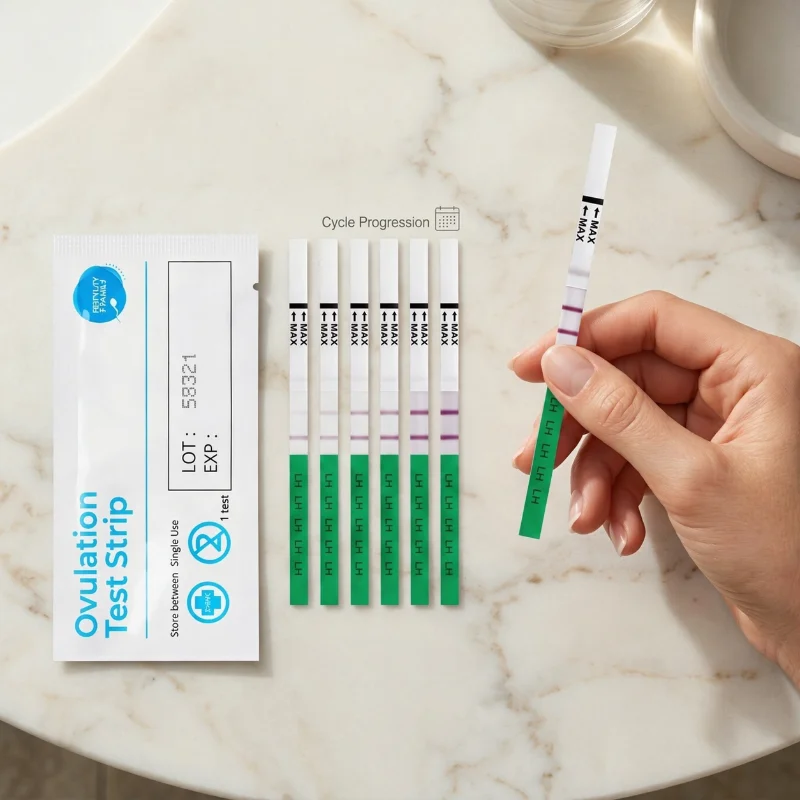
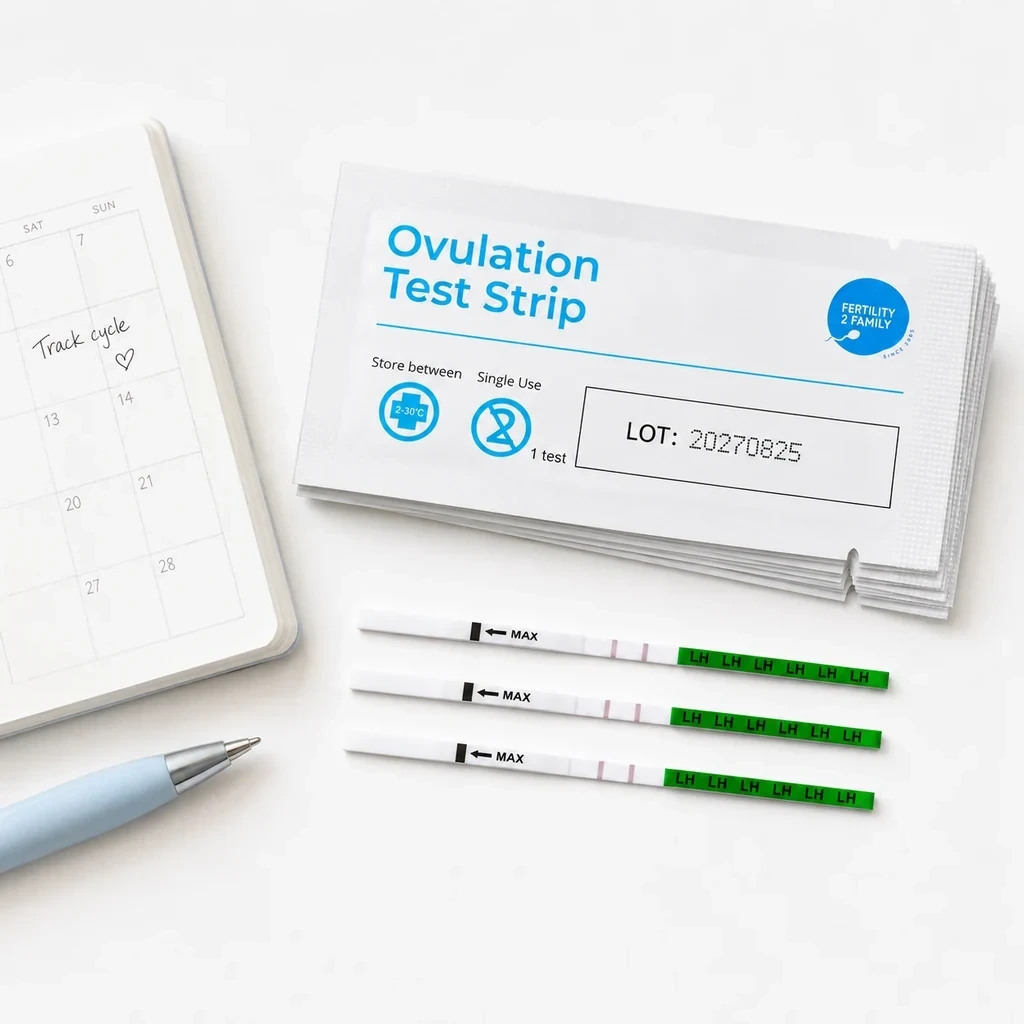
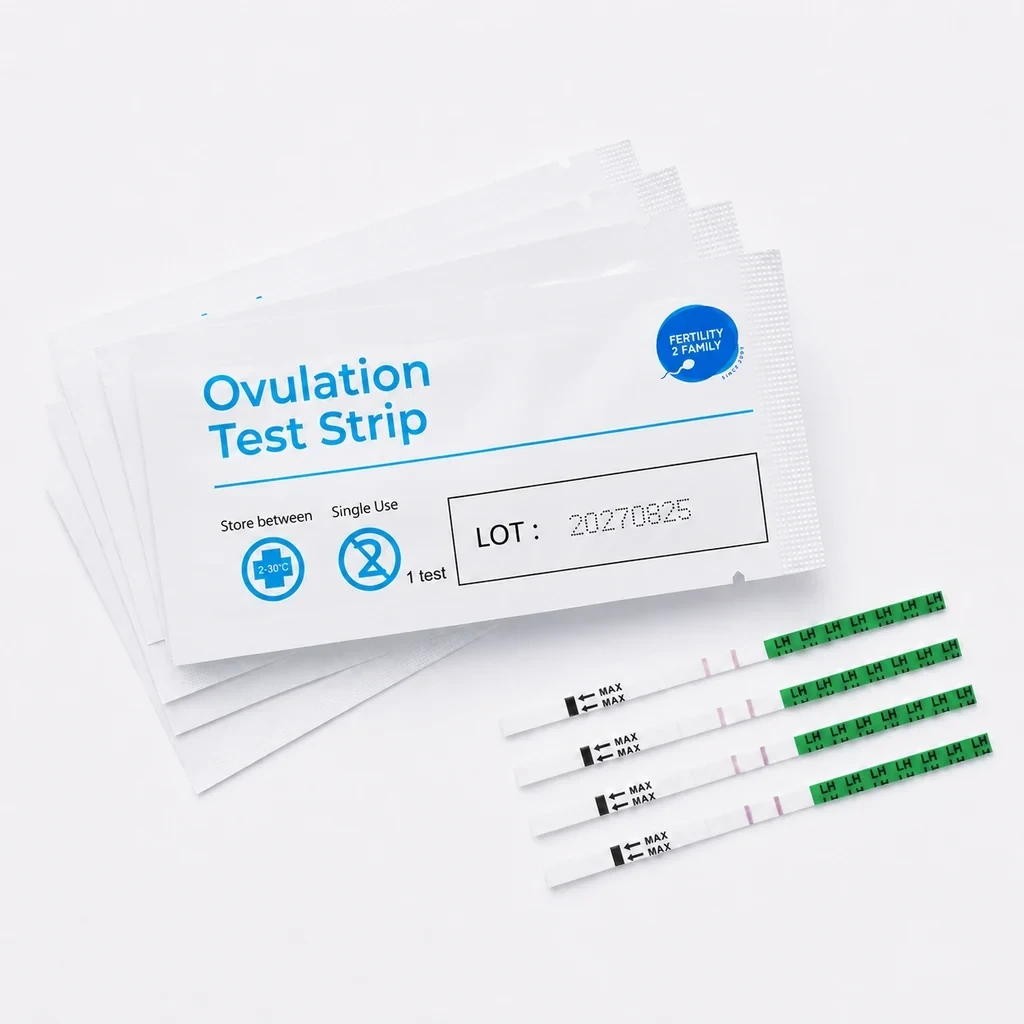
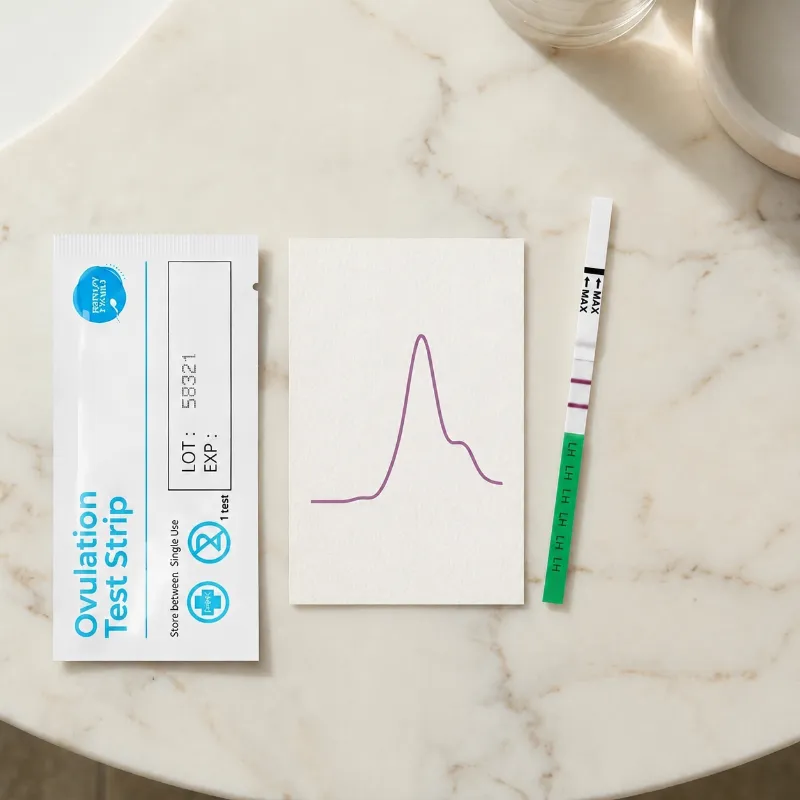
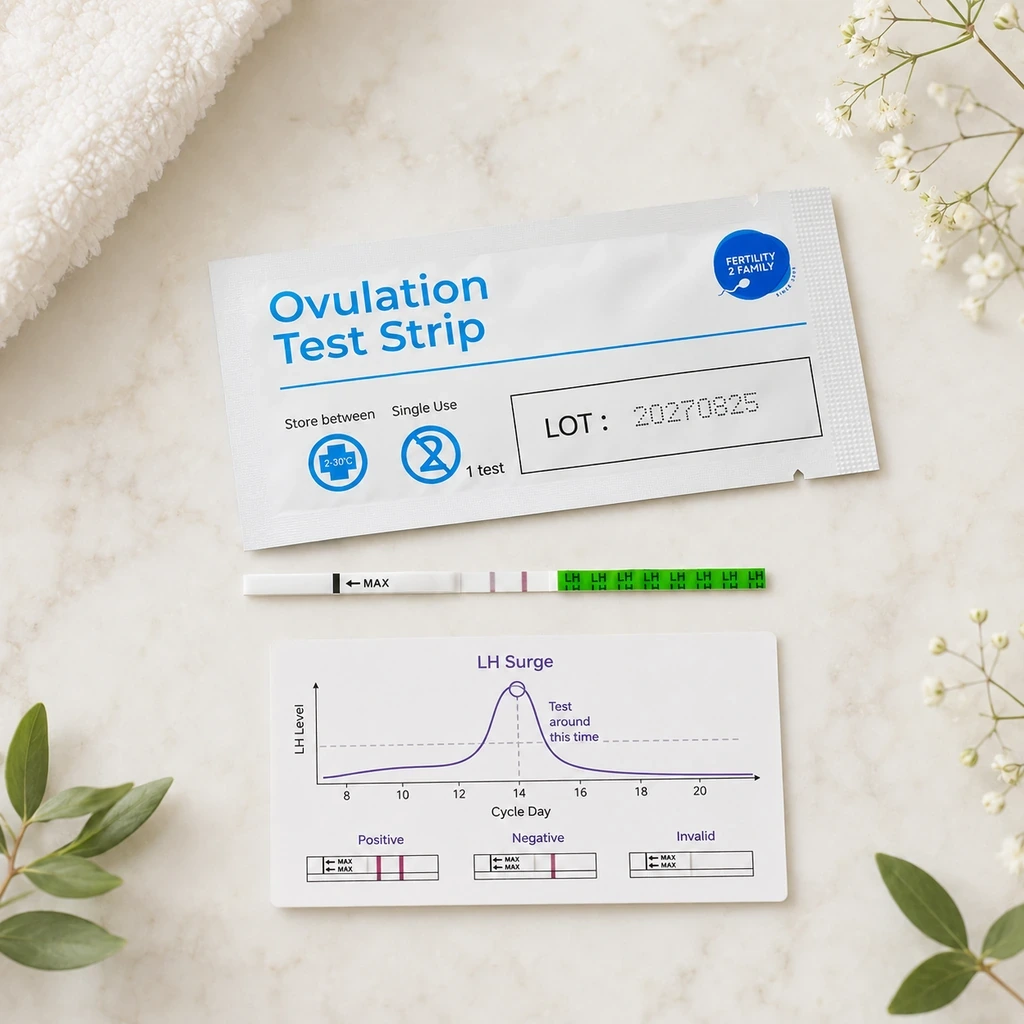
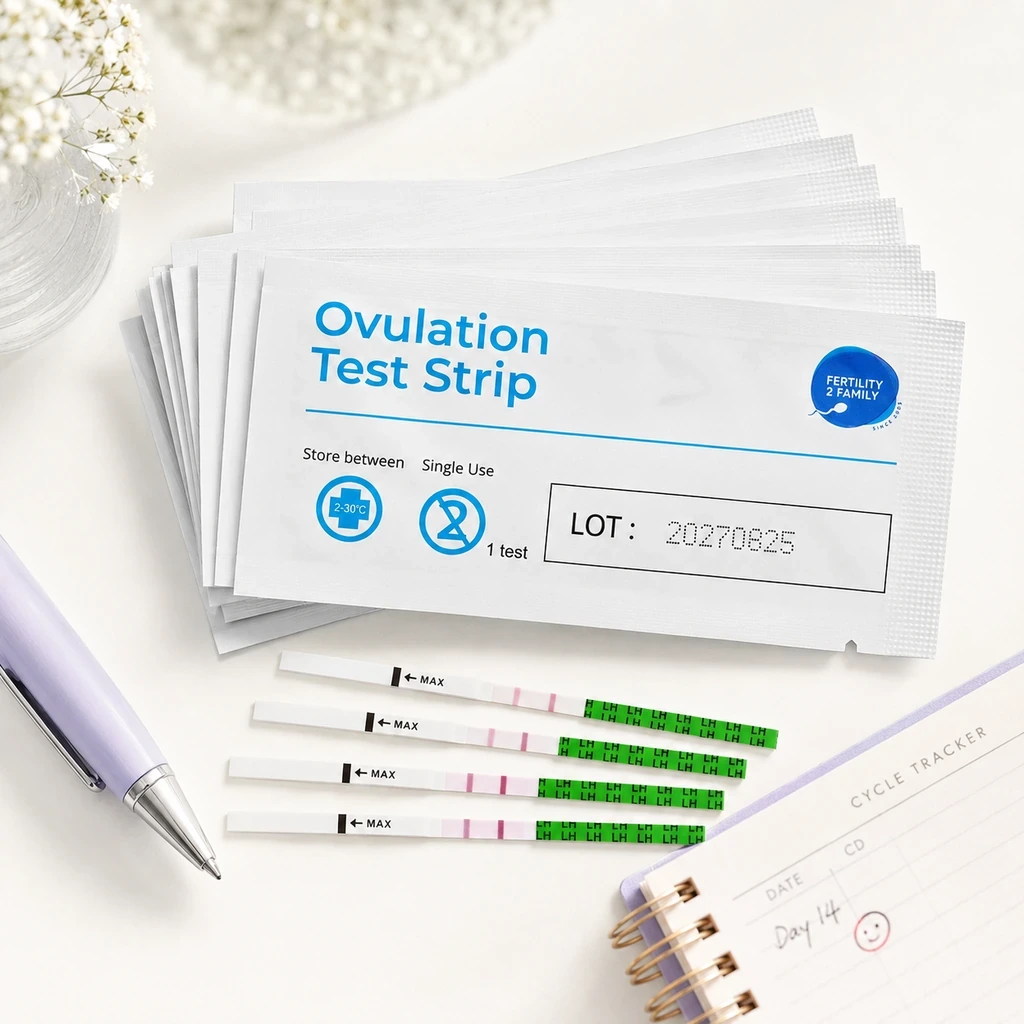
Best for repeated testing across several days. Ovulation test strips, also searched as ovulation strips, LH strips and ovu strips, are practical when your goal is ongoing tracking and better value per cycle.
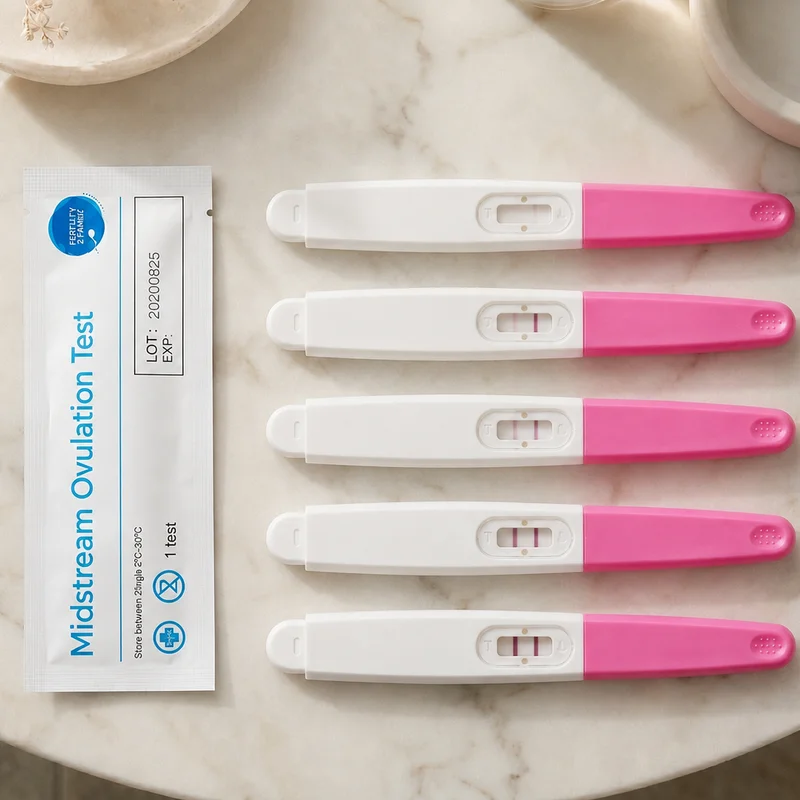
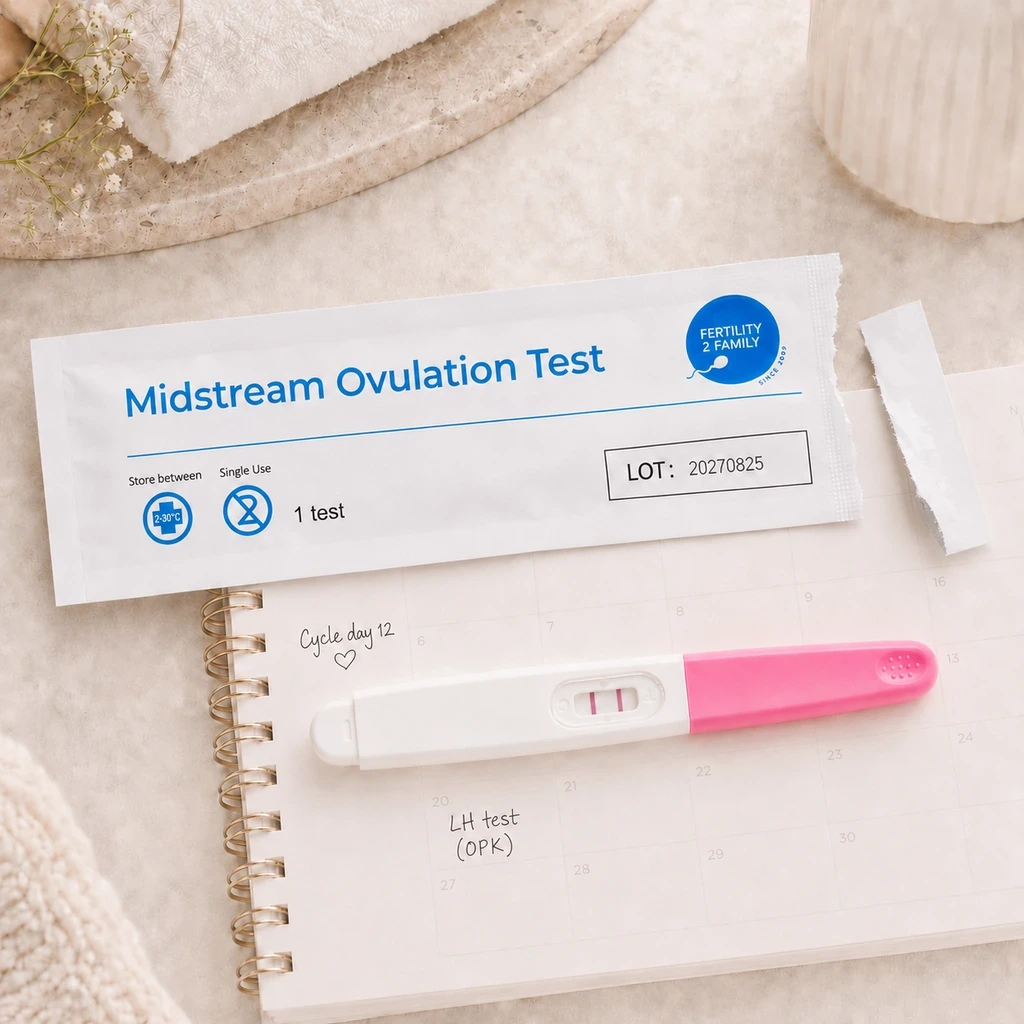
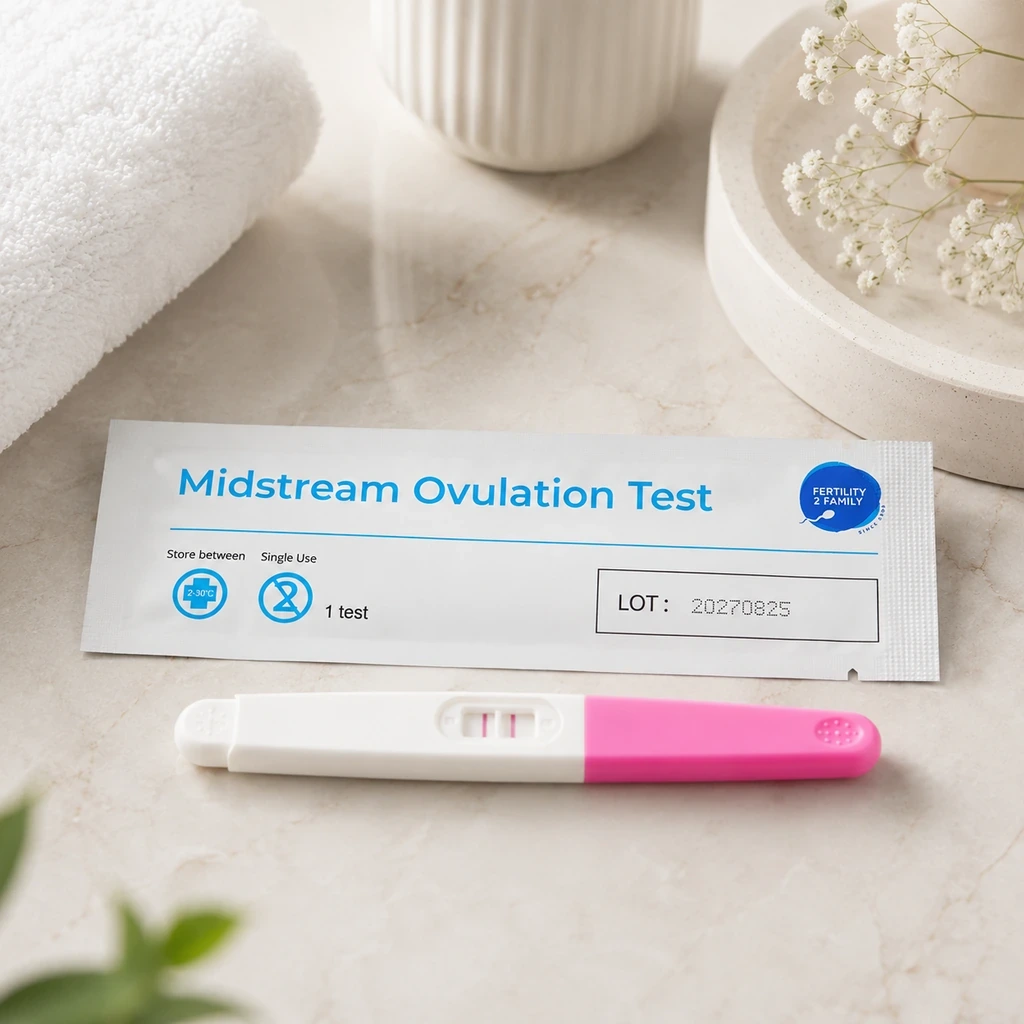
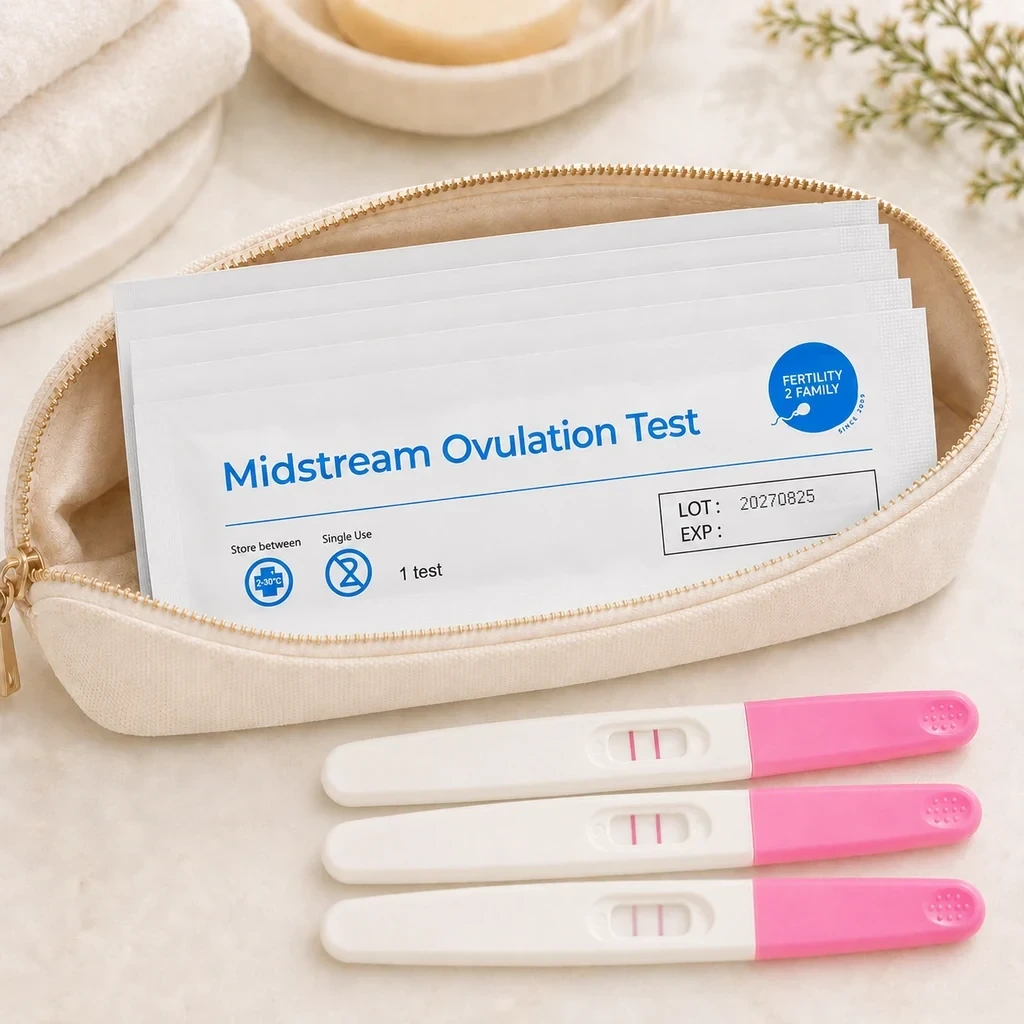
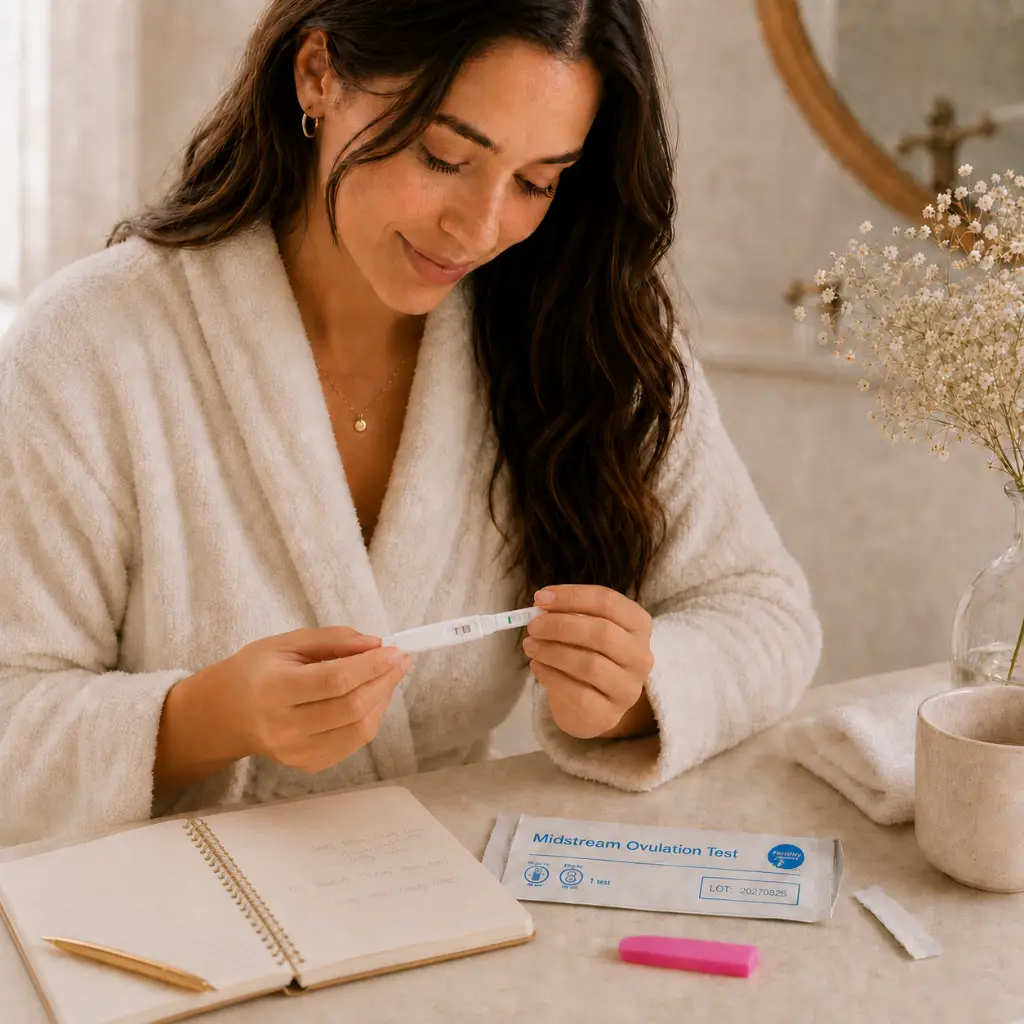
Best for convenience and simpler handling. Midstream ovulation tests, also searched as in-stream ovulation tests, no-cup ovulation tests and direct urine stream LH tests, suit customers who prefer not to dip strips into a urine sample.
Why buy ovulation tests from Fertility2Family?
Fertility2Family is an Australian-focused fertility testing brand with a nursing-led education approach, designed for people who want practical, low-friction ovulation testing at home.
Longstanding Australian fertility testing support for people using ovulation tests at home.
Ovulation test information is reviewed for clear, safe home-testing instructions.
Compare strips and midstream tests before choosing the format that fits your routine.
Discreet packaging and delivery across Australia.
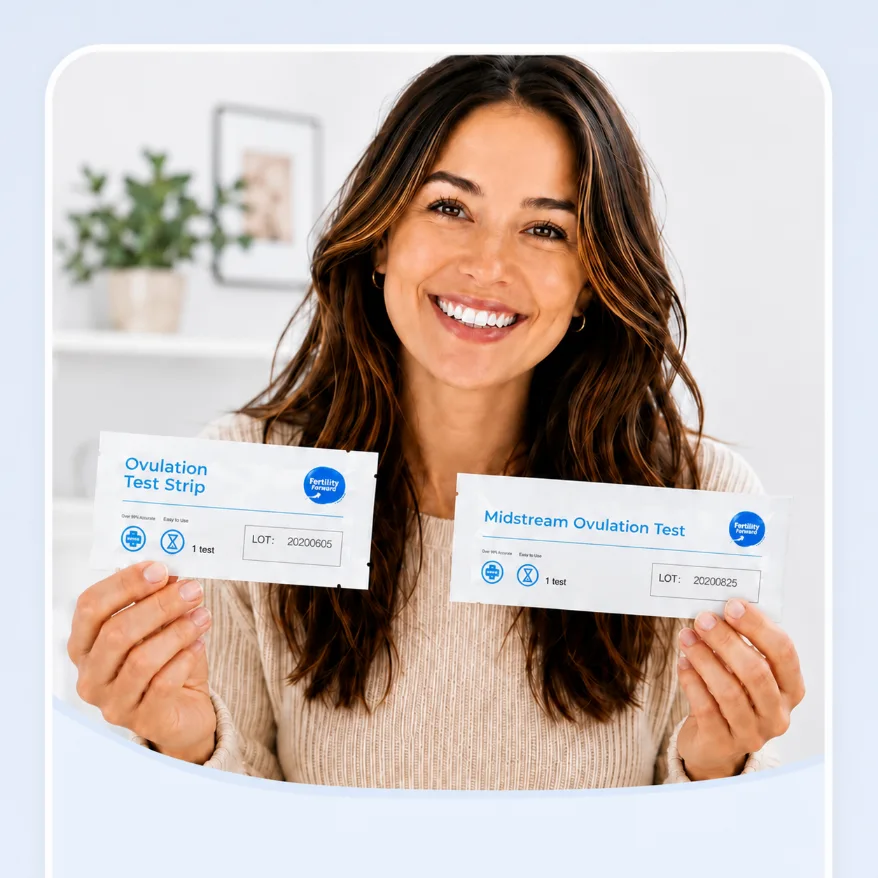
Format choice
Both Fertility2Family ovulation test formats help detect the LH surge before ovulation. Choose ovulation test strips for repeated value testing or midstream ovulation tests for no-cup convenience.
Customer reviews
Fertility2Family customer feedback about ovulation tests, LH surge tracking, cycle timing, value and ease of use, with a 4.7/5 customer rating.
Ovulation Tests
Louise, NSW
Ovulation tests Simple, quick, accurate readings. I have used this product in the past 2017 and again in 2018. bulk packs are great instructions were easy to follow.
Ovulation Tests
ttc_journey_au, QLD
Quick shipping, Australian company, and easy to use products. I prefer using these over ovulation tests from the chemist - cheaper, buy in bulk & way less plastic!
Ovulation Tests
Lina Smith, VIC
The process from ordering to receiving the order was smooth and easy. The ovulation tests were more accurate than drug store tests that I used in the past and way more affordable.
Ovulation Tests
SNJ, WA
Used the ovulation tests for approx 3 months and always was very accurate. Was easy to see a positive from a negative.

Ovulation Tests
Katie K, NSW
These were perfect for checking ovulation. Instructions were accurate and easy to follow, and I didn't have any problems reading the results.
Ovulation Tests
Bianca, VIC
I have bought these ovulation tests multiple times and have found them to be very useful and accurate when tracking ovulation and helping get the best chance of conception each cycle.
Ovulation Tests
Flick
They were affordable and accurate - the positive line displayed when my body was also showing signs of ovulating. They arrived quickly and the packaging was very discreet.
Ovulation Tests
Mikayla, TAS
Easy to use and accurate with ovulation. I used for 3 months and finally got pregnant after ttc for 12 months.
Ovulation Tests
Lcob, QLD
These were very reliable and affordable. I was able to test for my surge for a whole week, multiple times a day without worrying about the cost of the strips.
Ovulation Tests
Kia, WA
The tests were easy to use and supply was more than enough to track Ovulation cycle for a couple of months to accurately predict fertile period for family planning.
Quick chooser
The right ovulation test is the one you can use consistently across your fertile window. Start with how often you expect to test, then choose the format that best fits your routine.
You want better value for repeated ovulation test use across several days.
You want a no-cup ovulation test that feels easier to handle.
Your cycle varies, your LH surge is short, or you may test twice a day.
Compare formats
Both options help detect the LH surge before ovulation. The best choice depends on how often you expect to test, how much handling you prefer, and whether you want better value per test or a simpler no-cup routine.
| Factor | Ovulation test strips | Midstream ovulation tests |
|---|---|---|
| How it is used | Dip into a collected urine sample. | Hold directly in the urine stream. |
| Best for | Repeated testing across several days. | Simpler handling at home, work or while travelling. |
| Cost per test | Usually lower. | Usually higher. |
| Main reason to choose | Better value when you need more tests. | No collection cup needed. |
| Also searched as | LH strips, OPK strips, ovulation test strips. | In-stream ovulation test, no-cup ovulation test, midstream OPK. |
| Shared purpose | Helps detect the LH surge before ovulation. | Helps detect the LH surge before ovulation. |
Pack size guide
Match your pack size to your cycle pattern and how often you expect to test.
Smaller packs may suit if you usually know when to start testing.
Larger ovulation test strip packs give more room to start earlier and test across more days.
50 or 100 ovulation test strips are better suited when you may test more often.
Testing window
Start testing a few days before your expected fertile window and keep going until you see a clear LH surge.
An ovulation test is a home urine test that detects luteinising hormone, commonly called LH. LH usually rises before ovulation, so testing across the fertile window can help identify your most fertile days.
Start around day 6 to 7.
Start around day 8 to 11.
Start around day 12 to 18.
Start around day 19 to 21.
Use this simple guide to estimate your fertile window and ovulation test start day.
Cycle timing guide
Result guide
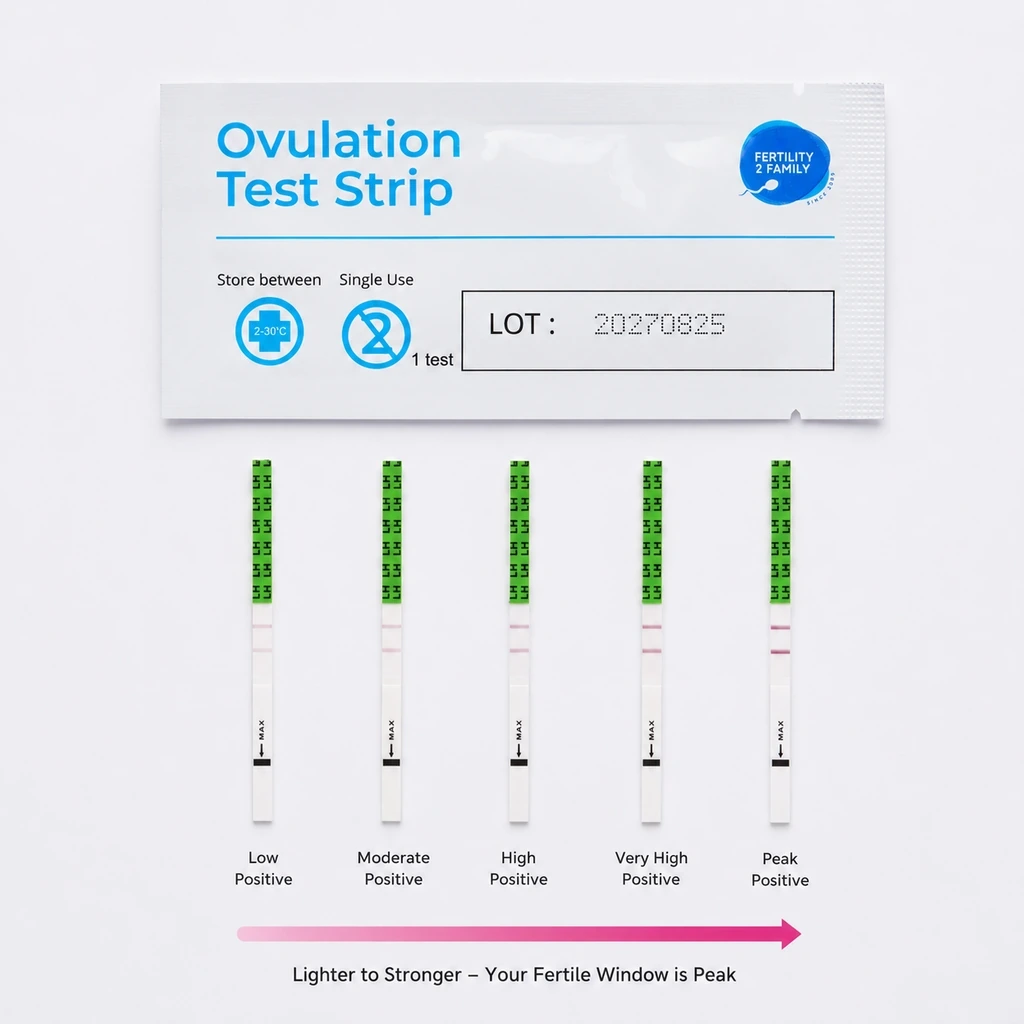
A positive ovulation test is when the test line is as dark as, or darker than, the control line within the reading window. A lighter test line usually means LH is present but has not yet reached surge level.
LH surge detected. Ovulation is likely within about 24 to 36 hours, although timing can vary.
LH may still be rising. Keep testing across the fertile window.
If the control line is missing, the result is invalid. Use a new test and repeat.
A faint test line is usually negative unless it is as dark as, or darker than, the control line.
You may have started testing too late, missed a short surge, tested with diluted urine, or had a cycle where timing shifted.
Some people see more than one high LH result. Use the first clear positive as a useful timing marker.
A late positive can happen when ovulation is delayed. If pregnancy is possible later, use a pregnancy test.
FAQs
Quick answers about buying, choosing and using ovulation tests in Australia.
An ovulation test is a home urine LH test that detects luteinising hormone. It is also commonly called an OPK, ovulation predictor kit or LH test. LH typically rises in the day or two before ovulation, so testing daily across your fertile window helps identify your most fertile days.
The best ovulation test is the format you can use correctly across the right number of days. Ovulation test strips often suit repeated testing and value. Midstream, in-stream or no-cup ovulation tests often suit simpler handling and direct urine stream testing.
You can buy ovulation tests online in Australia from Fertility2Family, with ovulation test strips and midstream ovulation tests for different routines, budgets and cycle patterns. If you are searching for an ovulation test kit in Australia, compare the two formats before choosing your pack size.
Many people use around 5 to 10 ovulation tests per cycle. You may need more if your cycle varies, if you start earlier, or if your LH surge is brief. Larger strip packs can be useful when you want room to test across more days.
Start a few days before your expected fertile window so you have enough days to catch the LH rise. For a 28 day cycle that is often around day 8 to 11. If your cycle length varies, use your shortest recent cycle and test across more days.
In most cases, yes. OPK means ovulation predictor kit, which is another common name for ovulation tests used to detect the LH surge before ovulation. Some customers also search for LH tests, LH strips or ovulation test kits when comparing options.
Yes, but you may need to test across more days. If you are not seeing a clear LH surge over several cycles, speak with your GP.
Some people with PCOS use ovulation tests, but LH patterns can be harder to interpret. If you have PCOS, very irregular cycles, or repeated unclear results, speak with your GP or fertility clinician.
Ovulation tests help detect the LH surge before ovulation, which can support fertile-window timing. They do not confirm pregnancy, prove ovulation definitely happened, diagnose PCOS or replace medical care.
A positive ovulation test suggests the LH surge is present. Many people use this timing to plan intercourse on the day of the positive test and the following day.
You may have started testing too late, missed a short LH surge, tested with diluted urine, or had a cycle where ovulation timing shifted. Start earlier next cycle and test across more days.
No. An ovulation test is not a pregnancy test. If pregnancy is possible, check with one of our pregnancy tests and follow the product instructions.
Open ovulation test strips or midstream ovulation tests to compare pack prices and contents. All prices include GST.
Registered Post is A$9.95 unless your order qualifies for free shipping after discounts. Express Postage is A$12.95.
We dispatch orders within 1 to 2 business days and deliver within Australia only.
Yes. Fertility2Family ovulation tests are included in the Australian Register of Therapeutic Goods under ARTG 317593.
More customer reviews
More Fertility2Family customer feedback about ovulation test strips, midstream ovulation tests, LH surge tracking, bulk packs, repeat testing, value, privacy and delivery.
Ovulation Tests
Highly recommend there products , the ovulation strips are very reliable and I’ve never had any issues. Great company and fast delivery .
Ovulation Tests
Great accurate tests, and fast shopping! Highly recommend both the lh ovulation tests and hcg pregnancy tests.. give these guys a go!
Ovulation Tests
Very affordable way to track ovulation
Great product - very affordable to track ovulation. It took us 10 months of trying and we just got our positive pregnancy result!
Ovulation Tests
Amazing price, works just as well as more expensive brands
My GP reccomended Fertility2Family for their affordable ovulation sticks and I see why! I've been using the ones you pee on directly (not the dip sticks) and they are easy to use and seem to be accurate.
Ovulation Tests
Clear and accurate
I have been using these test to predict ovulation for 3 years. They are easy, affordable and simple to do and read.
Ovulation Tests
Affordable and Accurate
Quick shipping and it was discreet. It gave me a great progression line and it was obvious as I was approaching ovulation.
Ovulation Tests
Affordable and effective
Being cheap means I can test multiple times a day to catch the LH surge. Also appreciate the straightforward instructions being emailed with the order for easy reference.
Ovulation Tests
Very useful and accurate
For me they were accurate and very helpful to predict my fertile window. They are also easy to use.
Ovulation Tests
Great products and value for money!
Quick delivery, discreet packaging and quality affordable products. I have used Fertility2Family pregnancy and ovulation test strips (saves you using so much wasteful plastic packaging).
Ovulation Tests
We fell pregnant!!
When we finally managed to find my ovulation, we almost immediately conceived! Great company, accurate results and excellent delivery.
Ovulation Tests
Perfect
I used these tests (purchased off ebay 50 for $11) they showed results quickly, being cheap i thought they wouldnt be any good but i soon changed my mind and i would recommend these to anyone trying to track ovulation.
Ovulation Tests
Cheap and reliable
Great affordable option. Were accurate and arrived super fast. Cheapest I have found after doing lots of research.
Ovulation Tests
Great affordable option!
Great affordable pricing, easy enough to use. Great customer service and very fast shipping in discreet packaging.
Ovulation Tests
Great strips!
Key product for trying to conceive. Excellent product. Accurate and clear. Totally recommend it. Great strips, really helpful. Awesome value for money. Easy to follow instructions and so easy to use.
Ovulation Tests
Helped me to learn my unique cycle
It helped pinpoint my LH surge perfectly and I know this because it aligned with blood test tracking when we later moved to ART to conceive.
Ovulation Tests
Best LH tests I’ve tried
I’ve been using these LH tests 2-3 times a day near my expected ovulation day the past 3 cycles and it has accurately detected LH peak (and ovulation was subsequently confirmed by a progesterone blood test 7 days later).
Ovulation Tests
This product is very useful
The first month I used these ovulation tests and I got pregnant. The instructions are really clear and easy to follow.
Ovulation Tests
Cheap and easy to use
These are good mid stream ovulation tests, occasionally I find it hard to interpret if the test line is dark. But in general they are easy to use and accurate.
Ovulation Tests
Review
Ended up getting test line positive. Would recommend if curious about ovulation test and trying to conceive.
Ovulation Tests
Extremely accurate!
I got a positive on both ClearBlue and Fertility2Family at the same time. The next month I used only Fertility2Family and it was so clear with pinpointing ovulation.
Ovulation Tests
Easy to use, no troubles
Fast postage, ovulation tests were so easy to use. Very economical when taking tests daily.
Ovulation Tests
Great and accurate OPK
I have been using these OPKs since FTC journey began a few months ago and they are my favourite so far. I love them as much as my first response tests which cost a lot more.
Ovulation Tests
Will be buying again
Iv used this product the past two ovulations and they are just as easy to read as the more expensive store brought ones. I recommend these to anyone in the same boat that's trying to conceive.
Ovulation Tests
Straightforward, value for money
I have purchased the ovulation tests for both pregnancies and they worked very well. Shipping was fast too as I don't remember having to wait too long for the envelope to arrive.
Ovulation Tests
The best I have used
After months of tracking I soon had accuracy of ovulation to the day (as confirmed by FS with bloods and scans). Fast and discreet delivery.
Ovulation Tests
Super good!
My partner has used these tests, clearblue and Ebay opk's. We found these to be the best by far.
Ovulation Tests
Reliable and affordable
This shop has great customer service and provides a real missing need in the Australian market; afforable and reliable tests for ovulation and pregnancy.
Ovulation Tests
Great way to detect ovulation
I bought a 100 pack of the LH test strips from ‘fertility 2 family’ to help detect when I was ovulating. I found they were very easy to use and also very affordable.
Ovulation Tests
Cheap & effective
Instructions were easy to follow and the strips develop the test line quickly, so no waiting around in the bathroom. Theyre as effective as the ovulation test sticks but a fraction of the price!
Ovulation Tests
Great products and service
I purchased the ovulation strip test and pregnancy test from Fertility2Family and I'm very happy with the products and service. The shipping was fast also.
Ovulation Tests
Arrived super quick and so easy to use, Will order again
I was a little worried but I have saved so much and I just use Clear blue to double check the results. So glad we decided to give them a go! i would recommend these to anyone trying to track ovulation .
Ovulation Tests
helped me
I found these ovulation tests accurate and reliable, i managed to detect ovulation successfully.
Ovulation Tests
Pregnant in 1 cycle!
I decided to use these ovulation tests when we were trying to conceive baby number two. They are cheap, quick to post to you and obviously work.
Ovulation Tests
Excellent value
This means my 7 pack of clear blue digital (1 month supply) actually lasts 4-7 months! This is excellent for women with irregular periods and therefore ovulation.
Ovulation Tests
These tests are the best value for money. They are extremely easy to use. The tests were delivered quickly and discreetly too.
Ovulation Tests
Quick and affordable
It had made this journey so much easier and affordable knowing there are cheaper options that are just as effective available. Shipping is super fast and discreet which is appreciated also!
Ovulation Tests
Wonderful Accurate Product
They were so accurate and made tracking so much easier. I highly recommend this company as they were very prompt, fast shipping and a pleasure to deal with.
Ovulation Tests
Excellent value for money
Super quick and discreet postage, easy to use tests, love being able to buy in bulk.
Ovulation Tests
Best deal i have ever found
Very easy to use and great value for money. Am ordering almost from last 3 years . And always happy with the product. Will order more stuff in future whenever needed.
Ovulation Tests
Affordable and reliable
The results were accurate, they were easy to use and are small and discreet for when you want to keep the results private. They were very easy to order and the delivery time was fast.
Ovulation Tests
Great value and quality
Would highly recommend. Only used the preg tests, no other products, and found these to be easy to use with clear instructions.
Ovulation Tests
Good product
Affordable, quick discreet delivery, easy to follow instructions. You need to be dedicated to the process to get the most out of it as it can be a little time consuming.
Ovulation Tests
Recommend ✅
So easy to use and very clear instructions. I always recommend this website to my friends who are trying to conceive, it’s much much cheaper than buying from chemists or supermarkets.
Ovulation Tests
quality. affordable and easy to order
Extremely happy with this product. Was easy to order.. also great pricing. The website is clear and easy to use. wish I came across your product earlier.. could have saved so much money.
Ovulation Tests
Easy to order from and reliable tests. Been using the Ovulation tests for many years.
Ovulation Tests
My experience with F2F has always been great and I have been ordering their ovulation tests for quite some time. Very happy with their products.
Ovulation Tests
Easy to use ovulation test strips and eye opening when I was actually ovulating. They did not come with instructions so I had to look online but very easy once the instructions were clear.
Ovulation Tests
Best ovulation tests!!
I've used these ovulation tests throughout many months, especially having PCOS and needing to test more than once a day, these tests were extremely accurate and had fallen pregnant within months of tracking after a year of trying without tracking accurately. Very simple to use and value for money!!
Ovulation Tests
Really easy and convenient ovulation tests
Easy to follow the instructions and used the ovulation tests for about 3 months before I ran out, needing more and will purchase again when ready to keep trying to conceive.
Ovulation Tests
Simple, easy to use
Easy to use test strips and eye opening when I was actually ovulating. They did not come with instructions so I had to look online but very easy once the instructions were clear.
Ovulation Tests
great products
The ovation strips have given me good insight to where to try to conceive during the cycle. Excellent postal service and quick delivery.
Ovulation Tests
These are fantastic!
I thought I was ovulating earlier in my cycle, but with these I am now able to pinpoint my ovulation date. They are so easy to use!
Ovulation Tests
Excellent product for a great price
They are much cheaper than buying from the chemist (you can buy in bulk) and they don't take long at all to arrive. The instructions are listed on their website and are very easy to follow.
Ovulation Tests
Easy to use, great service
Quick and easy shipping delivered straight to my door. Would recommend this company for their products and promptness of delivery.
Ovulation Tests
Great affordable products
I ordered from Fertility2Family after a recommendation from a friend. The products are so affordable.
Ovulation Tests
Helped me get my BFP!!
The customer service was great. Easy to deal with, great product and fast delivery
Ovulation Tests
Perfect!
I suffer from pcos and don’t ovulate every cycle, the ovulation strips are a life saver for me, being able to pin point when I ovulate has been a great success, would definitely recommend them to any one and will definitely use them again in the future. Great price also.
Ovulation Tests
Affordable and Effective
The pregnancy strip test showed a positive line 3 days before my missed period. Would use again and have reccomended to many friends who are trying to conceive
Ovulation Tests
Great product!!!
The product ( pregnancy test) has very good quality and is affordable. They gave me luck, because soon after buy some tests I got pregnant.
Ovulation Tests
Highly recommend!
TTC is hard enough without having to pay through the roof for the exact same product that is three times the price in-store. Very happy and will continue to use.
Ovulation Tests
Accurate
Always has the line within the waiting time. Easy to use, and easy to read instructions. I have been using for a few months while I have been trying to conceive.
Ovulation Tests
Great product, great price
I bought the ovulation and pregnancy tests from fertility to family as they were by far the best value for money. Arrived quickly and I got the results I wanted!
Ovulation Tests
Quality service and great value!
This is the first time I’ve ordered from Fertility2Family. Not only did I feel it’s great value for money but furthermore received extra bonus’ with my order.
Ovulation Tests
Ovulation Strips
However, I emailed them and the customer service agent was really good and he told me that my kits were on their way & after that they arrived in a few days time.
Ovulation Tests
This thermometer is great- exactly what I was after
I have been using this thermometer daily for the last 6 months to track my ovulation cycle and have found it to be great! Accurate & consistent, also easy to use.
Ovulation Tests
Highly Recommend
I highly recommend fertility2family!!! I have brought a few pregnancy tests from them as they are so much cheaper. They work great and the delivery was fast!
Ovulation Tests
Cheaper alternative than store bought
I purchased a large amount of ovulation and pregnancy strips whilst TTC. The ovulation sticks were showing me when I was ovulating, which is exactly what I wanted.
Ovulation Tests
Gets the job done!
I wish there was a ‘sensitivity’ number on it. I don’t find a “peak” but i get high level readings and it seems to be really good. It is spot on every time.
Ovulation Tests
These are amazing!! Do great fir my TTC journey!’
Using this product for my last 3 cycles. So easy to use and read results to see when ovulating. Super affordable and shipping was super discrete and quick!
Ovulation Tests
My new favourite test
The tests and instructions were sure easy to use. The strips were fiddler than the normal FRER I use but for 50 tests for the price of 5 I can’t complain.
Ovulation Tests
Great
I used the in stream ovulation tests and found them to be great. Ive had trouble in the past with strip ovulation tests, and never really understood them.
Ovulation Tests
Great quality and value for money
I purchased and used both the ovulation and pregnancy testing strips. Accurate results and value for money. Especially when you are testing so frequently.
Ovulation Tests
Love it!
My naturopath recommended this to me, it has been so great to track my ovulation. Accurate and easy to use. All you have to do is remember to use it haha!
Ovulation Tests
Very accurate- precise and fast
The Basal thermometer I have found to be very precise and super accurate because it has the 2 decimal places. The packaging was discreet and the postage was very fast.
Ovulation Tests
Very helpful
I only brought once but got a 50 pack so plenty . It really helped me to know when I was ovulating and my periods were random . Easy to use and accurate
Australian medical references
Fertility2Family publishes Australia-focused fertility education. Articles are written by our team and medically reviewed by Australian-registered health practitioners. We use Australian consumer medicine information, Australian clinical and public health guidance, and peer-reviewed research consistent with Australian care. We explain what the evidence suggests, what it cannot confirm, and when to see a GP or fertility specialist. Each article lists its author, medical reviewer, and review dates.
These Australian sources support the page wording on ovulation tests, urinary luteinising hormone testing, LH surge timing, fertile-window tracking, irregular cycles, PCOS/PMOS and medical-device advertising statements.
Our editorial and medical review policy explains how we research and check our health articles.
ALWAYS READ THE LABEL AND FOLLOW THE DIRECTIONS FOR USE. General information only. Ovulation tests can help identify an LH surge before ovulation, but they do not confirm pregnancy, prove ovulation occurred, diagnose fertility concerns or replace medical care.
Last reviewed: 26 August 2026. Next review: August 2027.