
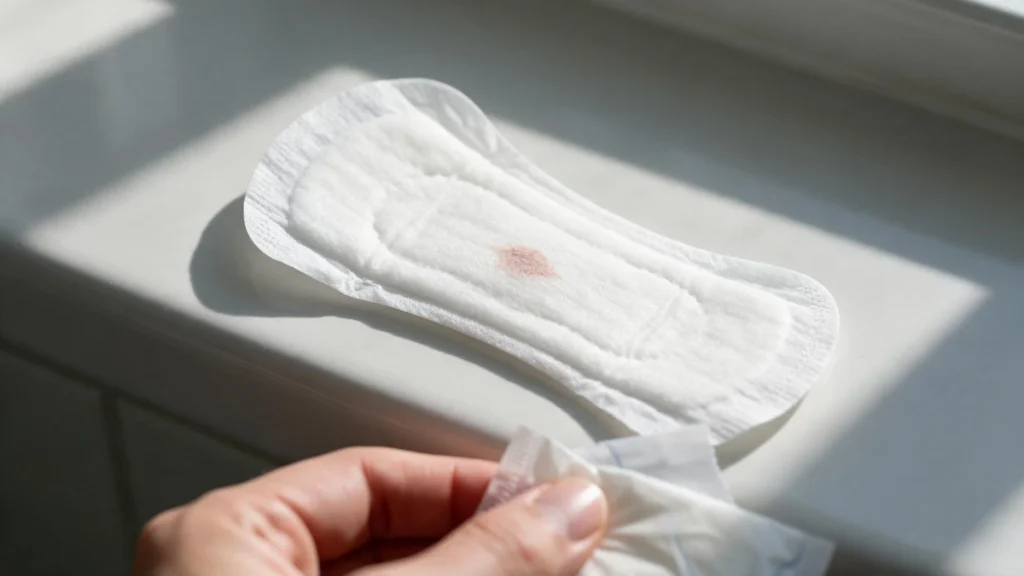

If you notice spotting around your fertile window, it is easy to wonder whether it means ovulation, pregnancy or something else. You usually cannot tell ovulation bleeding from bleeding after possible conception by colour, flow or a photograph. Timing is the strongest clue, but it is still only a clue.
Very light spotting may occur around ovulation. Bleeding attributed to implantation would need to happen several days later, after fertilisation and early embryo development. Apps and home tests estimate timing, and neither type of spotting confirms pregnancy.
Bleeding between periods can also come from contraception, the cervix, infection, polyps, fibroids, endometriosis, medicines or pregnancy-related conditions. Very heavy bleeding, severe or one-sided pain, shoulder-tip pain, marked dizziness, fainting or collapse needs urgent assessment.
Quick answers about ovulation bleeding versus implantation bleeding
How can you tell ovulation bleeding from implantation bleeding?
You usually cannot tell from colour, amount or a photograph. Timing is the strongest clue: ovulation spotting may occur near the fertile window, while bleeding attributed to implantation would occur several days later. Even then, estimated ovulation dates can be wrong and later spotting has other possible causes.
Can an ovulation test or pregnancy test identify the cause of spotting?
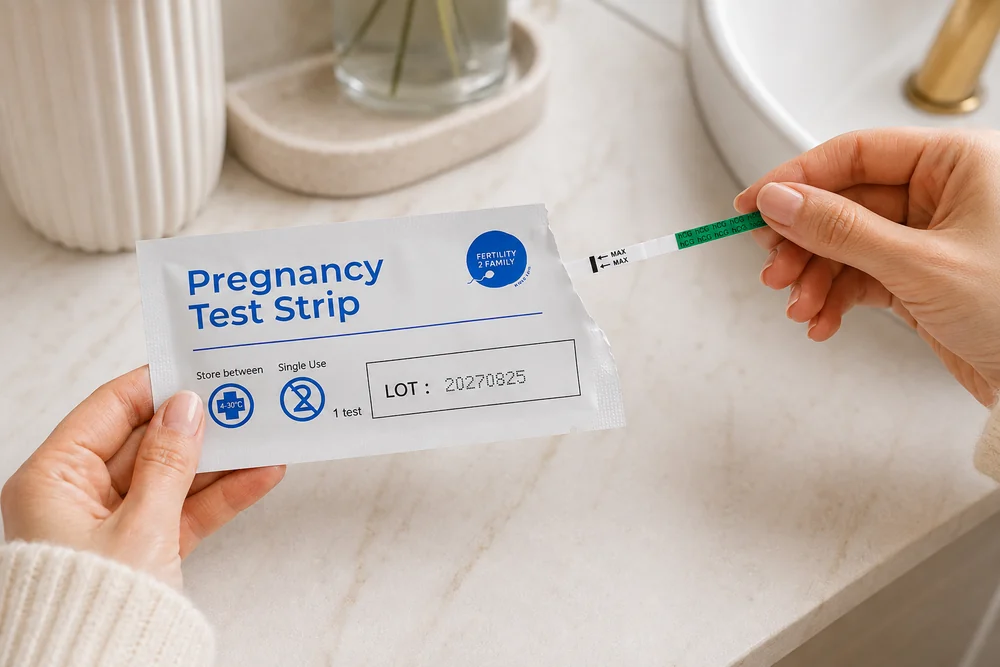
No. An ovulation test detects a rise in urinary LH, while a pregnancy test detects hCG. These tests can add timing context, but neither shows where the blood came from, proves that ovulation occurred or confirms why bleeding happened.
When should bleeding around ovulation be checked urgently?
Seek urgent assessment if pregnancy is possible and bleeding occurs with severe or one-sided pelvic pain, shoulder-tip pain, heavy flow, marked dizziness or fainting. Call 000 for very heavy bleeding, collapse, loss of consciousness or another life-threatening symptom.
Why am I bleeding while ovulating, and is it normal?
Australian health guidance recognises very light spotting around ovulation as one possible cause of bleeding between periods, but timing does not prove that ovulation caused it. The underlying source cannot be identified from symptoms at home.
Bleeding while ovulating usually means blood was noticed near a predicted fertile day, an LH rise or fertile cervical mucus. It does not confirm that an egg was released. Home ovulation tests detect a rise in urinary luteinising hormone, or LH, and Australian consumer guidance uses a positive result as a practical sign that ovulation may occur within about 24 to 36 hours.
That window is an estimate. Research has found marked variation between the beginning of an LH surge and ovulation, and a later basal body temperature rise is retrospective rather than an exact timestamp. A faint or negative result has several possible explanations, including shifted timing, a brief surge and diluted urine; repeated negative ovulation tests are better interpreted as a cycle pattern than as proof of low LH or no ovulation.
Spotting during ovulation is not a reliable good sign of higher fertility or pregnancy. A new, first-time or repeated pattern should not be normalised without review.
Ovulation bleeding versus implantation bleeding: what timing can tell you
Timing can rule out some interpretations, but it usually cannot prove a cause. Spotting near an LH rise or fertile mucus may fit the ovulation window. Bleeding attributed to implantation would occur only after several days of embryo development, but predicted ovulation dates can be wrong and later spotting has many other possible causes.
| Feature | Around ovulation | Bleeding attributed to implantation | Interpretation limit |
|---|---|---|---|
| Timing | Near fertile mucus, an LH rise or the estimated fertile window | Only after several days of embryo development | Apps and OPKs estimate rather than observe the exact ovulation time |
| Amount | Usually discussed as very light spotting | Often described as light, but early-pregnancy bleeding has other causes | Heavy or increasing bleeding needs separate assessment |
| Colour | Pink, red, brown or darker blood can occur | The same colours can occur | Colour cannot identify the source |
| Home-test clue | An OPK may show an LH rise | A pregnancy test may become positive later | Neither test diagnoses the bleeding |
| What it proves | It does not prove egg release | It does not prove implantation or pregnancy viability | Symptoms and tests must be interpreted in context |
If ovulation day has been accurately identified, bleeding on that same day cannot be caused by implantation. A calendar prediction or positive OPK does not establish the exact ovulation time, so same-day spotting should not be used to diagnose either process.
In a prospective study that used first urinary hCG appearance to estimate implantation, successful implantation occurred most often about 8 to 10 days after ovulation. Another prospective study found that very early pregnancy bleeding tended to occur around the expected period, rarely on the estimated implantation day, and did not support implantation itself as the cause of vaginal bleeding.
A person can become pregnant without spotting, and spotting can occur in a cycle that does not result in pregnancy. The biological sequence in pregnancy symptoms after sex helps separate fertilisation, implantation, hCG detection and symptoms without using bleeding as proof.

What does ovulation bleeding look like, and how long can it last?
Ovulation bleeding is usually described as a trace or very light spotting seen on toilet paper, underwear or a liner rather than period-like flow. It may appear pink, bright red, brown or darker after mixing with cervical mucus or remaining in the reproductive tract for longer.
Ovulation bleeding pictures cannot establish the cycle day, amount, pain level, pregnancy status or source of the blood. Lighting, screen settings, absorbent products and dilution can also change how a mark looks.
There is no number of hours or days that safely diagnoses ovulation as the cause. Brief spotting may fit the estimated timing, but bleeding that continues for several days, returns across cycles or differs from your usual pattern should be discussed with a GP.
Heavy ovulation bleeding, clots, repeated pad changes, soaked clothing or increasing flow should not be assumed to be ovulation spotting. Very dark blood or black discharge has a wider differential; black discharge causes and warning signs cover retained-tampon risk, infection and other relevant contexts.
Does bleeding during ovulation mean pregnancy or higher fertility?
No. Bleeding during ovulation does not confirm pregnancy, implantation, egg release or a particularly fertile cycle.
Spotting does not show that the fertile window has closed. Pregnancy can still be possible when intercourse occurs during the five days before ovulation or on ovulation day, because sperm can remain capable of fertilisation for several days. The fertile window and ovulation timing are more useful for planning intercourse than the presence or absence of blood.
Fertile cervical mucus adds context but does not prove egg release. When mucus, spotting and LH results do not line up, fertile cervical mucus without confirmed ovulation explains why one cycle sign should not be interpreted alone.
Which home test is useful now?
An ovulation test and a pregnancy test answer different questions. Choosing the relevant test can improve timing information, but neither can diagnose why you are bleeding.
If you are trying to estimate ovulation
Use an OPK to look for a urinary LH rise before expected ovulation. A positive result narrows the likely window but does not prove that a follicle released an egg. A negative result may simply mean the surge is still ahead, was brief or was missed.
If pregnancy is possible
Use a pregnancy test from the expected period date where practical. Testing only a few days after sex or ovulation can be negative before hCG is detectable. When the timing is appropriate, you can compare pregnancy tests by strip and midstream format without treating either format as a test for the cause of bleeding.
If the result is negative and the period remains absent, repeat the test as directed. A late period with a negative pregnancy test can reflect early testing, shifted ovulation and several non-pregnancy causes.
What neither test can tell you
Neither home test can identify whether blood came from the vagina, cervix or uterus. A positive pregnancy test cannot locate the pregnancy or assess viability, and an OPK cannot confirm that spotting was caused by ovulation.
What else can cause mid-cycle bleeding?
Mid-cycle timing can be coincidental. A GP considers pregnancy possibility, contraception, medicines, pain, discharge, bleeding after sex and whether the pattern is new or recurrent before deciding which causes and tests are relevant.
Hormonal contraception and medicines
Starting or changing hormonal contraception, missing pills or using a hormone-containing IUD, injection or implant can be associated with breakthrough bleeding. Many hormonal methods alter or suppress ovulation, so an OPK is not a way to check whether contraception is working. Ovulation tests while using birth control need to be interpreted within the method’s expected hormonal effects.
Anticoagulants and some other medicines can contribute to unexpected bleeding. Do not stop prescribed medicine without advice. Ask the prescriber or a pharmacist when bleeding begins after a medicine change or is heavier than expected.

The cervix, vagina or an infection
Bleeding can follow sex, a pelvic examination, vaginal dryness or irritation. Cervical polyps and infections, including sexually transmitted infections, can also cause spotting. Unusual discharge, odour, pain with sex, burning or fever makes clinical assessment more important.
Bleeding after sex is called post-coital bleeding and should be discussed with a doctor even when it is light. Routine cervical screening is preventive and does not replace assessment of unexplained bleeding between periods, after sex or after menopause.
Uterine and pelvic causes
Polyps, fibroids, endometriosis, irregular ovulation and bleeding disorders can cause bleeding between periods. Repeated mid-cycle pain, pain that affects daily activities or a changing period pattern may lead to examination, blood tests or ultrasound depending on the history.
When pain and spotting recur around the same cycle stage, endometriosis and ovulation pain need to be considered as a wider symptom pattern rather than diagnosed from timing alone.
Pregnancy-related bleeding
Bleeding can occur in early pregnancy for several reasons. It does not always mean pregnancy loss, but miscarriage and ectopic pregnancy are among the possible causes. Contact a GP, midwife, maternity service or fertility clinic when pregnancy is possible or confirmed and bleeding occurs.
Australian mid-cycle bleeding decision pathway
Use the most urgent action that matches your symptoms. This pathway does not diagnose the cause of bleeding and should not delay emergency care.
Call 000 now
Call triple zero for very heavy bleeding, collapse, loss of consciousness, feeling that you may pass out or another life-threatening symptom.
Go to an emergency department urgently
Seek urgent assessment when pregnancy is possible and bleeding occurs with severe or one-sided pelvic pain, shoulder-tip pain, heavy or worsening flow, marked dizziness or faintness. Call 000 if you cannot travel safely.
Contact pregnancy care promptly
Contact a GP, midwife, maternity service or fertility clinic when pregnancy is possible or confirmed and bleeding occurs, even if the amount is light. Mention any pain, dizziness or increasing flow.
Book a GP appointment
Arrange review for bleeding between periods, a first or repeated mid-cycle pattern, bleeding after sex, pelvic pain, fever, unusual discharge, a medicine change or any bleeding after menopause.
What should you record before a GP appointment?
Write down the first day of the last period, when the bleeding began, how long it lasted and whether the timing came from an app, cervical mucus, an LH result or clinical monitoring. Record whether the blood was seen only when wiping or required a liner or pad, whether the flow increased and whether there were clots.
Also note pain location and severity, bleeding after sex, discharge, odour, fever, dizziness, pregnancy-test timing, contraception, medicines and recent cervical or uterine procedures. A GP may recommend a pregnancy test, swabs, an examination, blood tests or ultrasound depending on this history.
Do not delay urgent care to complete a diary, take photographs or wait for the bleeding to change colour.
Frequently Asked Questions about Ovulation Bleeding in Australia
Can ovulation spotting happen every month?
It can recur, but recurrence does not prove ovulation is the cause. Record the timing across cycles and book a GP review if the pattern is new, changes, becomes heavier, causes pain or occurs after sex.
What if bleeding during ovulation happens for the first time?
A first episode may still be light and brief, but it is bleeding between periods and is worth discussing with a GP. Seek earlier care if pregnancy is possible, the flow is increasing or you have pain, fever, unusual discharge, dizziness or faintness.
Can you still ovulate while spotting or bleeding?
Yes. Bleeding does not prevent or confirm ovulation. Ovulation may occur while spotting, but anovulatory, contraceptive-related, cervical and uterine bleeding can look similar. Use cycle signs as timing clues rather than treating blood as proof.
Can spotting happen before ovulation or after an LH surge?
Yes. An ovulation test detects an LH rise before expected ovulation, and the interval to egg release varies. Spotting may be noticed before or after a positive result, but the sequence cannot identify its cause.
Does ovulation bleeding mean twins?
No. Spotting cannot show how many eggs were released, whether fertilisation occurred or whether more than one embryo is developing. Multiple pregnancy is identified later through appropriate pregnancy assessment, usually including ultrasound.
Is bleeding after sex during ovulation considered ovulation bleeding?
Not automatically. Bleeding after sex is called post-coital bleeding and can come from the cervix or vagina, including irritation, dryness, infection or a polyp. Australian guidance recommends discussing it with a doctor, even when it is light.
Next Steps in Australia
If spotting is happening now, record the cycle day, amount and accompanying symptoms. Use an OPK only for its LH-timing question and use a pregnancy test when hCG could reasonably be detectable. Arrange GP review for bleeding between periods, especially when it is new, repeated or follows sex.
Take your cycle dates, test results, contraception and medicine list to the appointment. Seek earlier care if the flow is increasing, pain is worsening or you feel dizzy or faint.
Last reviewed: 5 September 2026
Next scheduled review: September 2027
References
Fertility2Family articles are researched using Australian Government health guidance, professional clinical recommendations and peer-reviewed medical literature. The references below were used to research and medically review this article and provide additional reading for readers who want to explore the evidence in more detail.
Healthdirect Australia. Bleeding between periods
Australian guidance on intermenstrual bleeding, including ovulation spotting, hormonal contraception, infection, endometriosis, polyps, fibroids, pregnancy-related causes, GP assessment and emergency signs.
Healthdirect Australia. Vaginal bleeding
Australian overview of vaginal bleeding from the uterus or cervix, associated symptoms, possible causes, diagnostic tests and when bleeding between periods, after sex or in pregnancy needs review.
Pregnancy, Birth and Baby. Ovulation and fertility
Australian consumer guidance on the fertile window, cervical mucus, basal body temperature and urinary LH testing, including the practical 24 to 36 hour ovulation estimate.
Pregnancy, Birth and Baby. Pregnancy tests
Australian guidance on urine and blood pregnancy tests, hCG detection, test timing, early false-negative results, repeat testing and follow-up after a positive or uncertain result.
Pregnancy, Birth and Baby. Bleeding during pregnancy
Australian guidance on spotting and bleeding during pregnancy, possible causes, medical assessment and symptoms that warrant urgent or emergency care.
Healthdirect Australia. Ectopic pregnancy
Australian information on ectopic pregnancy symptoms, including vaginal bleeding, abdominal or shoulder-tip pain, dizziness and faintness, plus the roles of hCG testing, ultrasound and emergency assessment.
Australian Government Department of Health, Disability and Ageing. Managing patients with symptoms of cervical cancer
Current National Cervical Screening Program guidance for unexplained intermenstrual, post-coital and postmenopausal bleeding, including co-testing, gynaecological assessment and indications for specialist referral.
Pregnancy, Birth and Baby. Conception and fetal development
Australian explanation of fertilisation, early embryo development, movement through the fallopian tube and implantation, helping separate ovulation-day events from later pregnancy biology.
Human Reproduction Update. The LH surge and ovulation re-visited: a systematic review and meta-analysis and implications for true natural cycle frozen thawed embryo transfer
Systematic review and meta-analysis describing inconsistent LH-surge definitions and marked variation in the interval between surge onset and ovulation, limiting exact home-test timing.
The New England Journal of Medicine. Time of implantation of the conceptus and loss of pregnancy
Prospective study using daily urine samples to estimate ovulation and first hCG appearance, finding that successful implantation most often occurred 8 to 10 days after ovulation.
Human Reproduction. Vaginal bleeding in very early pregnancy
Prospective diary and urine-hormone study finding that very early pregnancy bleeding generally occurred around the expected period and did not support implantation as its cause.