


If the week before your period brings a predictable shift in mood, energy, sleep or physical comfort, the timing matters more than any one symptom. Premenstrual syndrome (PMS), also called premenstrual tension (PMT), describes a recurring pattern of symptoms before a period. Premenstrual dysphoric disorder (PMDD) is more severe: mood symptoms are prominent and the effect on work, study, relationships or daily life is marked.
Neither PMS nor PMDD is diagnosed from one difficult week, one hormone result or one home test. The most useful evidence is a daily symptom record across at least two cycles. That record can show whether symptoms cluster before menstruation, improve after bleeding starts and leave a clearer interval during the rest of the cycle.
Quick answers about PMS and PMDD
What is PMS?
PMS (premenstrual syndrome, also called premenstrual tension or PMT) is a recurring pattern of physical or emotional symptoms before a period that improves after bleeding starts. PMDD is a more severe premenstrual disorder with prominent mood symptoms and marked disruption to daily life.
How are PMS and PMDD diagnosed?
There is no single blood test. A clinician reviews daily symptom ratings across at least two cycles, looks for improvement after the period begins and checks whether another condition better explains symptoms that occur outside the premenstrual window.
When is PMS or PMDD urgent?
Get urgent help for suicidal thoughts, fear you may act on harmful thoughts or an inability to stay safe. Call 000 when there is immediate danger; Lifeline is available on 13 11 14.
PMS and PMDD symptom tracker
PMS and PMDD two-cycle check
Check immediate safety, symptom timing, functional impact and whether enough prospective tracking is available.
About 2 minutes
PMS and PMDD two-cycle check
Check immediate safety, symptom timing, functional impact and whether enough prospective tracking is available.
Private: answers are processed only in this browser.

When does PMS start, and how long does it last?
PMS and PMDD are premenstrual patterns. In an ovulatory cycle, symptoms occur during the luteal phase after ovulation and before the next period. Some people notice changes one to two weeks before bleeding; others notice only the final few days. Symptoms typically improve after the period starts, rather than staying at the same level throughout the month.
The calendar date can shift because ovulation and cycle length are not identical every month. Our guide to luteal phase length and timing explains how the post-ovulation part of the cycle is counted.
If you use ovulation tests, a positive urinary result shows an LH rise and can help narrow the likely fertile window. Australian guidance uses the following 24 to 36 hours as a practical ovulation guide, but an LH result does not prove the exact hour ovulation occurred or diagnose PMS.
Timing is the clue. Symptoms that recur before menstruation and then improve are more consistent with PMS or PMDD than symptoms that remain unchanged across the whole cycle.
PMS vs PMDD vs premenstrual exacerbation: what changes the diagnosis?
| Pattern | What the pattern looks like | What changes the next step |
|---|---|---|
| PMS | Physical and/or emotional symptoms recur before a period and improve after bleeding begins. | Severity, predictability and effect on daily life guide whether self-care or clinical treatment is needed. |
| PMDD | At least five symptoms are present, including a prominent mood symptom, with marked distress or functional impairment in the premenstrual phase. | Prospective confirmation across at least two cycles and direct mental-health safety assessment are important. |
| Premenstrual exacerbation | An existing condition such as depression, anxiety or migraine is present through the month but becomes distinctly worse premenstrually. | The baseline condition and the cycle-linked worsening both need assessment; one should not replace the other. |
The distinction matters because treatment follows the pattern. If low mood is present throughout the month and becomes worse before a period, treating the entire problem as PMDD could miss ongoing depression. Conversely, a clear symptom-light interval between premenstrual episodes makes a cycle-linked disorder more plausible.
Which PMS and PMDD symptoms matter most?
PMS and PMDD can involve many symptoms. The list matters less than the combination of timing, severity, repetition and functional impact.
Common physical symptoms include:
- Bloating or fluid retention
- Breast tenderness
- Headache or migraine
- Pelvic discomfort or cramps
- Fatigue or reduced energy
- Sleep changes
- Appetite changes or food cravings
- Joint or muscle discomfort
Emotional, cognitive and behavioural symptoms can include:
- Irritability, anger or conflict with others
- Mood swings, tearfulness or sensitivity to rejection
- Anxiety, tension or feeling on edge
- Low mood, hopelessness, guilt or worthlessness
- Reduced interest in usual activities
- Difficulty concentrating
- Feeling overwhelmed or out of control
- Changes in sleep or appetite
Breast soreness can occur at more than one point in the cycle, so it should not be used as a stand-alone PMS marker. The guide to cycle-related breast tenderness explains how timing can change the interpretation.

Why do PMS and PMDD happen?
The exact cause is not fully understood. Current Australian guidance points to increased sensitivity to normal hormonal changes across the menstrual cycle rather than a simple excess or deficiency of one reproductive hormone. Those cyclical changes interact with brain systems involved in mood, sleep, appetite and pain.
This is why a person can have severe premenstrual symptoms even when routine hormone results fall within a laboratory reference interval. The guide to FSH, LH, oestrogen and progesterone across the cycle explains how reproductive hormones normally change, while the guide to oestrogen blood-test interpretation explains why one result is not a PMS test.
Stress, sleep disruption, alcohol or smoking may make a difficult cycle harder to manage for some people, but they do not provide a complete explanation for PMS or PMDD. A person with severe symptoms should not be told that the condition would disappear if they simply relaxed, exercised more or tried harder.
How to build a two-cycle PMS pattern map
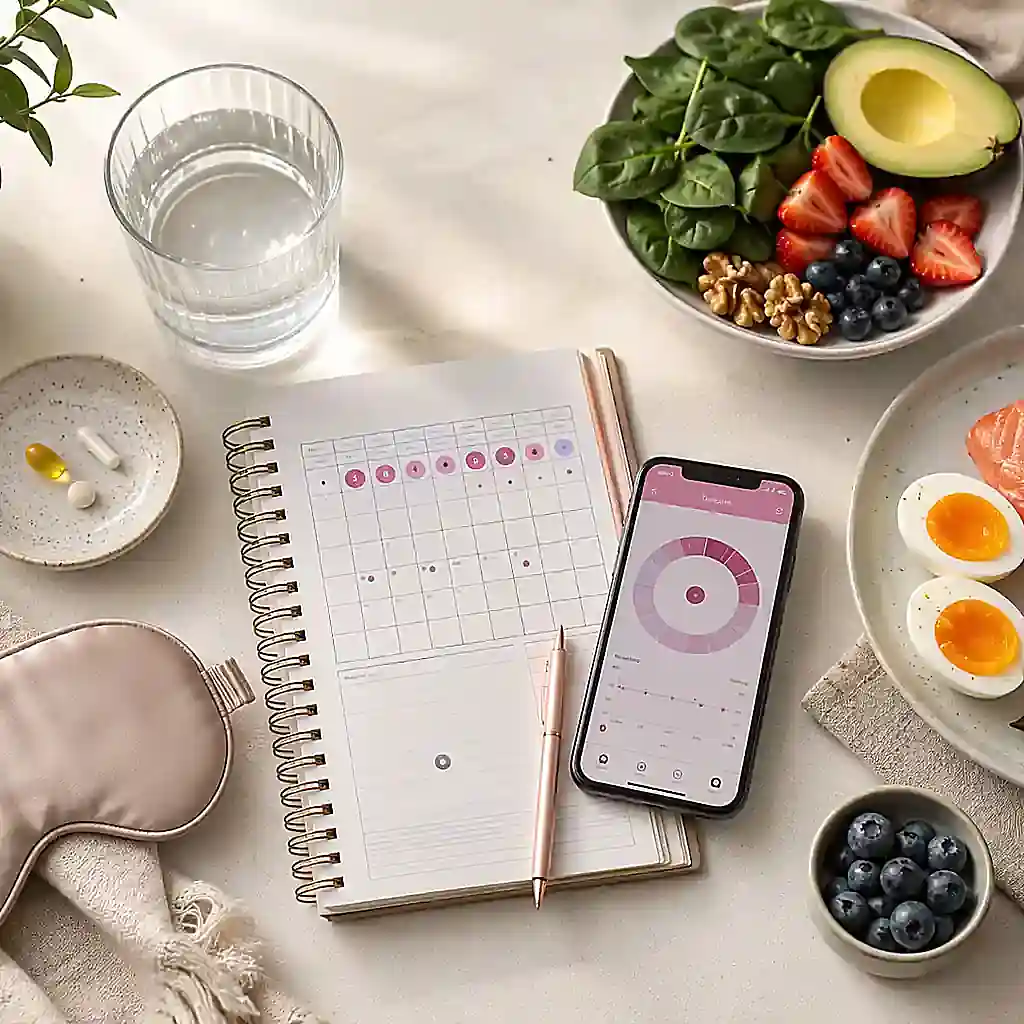
Memory naturally gives extra weight to the hardest days. A daily record is more useful because it captures symptomatic and symptom-light days with the same method. Track every day for at least two complete cycles where it is safe to wait.
Record:
- Bleeding and cycle day
- Mood, irritability, anxiety and hopelessness
- Sleep, appetite and concentration
- Bloating, breast symptoms, headache and pain
- Effects on work, study, relationships, exercise, caregiving and ordinary tasks
- Medicines, illness, alcohol, major stress and disrupted sleep
- Any thoughts of self-harm or inability to stay safe
For personal tracking, a consistent 0–3 scale can make changes easier to see: 0 for absent, 1 for mild, 2 for moderate and 3 for severe. This is a recording method, not a validated diagnostic score. A clinician may recommend a structured instrument such as the Daily Record of Severity of Problems.
| What the record shows | What it may suggest | Useful next question |
|---|---|---|
| Symptoms cluster before both periods, improve after bleeding starts and a clearer interval follows. | A premenstrual disorder is more plausible. | Does the severity and impact fit PMS or PMDD? |
| Symptoms occur through most of the month but become distinctly worse before menstruation. | Premenstrual exacerbation of another condition is possible. | What baseline condition needs treatment as well as the cycle-linked worsening? |
| Pelvic pain or abnormal bleeding dominates the record. | A separate gynaecological cause may need assessment. | Does the history suggest targeted examination, pathology or imaging? |
| No repeatable relationship with cycle timing appears. | PMS or PMDD becomes less certain. | Which other medical or mental-health explanations need review? |
| Suicidal thoughts or inability to stay safe occurs at any point. | This is an immediate safety concern whether or not it is cycle-linked. | What urgent support is needed now? |
How are PMS and PMDD assessed in Australia?
There is no single blood test, scan or hormone threshold that proves PMS or PMDD. A GP reviews cycle timing, symptom severity, functional impact and whether there is a symptom-light interval. Prospective daily ratings across at least two cycles are especially useful when PMDD is suspected.
Tests are chosen when the history suggests another explanation. Depending on your symptoms, a clinician may consider thyroid disease, depression or anxiety, migraine, perimenopause, pregnancy when a period is late, or a separate pelvic-pain condition. Blood tests or imaging are not automatic parts of a PMS diagnosis.
Pelvic examination or imaging becomes more relevant when pain, abnormal bleeding or another clinical finding suggests a gynaecological problem rather than an isolated premenstrual disorder. When pelvic pain is the main concern, see the guide to endometriosis and cyclical pelvic pain.
Bring your diary and a list of medicines, supplements, contraception, pregnancy plans, migraine history and relevant mental-health diagnoses. That gives the GP enough context to decide what needs investigation instead of ordering broad tests without a clinical question.
Which treatments may help PMS and PMDD?
Treatment is individualised according to dominant symptoms, level of impairment, other health conditions, pregnancy plans, contraception needs and previous treatment response. More than one approach may be combined.
| Main situation | Options to discuss | Important limit |
|---|---|---|
| Mild or moderate symptoms | Regular movement, sleep support, stress management, balanced meals, heat and symptom-specific care | Lifestyle support should not be used to dismiss severe symptoms. |
| Prominent mood symptoms or PMDD | CBT and an SSRI when clinically appropriate | Medicine choice, schedule and adverse-effect monitoring need individual prescribing. |
| Contraception is also wanted | A suitable combined hormonal contraceptive may be considered | Migraine, smoking, blood pressure, clot risk and other contraindications need assessment. |
| Pregnancy is being planned | A non-contraceptive strategy and pregnancy-specific medicine review | Do not start, stop or change prescription treatment without the prescriber. |
| Severe symptoms persist despite appropriate care | Specialist review and, in selected cases, ovarian suppression | Irreversible surgery is exceptional and requires specialist assessment. |
Lifestyle support and CBT
Regular physical activity, consistent sleep, balanced meals and stress-management strategies may reduce symptoms for some people and support general wellbeing. Heat can be useful for cramps. The aim is a sustainable plan, not a demanding routine that becomes another source of pressure.
Cognitive behavioural therapy can help reduce distress and functional impact. Therapy does not imply that PMS or PMDD is imagined; it provides practical strategies for responding to a predictable biological and emotional pattern.
SSRIs
Selective serotonin reuptake inhibitors are an evidence-based option for significant emotional symptoms and PMDD. A 2024 Cochrane review found that SSRIs probably reduce overall symptoms while increasing adverse effects such as nausea, reduced energy and sleepiness. Depending on the medicine and clinical plan, treatment may be continuous or limited to the luteal phase.
Current Australian medicine information lists Zoloft (sertraline) as indicated for PMDD. That does not make sertraline appropriate for everyone. Discuss likely benefits, adverse effects, sexual side effects, interactions, pregnancy plans and how response will be measured. Do not start, stop or change an antidepressant without the prescriber.
Hormonal contraception
A combined hormonal contraceptive may help selected people by suppressing ovulation and changing hormonal fluctuation. Suitability depends on migraine history, smoking, blood pressure, clot risk, age, other medical conditions and whether pregnancy is wanted.
Australian product information for Yaz states that it is indicated for PMDD symptoms in women who have chosen oral contraception, that efficacy for PMDD was not assessed beyond three cycles, and that Yaz has not been evaluated for PMS. That is a product-specific boundary, not a recommendation that everyone with PMDD should use this pill.
If you are trying to conceive, hormonal contraception conflicts with that immediate goal. The guide to ovulation and bleeding on hormonal contraceptive pills explains why these cycles cannot be interpreted like untreated ovulatory cycles.
Specialist treatment and supplements
When severe symptoms continue despite appropriate first-line care, specialist treatment may include a gonadotrophin-releasing hormone medicine that suppresses ovarian hormone production and periods. Surgery is not routine treatment and irreversible options require careful specialist assessment.
Calcium, magnesium, vitamin B6, chasteberry and other products are often promoted for PMS, but evidence, doses and product quality vary. Supplements can cause adverse effects or interact with medicines. Ask a GP or pharmacist about the exact ingredient, dose, duration and pregnancy implications before starting one.
PMS, pregnancy and fertility: what symptoms cannot tell you
PMS symptoms overlap with early pregnancy because breast tenderness, bloating, fatigue, appetite change and mood change are non-specific. Symptoms alone cannot tell you whether conception occurred. If a period is late and pregnancy is possible, use a home pregnancy test according to its instructions.
An early negative can be inconclusive. The guide to a late period with a negative pregnancy test explains when retesting or GP review may be useful.
PMS or PMDD is not a fertility test. If conception has not occurred within the usual timeframe, or another fertility concern is already known, see the guide to when to seek fertility assessment in Australia.
When should you see a GP or seek urgent help?
Book a GP review when premenstrual symptoms repeatedly interfere with work, study, relationships, sleep or normal activities; when symptoms remain severe despite reasonable self-care; or when the pattern is unclear because symptoms continue through most of the month. New or significant pelvic pain, abnormal bleeding or another concerning change also deserves assessment on its own merits.
Do not wait for a routine appointment if you have suicidal thoughts, fear you may act on harmful thoughts or cannot stay safe. Call 000 when there is immediate danger. Lifeline is available on 13 11 14 and Suicide Call Back Service on 1300 659 467. In Tasmania, Access Mental Health is available on 1800 332 388 for mental-health support, assessment and referral.
Tell the clinician that symptoms appear cycle-linked, but describe what is happening now. A premenstrual pattern never makes an immediate safety risk less urgent.

Frequently Asked Questions about PMS and PMDD in Australia
Can PMS symptoms change or disappear for one cycle?
Yes. The mix and intensity of symptoms can vary between cycles. One easier month does not rule PMS out, and one unusually difficult month does not establish PMDD without a repeating premenstrual pattern.
Can PMDD and depression or anxiety happen at the same time?
Yes. A person can have depression or anxiety through the month and still become worse premenstrually. A two-cycle diary helps a clinician distinguish PMDD from premenstrual exacerbation of an existing condition.
Are antidepressants only taken every day for PMDD?
Not always. Some SSRIs may be prescribed continuously or during the luteal phase. The medicine, schedule, dose, side-effect review and stopping plan must be individualised by the prescriber.
What if symptoms do not improve after my period starts?
Symptoms that stay at a similar level through most of the month are less typical of a premenstrual disorder. A GP can assess depression, anxiety, migraine, thyroid disease or another condition that may be present throughout the cycle.
Does severe PMS automatically mean PMDD?
No. PMDD requires a specific repeating premenstrual pattern, at least five symptoms including a prominent mood symptom, and marked functional impairment. Severe physical symptoms alone do not automatically establish PMDD.
Can stress cause PMS or PMDD?
Stress can make symptoms harder to manage and may worsen a difficult cycle, but PMS and PMDD are not explained by stress alone. Current guidance points to sensitivity to normal menstrual-cycle hormonal changes.
Next Steps in Australia
If your symptoms seem to follow the same premenstrual pattern each month, start with a simple daily record rather than trying to explain every sensation separately. Record good days as carefully as difficult days so the symptom-light interval is visible.
Book a GP appointment if symptoms are disrupting your life, and take the record with you. Ask whether the pattern fits PMS, PMDD, premenstrual exacerbation or another condition, and what change would count as meaningful improvement once treatment begins.
If mood symptoms become frightening, suicidal or unsafe, do not wait for the diary to be complete. Use urgent mental-health support immediately. The goal of tracking is to shorten the path to appropriate care, not to delay it.
Last reviewed: 2 September 2026
Next scheduled review: September 2027
References
Fertility2Family articles are researched using Australian Government health guidance, professional clinical recommendations and peer-reviewed medical literature. The references below were used to research and medically review this article and provide additional reading for readers who want to explore the evidence in more detail.
Healthdirect Australia. Premenstrual syndrome (PMS)
Australian guidance covering PMS and PMDD symptoms, cycle timing, PMS and PMT terminology, diagnosis, self-care, medicines, supplements, when to see a doctor and urgent suicide-related escalation.
Jean Hailes for Women’s Health. Premenstrual Dysphoric Disorder (PMDD)
Australian guidance defining PMDD severity, symptom timing, five-symptom diagnostic criteria, two-cycle tracking, functional impact and treatment options including SSRIs, CBT and hormonal care.
Jean Hailes for Women’s Health. Premenstrual Syndrome (PMS)
Australian women’s health guidance describing common physical and emotional PMS symptoms, variation between cycles, likely causes, practical management and when symptoms affecting daily life need medical review.
The Royal Women’s Hospital. Premenstrual conditions
Australian hospital guidance describing PMS, PMDD, sensitivity to normal hormonal change, and premenstrual worsening of conditions such as anxiety, depression, migraine and epilepsy.
Obstetrics & Gynecology. Management of Premenstrual Disorders: ACOG Clinical Practice Guideline No. 7
Evidence-based clinical guidance on diagnosing and managing premenstrual disorders using multimodal approaches including psychological, pharmacological, hormonal, exercise, nutritional and specialist treatment options.
Cochrane Database of Systematic Reviews. Selective serotonin reuptake inhibitors for premenstrual syndrome and premenstrual dysphoric disorder
A 2024 systematic review finding that SSRIs probably reduce overall PMS and PMDD symptoms while increasing adverse effects, with continuous and luteal-phase regimens assessed.
Healthdirect Australia. Zoloft
Current Australian medicine information listing sertraline as a prescription treatment indicated for PMDD and advising individual medical or pharmacist review when pregnancy is planned.
Healthdirect Australia. Yaz
Current Australian product information for drospirenone and ethinylestradiol, including its PMDD indication for oral-contraceptive users and explicit limits regarding PMS and treatment-duration evidence.
Pregnancy, Birth and Baby. Ovulation and fertility
Australian guidance on ovulation, the fertile window and urinary LH testing, including the practical limitation that a positive result estimates rather than timestamps ovulation.
Pregnancy, Birth and Baby. Pregnancy tests
Australian guidance on urine and blood pregnancy tests, useful test timing, early negative results, retesting and medical follow-up when a result remains uncertain.
Healthdirect Australia. Mental health crisis support — where to get help
Australian crisis guidance distinguishing immediate danger requiring 000 from urgent assessment and national supports including Lifeline and Suicide Call Back Service.
Department of Health, Tasmania. Access Mental Health Service
Current Tasmanian guidance describing Access Mental Health on 1800 332 388 for mental-health support, assessment and referral, while directing immediate danger to emergency services.