


Had sex after your app’s ovulation day? Pregnancy is still possible, but the answer depends on whether that date was only a prediction or whether egg release was genuinely confirmed. Once released, an egg is usually able to be fertilised for about 12 to 24 hours.
Sex in the five days before ovulation usually gives a better chance because sperm can survive and already be present when the egg appears. Beyond about 24 hours after confirmed release, later intercourse is generally outside the egg’s usual fertilisable window.
Home tracking rarely identifies the exact release hour. Apps forecast, LH tests and cervical mucus signal fertile timing, and basal body temperature looks backwards. That uncertainty is why an app date alone cannot provide a reliable personal percentage.
Quick answers about pregnancy after ovulation
Can you get pregnant after ovulation?
Yes, but mainly while the released egg can still be fertilised, usually about 12 to 24 hours. If the date came from an app or home sign, pregnancy may also be possible because ovulation could have happened later than estimated.
Can an app or positive ovulation test prove sex happened after ovulation?
No. An app forecasts from earlier cycles, a positive urine LH test suggests ovulation may be approaching, and basal body temperature looks backwards. None identifies the exact egg-release hour at home.
What should you do if sex happened after estimated ovulation?
If pregnancy is wanted, note how ovulation was estimated and test from the first day your period is missed. If pregnancy was not intended and unprotected sex was within the last five days, contact a pharmacist or GP promptly about emergency contraception.

How long does an egg survive after ovulation?
Ovulation is the release of a mature egg from an ovary. The egg enters a fallopian tube, where it can meet sperm. Australian consumer guidance commonly describes the egg as remaining able to be fertilised for about 12 to 24 hours after release.
Sperm have a longer window. In favourable cervical mucus, they may remain capable of fertilisation for up to five days. Pregnancy can therefore begin from sex several days before ovulation, even though fertilisation happens only after the egg appears.
Once the egg is no longer viable, later intercourse cannot make it available again. Because sperm can survive longer than the egg, the fertile window can extend across several days before ovulation, even though the post-release opportunity is much shorter.
How many days after ovulation can you get pregnant?
There are two different clocks: the calendar label shown by an app and the time since the egg was actually released. A person who is “one day after ovulation” on an app may still be before release, while someone more than about 24 hours after confirmed release is generally outside the egg’s usual biological window.
| Timing description | Biological interpretation | What makes it uncertain at home |
|---|---|---|
| An app says ovulation was yesterday | Pregnancy may still be possible because the date is a forecast, not proof that release occurred. | The current cycle may ovulate earlier or later than previous cycles. |
| Within about 12 hours after confirmed release | Pregnancy is possible while the egg remains viable. | Home methods rarely prove the release hour closely enough to start an exact countdown. |
| About 12 to 24 hours after confirmed release, including around 18 hours | Fertilisation may still be possible, but the remaining opportunity is narrowing. | “The day after ovulation” may still be less than 24 hours after release. |
| More than about 24 hours after confirmed release | Intercourse is generally outside the egg’s usual fertilisable window. | A pregnancy in the cycle may still reflect sperm from earlier sex or a release time that was not actually confirmed. |
| About 48 hours after confirmed release | Intercourse at this point is not expected to fertilise that egg. | Pregnancy stories labelled “two days after ovulation” usually involve estimated timing or earlier intercourse. |
| Three to seven full days after confirmed release | Intercourse this late is not expected to cause conception from that egg. | The more likely explanation is later-than-estimated ovulation or sperm from sex before release. |
Foundational prospective research followed 221 healthy women who were planning pregnancy and estimated ovulation from urinary hormone changes. Conception occurred only when intercourse took place within a six-day interval ending on the estimated ovulation day; the group estimate ranged from 10% five days before ovulation to 33% on the estimated day itself.
Those figures are population estimates from that selected study, not personal odds and not a dependable percentage for sex after confirmed release. Age, sperm factors, fallopian-tube function, timing uncertainty and chance all affect whether conception occurs.
How certain is your ovulation date?
The key question is what evidence placed ovulation on that date. Each home method observes a different part of the cycle.
Calendar or cycle app: an app predicts from previous cycle dates. It does not observe the current cycle, so sex after the predicted day may still have happened before or around egg release.
First positive urine LH test: a positive result suggests ovulation may be approaching. It does not confirm the exact release time or prove that release occurred.
Fertile-quality cervical mucus: clear, slippery mucus can support fertile timing, but it may be missed, recur or be confused with semen, arousal fluid or lubricant. It cannot timestamp egg release.
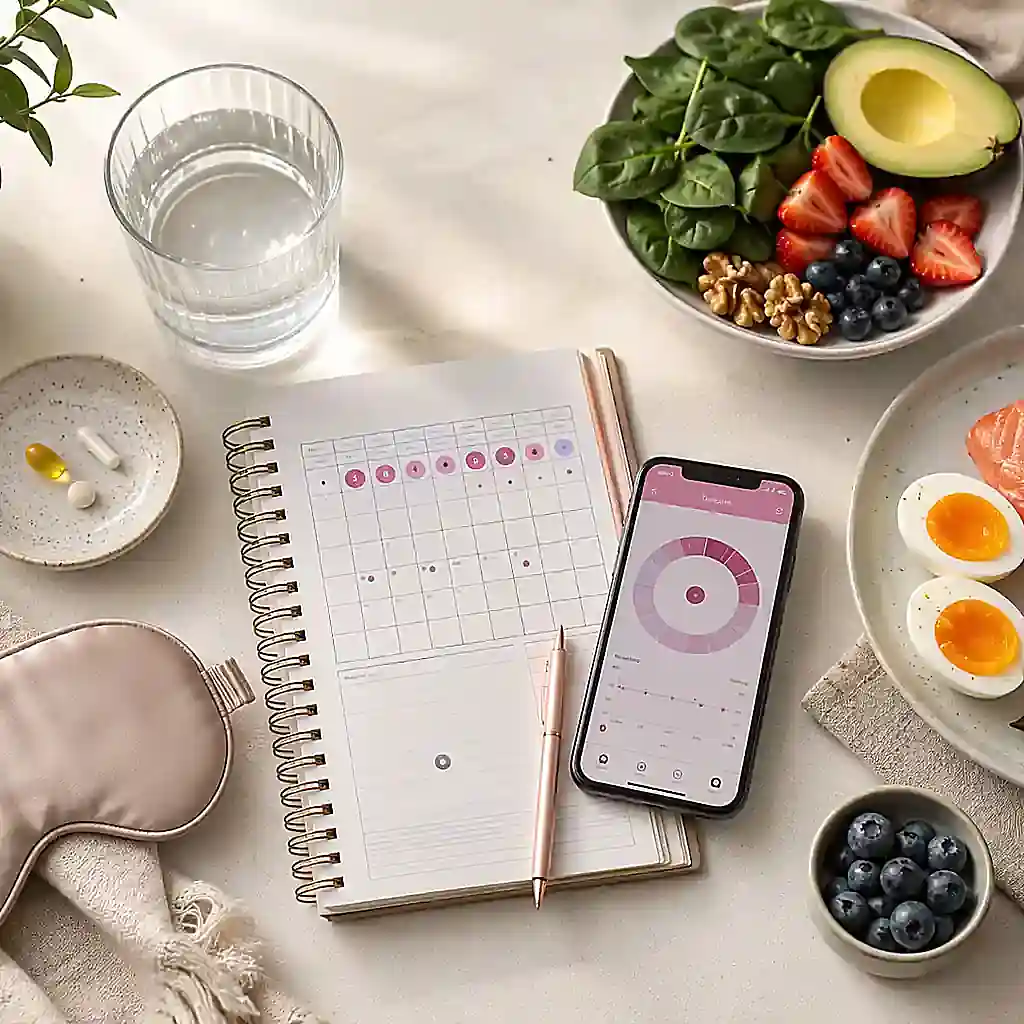
Basal body temperature: a sustained rise is mainly retrospective. Sleep, illness, alcohol and measurement timing can affect individual readings, so the pattern across several mornings matters more than one temperature.
Clinic monitoring: ultrasound, hormone results and trigger timing can narrow the window more than home tracking. In a monitored cycle, the clinic’s intercourse, medicine and pregnancy-testing instructions take priority.
Key interpretation rule: the less certain the ovulation date, the less confidently intercourse can be labelled “after ovulation”.
A 2026 prospective study followed 1,051 women across 12 cycles and found that 96.5% had estimated ovulation timing vary by at least four days across the year. Ovulation was estimated from cervical-mucus and basal-temperature patterns, and comorbidities such as hyperprolactinaemia, obesity and PCOS were not systematically excluded. The study shows that timing can vary; it does not prove an app is wrong by four days in every cycle.
When a predicted fertile window keeps moving, late ovulation can shift both DPO and pregnancy-test timing.
With basal body temperature charting, the sustained pattern across several mornings matters more than one reading because BBT is mainly retrospective.
What does a positive ovulation test mean?
A positive urine LH test detects a hormone rise that usually comes before ovulation. Australian consumer guidance commonly uses the next 24 to 36 hours as a practical guide, but this is not a universal countdown.
A 2022 systematic review found marked variation between LH-surge onset and ovulation, ranging from 22 to 56 hours across included regular ovulatory cycles. The studies used different definitions and were largely concerned with monitored natural cycles, so the result supports uncertainty rather than an exact home-test timestamp.
If a hormone-based timing signal would be more useful than an app alone, ovulation tests can help identify the urinary LH rise. A positive result does not prove the egg has already been released or guarantee pregnancy.
A 2023 Cochrane review found that urine-test-guided timing probably improves pregnancy and live-birth outcomes in women under 40 who had been trying for less than 12 months, while also noting manufacturer funding in several studies and uncertainty across some outcomes. After a positive result, timing sex after an LH surge is about covering the likely fertile window rather than treating the test as an exact release clock.
Why does sex before ovulation usually give the best chance?
Sex before ovulation gives sperm time to move through the cervix and uterus and be present in the fallopian tube when the egg arrives. Waiting until ovulation is believed to be over removes that head start and leaves only the egg’s short remaining lifespan.
Clear, slippery cervical mucus develops around the fertile window and supports sperm movement and survival. Egg-white cervical mucus can add useful timing context, but it does not prove the exact moment ovulation occurred.
Does sex after ovulation affect fertilisation or implantation?
Fertilisation and implantation are separate events. Fertilisation usually occurs in a fallopian tube while the egg is still viable. If development continues, the early embryo divides while travelling towards the uterus, and implantation begins several days later.
Sex after the egg’s fertilisable period cannot make that egg viable again. It also cannot show whether earlier intercourse led to fertilisation. Symptoms, discharge or a later positive test do not identify the exact act of intercourse that caused conception.
Research on intercourse around the estimated implantation window is limited and observational. A 2020 analysis of 2,606 cycles found no adjusted reduction in the chance of conception, but ovulation was estimated and intercourse recording may have been incomplete. The current balance of that evidence does not support routine abstinence solely to protect implantation in an uncomplicated natural cycle; fertility-clinic instructions still take priority.
How often should you have sex around ovulation?
For most couples trying naturally, intercourse every one to two days during the fertile window gives strong timing coverage. Having sex two or three times a week is also likely to cover many fertile windows and may feel easier to sustain.
Twice-daily intercourse is not required. More frequent sex cannot extend the egg’s lifespan or correct an inaccurate ovulation date.
If dryness makes intercourse uncomfortable, a fertility-friendly lubricant may help with comfort when needed, but sperm compatibility should not be turned into a promise of a higher pregnancy rate.
What can you do after sex to improve the chance?
No post-sex routine can reopen the fertile window, extend the egg’s lifespan or force fertilisation or implantation. Record the intercourse date and how ovulation was estimated; if the fertile window may still be open, continue your usual timing plan if comfortable.
If you want one sensible test date, the Pregnancy Test Timing Calculator can place an LH result, likely ovulation date or expected period on one practical timeline. Home tests detect hCG after implantation, not sperm or fertilisation.
For the clearest home result, test from around the first day your period is missed. If you need a home test at that point, pregnancy tests are available in strip and midstream formats; follow the exact instructions and result window for the device you use.
If a fertility clinic has given you a medicine plan or testing date, follow that plan rather than a general DPO guide.

What if pregnancy was not intended?
Do not use an app-predicted “after ovulation” day as contraception. The date may be wrong, and sperm from unprotected sex can survive for several days.
Contact a pharmacist, GP or sexual-health service promptly about emergency contraception. It works best as soon as possible; some emergency-contraception pills can be used up to five days after unprotected sex, and a copper IUD may also be an option for suitable people. A health professional can help choose the safest option for your timing, medicines and health history.
They can also advise when to take a pregnancy test, whether STI testing is relevant and what ongoing contraception may suit you.
When should you seek fertility advice in Australia?
One cycle with uncertain timing does not diagnose a fertility problem. Consider a GP review sooner if periods are very irregular or absent, ovulation remains difficult to identify, intercourse is painful, pelvic pain is significant, or there are known endometriosis, tubal, pelvic-infection or semen concerns.
Healthdirect advises seeing a doctor after 12 months of trying if you are 35 years or younger, or after six months if you are 36 years or older. Earlier assessment is reasonable when a known factor may reduce fertility or your clinician has advised it.
If you reach that point, fertility specialist assessment in Australia usually begins with a GP review and initial investigations before referral when needed.
Frequently Asked Questions about pregnancy after ovulation in Australia
Can one episode of unprotected sex after estimated ovulation cause pregnancy?
Yes, if the egg was still viable or ovulation happened later than estimated. One episode can be enough for pregnancy, but an app date alone cannot provide a reliable personal risk percentage.
Is unprotected sex safe after an app says ovulation is over?
Do not use an app-predicted ovulation day as a guaranteed non-fertile day. Apps forecast rather than confirm egg release, so use reliable contraception if pregnancy is not wanted.
Can a pregnancy test tell which day conception happened?
No. A home pregnancy test detects hCG after implantation. It cannot identify the exact day fertilisation occurred or determine which episode of intercourse caused a pregnancy.
Does ovulation cramping prove the egg was just released?
No. Mild pelvic cramping can occur around ovulation, but symptoms do not reliably identify the exact release time. Use cramping as context rather than an ovulation timestamp.
Do you need to lie down after sex to improve the chance of pregnancy?
No. Specific sexual positions, raised legs and prolonged post-sex rest have not been shown to improve natural conception. Some fluid leaving the vagina afterwards is normal.
Should you stop having sex during the two-week wait?
Routine abstinence is not recommended solely to protect implantation in an uncomplicated natural cycle. Evidence is limited and observational, and instructions from a fertility clinic or treating clinician take priority.
Next Steps in Australia
If pregnancy is wanted, aim to cover the days before and around likely ovulation rather than waiting for one perfect post-ovulation hour. Use a positive LH result as a signal that ovulation may be approaching and use temperature mainly to look back at the cycle.
If sex happened only after an estimated date, choose one meaningful pregnancy-test day instead of trying to calculate a personal percentage from the calendar. If pregnancy was not intended, seek time-sensitive emergency-contraception advice promptly rather than relying on the app.
If timing remains unclear across several cycles, or you have reached the Australian timeframe for fertility assessment, take your cycle dates, LH results, temperature pattern, medicines and relevant health history to your GP.
Last reviewed: 4 September 2026
Next scheduled review: September 2027
References
Fertility2Family articles are researched using Australian Government health guidance, professional clinical recommendations and peer-reviewed medical literature. The references below were used to research and fact-check this article and provide additional reading for readers who want to explore the evidence in more detail.
Pregnancy, Birth and Baby. Ovulation and fertility
Australian consumer guidance explaining the five days before ovulation, sperm survival, the egg’s 12-to-24-hour lifespan, home tracking methods and when pregnancy becomes unlikely after release.
Better Health Channel. Ovulation and fertility
Victorian Government guidance covering the fertile window, egg survival after release, cervical mucus, basal body temperature and the practical meaning of a positive ovulation predictor result.
Healthdirect Australia. Fertility awareness (natural family planning)
Australian guidance on calendar, cervical-mucus and temperature fertility-awareness methods, including why cycle predictions can be imprecise and should not be treated as guaranteed contraception.
Human Reproduction. Variations in ovulation time and menstrual cycle characteristics: analysis of a prospective long-term cohort study
Prospective 2026 research following 1,051 women across 12 cycles, documenting substantial within-person variation in estimated ovulation timing and important symptothermal-method and comorbidity limitations.
Human Reproduction Update. The LH surge and ovulation re-visited: a systematic review and meta-analysis and implications for true natural cycle frozen thawed embryo transfer
Systematic review and meta-analysis showing varied LH-surge definitions and a 22-to-56-hour interval between surge onset and ovulation across included regular ovulatory cycles.
New England Journal of Medicine. Timing of sexual intercourse in relation to ovulation. Effects on the probability of conception, survival of the pregnancy, and sex of the baby
Foundational prospective research in 221 healthy women estimating day-specific conception probabilities and finding conception only within a six-day interval ending on the estimated ovulation day.
Cochrane. Timed intercourse for couples trying to conceive
A 2023 systematic review of randomised trials evaluating timed intercourse with urinary ovulation detection, including pregnancy and live-birth outcomes, evidence certainty and possible bias.
American Society for Reproductive Medicine. Optimizing natural fertility: a committee opinion (2022)
Professional reproductive-medicine guidance defining the six-day fertile window, intercourse frequency, limits of app prediction and the lack of evidence for special positions or postcoital routines.
The Royal Women’s Hospital. Ovulation and conception
Australian hospital guidance describing sperm survival, fertilisation in the fallopian tube and the embryo’s several-day journey towards the uterus before implantation.
Human Reproduction. Peri-implantation intercourse does not lower fecundability
Prospective observational analysis of 2,606 cycles finding no adjusted reduction in the chance of conception with peri-implantation intercourse, while noting estimated timing and recording limitations.
Healthdirect Australia. Planning for your pregnancy
Australian preconception guidance covering intercourse around ovulation, practical preparation and when to seek medical advice after trying without pregnancy according to age.
Healthdirect Australia. Human chorionic gonadotropin (hCG) test – pregnancy
Australian guidance explaining urine and blood hCG testing, usefulness around the first missed period, early false-negative results and when medical confirmation may be appropriate.
Healthdirect Australia. ‘Morning after’ pill (emergency contraception pill)
Australian guidance on emergency-contraception pills, prompt pharmacy access, time limits after unprotected sex, factors affecting choice and the copper IUD as another option.