
When should I take a pregnancy test?
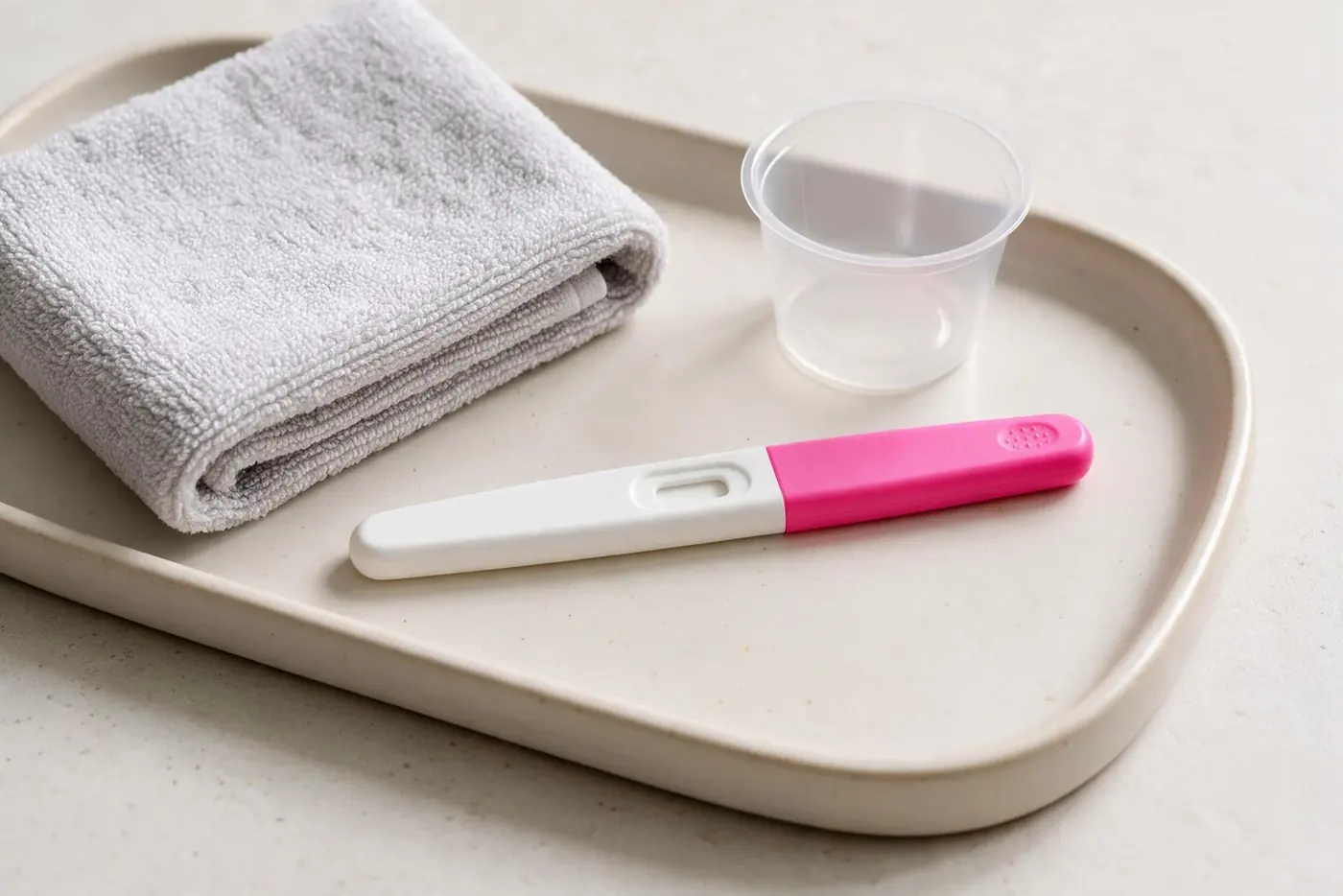
For the clearest home result, test from the first day your period is missed. Earlier is possible, but an early negative may only mean hCG is still below the test threshold.
Pregnancy Test Timing Calculator
Your testing plan
Your pregnancy test timing result
Your next useful date
Next:
Your next three steps
Use the result without second-guessing the process
- Use the testing date shown above.
- Use first morning urine when testing early.
- Read the result at 5 minutes.
Why did the calculator choose this result?
Use the right next resource
Symptoms need separate advice
Pain or bleeding can need assessment regardless of a home test result. Seek prompt advice for new or worsening one-sided pain, heavy bleeding, shoulder-tip pain, dizziness or fainting.
Call healthdirect on 1800 022 222 if you are unsure how quickly to seek care. Call 000 for severe symptoms, collapse or an emergency.
Use this calculator when you need a testing or retesting date.
Everything behind the result
 How this tool worksWhy timing changes the meaning of a negative result
How this tool works
Why timing changes the meaning of a negative result
A home test detects hCG in urine. Testing very early can return a negative before enough hCG is present.
The calculator separates an early negative from a negative taken around or after your expected period, using clear calendar rules and keeping uncertain ovulation timing as a range.

The full data tableEvery row this tool reads from.

What a pregnancy test result means at each day past ovulation
The stage verdict this calculator returns for each DPO, using a 25 mIU/mL test.
| Day past ovulation | Can a test detect hCG yet | What a negative result rules out |
|---|---|---|
| 6 DPO | No, implantation may not have happened | Nothing |
| 7 DPO | No, implantation may not have happened | Nothing |
| 8 DPO | No, implantation may not have happened | Nothing |
| 9 DPO | Only if implantation was early | Very little |
| 10 DPO | Only if implantation was early | Very little |
| 11 DPO | Only if implantation was early | Very little |
| 12 DPO | Often, if implantation was around day 8 to 10 | Some, but not enough to be confident |
| 13 DPO | Often, if implantation was around day 8 to 10 | Some, but not enough to be confident |
| 14 DPO | Usually, for most pregnancies | Most, but repeat in 48 hours if your period has not come |
| 15 DPO | Usually, for most pregnancies | Most, but repeat in 48 hours if your period has not come |
| 16 DPO | Yes, for almost all pregnancies | Most. If your period is late with repeated negatives, see your GP |
| 17 DPO | Yes, for almost all pregnancies | Most. If your period is late with repeated negatives, see your GP |
| 18 DPO | Yes, for almost all pregnancies | Most. If your period is late with repeated negatives, see your GP |
Around 90% of pregnancies have implanted by the first day of the expected period and 97% by seven days later (Wilcox 2001, JAMA 2001;286:1759-61). Even on that first day, roughly one in four can still test negative with a real kit. Test format, sensitivity and urine concentration all change the result, so follow the instructions supplied with your test.
Test instructionsFertility2Family, or the instructions with your own pack.

Test instructions
Timing and reading rules come from the instructions supplied with the test you are using.
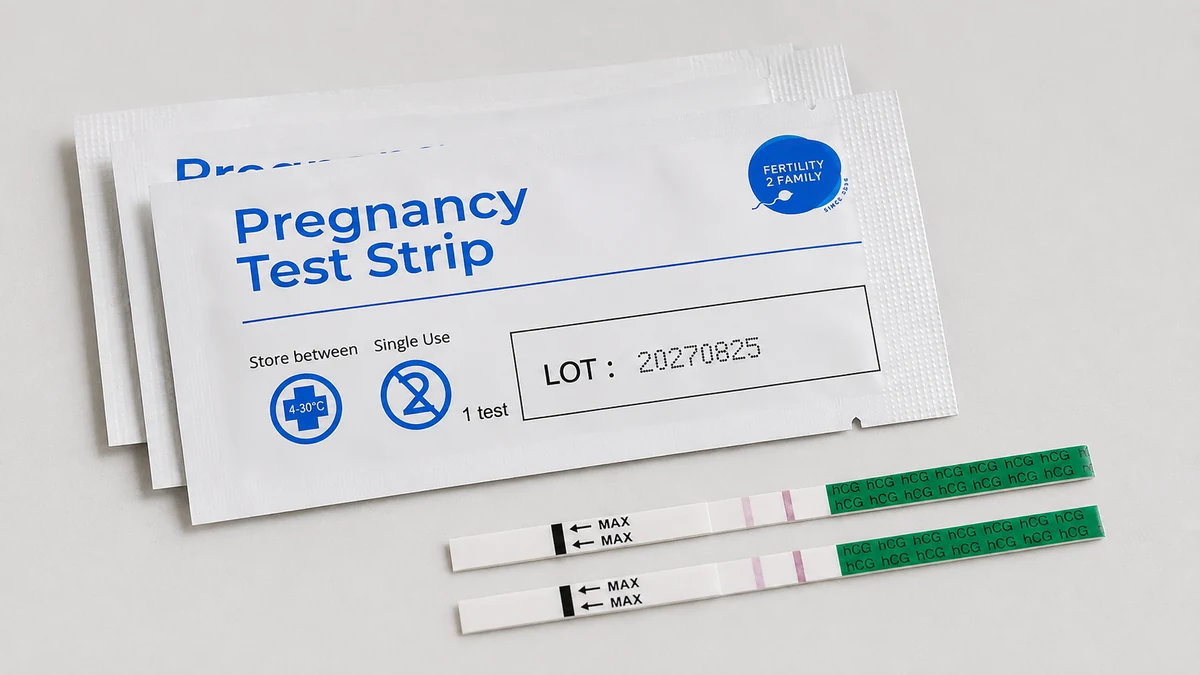
- Read the result at 5 minutes.
- A mark appearing after 10 minutes does not count.
- Follow the instruction sheet supplied with the pack.

- Read the result at 5 minutes.
- A mark appearing after 10 minutes does not count.
- Follow the instruction sheet supplied with the pack.
Use the instruction sheet that came with that product. Reading times differ between brands, so the timings above do not apply.
The full referenceEverything this tool draws on, in detail.Show the detail
A clearer home testing plan
Know when to test, when to wait and when to repeat
Start with the cycle date you know best. The calculator converts that clue into a DPO range, expected-period estimate and one practical next action.
Quick answers
What your pregnancy test timing result means
Clearest timing
Test from the first missed day
You can test earlier, but an early negative may only mean urine hCG is still below the detection threshold.
Early negative
Keep one retest date
Follow your test instructions for repeat timing. For a negative Fertility2Family test after a missed period, the strip instructions says 48 hours and the midstream instructions says 48 to 72 hours.
Fertility2Family tests
Read at 5 minutes
Our strip and midstream instructions state a 25 mIU/mL threshold, a 5 minute read and no interpretation after 10 minutes.
Treatment cycle
Use your clinic date
An hCG trigger can affect a home result, so the clinic testing plan takes priority.
Understanding the result
Why timing changes the meaning of a negative result
A home pregnancy test detects hCG in urine. Testing very early can produce a negative result before enough hCG is present to cross the test threshold. The calculator therefore separates an early negative from a negative result taken around or after the expected period.
How the calculator handles uncertain ovulation timing
This tool shows an entered ovulation date with one day either side as a timing estimate. A positive LH test produces a wider estimate because the interval from the LH rise to ovulation varies. A sustained BBT rise is retrospective, while an expected-period date depends on the luteal length entered.
Use a home result as one part of the next step
A positive home result indicates that hCG was detected, but it cannot show pregnancy location, progression or viability. An invalid test needs a new device. A grey or colourless mark is not a clear positive. A mark appearing after the reading cutoff is not a valid result.
Australian evidence and resources
These sources provide general Australian or product context. They do not replace advice from a qualified clinician.
- hCG test
Healthdirect Australia Urine and blood hCG testing, early testing, sample dilution and following the exact test instructions.
- hCG levels
Healthdirect Australia The timing limits of hCG detection and why an early result may not settle a pregnancy question.
- Fertility awareness and natural family planning
Healthdirect Australia The limits of cycle, temperature and cervical-mucus observations, including disturbance factors.
- Pregnancy-test strip instructions (PDF)
Fertility2Family product instructions Use the supplied instructions for the exact strip collection, reading window and product limitations.
- Pregnancy-test midstream instructions (PDF)
Fertility2Family product instructions Use the supplied instructions for the exact midstream collection, reading window and product limitations.
Frequently asked questions
- When is the best time to take a pregnancy test after ovulation?
- From the first day your period is missed. An early negative may be too soon. Follow your test instructions for when to repeat.
- Why does the calculator show a DPO range?
- LH, BBT and expected-period dates estimate ovulation differently. A range is more honest than one exact day.
- How can I use it without an ovulation date?
- Choose your expected period date and 14 days for luteal length. The result is broader because it works backwards.
- Can an hCG trigger injection affect a pregnancy test?
- Yes. Follow the testing date supplied by your fertility clinic for that cycle.



Australian evidence and resourcesShow sources
This is an educational timing aid, not a diagnosis.
Sources: Healthdirect Australia · Therapeutic Goods Administration · Fertility2Family
Early testing, sample dilution and following the exact test instructions.healthdirect.gov.au ↗
The timing limits of detection and why an early result may not settle the question.healthdirect.gov.au ↗
Warning symptoms and when urgent assessment or triple zero is needed.healthdirect.gov.au ↗
hCG cross-reactivity and treatment-cycle interpretation limits.tga.gov.au ↗
Collection, reading window and product limits for strips.PDF ↗
Collection, reading window and product limits for midstream tests.PDF ↗