
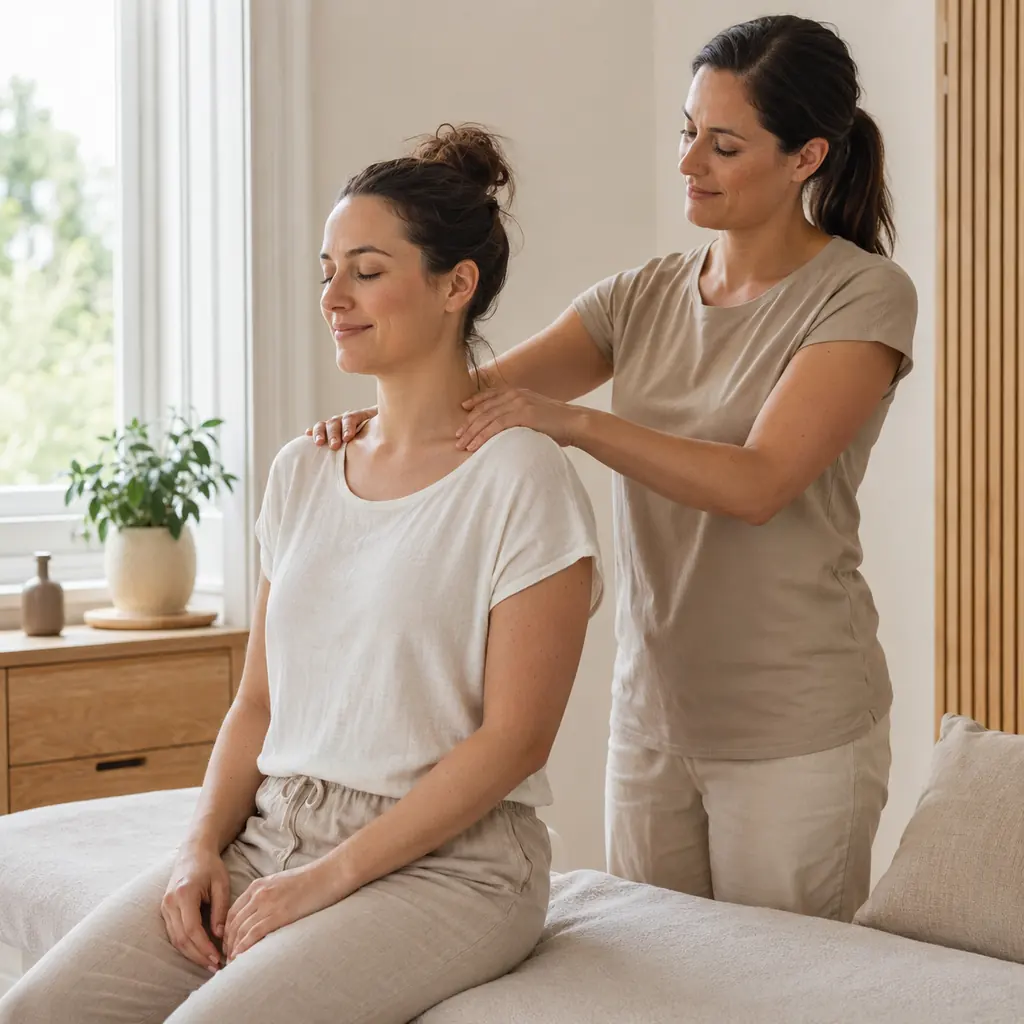

People searching for fertility massage, conception massage or massage to help get pregnant are often looking for something practical they can do. A calm, respectful massage may help the body feel less tense, but that is different from treating infertility. No credible technique can manually open fallopian tubes, move the uterus into a fertile position, clear endometriosis, remove adhesions or make an embryo implant. A strong decision starts by separating comfort claims from pregnancy-outcome claims.
Quick answers about fertility massage
Can fertility massage increase the chance of pregnancy?
There is no reliable evidence that massage increases ovulation, implantation, clinical pregnancy or live birth. It may help some people relax or manage muscle discomfort, which is a wellbeing benefit rather than a fertility treatment.
Can abdominal massage unblock fallopian tubes or remove adhesions?
No. Manual pressure cannot diagnose or reopen blocked fallopian tubes, remove intrauterine adhesions or treat endometriosis. Those conditions require appropriate clinical assessment and, when indicated, medical or surgical management.
Is massage safe during IVF or pregnancy?
Safety depends on timing, symptoms, treatment and technique. Ask the fertility clinic before deep abdominal work during ovarian stimulation or after egg collection. During pregnancy, use a suitably trained therapist and check with the maternity team.
What is fertility massage?
Fertility massage is not a standardised medical treatment. The term can describe abdominal, pelvic, lower-back or general relaxation massage marketed to people who are trying to conceive. Techniques, pressure and practitioner training vary, so evidence about one approach cannot automatically be applied to every treatment sold as fertility massage.
Terms such as fertility-enhancing massage, womb massage, uterine massage and ovary massage can sound clinical, but they are not validated diagnostic or fertility-treatment procedures. A practitioner cannot determine whether ovulation occurred, whether a tube is open or whether the uterine cavity is normal by feeling the abdomen.
What are the realistic benefits of fertility massage?
Massage can provide temporary relief from muscle tension, support relaxation and create a pause from the procedures and uncertainty of fertility care. Those outcomes can matter. Infertility and treatment can be physically and emotionally demanding, and a therapy does not need to increase pregnancy rates to be personally worthwhile.
The honest outcome should be named: feeling calmer, sleeping better, easing back or shoulder tension, or having supportive touch. If a practitioner uses those goals and does not overstate the evidence, massage can sit alongside, rather than compete with, medical care.
| Claim | What the evidence supports | Safer interpretation |
|---|---|---|
| Improves blood flow to the reproductive organs | Massage can affect local skin and muscle circulation, but that does not demonstrate improved implantation, pregnancy or live birth. | Treat warmth or relaxation as a comfort effect, not proof of reproductive change. |
| Unblocks fallopian tubes | No manual technique can confirm or reopen a blocked tube. | Tubal patency requires appropriate clinical testing, and treatment depends on the cause. |
| Breaks down scar tissue or adhesions | External pressure cannot diagnose or remove intrauterine or pelvic adhesions. | Use the clinical pathway for adhesions when symptoms or history justify it. |
| Balances fertility hormones | No validated evidence shows that massage corrects a hormone disorder. | Use targeted clinical assessment when symptoms suggest an ovulatory, thyroid or prolactin problem. |
| Helps implantation | No reliable live-birth evidence supports this claim. | Follow the fertility clinic’s treatment and post-procedure instructions. |
Does fertility massage really work? How to judge the evidence
A claim that massage improves fertility should be tested against a reproductive outcome, not only a short-term sensation or body response. Feeling warmer, calmer or less sore may be genuine, but it does not show that ovulation occurred, a fallopian tube opened, the endometrium became more receptive or the chance of live birth increased. Strong evidence would require a clearly defined technique, an appropriate comparison group, transparent reporting of harms and outcomes such as clinical pregnancy and live birth.
Before choosing a herbal tea, read the evidence behind fertility tea claims.
This distinction matters because fertility language can make indirect findings sound more important than they are. Changes in skin temperature, local circulation, stress scores or pain are not interchangeable with conception. Implantation, clinical pregnancy, ongoing pregnancy and live birth are also different outcomes. When reading clinic or practitioner claims, compare them with how IVF success rates are reported in Australia and check whether the claim measures the outcome that matters to you. Testimonials cannot establish cause because pregnancy may occur during the same period for many other reasons.
What about the IVF study that reported better outcomes?
One 2015 retrospective observational study compared people who chose a 30-minute oscillating-vibration relaxation treatment before frozen blastocyst transfer with a control group and reported higher pregnancy and birth rates. It was not a randomised trial, participants selected whether to receive the treatment, and it tested a specific vibrating-mattress intervention rather than abdominal fertility massage. The study cannot establish that massage caused the difference or that its result applies to natural conception, fresh transfers or other massage techniques. Later embryo-transfer guidance has not accepted massage as an intervention proven to improve pregnancy outcomes.
Why blocked tubes and adhesions need real testing
Fallopian tubes are internal structures that cannot be assessed by abdominal feel. A blockage may relate to previous infection, surgery, endometriosis or another cause. Hysterosalpingography, hystero-contrast sonography or laparoscopy may be considered depending on the history. The correct test matters because a false assumption about tight tissue can delay appropriate investigation, including assessment of factors associated with ectopic pregnancy.
Intrauterine adhesions are inside the uterine cavity. Hysteroscopy is commonly used to diagnose and treat them in selected cases. Deep abdominal massage cannot reach or remove this tissue. When adhesions are suspected, symptoms and treatment of pelvic adhesions need a clinical pathway rather than manual pressure.
Massage does not diagnose a hormone problem
Cycle changes can reflect PCOS, thyroid disease, high prolactin, hypothalamic disruption, perimenopause, medicines or normal variation. A practitioner cannot diagnose low progesterone, oestrogen dominance or a short luteal phase by pressing the abdomen. The evidence-based approach to a repeatedly short interval is outlined in short luteal-phase assessment and treatment.
Likewise, feeling warmth, tingling, emotional release or temporary soreness after massage does not show that hormones changed or toxins were released. Those explanations may sound persuasive because they give an immediate meaning to a sensation, but they are not a substitute for clinical evidence.
Massage during IVF: ovarian stimulation and after egg collection
Ovaries can enlarge during IVF stimulation, and discomfort or bloating may occur. Deep abdominal pressure, vigorous twisting or techniques marketed as moving the ovaries should not be used without specific approval from the fertility clinic. Tell the therapist that stimulation or egg collection is underway and follow the clinic’s procedure-specific instructions.
Rapidly worsening abdominal distension, severe pain, vomiting, breathlessness, reduced urine or sudden weight change after stimulation needs clinic or urgent medical assessment because ovarian hyperstimulation syndrome and other complications cannot be massaged away. Comfort care should never delay the clinic’s emergency instructions.
Massage while trying to conceive, during the two-week wait and early pregnancy
Gentle everyday movement is not considered capable of dislodging an embryo. A clinic may still give procedure-specific restrictions, and a massage therapist should not apply deep abdominal pressure or promise to secure implantation. Follow the clinic’s written advice rather than an online ritual.
Once pregnancy is confirmed, use a practitioner trained in pregnancy massage, check with the maternity clinician and adapt positioning and pressure. Australian pregnancy guidance advises gentle techniques, avoiding abdominal massage and taking care with positioning and leg massage. Bleeding, pain, dizziness or other warning symptoms require medical advice first.
Choosing a practitioner without buying a promise
- Ask what recognised qualification, professional-association membership and fertility- or pregnancy-specific training the practitioner has.
- Ask what outcome they claim and whether they distinguish relaxation from pregnancy or live birth.
- Do not accept advice to stop medicines, postpone investigations or ignore clinic instructions.
- Avoid painful deep abdominal work, bruising, internal techniques without a clear professional scope, or claims that discomfort means scar tissue is breaking.
- Request the full price before purchasing a package and make sure declining extra sessions does not affect respectful care.
A responsible practitioner is comfortable saying what massage cannot do. They will refer pain, abnormal bleeding, infection symptoms or fertility questions to an appropriate clinician and will adapt or postpone treatment when pregnancy or fertility procedures change the risk.
Can self fertility massage at home help you conceive?
Searches for fertility massage at home, self fertility massage, womb massage and uterine massage often lead to step-by-step routines. There is no clinically validated cycle day, abdominal sequence or pressure point shown to improve ovulation, implantation, pregnancy or live birth. Gentle touch for comfort is different from repeatedly pressing a painful, bloated or recently treated abdomen.
Stop if self-massage causes pain, dizziness, bleeding, nausea or worsening symptoms. Do not accept soreness as proof that scar tissue, toxins or blocked energy are being released. Massage therapists in Australia are not legally required to hold formal qualifications, so ask about recognised training, professional-association membership, insurance, informed consent and experience adapting care around fertility treatment.
Seek advice before abdominal or deep-tissue massage if you are using ovarian-stimulation medicines, have recently had egg collection or pelvic surgery, may be pregnant, bruise or bleed easily, or have a history of blood clots. Do not allow massage to delay fertility assessment. People under 35 are generally advised to seek help after 12 months of regular unprotected sex without pregnancy, while people aged 35 or older should usually seek advice after 6 months. Assessment may be appropriate earlier when periods are absent or irregular, pelvic pain is significant, or a known fertility risk is present.
When massage is not the next step
Persistent pelvic pain, pain with sex, heavy or irregular bleeding, fever, urinary or bowel symptoms, a positive pregnancy test with pain, or difficulty conceiving within the recommended timeframe needs clinical assessment. Endometriosis and ovulation pain require a symptom- and imaging-based assessment because cycle timing alone cannot establish the cause.
If the main need is emotional support, ask about fertility counselling, psychology, peer support or the clinic’s counselling service. Choosing support is not admitting that stress caused infertility. It is recognising that the process deserves care.

Frequently Asked Questions about fertility massage in Australia
Does fertility massage balance hormones?
There is no validated evidence that massage corrects FSH, LH, progesterone, oestradiol, thyroid or prolactin disorders. Hormone concerns should be investigated with history, examination and targeted tests.
Can massage cause ovulation or implantation?
No massage technique can reliably trigger ovulation or make an embryo implant. Ovulation induction and embryo-transfer support are medical treatment decisions.
Can massage help stress during fertility treatment?
It may help relaxation, sleep or temporary muscle tension for some people. Psychological support, counselling and evidence-based stress-management options can also help without suggesting that stress caused infertility.
Should I avoid massage during the two-week wait?
Gentle non-abdominal massage may be acceptable for many people, but follow the fertility clinic’s instructions after procedures. Avoid a therapist who claims that pressure can secure implantation or diagnose pregnancy.
What are warning signs of a poor-quality fertility-massage claim?
Be cautious about guarantees, pressure to buy packages, claims to clear tubes or scar tissue, advice to stop medical treatment, or statements that pain proves the therapy is working.
When should pelvic pain be assessed instead of massaged?
Seek assessment for persistent or severe pain, pain with sex, heavy bleeding, fever, vomiting, a positive pregnancy test with pain, or symptoms affecting daily life. Massage should not delay diagnosis.
Next Steps in Australia
Decide what you want from the session in one sentence: relaxation, shoulder-tension relief or general wellbeing. Tell the practitioner about IVF medicines, egg collection, pregnancy possibility, pain, bleeding and other health conditions. Stop if the technique is painful or the explanation becomes diagnostic or coercive.
If you choose massage for comfort, continue your fertility assessment and treatment discussions, and consider when to see a fertility specialist in Australia.
Last reviewed: 1 August 2026
Next scheduled review: August 2027
References
Fertility2Family articles are researched using Australian Government health guidance, professional clinical recommendations and peer-reviewed medical literature. The references below were used to research and medically review this article and provide additional reading for readers who want to explore the evidence in more detail.
You can read how we research, write and check our health information in our editorial and medical review policy, and see who reviews our articles and their clinical credentials.
Healthdirect Australia. Massage therapy guide
Australian Government-funded guidance covering massage benefits, limitations, risks, contraindications, informed consent and the absence of mandatory formal qualifications for Australian massage therapists.
Pregnancy, Birth and Baby / Healthdirect Australia. Pregnancy massage
Australian Government-funded pregnancy guidance covering gentle technique, safe positioning, abdominal and leg precautions, practitioner training and checking suitability with a doctor or midwife.
Pregnancy, Birth and Baby / Healthdirect Australia. All about in vitro fertilisation (IVF)
Australian Government-funded information explaining ovarian stimulation, egg collection, embryo transfer, IVF risks, ovarian hyperstimulation syndrome and the role of clinic-specific medical advice.
Victorian Assisted Reproductive Treatment Authority. Suspecting infertility
Australian fertility information covering causes of infertility, emotional effects, GP assessment and the usual 12-month or 6-month thresholds for seeking professional help.
Monash University. Australian Evidence-based Guideline for unexplained infertility: ADAPTE process from the ESHRE Evidence-Based Guideline on unexplained infertility 2024
NHMRC-approved Australian guidance covering infertility diagnosis, ovulation, tubal patency, uterine factors, standard investigations, evidence quality and treatment pathways for unexplained infertility.
Royal Australian and New Zealand College of Obstetricians and Gynaecologists. Asherman Syndrome
Australian specialist-college information explaining intrauterine adhesions, possible symptoms, diagnostic assessment and hysteroscopic surgery used to view and remove scar tissue.
Healthdirect Australia. Persistent pelvic pain
Australian Government-funded information covering persistent pelvic pain symptoms, possible contributors, clinical diagnosis, multidisciplinary management and circumstances in which medical assessment is appropriate.
JAMA Network Open. Use of Massage Therapy for Pain, 2018-2023: A Systematic Review
Systematic review evaluating massage for pain across recent evidence reviews and finding that certainty, effect size and clinical applicability vary substantially between conditions.
Journal of Clinical Medicine. Effects, Side Effects and Contraindications of Relaxation Massage during Pregnancy: A Systematic Review of Randomized Controlled Trials
Systematic review of randomised trials examining benefits, adverse effects and contraindications of relaxation massage during pregnancy, including positioning and pregnancy-specific safety considerations.
Human Reproduction Update. Efficacy of psychological interventions for mental health and pregnancy rates among individuals with infertility: a systematic review and meta-analysis
Systematic review and meta-analysis of randomised trials separating effects on infertility-related distress and wellbeing from the lower-certainty evidence concerning pregnancy outcomes.
Human Reproduction. Good practice recommendations on add-ons in reproductive medicine
Evidence-based good-practice recommendations for fertility add-ons, including assessment of efficacy, safety, uncertainty, cost, informed consent and claims involving pregnancy or live birth.
Human Reproduction Open. Evidence and consensus on technical aspects of embryo transfer
Review and consensus document on embryo-transfer technique reporting that massage and several other adjuncts have not demonstrated a beneficial effect on pregnancy outcomes.
Alternative Therapies in Health and Medicine. Massage Therapy Improves In Vitro Fertilization Outcome in Patients Undergoing Blastocyst Transfer in a Cryo-Cycle
Retrospective observational study of a self-selected oscillating-vibration intervention before frozen blastocyst transfer, providing limited hypothesis-generating evidence rather than proof of a causal benefit.
International Journal of Therapeutic Massage & Bodywork. Fertility Massage: an Unethical Practice?
Peer-reviewed Australian-authored commentary examining unsupported fertility-massage advertising, the absence of direct outcome evidence and ethical concerns about claims made to people experiencing infertility.