On this page
A dark stain when you were expecting a period, or when you were not expecting any bleeding, can leave you unsure what to do. Black or very dark brown vaginal discharge is often older blood mixed with vaginal fluid, especially around a period. A small amount as your usual period begins or ends can be normal. A new or recurring pattern needs more context.
The important clues are the timing, amount, pregnancy possibility and any pain, unusual smell or irritation. You do not need to identify the cause yourself before asking for help. This guide separates familiar period spotting from changes that need a pregnancy test, a GP appointment or more urgent care.
Quick answers about black discharge
What does black discharge usually mean?
It often means a small amount of older blood has darkened before leaving the body. This can happen around a period. Hormonal bleeding, cervical changes, infection or pregnancy-related bleeding are other possibilities, particularly when the discharge is new or keeps returning.
Can black discharge tell me whether I am pregnant?
No. Its appearance cannot confirm pregnancy, implantation or miscarriage. Use an appropriately timed pregnancy test when pregnancy is possible. An early negative may be inconclusive, and a positive home test cannot show where a pregnancy is located or explain the bleeding.
When does black discharge need urgent care?
Possible pregnancy with one-sided pelvic pain, shoulder-tip pain or dizziness needs urgent assessment. A retained tampon with fever or a rash also needs emergency care. Call 000 for severe pain, very heavy bleeding, fainting, collapse, confusion or breathing difficulty.

How soon should you seek help for black discharge?
| What is happening | What to do |
|---|---|
| Pregnancy is possible and you have one-sided pelvic or abdominal pain, shoulder-tip pain, dizziness or concerning bleeding | Seek urgent medical assessment. Call 000 for severe pain, very heavy bleeding, fainting or collapse. |
| A retained tampon or other vaginal object is accompanied by fever, rash, dizziness, confusion, breathing difficulty or rapidly worsening illness | Seek emergency care. If a fragile object breaks inside the vagina, do not try to remove the pieces yourself and go to the nearest emergency department. |
| You have bleeding during pregnancy, new or worsening pelvic pain with unusual discharge, fever, or a tampon you cannot remove easily | Contact your GP, maternity team, sexual health service or another appropriate health service promptly. Use emergency care if symptoms are severe. |
| You have unexplained bleeding between periods, after sex or after menopause, or persistent discharge with itching, burning or an unusual smell | Book a GP or sexual health appointment for assessment. |
| You notice a small amount of dark blood with your usual period, feel well and pregnancy is not a concern | Monitoring may be reasonable if it settles with the period. Arrange review if it persists, recurs or starts happening differently. |
Flooding through clothing or needing to change a pad or tampon every one to two hours can indicate heavy menstrual bleeding. These signs deserve medical review; they are not thresholds you must wait to reach if you feel faint or severely unwell.
What can black discharge before or after a period mean?
Blood becomes darker over time through oxidation. With lighter flow, it may look brown or almost black rather than bright red. Dark blood is not a sign that you need to clean inside the vagina.
What does black discharge before a period mean?
A small dark stain may be the beginning of menstrual flow. Notice whether it develops into your usual period. If only spotting occurs and the expected period never arrives, consider the testing advice below.
What does black discharge after a period mean?
A tapering amount may be the final blood leaving. That differs from bleeding that restarts after a clear gap or continues beyond your usual pattern.
Is black discharge without smell or pain normal?
A familiar small amount around a period is more reassuring when there is no pain, irritation or unusual smell. However, some infections and cervical changes produce few additional symptoms. Have new, persistent or recurring blood-stained discharge assessed even when it does not smell.
What should you check if you have black discharge without a period?
If you have dark spotting but your usual period has not arrived, first consider whether a pregnancy test is due. If pregnancy is unlikely or appropriately timed tests stay negative, the next question is why the bleeding pattern changed.
When should you take a pregnancy test for black discharge?
Most home pregnancy tests can detect hCG on the day your period is due. If you do not know when your period is due, follow the timing instructions for the test you are using and remember that an early negative may be inconclusive. Pregnancy, Birth and Baby advises repeating a negative test after a few days when your period still has not arrived.
The Pregnancy Test Timing Calculator can help organise a date from an expected period or ovulation estimate. It does not assess the cause or urgency of bleeding. During fertility treatment, follow your clinic’s testing plan instead.
Follow the instructions and reading window for the device you use. Testing early or with very dilute urine can give a false negative; first-morning urine may help when testing early. If the result is negative but pregnancy remains possible, repeat as directed or after a few days. Contact your GP if a second test is negative and your period has not arrived.
If pregnancy testing does not explain the spotting, the timing and your wider cycle or health history can help guide what needs to be assessed next.
Can hormonal contraception cause black discharge or spotting?
Breakthrough bleeding can occur, especially after starting or changing a method or missing pills. The pill, implant, injection, ring and hormonal IUD can affect bleeding patterns. Note any change in use when discussing the spotting.
Can irregular cycles or ovulation cause dark spotting?
Irregular cycles or ovulation may also change when and how much you bleed. Stress, significant weight changes and hormonal conditions can affect the cycle. During perimenopause, the years leading up to menopause, periods may become less predictable. None of these can be diagnosed from a dark stain alone.
Can cervical or uterine conditions cause dark spotting?
Cervical or uterine causes, including inflammation, polyps or fibroids, can produce bleeding separate from a period. Examination or other tests may be useful when spotting persists. Our guide to a late period with negative pregnancy tests explains the follow-up decision when repeated home tests are no longer resolving the uncertainty.

What can dark spotting one or two weeks after a period mean?
Light spotting can occur around ovulation and may look darker when noticed later. However, counting two weeks from your last period does not establish the cause: ovulation dates vary, and other bleeding can occur mid-cycle. Discuss a new or recurring pattern with your GP.
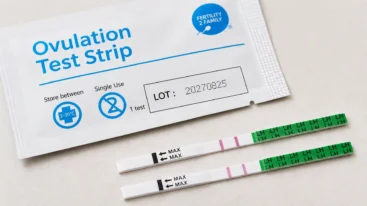
If you are trying to conceive, ovulation tests can help predict the fertile window by detecting a rise in urinary luteinising hormone, or LH. They do not investigate discharge or confirm that an egg was released. There is no need to buy an LH test to find out why you are bleeding.
The guide to ovulation spotting and other mid-cycle bleeding explains how that timing question differs from assessing unexplained bleeding.
What should you do about black discharge during pregnancy?
Contact your GP, midwife or maternity team about bleeding during pregnancy, even when it is light and dark. It does not always mean miscarriage. Depending on your dates and symptoms, assessment may involve examination, blood hCG testing or ultrasound. A very early scan can be inconclusive, so follow-up may be needed.
A home test cannot establish whether the pregnancy is inside the uterus. Use the urgent-care advice above for pain, shoulder-tip pain, dizziness or significant bleeding rather than waiting for another result.
Likewise, spotting cannot safely be labelled “implantation bleeding” from its colour or timing. The guide to spotting and early pregnancy bleeding explains why these appearances overlap.

What if black discharge comes with smell, itching or pelvic pain?
Blood-stained discharge can occur when the cervix is inflamed, including with some sexually transmitted infections. Thrush and bacterial vaginosis can also alter discharge, but black discharge does not identify either condition. Mention burning when passing urine, pain during sex and possible STI exposure so the clinician can choose appropriate swabs or urine tests.
Pelvic inflammatory disease, or PID, is infection involving the upper reproductive tract. Symptoms may include pelvic pain, unusual discharge, bleeding between periods or fever, although some cases are mild. Treatment can begin before swab results return when PID is suspected. Prompt treatment helps reduce complications, including damage to the fallopian tubes.
Could a tampon or another object still be inside?
A forgotten tampon or retained condom can cause unusual discharge, often with a strong smell or discomfort. If you feel well and a tampon is easily reachable, wash your hands and try to remove it gently with your fingers. Do not use tools or force it. Stop if removal is difficult or painful.
Seek prompt professional help if you cannot remove the object easily, are unsure whether part of it remains, or have symptoms. A large or fragile object needs professional removal. If a fragile object breaks inside the vagina, go to the nearest emergency department immediately and do not try to remove the broken pieces yourself. Fever, rash or rapidly worsening illness with a retained tampon also requires emergency assessment because toxic shock syndrome, though rare, can be serious.
What does black discharge or bleeding after sex mean?
Bleeding after sex can come from an injury, irritated tissue, cervical inflammation or a polyp. Arrange assessment for an unexplained episode rather than assuming friction is responsible. Your clinician may recommend different follow-up for one episode with normal findings than for bleeding that keeps returning.
What does black discharge or bleeding after menopause mean?
Natural menopause is identified after 12 consecutive months without periods when another cause does not explain their absence. Hormonal contraception can suppress periods without establishing menopause. Any new blood-stained discharge after menopause needs medical assessment, even once and without pain. Possible causes include thinning tissue and polyps, but serious causes must be excluded. Mention menopausal hormone therapy if you use it.
What does dark discharge or bleeding mean after childbirth?
Post-birth bleeding, called lochia, normally reduces and changes from red to reddish-brown and then paler discharge. Contact your maternity team if fresh, heavier bleeding returns, you pass new clots or the smell becomes offensive. Fever, worsening pain or feeling unwell also needs prompt advice. Very heavy bleeding or fainting requires emergency care, not a routine postnatal appointment.
How is black discharge treated?
Treatment addresses the source of bleeding or discharge. Some causes need no medicine; others require removal of a retained object, prescribed treatment or further investigation.
| Finding | What treatment may involve |
|---|---|
| Familiar old period blood | Monitoring may be enough when the small amount settles with your usual period. |
| Retained object | Removal, with professional help when needed, plus assessment of any accompanying symptoms. |
| Identified infection | Diagnosis-specific treatment, such as an antifungal for thrush or prescribed antibiotics for a bacterial infection. STI partner care may also be needed. |
| Bleeding on the pill or another hormonal method | Review of the method, missed doses and other possible causes before making a change. |
| Polyps or tissue changes | Examination and sometimes imaging or specialist care. Treatment is matched to the finding; a bleeding polyp may be removed. |
For pill users, bleeding and ovulation on the contraceptive pill are separate questions. A changed bleeding pattern should prompt advice, not an unplanned break in contraception.
What is safe to do at home?
Use a pad, liner or period underwear to observe the amount if helpful. Avoid douching, perfumed internal products, inserted herbal remedies and leftover antibiotics. Gentle external washing is enough; the vagina does not need to be flushed out. Pause penetrative sex if it hurts or triggers bleeding, and follow clinical advice about sex and partner treatment if an STI is diagnosed.
What happens at a GP appointment for black discharge?
Your GP uses the history to decide whether examination, pregnancy testing, swabs, blood tests or pelvic ultrasound would help. Not everyone needs every test. Ask what an examination involves, whether a support person or chaperone can attend, and how you will receive the results.
Unexplained bleeding needs symptom assessment rather than simply a routine cervical-screening reminder. Australian cervical-screening guidance recommends diagnostic assessment for unexplained intermenstrual or postcoital bleeding and for persistent blood-stained discharge. Depending on the symptom, this can include a gynaecological assessment, a co-test and specialist referral. Clearly explained contraception-related bleeding can follow a different pathway.
A brief phone note is enough. Do not delay care to finish a tracking record.

Frequently asked questions about black discharge in Australia
How long should I wait for black discharge to stop?
There is no safe waiting period based on colour alone. A small, familiar amount at the end of a period should taper with the flow. Book a GP appointment if it persists beyond your usual pattern or returns between periods; warning symptoms need earlier care.
Is black discharge normal after having sex for the first time?
Minor injury during sex can cause spotting that later looks dark, but first-time sex does not make unexplained bleeding automatically normal. Pause penetration if it hurts or causes more bleeding, and arrange a GP assessment. Seek urgent care for severe pain, heavy bleeding or faintness.
Should I stop my contraceptive pill because of black spotting?
Do not stop prescribed contraception solely because of the colour. Ask your GP or pharmacist about new or persistent spotting and follow your method’s missed-pill instructions. When pregnancy is possible, use an appropriately timed test rather than judging contraceptive effectiveness from bleeding.
Can a cervical biopsy cause dark discharge?
Yes. Medicine applied to stop bleeding at the biopsy site can cause dark discharge for a few days. Follow your clinic’s aftercare instructions. Contact the treating service for heavy bleeding, foul-smelling discharge, fever or severe pain rather than assuming these are expected recovery changes.
What do black clots, clumps or stringy discharge mean?
Blood mixed with mucus or small clots can change the texture of discharge. Tell your GP about recurrent clots, clots larger than a 50-cent piece or heavier-than-usual bleeding. Appearance alone cannot identify pregnancy tissue or diagnose miscarriage.
Does black discharge mean my fertility is affected?
Not by itself. Colour does not measure ovulation or the condition of your fallopian tubes. Some underlying causes, including untreated pelvic inflammatory disease, can affect fertility. Persistent unusual bleeding, pelvic pain or very irregular cycles should be assessed rather than interpreted as a fertility result.
Next Steps in Australia
A familiar small amount with a period may only need monitoring. For unexplained or persistent discharge, book a GP or sexual health appointment and take the brief record above. Contact your maternity team about pregnancy or post-birth bleeding rather than waiting for a routine visit.
If you are unsure how urgently to seek help, call healthdirect on 1800 022 222. For a life-threatening emergency, call 000. You do not need to be certain what caused the discharge before making that call.
✓ Medically reviewed by Evan Kurzyp, RNLast reviewed Next review September 2027
References22 sources
Fertility2Family articles are researched using Australian Government health guidance, professional clinical recommendations and peer-reviewed medical literature. The references below were used to research and medically review this article and provide additional reading for readers who want to explore the evidence in more detail.
You can read how we research, write and check our health information in our editorial and medical review policy, and see who reviews our articles and their clinical credentials.
- Queensland Government. Healthy period cycles
Australian guidance on menstrual variation, including dark brown or black blood during lighter flow, larger clots and bleeding changes that warrant medical advice. - Queensland Health. Periods
Queensland Health explanation of why menstrual blood colour varies with flow and oxidation, including why slower-flow blood can appear much darker. - Healthdirect Australia. Vaginal bleeding
Australian guidance covering unexplained vaginal bleeding, causes involving the cervix or uterus, relevant investigations and the importance of assessment after sex or after menopause. - Healthdirect Australia. Bleeding between periods
Australian guidance explaining intermenstrual bleeding, hormonal contraception, infections and injury, with advice on recording the pattern and seeking assessment for unexplained bleeding. - Healthdirect Australia. Vaginal discharge
Australian information on normal vaginal fluid, concerning changes, examination and swab options, diagnosis-specific treatment and avoiding irritating products or internal vaginal washing. - Healthdirect Australia. Heavy periods
Australian guidance describing heavy menstrual bleeding through practical signs such as frequent product changes, flooding, larger clots and disruption to everyday activities. - Healthdirect Australia. hCG test
Australian information explaining urine and blood pregnancy testing, early false negatives, urine dilution and why the instructions for the exact test should be followed. - Pregnancy, Birth and Baby. Pregnancy tests
Australian guidance on home pregnancy-test timing, testing on the day a period is due, first-morning urine, early false-negative results and repeat testing when a period still has not arrived. - Healthdirect Australia. Irregular periods
Australian information about changing cycle patterns, contraception and lifestyle influences, investigation of irregular or absent periods, and the usefulness of keeping a menstrual record. - Pregnancy, Birth and Baby. Ovulation and fertility
Australian guidance on variable ovulation timing, cervical mucus and urinary luteinising hormone testing, distinguishing fertile-window prediction from clinical assessment of whether ovulation occurred. - The Royal Women’s Hospital. Bleeding in early pregnancy
Australian hospital guidance explaining that early pregnancy bleeding does not always mean miscarriage, why clinical contact matters and how examination, ultrasound and blood tests contribute. - Healthdirect Australia. Ectopic pregnancy
Australian guidance on pregnancy outside the uterus, warning symptoms including pelvic pain, shoulder-tip pain and faintness, and the roles of blood testing and ultrasound. - Healthdirect Australia. Retained tampon or other object
Australian advice on retained vaginal objects, unusual discharge, gentle tampon removal, when professional help is needed and additional symptoms that require emergency assessment. - Healthdirect Australia. Toxic shock syndrome
Australian information about rare but serious toxic shock syndrome, including rapid illness, fever, rash and confusion, and the need for immediate medical treatment. - Australian STI Management Guidelines. Vaginal discharge
Professional Australian guidance on infectious and non-infectious discharge, cervical inflammation, appropriate examination and laboratory testing, diagnosis-directed treatment and follow-up for persistent symptoms. - Healthdirect Australia. Pelvic inflammatory disease
Australian guidance on pelvic inflammatory disease symptoms, assessment and antibiotic treatment, explaining possible fallopian tube damage and the importance of treating suspected infection promptly. - Healthdirect Australia. Bleeding after menopause
Australian information explaining why postmenopausal bleeding needs assessment, describing tissue thinning, polyps and other possible causes, and outlining investigations and management after diagnosis. - Australian Government Department of Health, Disability and Ageing. Menopause
Australian Government information explaining natural menopause, including the need to exclude other medical reasons for absent periods when applying the twelve-month definition. - Australian Government Department of Health, Disability and Ageing. Managing patients with symptoms of cervical cancer
National guidance distinguishing symptom investigation from routine cervical screening, covering unexplained bleeding, persistent discharge, co-testing and specialist referral when symptoms require further assessment. - The Royal Women’s Hospital. What to expect
Australian hospital information on physical recovery after childbirth, including lochia becoming lighter and changing from red to reddish-brown, then paler discharge before stopping. - Mid North Coast Local Health District, NSW Health. Following your birth
Australian maternity advice explaining which post-birth bleeding changes need review, including a return to fresh bleeding, new clots or an offensive smell. - Cancer Institute NSW. Colposcopy: A guide to what you need to know
Australian patient guidance on cervical biopsy recovery, temporary dark discharge from medicines used to stop bleeding, and symptoms that warrant contacting the treating clinician.