
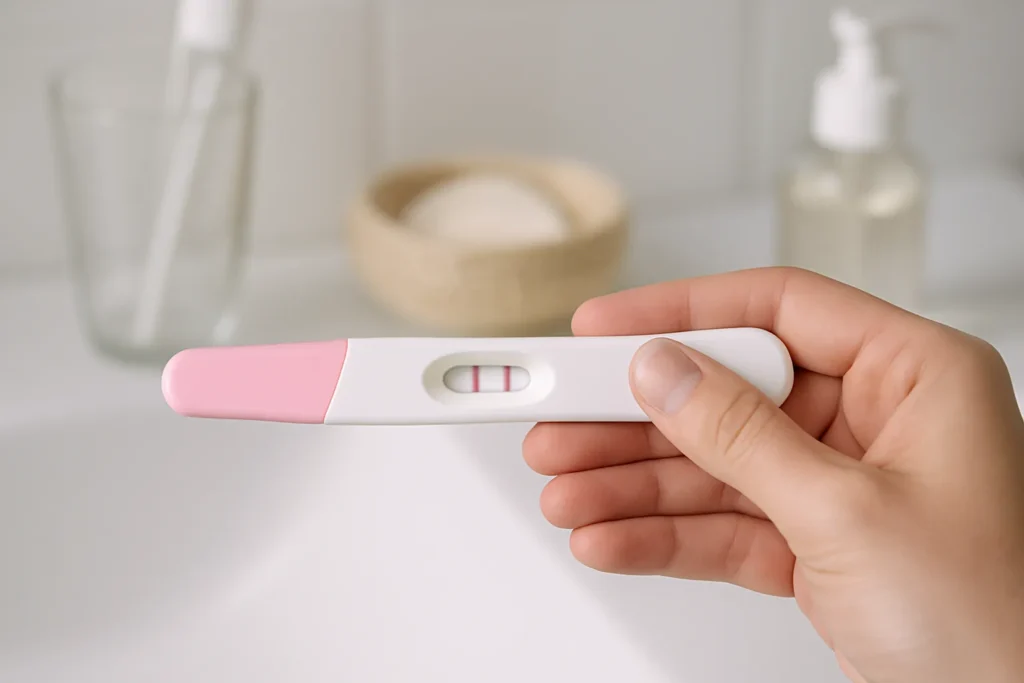

No, you cannot reuse a home pregnancy test. The test reacts once when urine moves through it, and that reaction cannot be reset by drying, washing, redipping or storing the test for later. If your result is unclear, use a new test, first morning urine, or a GP-requested hCG blood test.
This article explains why pregnancy tests are single use, what can happen if you use one twice, how faint lines and evaporation lines can confuse results, and when to speak with your GP in Australia.
Quick answers about reusing pregnancy tests
Can you reuse a First Response or Clearblue pregnancy test?
No. First Response, Clearblue and other common pregnancy test brands are designed for one urine sample and one reading window. Once the test strip has reacted, redipping, washing or reopening the device cannot make it accurate again. Follow the instructions for the exact product you bought.
Are pregnancy tests reusable?
No. Standard home pregnancy tests are not reusable. Some devices may use a reusable digital reader, but the urine-exposed strip, cassette or cartridge is still single use. If any part has already touched urine, use a fresh test for the next result.
Can you wash a pregnancy test and use it again?
No. Washing a pregnancy test does not reset it. Water can damage the strip, move leftover dye and create marks that look like test lines. A clean-looking plastic case does not mean the internal strip is unused or reliable.
How home pregnancy tests work
Home pregnancy tests check urine for human chorionic gonadotropin, known as hCG. This hormone can also be measured in blood. In Australia, home urine tests are sold through pharmacies, supermarkets and online stores, while blood hCG testing is arranged through a GP or another health professional when needed.
A home test contains an absorbent strip that draws urine across a test area. If hCG is present at a detectable level, the test chemicals help create a visible line, symbol or digital result. A control line shows the sample has moved through the test properly.
Most home tests are most useful from around the day your period is due, although some brands are marketed for earlier testing. Testing too early can give a negative result even when pregnancy has occurred, because urine hCG may still be below the test’s detection level.

Why pregnancy tests are single use
Pregnancy tests are single use because the strip changes when urine first passes through it. The test has already been exposed to moisture, urine components, dye movement and hCG if hCG is present. Drying the test does not return the strip to its unused state.
This is why a test that looks clean from the outside can still be unusable inside. The strip may dry unevenly, the dye may move again, and the test area may show a shadow that does not reflect a new hCG result.
The same principle applies to strip tests, cassette tests, midstream tests and most digital tests. The casing, handle or screen can change how the result is displayed, but the urine-exposed test part is still designed for one use.
What happens if you use a pregnancy test twice
If you use a pregnancy test twice, the second result is invalid. A reused test may show a darker mark, no line, a smeared line, a broken control line or a confusing shadow. None of these should be treated as a fresh pregnancy test result.
A false-looking positive can happen when leftover dye moves across a dried test area. This can make an evaporation line, indent or shadow look stronger. A false negative can also happen because the test strip has already reacted and may no longer detect hCG properly.
If you already reused a test, ignore the second reading. Use a new, sealed, in-date test and follow the instructions from the beginning. If results remain unclear, speak with your GP about whether a blood hCG test is useful.
How faint lines and evaporation lines can confuse reuse
A faint test line inside the correct reading window can be a positive result, even if it is light. An evaporation line usually appears after the test has dried or after the reading window has passed. Reusing the same test can make that difference harder to judge.
If you check a test later, the test area may show a grey, colourless or shadow-like line. Redipping the same test can move dye over that dried area and make the mark look stronger. That does not mean the test has detected new hCG.
If your line is hard to interpret, read Fertility2Family’s guide to what a faint line on a pregnancy test means. If the mark appeared after the reading window, see the guide to evaporation lines on pregnancy tests.

How to retest safely in Australia
If your result is negative but your period has not started, use a fresh test after 48 to 72 hours. First morning urine is usually more concentrated and can be useful when testing early. If your result stays unclear, your GP can advise whether blood hCG testing is needed.
Do not retest by reusing the same device. Open a new, sealed test, check the expiry date, follow the leaflet, and read the result only within the listed time window. If you drank a large amount of fluid before testing, urine dilution may make a result harder to interpret.
If you received a negative result but still suspect pregnancy, read Fertility2Family’s guide to false negative pregnancy tests. If cost is the reason you are tempted to reuse a test, the guide to pregnancy test costs in Australia compares formats and unit prices.
How product format changes use, not reuse
Pregnancy test strips, midstream tests, cassette tests and digital tests are all single use. The format can affect how you collect urine, hold the test or read the result. It does not change the rule that the urine-exposed strip should be used once only.
If you test often across a cycle, lower unit-cost options may reduce pressure to reuse a device. Fertility2Family’s pregnancy tests include different formats, but home tests do not diagnose pregnancy complications, infertility, miscarriage or ectopic pregnancy.
A home test can help identify hCG in urine when used correctly. It cannot tell you whether a pregnancy is located in the uterus, whether the pregnancy is progressing normally, or why symptoms are occurring. Speak with your GP if your result is positive, unclear or does not match how you feel.

How ovulation timing fits with pregnancy testing
Knowing your likely ovulation window can reduce unnecessary early pregnancy testing. Ovulation tests detect luteinising hormone, known as LH, before ovulation. They can help estimate timing, but they do not confirm pregnancy and they should not be reused.
If you track ovulation, cervical mucus or basal body temperature, use those signs as timing tools rather than diagnostic answers. Home tracking can help you plan when to test, but it cannot prove that pregnancy has occurred or diagnose a medical condition.
If you are trying to conceive and cycles are irregular, unclear or consistently hard to track, speak with your GP. Australian general practice guidance supports fertility assessment after 12 months of trying if under 35, or after 6 months if 35 or older, with earlier review when symptoms or known conditions are present.
When to see a GP or seek urgent care
Speak with your GP if home pregnancy test results remain unclear, if your period is late and tests stay negative, or if your result does not match your symptoms. A GP can advise whether a urine test, blood hCG test, repeat test or ultrasound timing is appropriate.
If you have a positive home test and no concerning symptoms, booking a GP appointment is the usual next step for confirmation, early pregnancy advice and referral into antenatal care if needed.
Seek urgent medical care if you have severe one-sided pelvic pain, shoulder-tip pain, fainting, dizziness, heavy bleeding, worsening pain, a fast heartbeat or feel very unwell. These symptoms need prompt assessment because ectopic pregnancy and other early pregnancy problems can be serious.
Frequently asked questions about reusing pregnancy tests Australia
Can you reuse a positive pregnancy test?
No. A positive test can be kept as a personal keepsake, but it should not be reused or treated as an ongoing medical record. Test lines can fade, darken or dry unevenly. Take a photo inside the correct reading window and speak with your GP about confirmation.
Can you use a pregnancy test twice on the same day?
No. Using the same pregnancy test twice on the same day can flood the strip, move dye and create a misleading mark. If the first result looked incomplete or invalid, use a new test rather than dipping the same test again.
Can you reuse a digital pregnancy test?
No. A digital pregnancy test still uses an internal urine-reactive strip. The screen reads the result from that one strip. Opening the case, removing the strip or dipping the device again will not improve accuracy and can make the result harder to interpret.
Can you reuse an expired pregnancy test?
No. An expired pregnancy test should not be reused or relied on for a new result. Expiry matters because test performance can change over time, especially if storage conditions were poor. Use a fresh, in-date test and speak with your GP if results remain unclear.
Can ovulation tests be reused?
No. Ovulation tests are also single use. They detect LH rather than hCG, but the urine-exposed strip still reacts once and should be discarded after the reading window. Ovulation tests can help with timing, but they do not diagnose ovulation problems or confirm pregnancy.
Can drinking lots of water affect my pregnancy test result?
Yes. Drinking a large amount of fluid before testing can dilute urine and make hCG harder to detect, especially early. This can increase the chance of a false negative. Use first morning urine where possible and follow the test instructions closely.
Last reviewed: May 16, 2026
Next scheduled review: May 2027
References
Fertility2Family publishes Australia-focused fertility education. Articles are written by our team and medically reviewed by Australian-registered health practitioners. We use Australian consumer medicine information, Australian clinical and public health guidance, and peer-reviewed research consistent with Australian care. We explain what the evidence suggests, what it cannot confirm, and when to see a GP or fertility specialist. Each article lists its author, medical reviewer, and review dates.
https://www.healthdirect.gov.au/hcg-test
https://www.pregnancybirthbaby.org.au/pregnancy-tests
https://www.betterhealth.vic.gov.au/health/healthyliving/pregnancy-testing
https://www.healthdirect.gov.au/ectopic-pregnancy
https://ranzcog.edu.au/wp-content/uploads/Ectopic-Pregnancy.pdf
https://www1.racgp.org.au/ajgp/2020/june/female-fertility-in-general-practice-setting
https://www.clearblue.com/how-to-get-pregnant/can-you-mess-up-a-pregnancy-test
https://www.firstresponsepregnancy.com.au/wp-content/uploads/2015/04/FR_D_R_Leaflet_IN0719h.pdf
https://pmc.ncbi.nlm.nih.gov/articles/PMC4119102/