On this page
At 7 DPO, every cramp, change in discharge or quiet symptom-free day can feel loaded with meaning. The symptom may be real, but it is not a reliable pregnancy answer. You do not have to settle that question today.
A home pregnancy test can be positive at an estimated 7 DPO, but a negative result is provisional. hCG may not yet be detectable in urine, and the ovulation date may be earlier or later than an app suggests. The useful task today is to check the timing, interpret any result carefully and use one practical plan for the remaining wait.
Quick answers about 7 DPO symptoms
Can 7 DPO symptoms tell you whether you are pregnant?
No. Cramps, discharge changes, breast tenderness, bloating, tiredness, nausea or no symptoms can occur in cycles that do and do not become pregnant. At 7 DPO, symptoms are more useful for comfort and deciding whether you need care than for confirming implantation.
Can a pregnancy test be positive at 7 DPO?
It can be positive at an estimated 7 DPO, but this is still very early. A valid negative result cannot rule pregnancy out because hCG may not yet be detectable in urine, the ovulation date may be off, and fertility treatment can change how an early result should be read.
What should you do at 7 DPO?
Use the plan below to record your ovulation estimate, testing point, contact and support person. Severe abdominal or pelvic pain, heavy bleeding, marked dizziness or fainting requires immediate assessment at the nearest hospital emergency department or by calling triple zero (000).
What does 7 DPO mean?
DPO means days past ovulation. Ovulation day is 0 DPO, so 7 DPO is the seventh calendar day after your estimated ovulation date. It is a trying-to-conceive timing label rather than an exact biological timestamp.
If fertilisation occurred, early cell division and movement towards the uterus happen before implantation. After implantation, placental tissue begins producing and releasing hCG, which must then rise enough to become detectable in blood or urine. That sequence is why a symptom or one early urine test cannot identify the exact attachment date.
The DPO testing calendar can place an app date, LH result or expected period on one working timeline. Keep the result as an estimate unless your treating clinic has given you a specific cycle schedule.
For the research behind this early timing, the 6 DPO research-versus-home-evidence guide separates study findings from what a home test can show.
How should you respond to 7 DPO symptoms while you wait?
Bloating, breast tenderness, tiredness and headache can occur during the second half of the menstrual cycle. Nausea is also non-specific and has many possible causes.
What can cramping or pelvic twinges at 7 DPO mean?
Lower-abdominal discomfort has many possible causes, including digestive and reproductive causes. A brief ache, pressure or twinge cannot confirm implantation, locate a pregnancy or predict the next test result.
For mild, familiar abdominal discomfort with a known cause, rest, clear fluids and a warm pack may help. Because pregnancy is possible, ask a pharmacist or doctor before starting a new pain medicine. Do not continue home care if pain is worsening, lasts several hours, wakes you from sleep, or occurs with fever or persistent vomiting; use the urgent medical-care pathway below.
How should you respond to discharge or spotting at 7 DPO?
After ovulation, cervical mucus may become cloudy, thicker, sticky or less noticeable. Semen and sexual arousal can also change what you see. There is no validated 7 DPO discharge appearance that confirms pregnancy.
Spotting means very light bleeding between periods. Hormone changes, infection and genital injury are among the possible causes, and bleeding can also follow sex. Timing or colour alone cannot identify implantation. Arrange GP assessment for bleeding between periods or after sex, even when it is light. Very heavy bleeding or feeling faint follows the emergency pathway below. The guide to implantation bleeding and other causes of spotting explains why the pattern needs context.
What can breast changes, bloating, fatigue or nausea at 7 DPO mean?
Breast tenderness, bloating and tiredness can overlap with premenstrual symptoms. Nausea can occur for many reasons, including pregnancy, food-related causes, illness and medicines. Comparing the sensation with your usual cycle may help you describe a change, but it cannot identify its cause.
Seek medical advice when a symptom is persistent, worsening, unusual for you or affecting your ability to function.
What does having no symptoms at 7 DPO mean?
Having no noticeable symptoms at 7 DPO does not show that conception failed. Early pregnancy symptoms vary, and some people notice only a few changes.
How should you read a pregnancy test at 7 DPO?
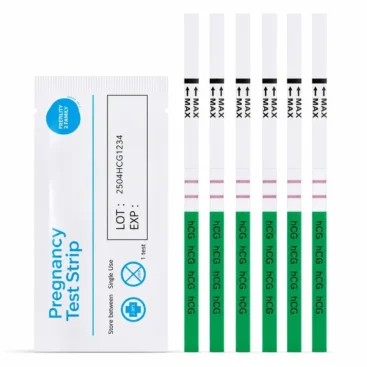
Before interpreting any result, check that the device is unexpired and undamaged, follow its collection method, confirm the required control indicator and read the result only within the stated window. A control indicator is one validity check, but it does not prove that every collection and timing instruction was followed.
What does a negative pregnancy test at 7 DPO mean?
A valid negative result means hCG was not detected in that sample at that reading time. It does not rule pregnancy out at 7 DPO because testing may have occurred before urine hCG was detectable or because the DPO estimate is too early.
Use the device instructions, expected period or fertility-clinic schedule to fill in the planned testing point in the uncertainty plan below. The pregnancy-test timing calculator can help organise the available dates without making the estimate more certain than the underlying information.
What should you do after a positive pregnancy test at 7 DPO?
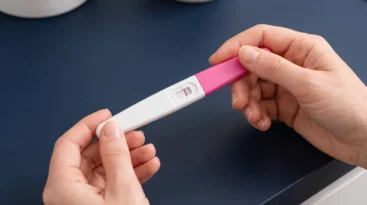
A valid positive result, including a faint positive interpreted according to the device instructions, can indicate detectable hCG. It cannot establish the exact implantation day, pregnancy location or viability.
Arrange confirmation and follow-up with a GP or fertility clinic after any valid positive. If you used an hCG trigger, contact your treating clinic for interpretation. The guide to what to do after a positive pregnancy test in Australia explains the next care decisions.
What should you do if a 7 DPO test is unclear or invalid?
If the control does not appear, the device is expired or damaged, the result develops abnormally, or the display cannot be read under the instructions, do not treat it as a valid positive or negative. Use a new, unexpired device and follow its instructions from the beginning. A new mark first noticed after the stated reading window is not a new result. The evaporation-line guide explains why the reading window matters more than repeatedly inspecting a dried test.
Why might your 7 DPO estimate be wrong?
An app predicts ovulation from previous cycle information. A urine ovulation predictor kit detects an LH rise that usually comes before ovulation. Basal body temperature looks back for a sustained temperature change after ovulation. These methods answer related but different questions.
For example, an app may predict ovulation on Monday while the first positive LH test appears on Tuesday. That does not prove the exact ovulation day, but it shows why the following Monday may represent a range rather than a confirmed 7 DPO timestamp.
The confidence you place in an early test date should match the confidence you have in the ovulation estimate.
What can a story about 7 DPO symptoms ending in a BFP tell you?
BFP is trying-to-conceive shorthand for a positive pregnancy test. A personal story can accurately describe cramps, discharge, tiredness, nausea, breast tenderness or no noticeable change before a later positive result. The later positive does not identify what caused the earlier sensation or turn that symptom pattern into a prediction method.
Some online day-specific charts calculate their percentages from a selected group, such as member-reported cycles that were later recorded as pregnant. Percentages from that group cannot provide an individual reader’s pregnancy odds or controlled accuracy data for the home-test device they used.
How can you plan the wait at 7 DPO?
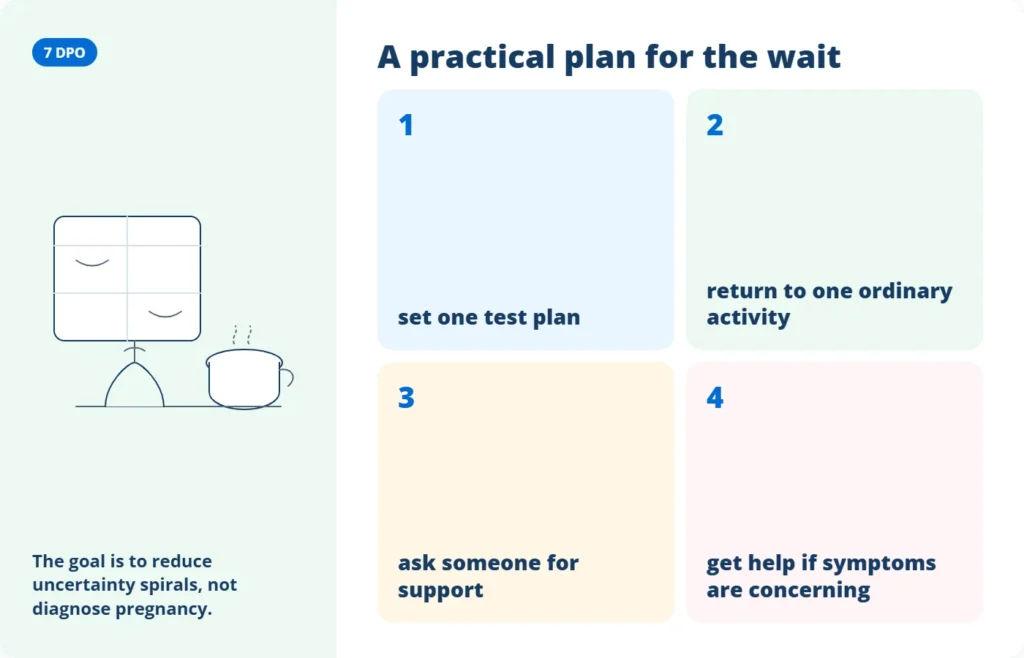
A short written plan cannot change implantation, but it can reduce repeated decisions during the wait. Complete only the lines that are useful to you.
My 7 DPO uncertainty plan
What will your next day of waiting at 7 DPO look like?
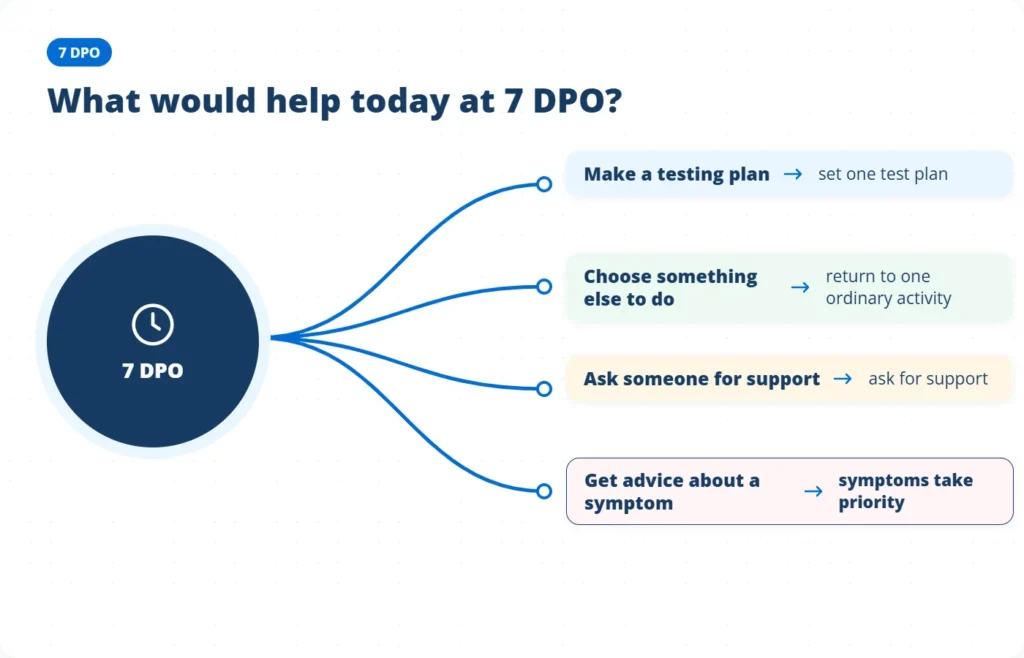
A written plan for testing, support and symptoms can reduce the number of decisions you have to keep making in your head.
Write down one future testing time that follows your test or clinic instructions, one support contact, one ordinary activity and the symptoms that would change the plan.
Our free DPO calculator can work out how many days past ovulation you are and when a pregnancy test is more likely to give a clear answer.
What changes if you used an hCG trigger or are in fertility treatment?
An hCG-containing trigger changes how an early result should be interpreted. Current Australian Ovidrel information states that, following administration, blood or urine hCG testing may be affected for up to ten days and can produce a false-positive result. This is not a DPO clock or a guarantee that the medicine has cleared at a particular time. Use the clinic’s nominated test date and medicine instructions.
Counting after an embryo transfer follows a different treatment timeline from spontaneous-conception DPO because the embryo has already developed in the laboratory before transfer. Do not stop progesterone or another prescribed medicine because of an early home result unless the treating team tells you to. The Ovidrel and trigger-shot guide explains these testing limits in more detail.
When should you seek medical care in Australia?
Contact a GP or treating clinic for discharge with a strong odour, itching or pain, for symptoms that are persistent or unusual for you, or when a test result does not fit the treatment history.
Seek urgent medical attention for abdominal or pelvic pain that is worsening, has lasted several hours, wakes you from sleep, or occurs with fever or persistent vomiting. If you are vomiting and cannot keep water down, seek immediate medical attention from a doctor or hospital emergency department.
Go immediately to the nearest hospital emergency department or call triple zero (000) for an ambulance if you have severe abdominal or pelvic pain, heavy bleeding, shoulder-tip pain, marked dizziness, fainting or feel very unwell. You do not need to wait for collapse, a positive pregnancy test or another home test before using an emergency route. A negative home test must not delay symptom-based assessment.
Frequently asked questions about 7 DPO symptoms in Australia
Is 7 DPO the same as being one week pregnant?
No. DPO starts after ovulation, while Australian maternity dating usually starts from the first day of the last menstrual period. In a typical cycle, the clinical pregnancy count is therefore about two weeks ahead of the ovulation-based count.
Why can two pregnancy tests look different at 7 DPO?
Urine concentration, test design, collection method, timing and the reading window can change what you see. Compare only results that were valid under their own device instructions. The dedicated faint-line pregnancy-test guide explains these factors in more detail. Ask a GP or fertility clinic about inconsistent valid results, especially when symptoms are concerning.
Is a blood hCG test more sensitive than a urine test at 7 DPO?
Yes, a blood hCG test is more sensitive than a urine test, but that does not guarantee a useful answer at 7 DPO. Its value depends on the timing and the clinical question, so a GP or fertility clinic should decide whether it is appropriate.
Can an ovulation test tell you if you are pregnant at 7 DPO?
No. An ovulation predictor kit tests urine for an LH rise, while a pregnancy test checks for hCG. An OPK is not a substitute for a pregnancy test, and an unexpected OPK line at 7 DPO cannot confirm or exclude pregnancy.
What if you do not know when your period is due?
The missing date limits what a calendar or app can tell you. Follow the instructions for your exact pregnancy test when period timing is unknown, and ask a pharmacist, GP or fertility clinic to help choose an appropriate testing point if the instructions do not resolve it. The no period but negative pregnancy-test guide covers the separate missed-period pathway.
What if the 7 DPO wait is affecting sleep or daily life?
Reduce repeated checking if it is making the day harder and speak with someone you trust. If worry remains overwhelming, regularly disrupts sleep or interferes with daily life, consider speaking with a GP or mental health professional for support.
Next Steps in Australia
At 7 DPO, the next useful information usually comes from time, a correctly timed test or clinical assessment when symptoms require it. The 8 DPO test-today-or-wait guide continues the day-by-day sequence while keeping the same limits on what symptoms and early tests can tell you.
With your testing date and support contact recorded, choose one ordinary activity for the next part of today if you feel well. The medical-care pathway above applies at any DPO and after any home-test result.
✓ Medically reviewed by Evan Kurzyp, RNLast reviewed Next review September 2027
References23 sources
Fertility2Family articles are researched using Australian Government health guidance, professional clinical recommendations and peer-reviewed medical literature. The references below were used to research and medically review this article and provide additional reading for readers who want to explore the evidence in more detail.
You can read how we research, write and check our health information in our editorial and medical review policy, and see who reviews our articles and their clinical credentials.
- Pregnancy, Birth and Baby Ovulation and fertility
Australian guidance on ovulation timing, urine LH testing, cervical mucus, basal body temperature and the limits of using home cycle signs to identify an exact ovulation time. - Pregnancy, Birth and Baby Conception – from fertilisation to embryo
Australian consumer guidance separating fertilisation, early cell division, travel through the fallopian tube and implantation, supporting a staged explanation rather than an exact personal implantation date. - Pregnancy, Birth and Baby hCG levels
Australian guidance explaining that placental tissue begins making and releasing hCG after implantation and that blood and urine detection occur only after levels become measurable. - Healthdirect Australia Human chorionic gonadotropin (hCG) test – pregnancy
Australian guidance on urine and blood hCG tests, early false-negative results, urine dilution, device instructions and the limited questions that further clinical testing may answer. - Better Health Channel, Victorian Department of Health Pregnancy testing
Victorian public-health guidance on home-test technique, expiry and collection problems, early false results, faint positive results and arranging medical confirmation after a positive test. - Clearblue Australia Clearblue Rapid Detection Pregnancy Test
Current Australian instructions for one pregnancy-test device, including its control window, reading window and requirement to repeat with a new test stick when the control is absent. - Healthdirect Australia Premenstrual syndrome (PMS)
Australian guidance identifying bloating, breast tenderness, headaches and fatigue as common second-half-of-cycle symptoms, supporting their overlap with concerns raised during the 7 DPO wait. - Healthdirect Australia Nausea
Australian guidance showing that nausea has multiple possible causes, may occur in pregnancy and warrants medical review when persistent or associated with serious accompanying symptoms. - Healthdirect Australia Fertility awareness (natural family planning)
Australian guidance on post-ovulation cervical mucus, basal body temperature and calendar methods, including how semen, arousal, illness, sleep and stress can affect interpretation. - Healthdirect Australia Vaginal discharge
Australian guidance on normal and abnormal vaginal discharge, including odour, itching, pain, bleeding and lower abdominal symptoms that should prompt medical assessment. - Healthdirect Australia Bleeding between periods
Australian guidance defining spotting, describing several possible causes and advising medical assessment for bleeding between periods or after sex, with emergency action for very heavy bleeding or faintness. - Better Health Channel, Victorian Department of Health Pregnancy – signs and symptoms
Victorian public-health guidance listing early pregnancy symptoms while explaining that they can have other causes and that some people notice only a few changes. - Pregnancy, Birth and Baby Working out your due date
Australian guidance explaining that pregnancy dating usually starts from the first day of the last menstrual period and may use ultrasound when dates are uncertain. - Healthdirect Australia Abdominal pain
Australian guidance on broad digestive and reproductive causes, limited self-care for mild pain with a known cause, and urgent attention for worsening, prolonged or severe pain and associated symptoms. - Healthdirect Australia Vomiting – treatments, self-care and causes
Australian guidance requiring immediate medical attention when vomiting is accompanied by dehydration, inability to keep water down, fever or prolonged symptoms, and emergency care for severe abdominal pain. - Healthdirect Australia Medicines during pregnancy
Australian guidance advising people to check medicines with a doctor or pharmacist when pregnancy is possible and not to stop prescribed treatment without professional advice. - Healthdirect Australia Ectopic pregnancy
Australian guidance on abdominal or shoulder-tip pain, heavy bleeding, dizziness, faintness and feeling unwell, with immediate access to an emergency department or triple zero where indicated. - Healthdirect Australia Stress
Australian guidance on reaching out to a trusted person and seeking professional support when stress remains overwhelming, disrupts sleep or interferes with daily life. - Better Health Channel, Victorian Department of Health Assisted reproductive technology – IVF and ICSI
Victorian public-health guidance explaining that embryos develop in the laboratory before transfer, supporting why post-transfer counting differs from spontaneous-conception days past ovulation. - Australian Commission on Safety and Quality in Health Care Ovidrel Pen
Australian product information stating that, following administration, Ovidrel may interfere with blood or urine hCG testing for up to ten days and cause a false-positive result. - New England Journal of Medicine Time of implantation of the conceptus and loss of pregnancy
Prospective United States research using first sustained urinary hCG as an indirect marker of implantation timing among pregnancies continuing at least six weeks from the first day of the last menstrual period. - Human Reproduction Update The LH surge and ovulation re-visited: a systematic review and meta-analysis and implications for true natural cycle frozen thawed embryo transfer
A systematic review showing substantial person-to-person variation between LH-surge onset and ovulation, supporting urine LH as a timing window rather than an exact ovulation timestamp. - Countdown to Pregnancy Pregnancy test results on 7 days past ovulation
Previously captured member-reported chart with a denominator restricted to reported pregnant cycles, used only to explain why its percentages are not personal odds or controlled device accuracy.