
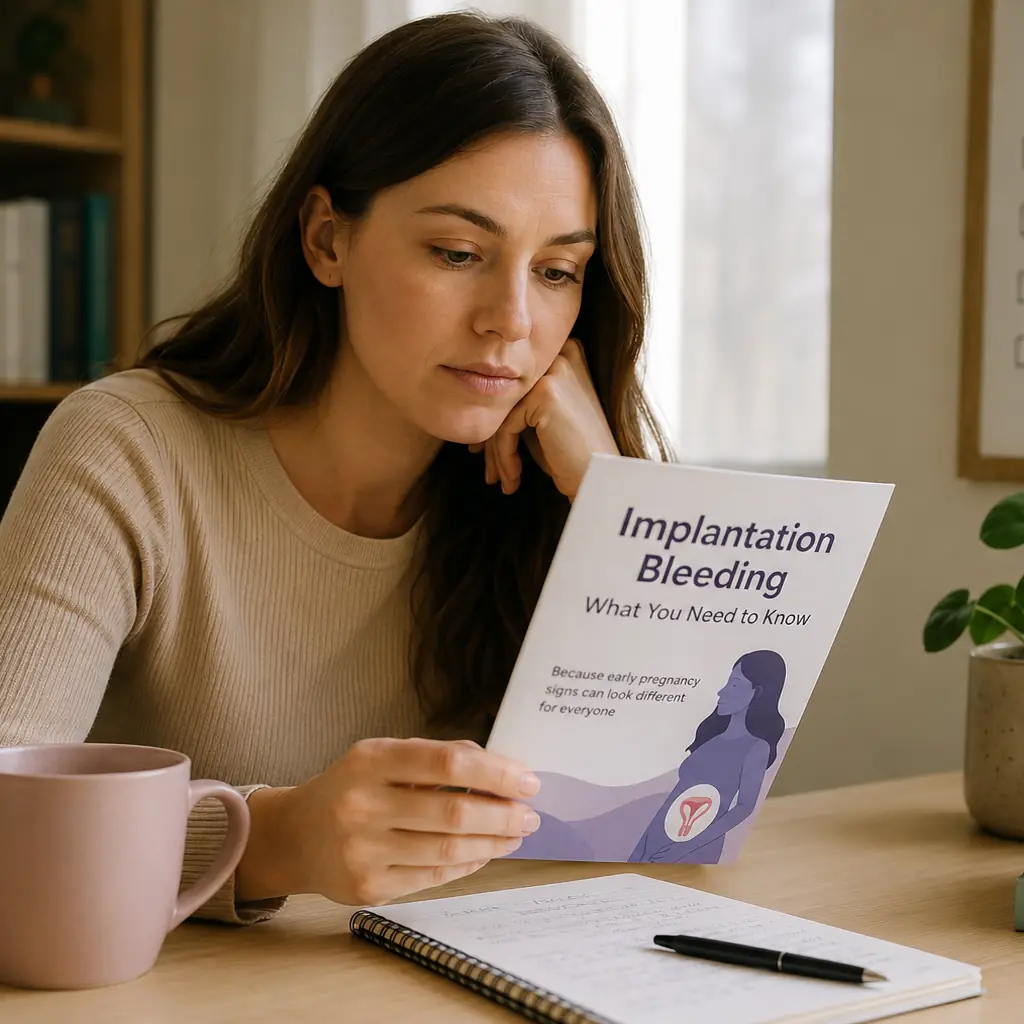

Implantation bleeding cannot be confirmed from spotting alone. Pink, brown or red blood, light flow, cramps and timing can overlap with a period, cervical bleeding and early-pregnancy complications. The safest approach is to answer two questions separately: when should you take a pregnancy test, and does the bleeding pattern require medical assessment?
Quick answers about implantation bleeding
What does implantation bleeding look like?
There is no appearance that confirms implantation. Light pink, brown or red spotting can occur for many reasons, including a period starting, cervical irritation, infection, early-pregnancy bleeding or pregnancy loss.
Can implantation bleeding be heavy or bright red?
Heavy flow, clots, worsening pain or bright-red bleeding should not be labelled implantation bleeding. Arrange clinical assessment, especially after a positive test or when pregnancy is possible.
When should I take a pregnancy test after spotting?
Test from the recommended date for the device: usually when the period is due or later. If the first result is negative but the period does not start, repeat according to the instructions or seek clinical advice.

Implantation bleeding or period: what can you actually tell?
A light episode close to an expected period can be difficult to interpret. A period may begin with spotting, and early-pregnancy bleeding can also be light. Colour, duration and flow can guide the next step, but none can confirm that implantation caused the bleeding. The most useful distinction is whether the bleeding is becoming heavier, whether pregnancy is possible and whether pain or other warning symptoms are present.
There is no diagnostic colour or pattern
Pink, brown and red describe how blood looks, not why it occurred. Brown blood is older blood; bright red is fresher. Neither proves or excludes implantation. A period can begin lightly, cervical tissue can bleed after sex, hormonal contraception can cause spotting, and infection or early-pregnancy complications can present with bleeding.
| What you notice | What it may mean | What to do |
|---|---|---|
| A small amount of spotting before the period is due | Could reflect cycle variation, cervical bleeding or early pregnancy; appearance is not diagnostic. | Test at the recommended time and monitor symptoms. |
| Bleeding similar to a usual period | A period is common, but pregnancy-related bleeding is still possible if a test is positive or the pattern is unusual. | Test when indicated and seek advice for unusual pain or flow. |
| Heavy bleeding, clots or worsening cramps | Not safely explained as implantation bleeding. | Arrange prompt assessment; emergency care if heavy or accompanied by instability. |
| One-sided pain, shoulder-tip pain, fainting or marked dizziness | Ectopic pregnancy or internal bleeding must be considered. | Emergency department or 000. |
| Bleeding after embryo transfer or fertility treatment | Can relate to procedures, hormones or pregnancy; clinic timing matters. | Use the clinic’s test date and urgent-contact instructions. |
When does implantation bleeding occur?
Implantation occurs after fertilisation and before a urine pregnancy test is usually at its most reliable. However, a spotting episode cannot identify the day implantation occurred. Bleeding near the expected period can also be a period beginning, cervical bleeding, hormonal spotting or another cause.
Use the expected period and the pregnancy test instructions to decide when to test. Do not count forward from the spotting itself as though it proves implantation. If the test is negative and the period does not start, repeat at the interval in the instructions or seek clinical advice.
Can implantation bleeding look like discharge?
A small amount of blood can mix with vaginal or cervical fluid and appear as pink, brown or red discharge. This does not identify implantation. Offensive odour, itching, fever, pelvic pain or persistent unusual discharge may indicate infection or another cause and should be assessed.
Can implantation bleeding be red?
Bleeding can be red in a cycle that later has a positive pregnancy test, but red blood does not establish implantation. It is understandable to want a visual rule; medically, no shade confirms the cause. The action depends on pregnancy possibility, amount, pain and whether symptoms are worsening.
How heavy can implantation bleeding be?
There is no validated volume threshold that defines implantation bleeding. Heavy flow, soaking pads, passing clots or increasing bleeding should not be reassured away with the label. Contact a clinician, and seek urgent care when bleeding is heavy or accompanied by severe pain, faintness, shoulder-tip pain or feeling acutely unwell.
Can implantation bleeding cause cramps?
Mild cramping can occur around the time a period is due and during early pregnancy, but cramps do not identify implantation. Worsening, severe or one-sided pain, shoulder-tip pain, fainting or marked dizziness needs prompt assessment, particularly after a positive test or when pregnancy is possible.
How long can the spotting last?
Duration also overlaps. Brief spotting and bleeding over several days can have different causes. Ongoing bleeding after a positive test may require hCG testing, ultrasound and follow-up, particularly when the pregnancy location has not been confirmed. One normal-looking episode cannot guarantee that no review is needed later.
Does everyone get implantation bleeding?
No. Many pregnancies are not accompanied by noticeable spotting. The absence of bleeding does not rule out pregnancy, and the presence of spotting does not confirm it. Pregnancy testing at the correct time is more reliable than waiting for a particular colour, flow or symptom.
When to take a pregnancy test
Test from the date recommended for the device: usually when the period is due or later for the most reliable home result. If the result is negative and the period still has not started, use the false-negative pregnancy-test guide and repeat according to the instructions. If an hCG trigger injection was used, follow the fertility clinic’s date because medicine-related hCG can produce a positive result.
A home test detects hCG but cannot show pregnancy location or viability. Line darkness is not a substitute for blood testing or ultrasound when symptoms or clinical history justify them. Use pregnancy-test accuracy by DPO for the timing question, while the bleeding cause is assessed separately.

Bleeding after a positive pregnancy test
Bleeding in early pregnancy is common enough that many pregnancies continue, but ectopic pregnancy and miscarriage are important possibilities. A clinician considers stability, pain, bleeding amount, gestational timing, prior ectopic pregnancy, tubal disease, fertility treatment and examination findings. It may not be possible to give a final diagnosis at the first visit.
Serial hCG and ultrasound are interpreted together when needed. A single hCG result cannot independently confirm a viable pregnancy, and a scan performed very early may be inconclusive. The plan should specify when to repeat testing and which symptoms require earlier care.
Implantation bleeding or miscarriage: can symptoms tell the difference?
Bleeding alone cannot reliably separate an uncomplicated early pregnancy from pregnancy loss or ectopic pregnancy. Increasing flow, clots and cramping may raise concern, but symptoms overlap. A clinician may need pregnancy timing, serial hCG, ultrasound and follow-up to determine what is happening. Seek urgent care for severe pain, heavy bleeding, fainting, marked dizziness or feeling acutely unwell.
What an assessment may involve
Assessment can include questions about the last period, pregnancy-test timing, previous ectopic pregnancy, fertility treatment, pain, pad use and medicines. Depending on gestation and symptoms, the clinician may arrange examination, quantitative hCG, blood group testing or ultrasound. Not every person needs every test, and an early inconclusive result is not the same as a confirmed loss.
The safest plan includes a clear follow-up point. Ask what result is expected next, when it should be checked and which symptoms mean returning sooner. This is more informative than repeatedly comparing the colour of home-test lines or searching photographs of spotting.

Other causes of spotting
- A period beginning or ending.
- Cervical irritation after sex, an examination or a cervical condition.
- Hormonal contraception or a change in hormones.
- Vaginal or cervical infection.
- Polyps or other uterine causes.
- Pregnancy loss, ectopic pregnancy or another early-pregnancy complication.
Bleeding around ovulation has its own differential and should not be merged with implantation claims. Use the ovulation-bleeding guide for mid-cycle spotting when a pregnancy test is not yet expected.
Fertility treatment changes the context
Bleeding after embryo transfer or while using fertility medicines should be interpreted using the clinic’s protocol. hCG-containing trigger medicines can affect pregnancy test timing, and progesterone or other prescribed support should not be stopped without advice. Ask whether the bleeding changes the scheduled blood test, ultrasound or medicine plan.
After abortion or pregnancy loss, residual hCG and cycle recovery can also complicate interpretation. Conception and testing after abortion explains why ovulation can return before the first period and why a positive test can persist for a time.
Urgent warning signs
Call 000 or attend an emergency department for collapse, severe or one-sided abdominal or pelvic pain, shoulder-tip pain, marked dizziness, heavy bleeding, a racing heart or feeling acutely unwell. These can occur with ectopic pregnancy or significant blood loss. Do not wait for a repeat home test.
Seek prompt clinical advice for increasing bleeding, clots, fever, offensive discharge, persistent pain or any bleeding after a positive pregnancy test when you are unsure what to do. After a positive result, follow the Australian first steps and emergency pathway rather than relying on spotting alone.

Frequently Asked Questions about implantation bleeding in Australia
How long does implantation bleeding last?
Duration cannot identify the cause. Brief spotting and several days of light bleeding can both have different explanations. Ongoing or increasing bleeding should be assessed.
Can implantation bleeding happen after a missed period?
Bleeding after a missed period may occur in an early pregnancy, but the cause cannot be diagnosed from timing. Take a pregnancy test and seek care according to the result and symptoms.
Does spotting mean pregnancy?
No. Spotting is not a pregnancy test. It can occur before a period, with hormonal contraception, after sex, with infection or during pregnancy.
Can implantation bleeding contain clots?
Clots are not a feature that can safely be used to diagnose implantation. Bleeding with clots, increasing flow or pain warrants clinical advice.
What if I have pain and a positive pregnancy test?
Seek prompt assessment. Severe or one-sided pain, shoulder-tip pain, fainting, marked dizziness or heavy bleeding can occur with ectopic pregnancy or significant bleeding and may require emergency care.
Can fertility treatment change the interpretation?
Yes. Embryo-transfer timing, progesterone, recent procedures and hCG-containing medicines can alter bleeding and test interpretation. Follow the clinic’s testing and emergency instructions.
Next Steps in Australia
Record when bleeding started, pad use, clots, pain location, pregnancy-test timing and fertility medicines. Test at the correct time rather than repeatedly testing within hours. If the result is positive, contact a GP, early-pregnancy service or fertility clinic and follow the agreed monitoring plan.
Avoid asking the colour to answer a clinical question it cannot answer. The priority is whether pregnancy is possible, whether the bleeding is changing and whether symptoms suggest urgent care.
Last reviewed: 1 August 2026
Next scheduled review: August 2027
References
Fertility2Family articles are researched using Australian Government health guidance, professional clinical recommendations and peer-reviewed medical literature. The references below were used to research and medically review this article and provide additional reading for readers who want to read the evidence in more detail.
Healthdirect Australia Bleeding during pregnancy
Australian guidance on possible causes of bleeding during pregnancy, symptoms that warrant medical assessment, and circumstances in which urgent or emergency care should be sought.
Pregnancy, Birth and Baby / Healthdirect Australia Bleeding during pregnancy
Australian consumer guidance on bleeding during pregnancy, possible causes, when to contact a clinician and symptoms that require urgent medical assessment or emergency care.
Healthdirect Australia Bleeding between periods
Australian guidance on bleeding between periods or after sex, common possible causes, clinical assessment and when persistent, unusual or concerning bleeding needs medical review.
Pregnancy, Birth and Baby / Healthdirect Australia Pregnancy tests
Australian consumer guidance on when urine pregnancy tests are most reliable, why early false-negative results occur, when to repeat testing and when to seek clinical advice.
Healthdirect Australia hCG levels
Australian guidance explaining hCG production, urine and blood testing, serial measurements and why one hCG result or home-test line darkness cannot determine pregnancy viability or location.
North Metropolitan Health Service, Women and Newborn Health Service Early Pregnancy Complications (including miscarriage, pregnancy of unknown location, ectopic and caesarean scar pregnancy): Management of
Current Western Australian clinical guidance covering early-pregnancy pain and bleeding, miscarriage, pregnancy of unknown location, serial hCG, ultrasound, ectopic pregnancy and follow-up care.
Queensland Health Queensland Clinical Guideline: Early pregnancy loss
Queensland clinical guidance on assessment of early pregnancy loss, serial hCG testing, ultrasound, pregnancy of unknown location, follow-up planning and urgent warning symptoms.
Healthdirect Australia Ectopic pregnancy
Australian guidance on ectopic pregnancy symptoms, risk factors, diagnosis and treatment, including one-sided pain, shoulder-tip pain, dizziness, fainting and heavy bleeding.
Healthdirect Australia Miscarriage
Australian information on miscarriage symptoms, clinical assessment, treatment options, recovery and support, including why bleeding or pain alone cannot confirm the diagnosis.
Healthdirect Australia Warning signs during pregnancy
Australian guidance on warning signs during pregnancy, including bleeding, severe pain, dizziness, fainting and acute illness, with advice on urgent and emergency care.
Australasian Emergency Care What assessment, intervention and diagnostics should women with early pregnancy bleeding receive in the emergency department and when? A scoping review and synthesis of evidence
Australian-led scoping review and evidence synthesis identifying recommended assessment, analgesia, blood testing, ultrasound, referral and follow-up elements for initial emergency management of early-pregnancy bleeding.
Development Human embryo implantation
Peer-reviewed article covering modern human embryo implantation biology, implantation timing and uncertainty in assigning an exact implantation day from symptoms or days past ovulation.
Human Reproduction Vaginal bleeding in very early pregnancy
Prospective study of daily bleeding and hCG patterns in very early pregnancy, finding that observed bleeding rarely coincided with implantation timing and could not establish an implantation-related pattern.
BMJ Open Self-testing for pregnancy: a systematic review and meta-analysis
Systematic review and meta-analysis examining home pregnancy self-testing, including test accuracy, usability, interpretation, access and limitations that can affect real-world results.
Obstetrics and Gynecology International β-Human Chorionic Gonadotropin Dynamics in Early Gestational Events: A Practical and Updated Reappraisal
Peer-reviewed 2024 review explaining early β-hCG dynamics, limitations of single measurements and how serial values are interpreted alongside symptoms and transvaginal ultrasound.
The Lancet Miscarriage matters: the epidemiological, physical, psychological, and economic costs of early pregnancy loss
Peer-reviewed review of the epidemiological, physical, psychological and economic costs of early pregnancy loss, miscarriage care and the importance of avoiding blame or unsupported certainty.
Healthdirect Australia Vaginal bleeding
Australian guidance covering menstrual, intermenstrual and pregnancy-related bleeding, hormonal and infectious causes, clinical assessment, treatment options and circumstances that warrant medical review.
Therapeutic Goods Administration OVIDREL choriogonadotropin alfa 250 mcg / 0.5mL solution for injection pre-filled syringe (USA)
Australian regulatory information confirming choriogonadotropin alfa is used to trigger final follicular maturation or ovulation in assisted reproduction, supporting clinic-directed pregnancy test timing.
Healthdirect Australia Progesterone (BNM)
Australian medicine information confirming progesterone is used for luteal support in assisted reproductive technology cycles and pregnancy support under professional supervision.