


If a lip-filler appointment is already in your calendar, a positive pregnancy test or a cycle where pregnancy is possible can turn a routine cosmetic decision into an immediate question: is it still okay to go ahead?
So, can you get lip filler when pregnant? For a new elective treatment, the practical, cautious choice is to postpone it. If you already had filler before you knew you were pregnant, that does not automatically mean harm occurred.
The reason is not that dermal filler has been proven to harm a developing baby. Direct pregnancy safety evidence is limited, and filler also has recognised complications that can need urgent treatment.
If treatment has already happened, keep the product and treatment details, tell your maternity clinician, and focus on what needs doing next rather than assuming the worst or arranging routine dissolving.
Quick answers about dermal filler and pregnancy
Can you get dermal fillers while pregnant?
If you are asking whether you can get lip filler when pregnant, or filler elsewhere on the face, the cautious answer is to postpone a new elective treatment. Direct pregnancy safety evidence is insufficient, and waiting also avoids the possibility of needing medicines or urgent treatment for a complication.
What if I had filler while pregnant before I knew?
A previous filler treatment does not prove that you harmed your pregnancy. Record the product, amount, treatment site and date, tell your GP, midwife, obstetric clinician or fertility clinic, and contact the injector promptly if you develop unusual pain, skin colour changes, increasing swelling, infection symptoms or visual problems.
Can you get lip filler while breastfeeding?
If you are breastfeeding, the answer is less clear-cut than it is for pregnancy. Research on dermal filler during breastfeeding is limited, and Australian guidance is not completely uniform. If treatment can wait, postponing filler until breastfeeding is finished is the lowest-uncertainty option. If you are considering it sooner, discuss the exact filler, any medicines or local anaesthetic, your feeding circumstances and how the clinic would manage a complication with an appropriately qualified clinician.
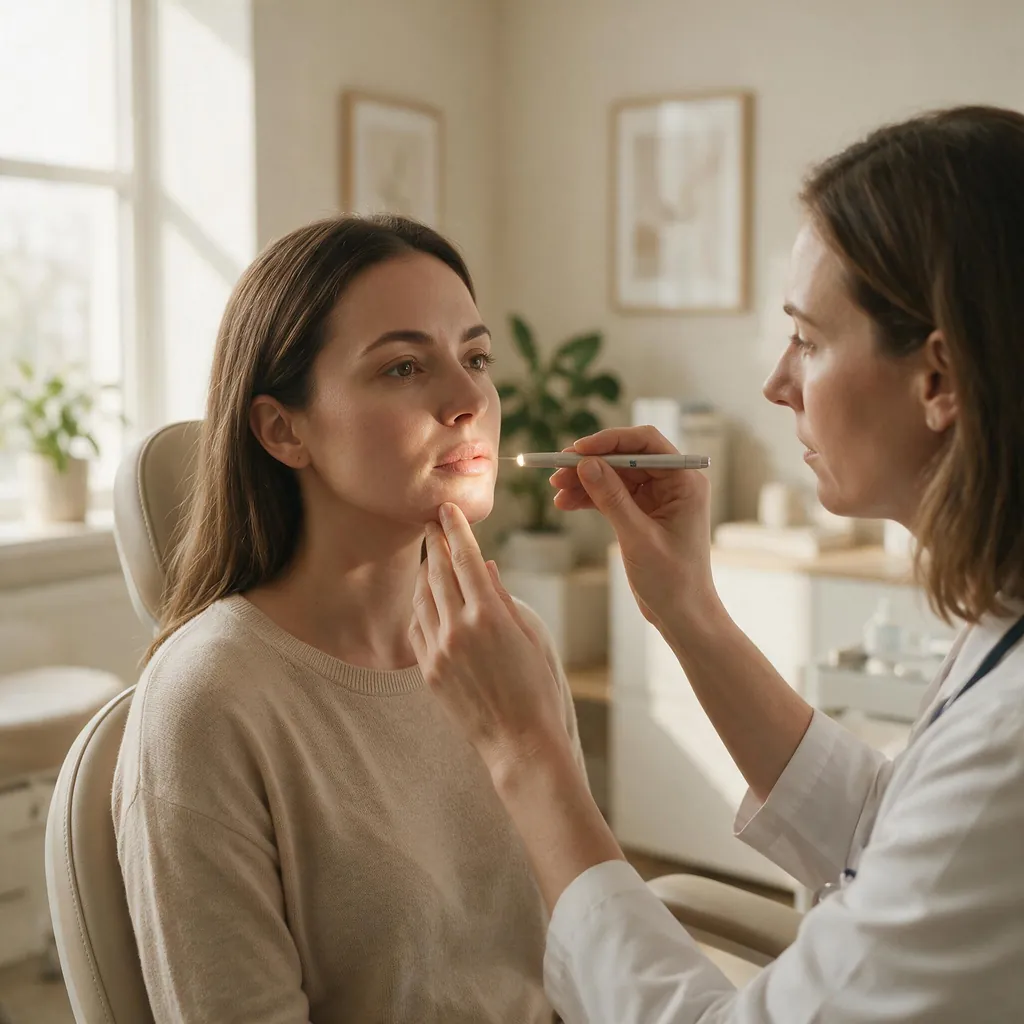
What does current Australian guidance say about filler in pregnancy?
Australian guidance does not say dermal fillers are proven harmful in pregnancy. Instead, current guidance reflects an evidence gap and the fact that the procedure is elective. That distinction matters because it avoids turning a precautionary recommendation into a claim of proven fetal toxicity.
| Australian source | Pregnancy | Breastfeeding | What this means |
|---|---|---|---|
| Pregnancy, Birth and Baby | There is not enough research to know how dermal fillers may affect pregnancy; no specific filler recommendation is currently made. | Direct evidence is also insufficient. | Discuss treatment with a maternal health provider rather than treating filler as proven safe. |
| Queensland Health | Advises avoiding cosmetic injectables. | Also advises avoiding cosmetic injectables. | A conservative public-health approach is reasonable for an elective procedure. |
| TGA and Ahpra | Focus on regulated products, practitioner qualifications, consultation, informed consent, aftercare and serious procedural risks. | Using a TGA-approved product and appropriately registered practitioners supports procedural safety, but does not establish pregnancy safety. | |
Why can’t you get filler when pregnant?
It is more accurate to say that elective filler is usually deferred than to say that all filler is proven toxic in pregnancy. Pregnant people are rarely enrolled in trials of optional cosmetic injections, so there is no robust human evidence that can establish safety for a developing pregnancy. Lack of evidence of harm is not the same as evidence of safety.
The decision is also about the procedure, not only the filler material. Dermal filler can cause bruising, swelling, infection, inflammatory reactions, nodules and vascular occlusion. Rare vascular complications can cause tissue injury, visual loss or neurological harm.
Those complications may require urgent assessment, prescription medicines, hyaluronidase for selected hyaluronic-acid filler problems, imaging or specialist care. Postponing an unnecessary injection removes that additional treatment uncertainty during pregnancy.
Does the advice change for lip, chin, cheek or nose filler?
No facial treatment area removes the pregnancy evidence gap. Lip filler, chin filler, cheek filler, jawline filler and nose filler are all elective injectable procedures. A smaller amount, a familiar treatment or having had filler before does not establish pregnancy safety.
Can you get lip injections while pregnant?
Cosmetic lip injections during pregnancy sit in the same decision pathway as other elective dermal filler. Whether you call it lip filler, lip injections or lip enhancement, there is not enough direct evidence to confirm pregnancy safety. The practical approach is to postpone a new treatment until after pregnancy.
What about chin, cheek, jawline or nose filler while pregnant?
The answer remains to defer elective treatment, but the anatomical complication profile is not identical. Reviews of filler-related visual complications show that vascular anatomy matters, with the nose, forehead and glabella represented disproportionately in reported vision-loss cases. Lip filler is not risk-free; the point is that product, site, technique and practitioner all affect procedural risk.
Can you get hyaluronic acid injections while pregnant?
Hyaluronic acid occurs naturally in human tissues, but that does not prove that an injected cosmetic formulation is safe in pregnancy. Commercial fillers vary in concentration, cross-linking, additives, intended treatment area and other formulation characteristics. Some products may also be used with local anaesthetic.
Hyaluronic-acid filler has an important clinical distinction from some other filler materials: hyaluronidase can be used in selected situations to break down hyaluronic acid. That can be important when treating certain complications, but the availability of a dissolving agent is not evidence that elective hyaluronic-acid injections are pregnancy-safe.
Do fillers affect fertility?
If you are worried that past filler may have affected your fertility, the evidence reviewed for this article does not identify dermal filler as an established cause of infertility or disrupted ovulation. That is not the same as proving zero reproductive risk: fertility outcomes have not been studied well enough for that claim.
When you are trying to conceive, the more immediate issue is avoiding a new elective injection during an unrecognised early pregnancy and avoiding extra treatment uncertainty if a complication occurs. If you use LH testing as part of TTC, see how accurate ovulation tests are and use the result as cycle-tracking information rather than medical clearance for filler.
The Australian guidance and filler-safety reviews used for this article do not establish a universal “washout” period after uncomplicated filler. If pregnancy could occur in the same cycle, postponing a new appointment is the simplest way to remove the timing uncertainty. If you are having IVF, IUI or another fertility treatment, follow your fertility clinic’s advice because medicines and treatment schedules can change the decision. For home LH tracking, you can compare ovulation tests in Australia.
Trying to conceive: pregnancy tests, LH tests and filler timing
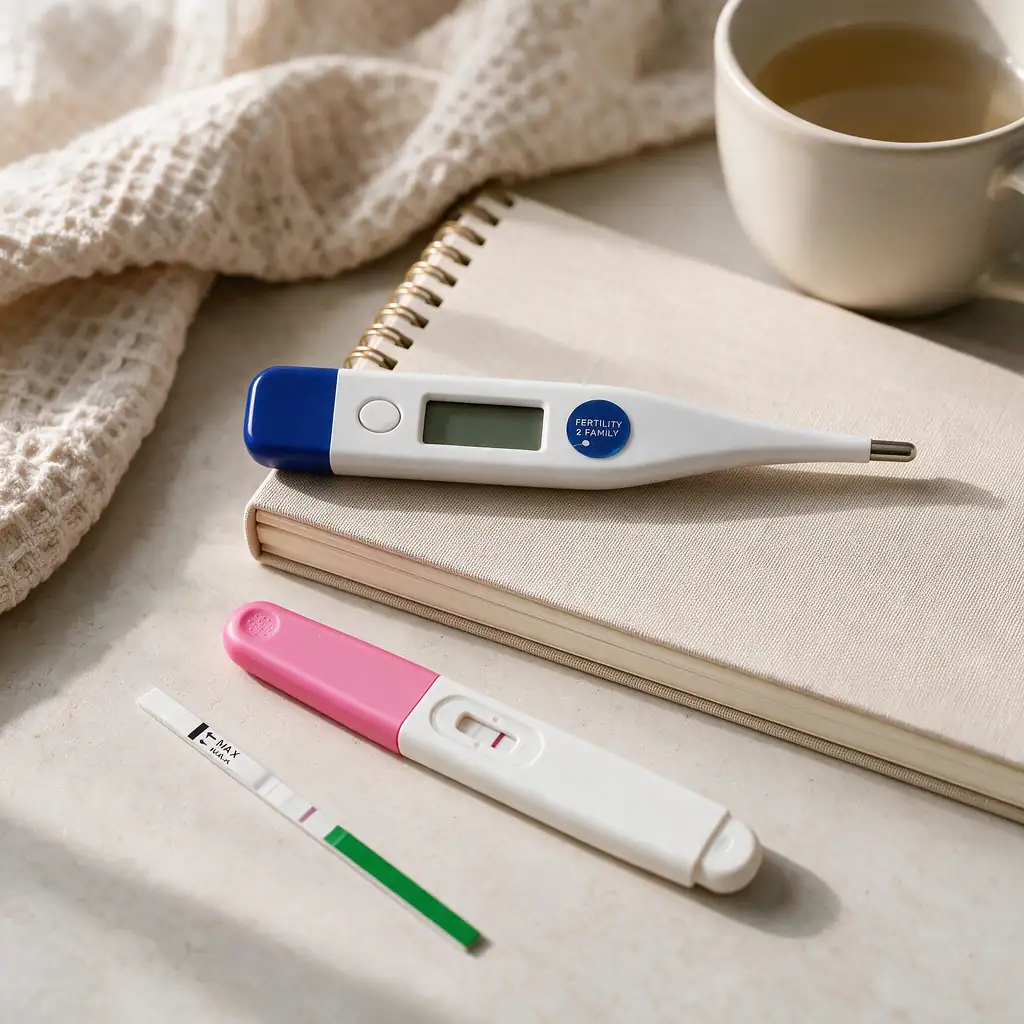
One early negative pregnancy test cannot guarantee that pregnancy is impossible. Home urine tests detect human chorionic gonadotropin, usually called hCG, and testing before enough hCG has accumulated can produce a false-negative result. If you tested early, read our guide to false-negative pregnancy tests and when to retest.
If you track ovulation while trying to conceive, an ovulation test can help identify an LH surge, but it cannot confirm that you are not pregnant, prove that ovulation occurred or identify a “safe filler day”. This is why an ovulation test cannot replace a pregnancy test.
For repeated home LH tracking, ovulation test strips provide a dip-and-read option. These tests support fertile-window tracking; they should not be used as medical clearance for an elective injectable procedure.

I had filler before I knew I was pregnant: what should I do?
Finding out you are pregnant after a recent filler appointment can be frightening, but an uncomplicated past injection is not proof of fetal harm. In the absence of a filler complication, the practical approach is routine pregnancy follow-up plus documentation of the exposure rather than automatic treatment to remove the filler.
- Do not panic. Accidental exposure is different from choosing to have a new elective treatment during a known pregnancy.
- Get the treatment record. Ask for the product name, batch or lot number, amount, anatomical site, treatment date and practitioner details.
- Tell your maternity clinician. Your GP, midwife, obstetric clinician or fertility clinic can document the exposure and review medicines used with the procedure.
- Do not routinely dissolve uncomplicated filler because pregnancy was discovered. Hyaluronidase should be used for a clinical indication and individual risk-benefit assessment, not as an automatic response to a positive pregnancy test.
- Watch for filler complications. New severe pain, skin colour changes, infection symptoms or visual symptoms need assessment based on the symptom and timing.
If you have just received a positive result, the positive pregnancy-test first-steps guide covers practical Australian next steps.

Which filler symptoms need urgent medical assessment?
Most mild bruising or swelling after filler is not an emergency. However, severe or escalating pain, blanching, mottled or dusky skin, cool skin, rapidly worsening colour change or new visual symptoms can indicate a serious vascular complication. Contact the treating practitioner urgently and seek emergency medical assessment rather than waiting for a routine pregnancy appointment.
New loss of vision, severe visual disturbance, weakness, facial droop, difficulty speaking, collapse, severe breathing difficulty or signs of anaphylaxis require emergency care. In Australia, call Triple Zero (000) for an ambulance when symptoms are life-threatening. If you have a prescribed adrenaline autoinjector and suspect anaphylaxis, Australian healthdirect guidance says to use it immediately, then call 000.
Spreading redness, increasing warmth, pus, fever or worsening tenderness can indicate infection and also need prompt medical review. Delayed nodules or persistent inflammation may not be a 000 emergency, but they still require assessment by an appropriately qualified clinician.
Can you get lip filler while breastfeeding?
If you are breastfeeding and wondering whether you need to wait until weaning, the evidence does not support a simple universal rule. Research specifically examining dermal filler during breastfeeding remains limited, and Australian sources take different levels of caution.
The important distinction is that limited evidence is not proof of safety, but it is also not proof of harm. The Australian sources reviewed for this article do not establish a fixed postpartum waiting period for dermal filler.
If you want the least uncertainty, waiting until breastfeeding is complete is reasonable. If you are considering treatment sooner, the decision should account for the exact filler, any local anaesthetic or other medicines, your health, feeding circumstances and how the clinic would manage a complication. A clinic may adopt a stricter policy, but that policy should not be presented as evidence that filler has been shown to harm a breastfed baby.

How do you choose a safer cosmetic injector in Australia?
The TGA’s current consumer guidance treats cosmetic injections as medical procedures and emphasises regulated products, practitioner qualifications, informed consent, aftercare and the risk of counterfeit products. Ahpra’s national guidelines for registered health practitioners performing non-surgical cosmetic procedures took effect on 2 September 2025 and strengthened expectations around training, assessment, consent and patient safety.
Why are specific filler brands not promoted here? Current TGA advertising guidance restricts public promotion of prescription-only cosmetic injectable brand names and substances. Ask for the exact product during consultation, check it on the Australian Register of Therapeutic Goods, and remember that brand recognition does not establish pregnancy safety.
- Check the registration of the health practitioners involved and ask who is responsible for prescribing, administering and clinical follow-up.
- Ask for the exact product and confirm that it is included on the Australian Register of Therapeutic Goods where required.
- Keep the product name and batch or lot details after treatment.
- Ask who will manage vascular occlusion, severe allergy, infection or delayed complications, including after hours.
- Do not treat claims such as “pregnancy-safe filler”, “risk-free filler” or “natural filler” as evidence of reproductive safety.
- Avoid counterfeit or unapproved injectables sourced outside legitimate Australian supply pathways.
What can you do instead of filler during pregnancy?
For most people, the lowest-uncertainty alternative is simply to postpone the injection. That does not mean you need to ignore how your skin or face feels during pregnancy. Pregnancy can change skin and facial tissues, and waiting gives you a more stable point to reassess volume, symmetry and skin concerns after birth.
Basic moisturiser and daily sun protection can usually remain part of pregnancy skin care, but active ingredients and prescription treatments need individual checking. If acne, pigmentation, dermatitis or another skin condition is bothering you, ask your GP, pharmacist, midwife or dermatologist for pregnancy-appropriate care rather than assuming another cosmetic procedure is safe because it is marketed as “natural”. If you are also considering anti-wrinkle injections, the separate Botox and pregnancy guide covers that treatment because the evidence and treatment characteristics are different.
Frequently Asked Questions about Dermal Fillers and Pregnancy in Australia
Can I get lip filler in the first trimester?
Elective lip filler is best postponed in the first trimester and throughout pregnancy, including very early pregnancy. Moving treatment to a later trimester does not solve the lack of direct pregnancy safety evidence for an optional filler procedure.
Can filler harm a baby if I had it before I knew I was pregnant?
An accidental past treatment does not prove fetal harm. Document the exposure and tell your maternity clinician. Routine dissolution is not recommended solely because pregnancy was discovered, but any filler complication should be assessed and treated on its clinical merits.
How long should I wait after filler before trying to conceive?
The Australian guidance and filler-safety reviews used for this article do not establish a universal waiting interval after uncomplicated filler. If pregnancy could occur in the same cycle, postponing the cosmetic injection avoids the possibility of treatment during an unrecognised early pregnancy.
Can I get chin, nose or face filler while pregnant?
Elective chin, nose and other facial filler should also be postponed during pregnancy. The treatment area changes the anatomical complication profile, but it does not remove the lack of direct pregnancy safety evidence.
Can you dissolve lip filler while pregnant?
Do not arrange filler dissolving just because you discover you are pregnant. Hyaluronidase is used to break down hyaluronic-acid filler and is important for selected complications, including vascular occlusion, but routine dissolving of uncomplicated filler after a positive pregnancy test is not supported by the evidence reviewed here. If a vascular complication is suspected, treatment is urgent and should be based on the clinical risk; tell the treating team that you are pregnant.
Can dermal filler cause a positive pregnancy test?
Dermal filler is not hCG and is not expected to make an hCG pregnancy test positive. Some medicines and medical conditions can affect hCG results, so an unexpected positive result should be interpreted in the context of your treatment history and confirmed with appropriate pregnancy testing.
When can I restart filler after pregnancy?
The Australian sources reviewed for this article do not establish a single waiting interval after birth. If you are breastfeeding, research on dermal filler remains limited and clinical policies vary. Discuss the exact filler, your health, feeding circumstances and the clinic’s complication plan. A fresh facial assessment can also be useful after pregnancy-related changes settle.
Next Steps in Australia
If you are pregnant, postpone new elective dermal or lip filler. If treatment happened before you knew you were pregnant, the useful next step is documentation, not panic: keep the product, treatment site and date, then discuss the exposure with your maternity clinician without assuming harm.
If you develop severe pain, skin blanching or mottling, visual symptoms, neurological symptoms, breathing difficulty or collapse after filler, seek urgent medical care. For life-threatening symptoms in Australia, call Triple Zero (000).
Last reviewed: 17 August 2026
Next scheduled review: August 2027
References
Fertility2Family articles are researched using Australian Government health guidance, professional clinical recommendations and peer-reviewed medical literature. The references below were used to research this article and provide additional reading for readers who want to explore the evidence in more detail.
Pregnancy, Birth and Baby. Cosmetic procedures and beauty treatments during pregnancy and breastfeeding
Australian Government-supported guidance summarising limited safety evidence for cosmetic procedures in pregnancy and breastfeeding, including dermal filler, and advising discussion with a maternal health provider.
Therapeutic Goods Administration. Things to consider before undergoing procedures involving dermal fillers
Current Australian consumer guidance covering dermal filler regulation, TGA-approved products, practitioner expertise, counterfeit-product risks, consultation questions, serious complications and aftercare responsibilities.
Therapeutic Goods Administration. Cosmetic injections checklist
Australian checklist explaining prescriber consultation, practitioner registration, informed consent, product checks, ARTG status, counterfeit-product risk, complications and post-procedure follow-up for cosmetic injections.
Australian Health Practitioner Regulation Agency. Guidelines for registered health practitioners who perform non-surgical cosmetic procedures
National guidelines effective from September 2025 outlining expectations for registered health practitioners performing non-surgical cosmetic procedures, including competence, assessment, consent, prescribing, administration and patient safety.
Queensland Health. Beginner-friendly guide to cosmetic injectables
March 2026 Australian public-health guidance describing cosmetic injectables as medical procedures, advising avoidance during pregnancy and breastfeeding, and explaining product, practitioner and complication risks.
healthdirect Australia. Human chorionic gonadotropin (hCG) test – pregnancy
Australian consumer guidance explaining how urine and blood hCG testing works, why very early urine testing can produce false-negative results, and when repeat testing may be needed.
healthdirect Australia. Anaphylaxis
Australian emergency guidance describing anaphylaxis symptoms and advising immediate use of an adrenaline autoinjector when available, followed by calling Triple Zero for an ambulance.
Journal of Cutaneous and Aesthetic Surgery. Dermatologic and Cosmetic Procedures in Pregnancy
A 2022 clinical review of dermatologic and cosmetic procedures in pregnancy that reviews pregnancy physiology and procedure-specific risks and classifies dermal fillers as contraindicated during pregnancy.
Aesthetic Plastic Surgery. Adverse Events Associated with Hyaluronic Acid Filler Injection for Non-surgical Facial Aesthetics: A Systematic Review of High Level of Evidence Studies
A 2024 systematic review of higher-level evidence on hyaluronic-acid facial fillers, classifying expected reactions, technique-related events and rare severe complications relevant to informed consent and safety.
Ophthalmology. Vision-Threatening Complications of Soft Tissue Fillers: A Report by the American Academy of Ophthalmology
A 2025 evidence review describing reported vision-loss cases after soft-tissue filler injection, associated facial injection sites, filler materials and the limited effectiveness of reported rescue treatments.
Clinical & Experimental Ophthalmology. Causes and management of sight threatening complications of dermal filler injections: A review
A 2024 review in the Royal Australian and New Zealand College of Ophthalmologists journal covering mechanisms, recognition and management of rare sight-threatening filler complications.
Clinical, Cosmetic and Investigational Dermatology. The 10-Point Plan 2021: Updated Concepts for Improved Procedural Safety During Facial Filler Treatments
A filler-safety review covering patient selection, pregnancy and lactation, product characteristics, consent and complication management, including routine follow-up after pregnancy discovered shortly after treatment.
Journal of Craniofacial Surgery. Understanding Vascular Complications Arising From Dermal Filler Injection
A 2025 review of filler-related vascular complications describing tissue-ischaemia changes, necrosis and vision-threatening events that reinforce the need for rapid recognition and appropriate management.
Brazilian Dental Journal. Adverse reactions and complications caused by hyaluronic acid injections in the face: A scoping review
A 2026 scoping review mapping adverse reactions and serious complications reported after facial hyaluronic-acid filler injections, including bruising, ischaemia, oedema, necrosis and embolic events.
Journal of Clinical Medicine. Hyaluronidase Use in Aesthetic Medicine: Formulations, Safety, and Clinical Practice
An updated 2025 review of hyaluronidase formulations and clinical practice describing its role in managing hyaluronic-acid filler complications, including vascular occlusion, while noting variable dosing protocols.