
On this page
If you have ever lined up a few ovulation tests and wondered whether the darkest line means “today is the day”, the useful answer is a little simpler. Ovulation tests, also called ovulation predictor kits or OPKs, detect a rise in luteinising hormone (LH) in urine. Their real value is helping you narrow down the fertile window, rather than pinpointing one exact moment of ovulation.
Compare ovulation tests if you are choosing between strips and midstream formats.
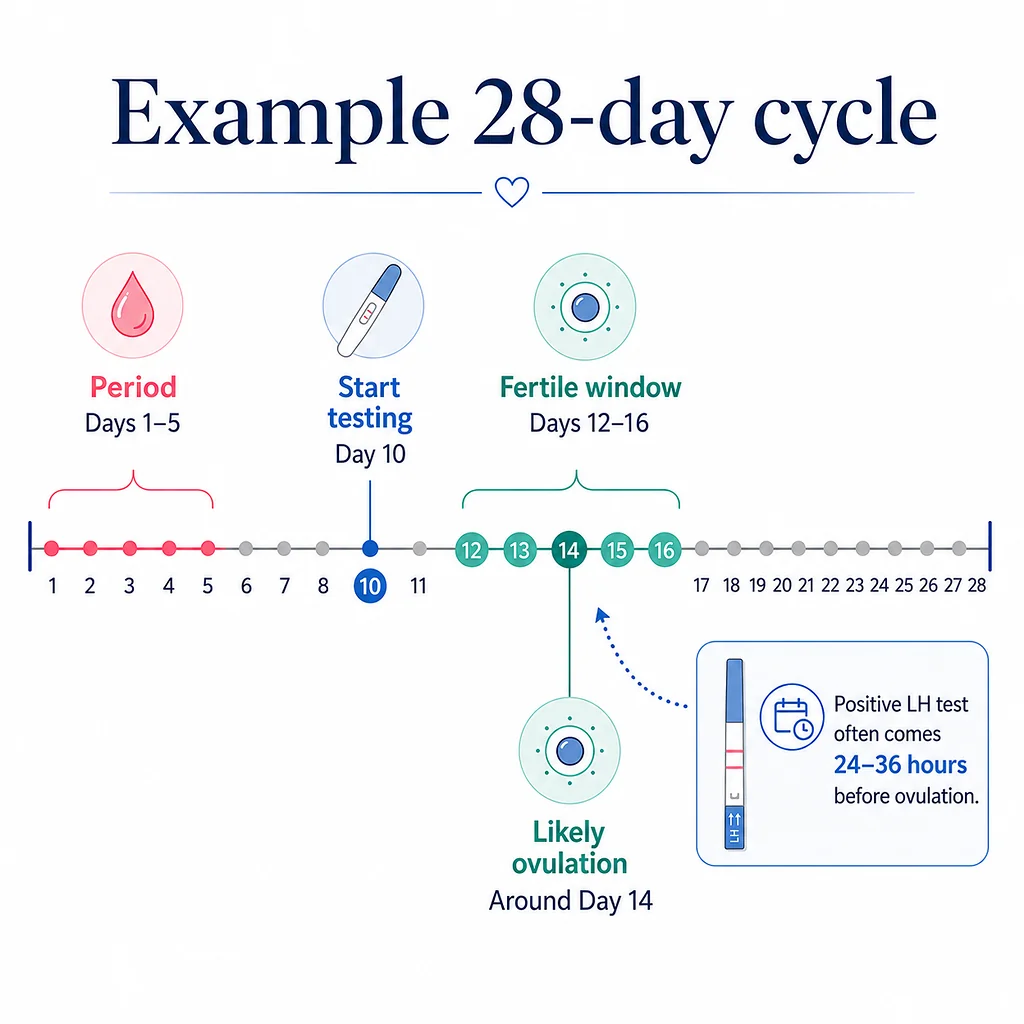
Australian guidance commonly uses about 24 to 36 hours after a positive urinary LH test as a practical guide to likely ovulation. Individual timing varies, so an OPK is best read as a helpful signal that ovulation may be approaching, not a countdown clock.
Quick answers about ovulation test accuracy
How accurate are ovulation tests?
Ovulation tests are useful for detecting a rise in urinary LH when they are used as directed. They are most helpful for narrowing down the fertile window, but they do not pinpoint the exact moment an egg is released.
Does a positive OPK mean you will definitely ovulate?
Not necessarily. A positive OPK means the urine sample has reached the test’s positive range for LH. Ovulation often follows, but the result is best used as a timing signal rather than proof that ovulation has already happened.
Can you miss an LH surge?
Yes. A short surge, starting too late, very dilute urine or inconsistent testing can mean the rise is missed in the samples you collect. Following the instructions for your exact test gives you the best chance of catching it.
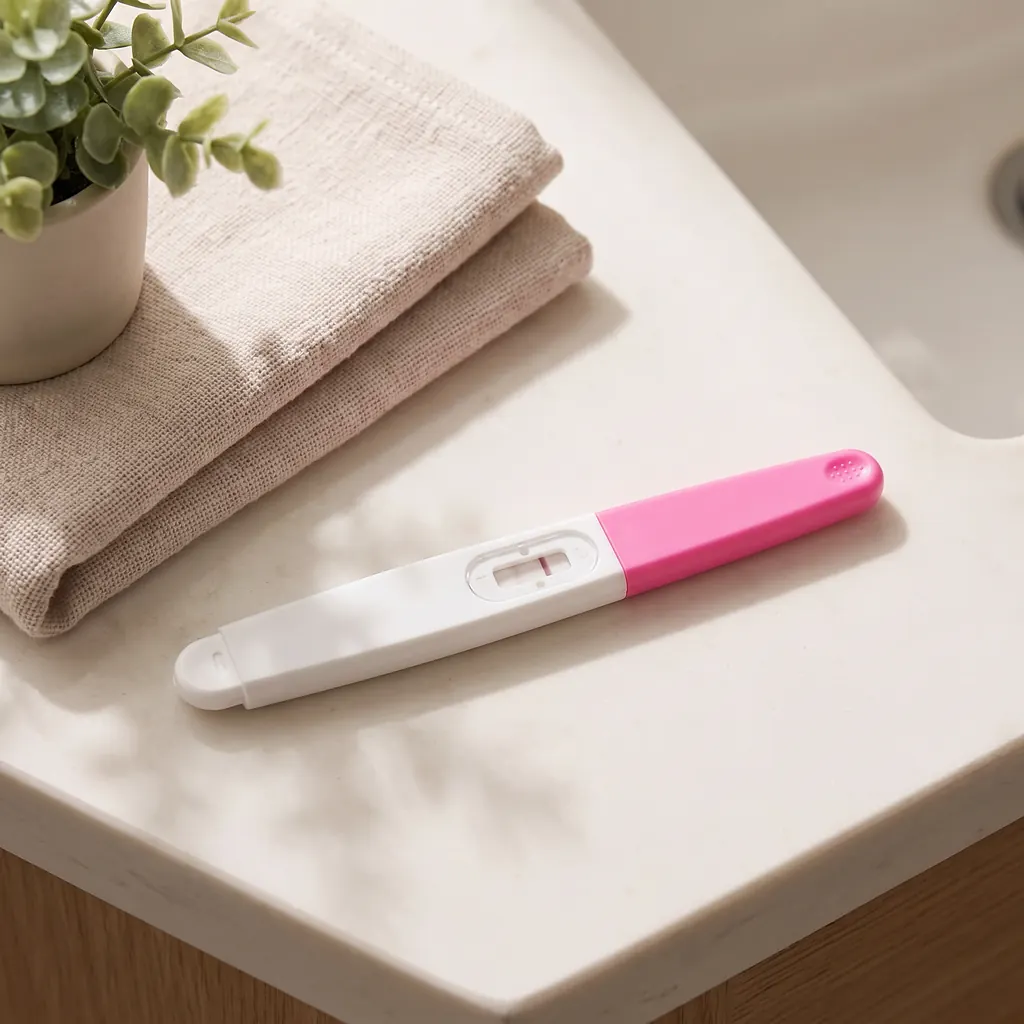
What does ovulation test accuracy really mean?
When people ask how accurate ovulation tests are, they are often asking two different questions. The first is whether the test can detect LH in urine. The second is whether that result tells you exactly when ovulation will happen. Those are related, but they are not the same thing.
An OPK can be very useful at detecting an LH rise. Once LH reaches the test’s positive range, the result can help show that the fertile part of the cycle is close. What the test does not directly measure is egg release itself, so the timing of ovulation can still be earlier or later than expected.
A useful way to think about an OPK is as a signpost. It gives you a clearer sense of where you are in the cycle without asking one urine test to explain everything that is happening hormonally.
What does the evidence say about OPK accuracy?
There is no single percentage that describes every ovulation test in every cycle. Recent research helps explain why.
A 2025 prospective study compared five home OPKs with blood LH measurements. Overall agreement was high across the five kits, ranging from 91.75% to 96.90%, while sensitivity for detecting a blood LH surge varied more widely from 38.46% to 76.92%. The important detail is that the study measured agreement with blood LH, not whether ovulation was later confirmed by ultrasound.
Timing also varies naturally. A 2022 systematic review found that the interval from the start of the LH surge to ovulation ranged from about 22 to 56 hours, with an average of about 34 hours across the included cycles. That fits well with the simpler Australian consumer guidance of roughly 24 to 36 hours after a positive OPK, while reminding us that not every cycle follows the same clock.
So when you see an accuracy claim, it helps to ask what is actually being measured. Detecting an LH rise and predicting likely ovulation are useful, but they are not identical measurements.
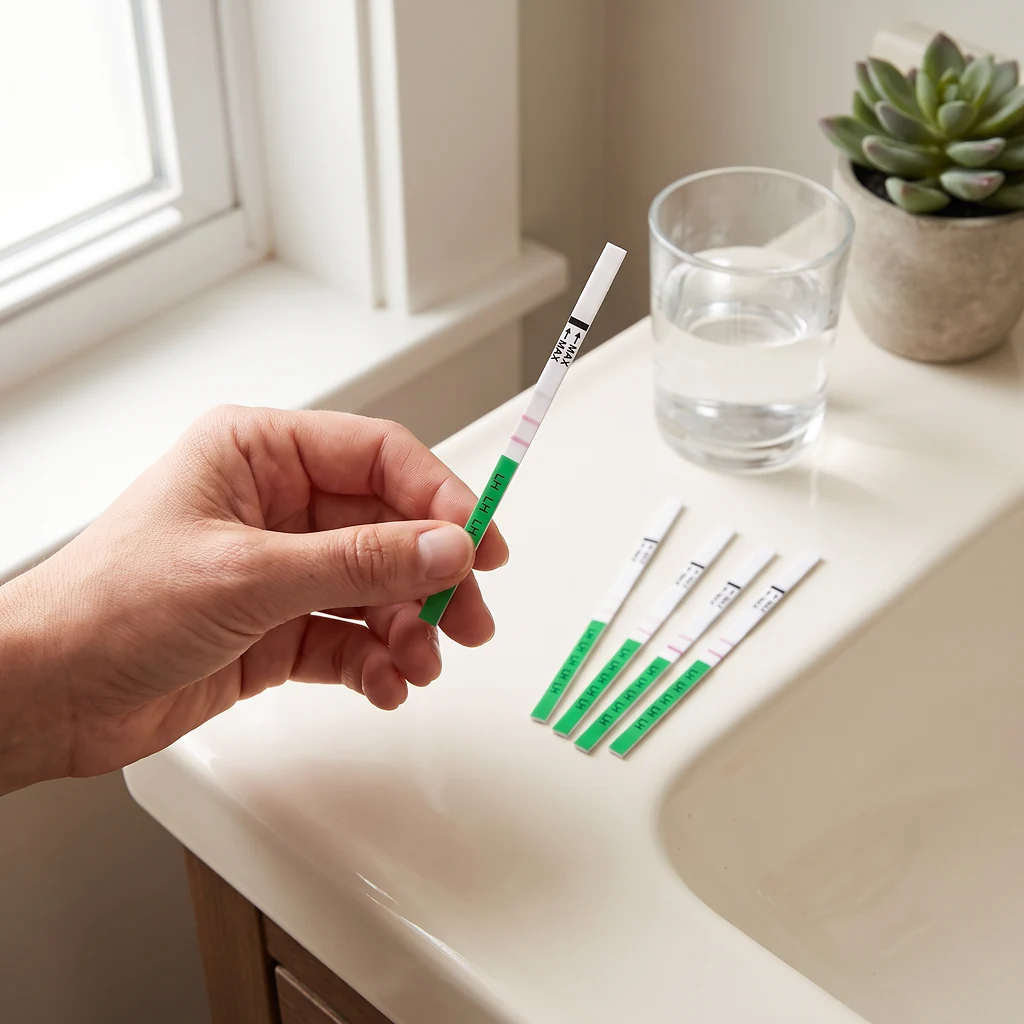
What does a positive ovulation test mean?
On many line-based LH tests, a result is positive when the test line is as dark as or darker than the control line. Digital tests can use different displays or algorithms, so the instructions supplied with your exact test should guide how you read the result.
After a positive OPK, Australian guidance commonly uses the next 24 to 36 hours as a practical window for likely ovulation. Research shows that the interval can be wider, which is why it is usually more useful to think about the fertile window than to chase one exact hour.
Because the fertile window begins before ovulation, a positive result can be used naturally alongside timing after an LH surge. Looking at the wider fertile window also helps put one positive test into the context of the whole cycle.
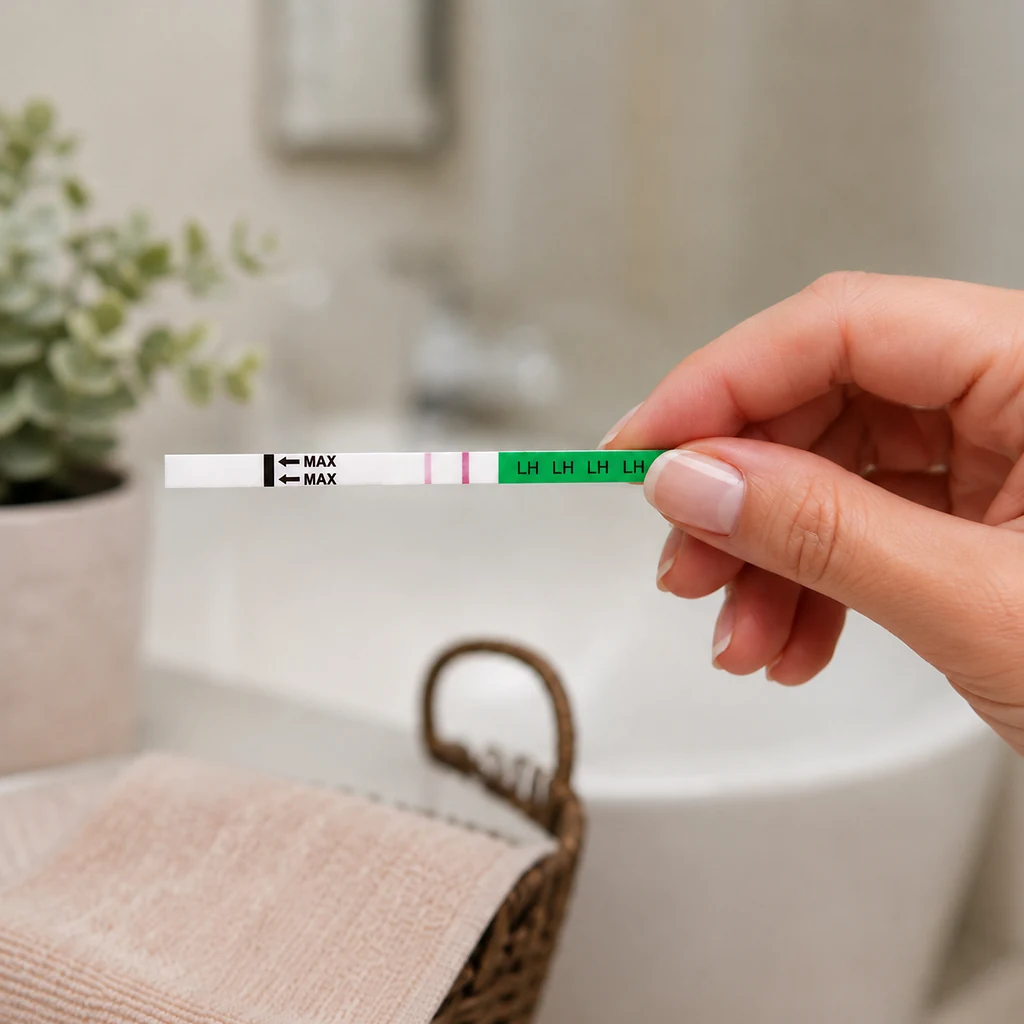
Why timing and technique can change an OPK result
Even a well-performing test can only measure the urine sample you collect at that moment. If testing starts after a short LH surge has passed, or the urine is very dilute, the result may stay below the positive threshold even though LH rose at another point in the day or cycle.
Collection method matters too. Dip strips and midstream tests are used differently, so the directions for the format in your hand are more useful than a rule copied from another brand. The strip testing instructions cover dipping and reading windows, while the midstream instructions reflect direct in-stream testing.
Starting a few days before expected ovulation gives you more opportunity to see the rise. A 28-day cycle is often used as an example, with ovulation around the middle of the cycle, but real cycles can be shorter, longer or vary from month to month. Your recent cycle pattern and the instructions supplied with the test are more useful than assuming everyone ovulates on day 14.
Why can ovulation test results look different from cycle to cycle?
No positive result this cycle
Missing a positive OPK once does not automatically mean anything is wrong. A shorter surge, starting at the wrong point in the cycle, a diluted sample or a lower LH peak can all make the rise harder to catch. If it becomes a repeated pattern, the common reasons an ovulation test can stay negative are easier to interpret alongside your cycle timing than from one test alone.
Positive for more than one day
Some LH surges rise and fall quickly, while others are broader. Seeing more than one positive test can therefore be part of a normal pattern. It does not mean that several eggs were released or that you need to keep testing until the line becomes lighter.
PCOS, now also referred to as PMOS in current Australian guidance, can make ovulation and LH patterns less predictable. For people in that situation, tracking ovulation with PCOS or PMOS often makes more sense when the OPK result is considered with the wider cycle pattern.
When an OPK result does not match what you expected
People often describe an unexpected OPK as a false positive or false negative, but many confusing results come down to timing, hormone patterns or how the result was interpreted.
A positive LH result without confirmed ovulation
An OPK can correctly detect an LH rise without showing what happens afterwards. Ovulation often follows, but the urine test itself does not observe egg release. Fertility medicines can also affect hormone patterns, so anyone using them should follow the testing plan provided by their clinic.
A positive window that was easy to miss
A negative result tells you that the sample did not meet the positive threshold at that time. If the surge is brief or the urine is dilute, the positive window can be missed between tests. Looking at cycle timing and several days of results is usually more helpful than over-interpreting one negative strip.
When the test is invalid
If the required control indicator does not appear, the test has not run correctly and should be repeated with a new device. When the control is present but the second line is hard to judge, understanding what a faint line on an ovulation test usually means can make the result much easier to read.
What can you use alongside an ovulation test?
Different tracking methods answer different questions, so some people find it useful to look at more than one sign across the cycle.
Basal body temperature rises slightly after ovulation and is most useful for looking back at the pattern. It does not predict the LH surge, but a sustained rise can add context after the fertile window. Some people pair OPKs with basal body temperature charting so the LH result provides a forward-looking signal and BBT adds a retrospective pattern.
Cervical mucus can provide another prospective fertility sign. Around ovulation it often becomes clearer, wetter and more slippery, although medicines, infection, semen and other factors can change what you notice.
When there is a clinical reason to check whether ovulation is occurring, a GP or fertility clinician may use a correctly timed progesterone blood test and, in some situations, ultrasound monitoring. These answer different questions from a home OPK and are used when a fuller clinical picture would be helpful.
Ovulation test strips or midstream tests: which format suits you?
The best format is usually the one that fits your routine and that you can use consistently. Ovulation test strips are dipped into a collected urine sample and can be practical when you expect to test over several days. Midstream ovulation tests are used directly in the urine stream and may suit people who prefer fewer handling steps.
Price alone does not tell you how well an OPK will perform. In the small 2025 comparison of five one-step kits, overall agreement with blood LH was similar across products at different price points, although sensitivity varied. Clear instructions, correct use and choosing a format you are comfortable with matter more than assuming a more expensive test must be more accurate.
Can an OPK make fertile-window timing easier?
For people trying to conceive, urine ovulation tests can make timing feel more practical because they provide a prospective sign that the fertile window is close. A 2023 Cochrane review found that timed intercourse using urinary ovulation detection probably improved pregnancy and live-birth rates in women under 40 who had been trying to conceive for less than 12 months compared with intercourse without ovulation prediction.
The evidence is encouraging, but an OPK does not need to become a daily scorecard. Its job is simply to make the fertile window easier to recognise and use.
When might it help to speak with a GP?
One unusual OPK cycle usually does not need medical review. A GP conversation can be useful when periods are absent or very irregular, you repeatedly cannot identify an LH rise despite well-timed testing, you are using fertility medicines, or you already know of a condition that can affect ovulation.
If you are trying to conceive, Pregnancy, Birth and Baby recommends seeking advice after 12 months of trying if you are under 35, or after 6 months if you are 35 or older. Earlier advice can be appropriate when there are known fertility concerns. If you are approaching that point, understanding when fertility specialist assessment is usually considered can make the next step feel more straightforward.

Frequently Asked Questions about Ovulation Test Accuracy in Australia
Are ovulation tests 99% accurate?
Not in the way that phrase is often understood. A 99% figure may describe how well a particular test detects LH under defined conditions. It does not mean there is 99% certainty that ovulation occurred, so it is worth checking what the accuracy claim actually refers to.
Can an ovulation test be positive without confirmed ovulation?
Yes. A positive urinary LH test shows that LH has reached the test’s positive range. Ovulation often follows, but a home OPK does not directly observe egg release, so the result is predictive rather than confirmatory.
How long after a positive OPK does ovulation happen?
Australian consumer guidance commonly uses about 24 to 36 hours as a practical guide. Research shows wider individual variation, so it is better to treat this as a fertile-window cue rather than an exact countdown.
Can diluted urine affect an ovulation test result?
Yes. Drinking a large amount of fluid before testing can lower the concentration of LH in the urine sample. Follow the fluid and timing instructions supplied with your test, because recommendations can differ between products.
Does a faint line mean ovulation is approaching?
Not necessarily. On line-comparison tests, a faint test line is usually still negative until it meets the positive rule in the instructions. Line darkness can change across the cycle, so read the current result rather than trying to predict too much from one faint line.
Are cheaper ovulation tests less accurate?
Price alone does not tell you how well an OPK will perform. A small 2025 study found similar overall agreement with blood LH across five differently priced one-step kits, although sensitivity varied. Clear instructions and correct use matter more than price alone.
Next Steps in Australia
Ovulation tests are most useful when they make your cycle easier to understand. Use the same test consistently, follow its timing and reading instructions, and look at the pattern across several days rather than searching for one perfect line or one exact hour of ovulation.
If your cycles are fairly regular, an OPK can be a simple way to narrow down the fertile window. If the pattern stays difficult to interpret, your cycles are very irregular or you have been trying to conceive for the recommended timeframe without success, a GP can help you decide whether any further assessment would be useful.
✓ Medically reviewed by Evan Kurzyp, RNLast reviewed Next review August 2027
References17 sources
Fertility2Family articles are researched using Australian Government health guidance, professional clinical recommendations and peer-reviewed medical literature. The references below were used to research and medically review this article and provide additional reading for readers who want to explore the evidence in more detail.
You can read how we research, write and check our health information in our editorial and medical review policy, and see who reviews our articles and their clinical credentials.
- Pregnancy, Birth and Baby Ovulation and fertility Australian consumer guidance on ovulation, urinary LH testing, fertile-window timing and the limits of using a positive ovulation test as evidence that ovulation occurred.
- Healthdirect Australia Fertility awareness (natural family planning) Australian guidance on fertility-awareness methods, including cervical mucus and basal body temperature, plus factors that can make cycle signs harder to interpret accurately.
- Your Fertility Timing Australian fertility education explaining the fertile window, the relationship between ovulation and intercourse timing, and why cycle timing varies between people and cycles.
- Royal College of Pathologists of Australasia Luteinising hormone Pathology guidance explaining LH physiology, the pre-ovulatory LH peak, pulsatile secretion and why a single hormone measurement needs appropriate clinical and cycle context.
- Australian Journal of General Practice Assessment of female fertility in the general practice setting Australian primary-care guidance on ovulation assessment, cycle history, progesterone testing, fertility risk factors and when further investigation or fertility referral may be appropriate.
- Better Health Channel Ovulation and fertility Victorian consumer guidance on ovulation, fertility signs and clinical methods that can provide additional information when home cycle tracking does not answer the question.
- Medical Journal of Australia Summary of the 2023 international evidence-based guideline for the assessment and management of polycystic ovary syndrome: an Australian perspective Australian clinical summary of the international PCOS guideline, covering ovulatory dysfunction, reproductive assessment and evidence-based management considerations relevant to irregular ovulation patterns.
- Journal of Clinical Endocrinology & Metabolism Recommendations From the 2023 International Evidence-based Guideline for the Assessment and Management of Polycystic Ovary Syndrome International evidence-based recommendations covering PCOS, ovulatory dysfunction, reproductive features and clinical assessment when cycle patterns are irregular or difficult to interpret.
- US Food and Drug Administration Ovulation (Urine Test) Consumer medical-device guidance explaining that home ovulation tests detect urinary LH, that timing and instructions affect results, and that a positive test predicts rather than confirms ovulation.
- MedlinePlus Ovulation home test Consumer medical guidance on urinary LH testing, testing technique, medicines and other factors that can affect results, plus when persistent difficulty detecting a surge warrants clinical advice.
- The Journal of Applied Laboratory Medicine AACC Guidance Document on the Use of Point-of-Care Testing in Fertility and Reproduction Laboratory medicine guidance on point-of-care fertility testing, including urinary LH test performance, interpretation and limitations relevant to home ovulation prediction.
- Human Reproduction Update The LH surge and ovulation re-visited: a systematic review and meta-analysis and implications for true natural cycle frozen thawed embryo transfer Systematic review and meta-analysis showing substantial variation between the onset of the LH surge and ovulation, supporting use of OPKs as timing tools rather than exact ovulation clocks.
- Fertility and Sterility Similar accuracy and patient experience with different one-step ovulation predictor kits Prospective 2025 comparison of five home OPKs examining agreement with serum LH, sensitivity and user experience, including the distinction between overall concordance and surge-detection sensitivity.
- Fertility and Sterility Optimizing natural fertility: a committee opinion Professional guidance on the fertile window, intercourse timing and natural conception, supporting the use of ovulation prediction as a timing aid rather than a guarantee of conception.
- Cochrane Database of Systematic Reviews Timed intercourse for couples trying to conceive Systematic review finding that urine-based ovulation prediction probably improves pregnancy and live-birth rates in women under 40 trying for less than 12 months, while noting manufacturer funding and uncertainty about stress and quality of life.
- Healthdirect Australia Planning for your pregnancy Australian preconception guidance covering when to seek fertility advice, including different timeframes according to age and earlier assessment when individual risk factors are present.
- Pregnancy, Birth and Baby PCOS and pregnancy Current Australian consumer guidance on PCOS and the 2026 transition to the term polyendocrine metabolic ovarian syndrome, including effects on ovulation and fertility.