
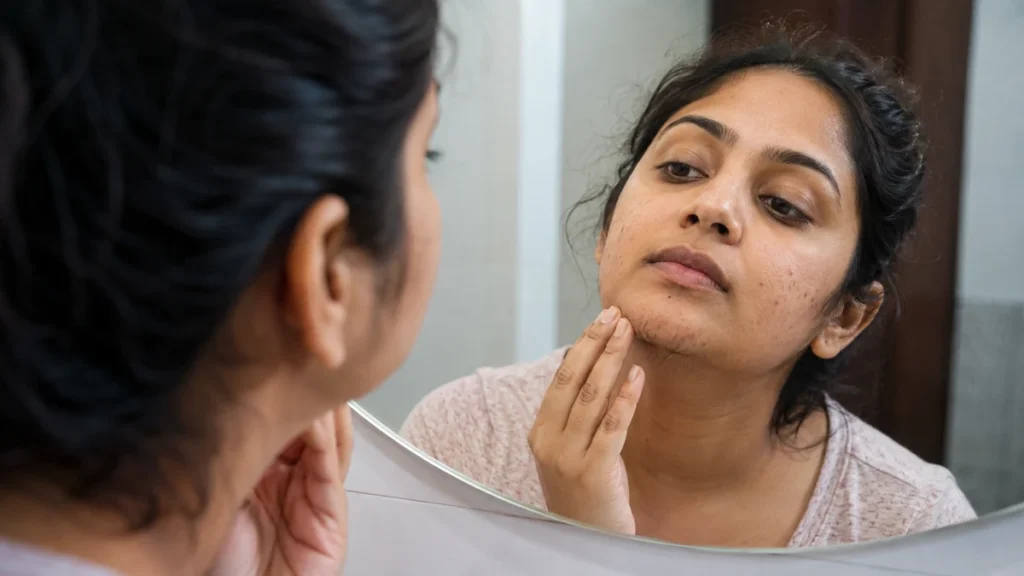

When irregular periods, persistent acne or new hair changes appear together, it is understandable to wonder whether PMOS is the reason. PMOS may be one possibility, but the pattern matters more than any single symptom. PMOS is the new Australian name for PCOS. Common symptoms include irregular or absent periods, difficulty predicting ovulation, excess facial or body hair, scalp hair thinning, persistent acne or oily skin, and concerns involving glucose health, sleep, mood or fertility.
If you are searching for PCOS symptoms in Australia, you are looking at the same condition now called PMOS. One symptom, one blood result or one ultrasound cannot diagnose it. An Australian GP considers the cycle history, androgen-related features, other possible causes and the tests that would genuinely change care.
Book a review when periods remain irregular, symptoms persist or pregnancy is a goal. You do not need to prove the diagnosis before asking for help.
Quick answers about PMOS symptoms
What are the most common PMOS symptoms?
The most common pattern includes irregular or absent periods, persistent acne or oily skin, excess facial or body hair, scalp hair thinning and difficulty predicting ovulation. Metabolic, sleep, mood and fertility concerns can also occur, but one symptom alone does not diagnose PMOS.
Can symptoms or an ultrasound diagnose PMOS?
No. In adults, diagnosis generally requires at least two of three features: ovulatory dysfunction, clinical or biochemical androgen excess, and polycystic ovarian morphology assessed by ultrasound or AMH where appropriate. Other possible causes must also be excluded.
When should you see a GP about possible PMOS?
Book a GP review if periods are repeatedly irregular, you have eight or fewer periods a year, no period for three months, persistent androgen-related skin or hair changes, difficulty conceiving, or metabolic or mental-health concerns. Seek earlier assessment if symptoms change rapidly.
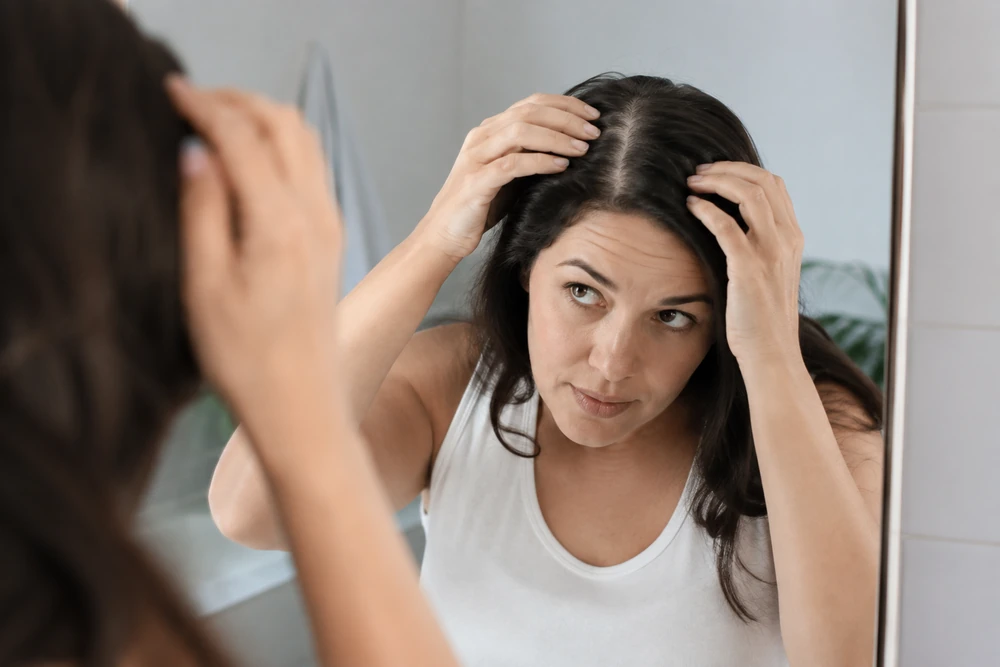
PCOS is now PMOS: what changed and what did not?
In May 2026, polycystic ovary syndrome was renamed polyendocrine metabolic ovarian syndrome. The new name reflects that the condition can involve endocrine, metabolic, reproductive, skin and psychological health. It also reduces the misleading idea that abnormal ovarian cysts define the condition. The structures usually described on ultrasound are small follicles. A person can have PMOS without this ultrasound feature, and the feature can occur without PMOS.
The rename did not create a new disease or suddenly change established diagnostic criteria and treatments. Australian records and websites may use PMOS, PCOS or both during the transition. Older PCOS wording remains useful when discussing previous results or searching for established care information.
PMOS symptom pattern map: which signs deserve a GP review?
A PMOS symptoms checklist is most useful when it connects a pattern to the next decision. There is no universal first or early sign of PMOS, and a checklist should not assign a score or encourage self-diagnosis. Find the situation closest to yours, then use the action line to prepare for an Australian GP appointment.
Periods are repeatedly far apart or missed
What it may mean: Ovulatory dysfunction is one adult PMOS feature, but pregnancy, thyroid changes, stress, breastfeeding, perimenopause and other causes can also alter cycles.
Useful action: Record bleeding dates. Book a GP review if the pattern persists, you have eight or fewer periods a year, or no period for three months.
Cycle changes occur with acne or hair changes
What it may mean: Irregular ovulation plus persistent acne, excess facial or body hair, or scalp thinning brings two important PMOS feature groups into the same assessment.
Useful action: Note when each change began and whether it is progressing. A GP can decide whether androgen testing or another investigation would add information.
Bleeding looks regular but androgen signs persist
What it may mean: Regular-looking bleeding does not always confirm regular ovulation. Some adults may meet criteria through androgen excess and ovarian morphology.
Useful action: Discuss persistent acne, hair growth or scalp thinning rather than dismissing the pattern because periods appear regular.
Metabolic, sleep or mood concerns are prominent
What it may mean: Glucose, cholesterol, blood pressure, sleep apnoea, anxiety, depression, eating concerns and body-image distress can be clinically important, but they do not diagnose PMOS.
Useful action: Ask for each concern to be assessed on its own merits and in the context of the wider PMOS pattern.
Androgen-related changes develop quickly
What it may mean: Rapidly increasing coarse hair, severe new acne, voice deepening or marked muscle change is not the usual gradual PMOS pattern.
Useful action: Arrange prompt medical assessment so other ovarian or adrenal causes can be considered.
Pregnancy is the goal and ovulation is unclear
What it may mean: PMOS can make fertile-window timing less predictable, although age, sperm, tubal health, endometriosis and other factors also affect conception.
Useful action: Discuss irregular or absent ovulation early rather than waiting for a standard trying-to-conceive timeframe.
How can PMOS affect periods and ovulation?
PMOS can disrupt follicle development and make ovulation less regular. Periods may arrive far apart, vary substantially in timing or stop for months. Ovulation may occur later than an app predicts, and some cycles may not ovulate.
Bleeding at regular-looking intervals does not always prove that ovulation occurred. A calendar app predicts from previous dates, while LH tests, cervical mucus, basal body temperature and clinical monitoring provide different kinds of information. For variable cycles, tracking ovulation with PMOS is more useful when each method is given one clear job.
Very infrequent periods are associated with a higher risk of abnormal thickening of the uterine lining and endometrial cancer, although the overall chance remains low. Routine screening is not recommended for everyone with PMOS, but prolonged gaps between periods should be discussed with a GP. Bleeding between periods, bleeding after sex, periods lasting longer than seven days or significant pelvic pain should also be assessed rather than attributed to PMOS.
What do acne, excess hair and scalp thinning mean?
Androgens are hormones present in everyone. In PMOS, androgen levels may be higher, or skin and hair follicles may respond more strongly to them. Possible signs include persistent adult acne, oily skin, thicker facial or body hair and gradual thinning of scalp hair.
These signs are more informative when they occur with cycle changes or raised androgen levels. Acne can also relate to normal hormonal variation, skin products, medicines or contraception changes. Hair shedding may follow illness, childbirth, iron deficiency, thyroid disease, restrictive eating or substantial stress.
Why do metabolic, sleep and mental-health concerns matter?
PMOS is associated with impaired glucose regulation, type 2 diabetes, cardiovascular risk factors, obstructive sleep apnoea, anxiety, depression, eating disorders and body-image distress. These concerns can affect health and quality of life even when fertility is not a current priority.
Metabolic risk cannot be judged from appearance. PMOS occurs across body sizes, and current guidance recognises the need to avoid weight stigma. Some people develop darkened, velvety skin in body folds, called acanthosis nigricans, which can be associated with insulin resistance but is not a diagnosis by itself. Depending on personal risk and pregnancy plans, a GP may consider blood pressure, glucose, lipids and sometimes an oral glucose tolerance test. The relationship between PMOS and insulin resistance cannot be confirmed from symptoms alone.
Fatigue, poor sleep and low mood are non-specific. Iron deficiency, thyroid disease, medicines, shift work, depression, anxiety and sleep disorders can create similar experiences. Tell your GP how the problem affects daily functioning rather than assuming it is an unavoidable part of PMOS.
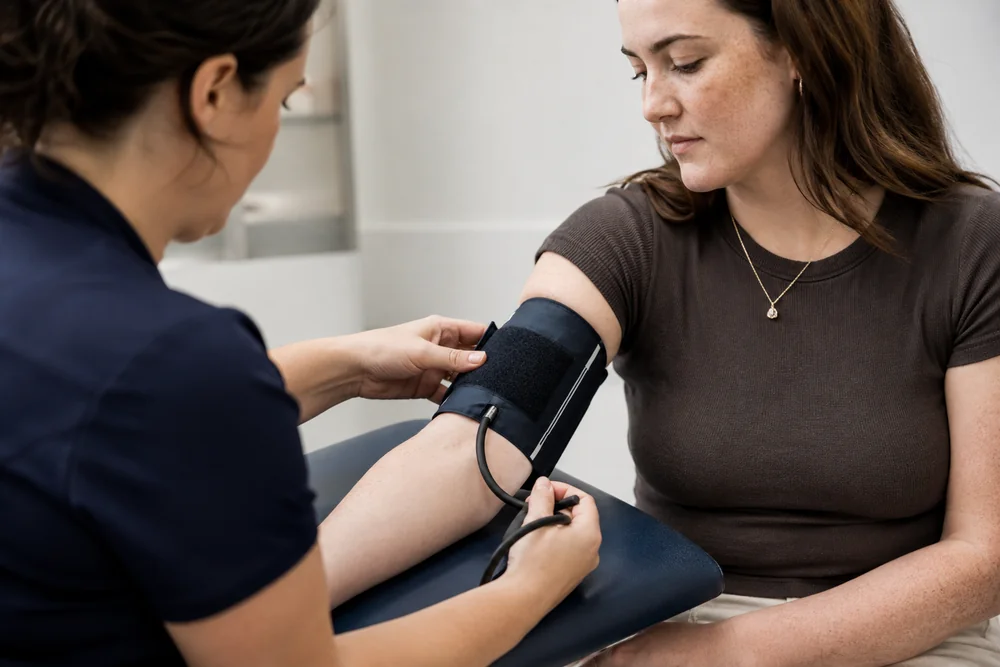
What else can look like PMOS?
PMOS is diagnosed after other explanations for the same pattern are considered. Depending on the history, possibilities include pregnancy, thyroid disease, high prolactin, functional hypothalamic amenorrhoea, premature ovarian insufficiency, non-classic congenital adrenal hyperplasia, perimenopause, medicine effects and less common ovarian or adrenal causes of androgen excess.
The dominant symptom can change the differential. Heavy or painful bleeding may point towards a uterine or pelvic cause. New hair shedding may need iron and thyroid review. Nipple discharge can change the prolactin assessment. A recent change in eating, exercise, body weight, breastfeeding, contraception or medicines can also alter the hormone pattern.
How do you get tested for PCOS or PMOS in Australia?
There is no single PCOS test, PMOS blood test, scan or home kit. In adults, diagnosis generally requires at least two of three features after other causes are excluded: ovulatory dysfunction, clinical or biochemical androgen excess, and polycystic ovarian morphology assessed by ultrasound or AMH where appropriate. The PMOS diagnostic criteria used in Australia bring those findings together.
What blood tests may be used in a PMOS assessment?
Blood tests are selected for the question raised by the history. Total and free testosterone are commonly used to assess biochemical androgen excess. Androstenedione or DHEAS may be considered when suspicion remains, although they are less specific. Pregnancy testing, thyroid testing, prolactin and 17-hydroxyprogesterone may help exclude other explanations when clinically relevant.
Glucose and lipid assessment considers longer-term health rather than diagnosing PMOS itself. An oral glucose tolerance test may be the most informative glycaemic test in some people, particularly when pregnancy is planned, but the GP chooses the test that fits the individual situation.
When are ultrasound or AMH actually needed?
If an adult already has ovulatory dysfunction and androgen excess, ultrasound or AMH is not required to establish the diagnosis. When only one of those features is present, either ultrasound or AMH may help assess ovarian morphology. Using both routinely for the same diagnostic feature can add complexity without improving the decision.
AMH is not a stand-alone PMOS test. Age, laboratory method, hormonal contraception and the reason for testing influence interpretation. Understanding how AMH is interpreted in Australia prevents a high or low result from being treated as a complete fertility diagnosis.
Why is PMOS diagnosis different in adolescents?
Irregular cycles, acne and multifollicular ovaries can overlap with normal puberty. In adolescents, both persistent ovulatory dysfunction and clinical or biochemical androgen excess are required after other causes are excluded. Ultrasound and AMH are not recommended for diagnosis at this life stage.
Can hormonal contraception change the assessment?
Yes. Hormonal contraception can alter bleeding patterns, androgen measurements and the visibility of acne or hair changes. Do not stop contraception solely to obtain a test. A GP can use the pre-treatment history, discuss pregnancy-prevention needs and decide whether any change or delayed testing is warranted.
How is PMOS treatment matched to your priorities?
Treatment is chosen around the problem that needs solving now. Priorities may include predictable bleeding and protection of the uterine lining, acne or unwanted hair, scalp hair loss, metabolic health, sleep, emotional wellbeing or fertility. The plan may change at another life stage.
Options can include sustainable lifestyle support, hormonal treatment, skin or hair treatment, metformin for selected indications, psychological care and fertility treatment. A practical Australian PMOS diet should be nutritionally adequate and realistic rather than presented as a cure or a universal restriction plan.
Do not start several supplements or stop prescribed medicine because a checklist looks positive. The evidence for supplements used for PCOS or PMOS varies by ingredient, dose, deficiency, pregnancy plans and the outcome being measured.

What changes when pregnancy is your goal?
Irregular ovulation can make the fertile window harder to identify, but PMOS does not mean pregnancy is impossible. Many people conceive naturally, while some benefit from ovulation treatment or a broader fertility assessment. Age, sperm, tubal health, endometriosis and intercourse timing remain part of the picture.
Some people use ovulation tests to detect the urinary luteinising hormone rise. A positive result commonly suggests ovulation may follow within about 24 to 36 hours, but it does not prove that an egg was released. Variable cycles or repeated LH rises can make the testing window harder to interpret.
Strip tests may suit repeated testing across more days, while midstream tests suit people who prefer direct use without collecting urine. Neither format diagnoses PMOS or confirms ovulation. When conception is the priority, pregnancy planning with PMOS should also include medicine review, folate planning, blood pressure and metabolic assessment.
How should you prepare for a GP appointment?
Cycle record: Bring the first day of each period, the usual cycle range, missed months, spotting, heavy bleeding and any ovulation-test or temperature dates that influenced your estimate.
Symptoms and timing: Note when acne, hair growth, scalp thinning, sleep, mood or fatigue changed, whether the pattern is progressing and what affects daily life.
Medicines and context: Include prescribed medicines, supplements, hormonal contraception, fertility treatment, pregnancy possibility, breastfeeding, recent illness and substantial changes in eating or exercise.
Priority question: Bring previous laboratory and ultrasound reports where available, then identify the decision you need help with, such as cycle protection, symptom treatment, metabolic testing or pregnancy planning.
Frequently Asked Questions about PMOS symptoms in Australia
Can you have PMOS with regular periods?
Yes. Some adults may meet criteria through androgen excess and ovarian morphology even when bleeding looks regular. Regular bleeding also does not always confirm regular ovulation, so persistent symptoms still deserve assessment.
Can PMOS occur without weight gain?
Yes. Weight gain is not required for diagnosis, and PMOS can occur across body sizes. Metabolic screening should be based on the whole clinical picture rather than appearance alone.
Does acne alone mean PMOS?
No. Acne has many possible causes. It becomes more relevant to PMOS assessment when it is persistent and appears with irregular cycles, excess hair growth, scalp hair thinning or raised androgen results.
Can PMOS cause fatigue?
Fatigue is reported by some people with PMOS, but it is not specific to the condition. Sleep problems, iron deficiency, thyroid disease, mood conditions, medicines and glucose concerns may also need assessment.
Can PMOS symptoms change over time?
Yes. Symptoms can change with puberty, pregnancy, breastfeeding, perimenopause, ageing and treatment. Hormonal contraception, acne treatment and hair-removal methods can also mask parts of the pattern, so past symptoms matter.
Can PMOS cause pelvic pain?
Pelvic pain is not one of the defining diagnostic features of PMOS. Painful periods, persistent pelvic pain, pain during sex or sudden severe pain need assessment for other causes, which can coexist with PMOS.
Next Steps in Australia
Book a GP appointment if periods remain irregular, you have no period for three months, you have eight or fewer periods in a year, androgen-related skin or hair changes persist, or metabolic, sleep, mood or fertility concerns are affecting you. Rapid androgen-related changes need earlier assessment.
If pregnancy is the priority and cycles are absent or very irregular, discuss fertility assessment without waiting for a standard trying-to-conceive timeframe. The Australian fertility specialist pathway outlines when referral may be appropriate.
Take your cycle dates, medicine list and previous results. Ask which finding is being assessed, which test would change care and when follow-up is due.
Last reviewed: 5 September 2026
Next scheduled review: September 2027
References
Fertility2Family articles are researched using Australian Government health guidance, professional clinical recommendations and peer-reviewed medical literature. These sources were used to research and medically review this article and provide further reading for readers who want to examine the evidence.
Commercial disclosure: Fertility2Family sells home ovulation tests. The single product-category link is included where it supports a tracking decision and does not change the medical evidence or stated limitations. Read our editorial and medical review policy.
Monash University PCOS Guideline/ PMOS Guideline
Current Australian-led guideline hub for evidence-based PMOS assessment and management, including diagnosis, metabolic and psychological screening, lifestyle care, fertility treatment and shared decision-making.
Royal Australian and New Zealand College of Obstetricians and Gynaecologists RANZCOG Welcomes Polycystic Ovarian Syndrome (PCOS) Renaming to Polyendocrine Metabolic Ovarian Syndrome (PMOS)
Australian specialist-college statement confirming the PCOS to PMOS rename and explaining why the terminology better reflects endocrine, metabolic, reproductive and psychological features.
Healthdirect Australia Polycystic ovarian syndrome (PCOS)
Australian consumer guidance covering symptoms, GP assessment, diagnostic testing, treatment options, long-term health considerations and the transition from PCOS to PMOS terminology.
Jean Hailes for Women’s Health Polycystic Ovary Syndrome (PCOS)
Australian women’s health guidance describing PMOS symptoms across life stages, adult diagnosis, adolescent limits, treatment options and the physical and emotional effects of the condition.
Better Health Channel, Victorian Department of Health Polyendocrine metabolic ovarian syndrome (PMOS)
Victorian public-health guidance summarising PMOS symptoms, diagnosis, management, fertility implications, metabolic and mental-health considerations, and when to seek support from a health professional.
The Medical Journal of Australia Summary of the 2023 international evidence-based guideline for the assessment and management of polycystic ovary syndrome: an Australian perspective
Australian clinical summary covering adult and adolescent diagnostic criteria, ultrasound and AMH limits, metabolic screening, weight stigma, mental health and fertility care.
Healthdirect Australia Irregular periods
Australian guidance defining irregular period patterns, listing thresholds for medical review, and explaining the history, examination, blood tests or ultrasound that may identify the cause.
Pregnancy, Birth and Baby Ovulation and fertility
Australian fertility guidance explaining ovulation, the fertile window, urinary LH testing, the practical 24 to 36 hour prediction window and when to seek medical advice.