On this page
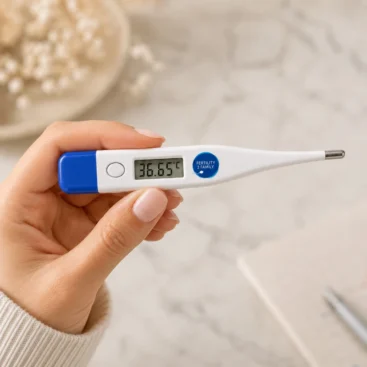
Fertility2Family basal body thermometers are made for home cycle tracking when you want to record small resting temperature changes across your menstrual cycle. Basal body temperature, often called BBT, is your temperature after sleep and before normal daily activity begins.
A BBT thermometer can help you see whether ovulation has likely happened by showing a sustained temperature rise after ovulation. It works best when you take your temperature at the same time each morning, before getting out of bed, and record the result across more than one cycle.
A basal thermometer does not predict ovulation on the same day in the way an ovulation test can. Instead, it helps you understand your cycle pattern after ovulation has likely occurred. This can be useful when you are learning your fertile window, checking whether your cycle shows a regular temperature shift, or combining BBT charting with ovulation tests.
This page explains how to use the Fertility2Family digital basal thermometer after purchase, including when to take your temperature, how to measure orally, rectally or under the arm, how to view the last reading, how to clean and store the thermometer, how to replace the battery, and when to speak with a GP in Australia. Always read the label and follow the directions for use. You can also download the official Fertility2Family digital thermometer instructions PDF if you want a printable copy.
Quick Answers About Basal Body Thermometers
How do you use a Fertility2Family basal body thermometer?
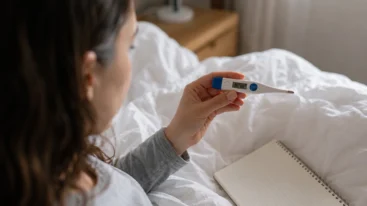
Take your temperature first thing in the morning after at least three hours of uninterrupted sleep. Stay lying down and resting, place the thermometer in the same measurement site each day, wait for the beep, then record your temperature straight away.
Can a basal body thermometer predict ovulation?
A basal body thermometer helps identify a temperature pattern after ovulation has likely occurred. It does not predict ovulation before it happens. Ovulation tests can help detect the LH surge before likely ovulation, while BBT can help show whether a temperature rise followed.
When should I take my basal body temperature?
Take your basal temperature immediately after waking, before sitting up, speaking, eating, drinking or moving around. Try to test at the same time each day and record anything that may affect the reading, such as poor sleep, illness, alcohol or a different wake time.
What Fertility2Family Basal Body Thermometers Measure
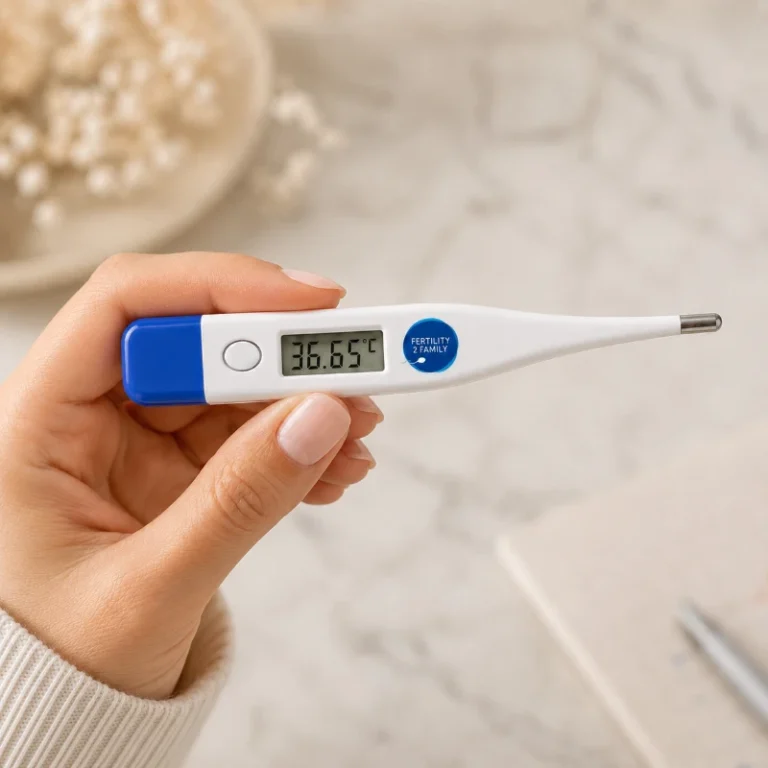
Fertility2Family basal body thermometers measure resting body temperature. The thermometer displays temperature with two decimal places, which helps show small changes that may be missed by a standard fever thermometer.
After ovulation, progesterone usually rises and can slightly increase resting temperature. On a BBT chart, this may appear as a sustained rise after a run of lower temperatures. The pattern is more useful than one isolated reading.
BBT tracking can help you understand your cycle pattern, but it cannot diagnose infertility, confirm pregnancy, confirm that ovulation definitely occurred, or explain irregular bleeding, pelvic pain or missed periods. If your chart does not match your cycle or symptoms, your GP can help interpret the pattern.
What BBT Can and Cannot Tell You
A sustained rise in basal body temperature can suggest ovulation has likely happened. This can help you understand your luteal phase and compare one cycle with another.
After the fertile window has passed, BBT usually suggests ovulation has likely happened. If you are trying to conceive, this means a fertility thermometer is often more useful for learning your cycle than for timing intercourse on the same day. Fertility2Family ovulation tests can help detect the LH surge before likely ovulation, while BBT can help show whether a temperature shift followed.
A higher temperature that stays elevated longer than your usual luteal phase can suggest pregnancy is possible, but it does not confirm pregnancy. Use a home pregnancy test from the right testing window, or speak with your GP if results or symptoms do not make sense.
Before You Start Tracking
Keep the thermometer within reach before you go to sleep. The official Fertility2Family instructions recommend taking your temperature first thing in the morning after at least three hours of uninterrupted sleep.
Use the thermometer while lying down and resting. Take the reading before sitting up, speaking, eating, drinking, checking your phone, showering, or moving around. Small routine changes can affect your result.
Use the same measurement site each day. Oral, rectal and underarm readings can differ from each other, so changing sites during a cycle can make your chart harder to read.
How to Use the Fertility2Family Digital Basal Thermometer
Clean the thermometer tip before first use. Press the ON/OFF button to turn the thermometer on. The display will complete a self-check, then show that the device is ready to measure.
Place the thermometer in your chosen measurement site and keep it still until the reading is complete. The thermometer will beep when the reading has stabilised. Record your temperature straight away before getting out of bed.
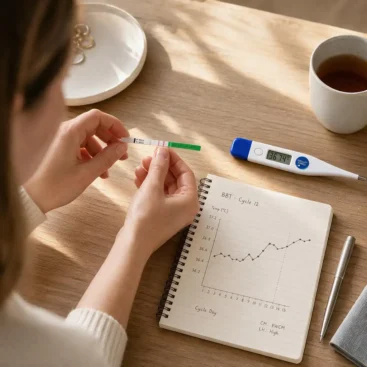
Look for a pattern in your temperature highs and lows across the menstrual cycle. One day on its own is rarely enough to interpret. A clearer picture usually comes from daily tracking over more than one cycle.
The thermometer has a memory function. With the unit switched off, press the ON/OFF button for about two seconds to view the last measured value. The stored reading is replaced when a new temperature reading is recorded.
Where to Place the Thermometer
For oral use, place the tip in a heat pocket under the tongue, keep your mouth closed, and breathe through your nose. Do not eat or drink before measuring. Oral readings are common and convenient, but mouth breathing, snoring, congestion or waking with a dry mouth can affect consistency.
Rectal readings are usually more stable because they sit closer to core temperature. Insert the tip gently and do not insert more than 2 centimetres. Use this method only if it is appropriate and comfortable for you.
Underarm readings can vary more because they are affected by skin temperature, room temperature and clothing. If you choose underarm tracking, keep the thermometer snug in place and use the same method every day.
How to Read Your BBT Chart
In many cycles, temperatures are lower before ovulation and higher after ovulation. The useful sign is a sustained rise, not one single high reading.
A disturbed night, later waking time, alcohol, illness, fever, travel, stress, a different measurement site or sleeping with your mouth open can all change a reading. Record these notes beside your temperature so one outlier does not distort the whole chart.
If your chart remains difficult to interpret after several cycles, or if you do not see a clear pattern, speak with your GP. A GP may suggest blood tests or other assessment, depending on your cycle history and symptoms.
Using BBT With Ovulation and Pregnancy Tests
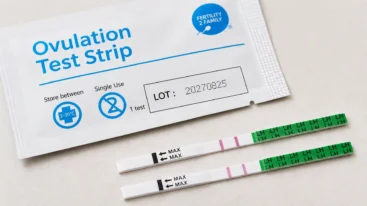
BBT and ovulation tests answer different questions. Ovulation tests detect the LH surge before likely ovulation. BBT can show whether a temperature rise followed. Used together, they can give a clearer picture than either method alone.
If you are trying to conceive, intercourse in the days before ovulation and around the LH surge is usually more useful than waiting for a BBT rise. Once the temperature has risen, ovulation has likely already happened.
Fertility2Family pregnancy tests detect hCG after implantation. If your temperature stays elevated beyond your usual luteal phase, a pregnancy test can help check whether hCG is present.
Cleaning, Storage and Battery Care
Clean the thermometer tip before first use and after use. The official instructions recommend cleaning the tip with disinfectant, such as 70 percent ethyl alcohol, using a damp cloth. Do not use harsh chemicals.
Store the thermometer in its storage case when not in use. Keep it away from direct sunlight, high heat, moisture and children. Do not drop the thermometer, bend the tip, bite it, or disassemble it except when replacing the battery.
Replace the battery when the battery symbol appears on the display. The official instructions state to use a 1.5V DC button battery, LR41 or equivalent, with the positive side facing up. Dispose of batteries safely according to local rules.
Safety Information and Limits
The Fertility2Family digital basal thermometer is for temperature measurement and cycle tracking. It is not intended to diagnose or treat any health problem or disease, and it should not be used as a substitute for a doctor or other medical professional.
Do not use the thermometer for oral readings if it has been used rectally. Keep the battery and small parts away from children because they can be a swallowing risk.
If the display shows Lo℃, the measured temperature is below 32.00℃. If it shows HI℃, the measured temperature is above 42.99℃. If the reading does not make sense, check the position, repeat the measurement if appropriate, and seek medical advice if you are unwell.
When to Speak With a GP in Australia
Speak with your GP if your cycles are very irregular, absent for more than three months, unusually painful, very heavy, or if you have bleeding between periods. You should also seek advice if your BBT chart suggests repeated cycles without a clear temperature shift.
If you are under 35 and have been trying to conceive for 12 months, or 35 or older and have been trying for 6 months, speak with your GP about fertility assessment. A GP can arrange initial tests and may refer you to a fertility specialist if needed.
Seek medical advice sooner if you have pelvic pain, symptoms of thyroid disease, known PCOS, endometriosis, recent pelvic infection, or concerns about medicines that may affect your cycle.
Choosing the Right Fertility2Family Tracking Product
The main product for this instruction page is the Fertility2Family basal body thermometer. If this is the product you already have, stay with the thermometer instructions on this page because the steps are specific to morning resting temperature tracking.
BBT tracking can suit people who want to understand their cycle pattern, luteal phase and likely post-ovulation temperature shift. The broader basal body thermometer category explains Fertility2Family’s thermometer options for home fertility tracking.
If you want several home tracking tools together, Fertility2Family fertility kits can combine ovulation tests, pregnancy tests and a basal thermometer. The best option depends on whether you want to predict fertile days, look for a pattern suggesting ovulation has likely happened, or check for hCG after your expected period.
Frequently Asked Questions About Basal Body Thermometers Australia
What does Lo℃ mean on a basal body thermometer?
Lo℃ means the measured temperature is below 32.00℃. This can appear before the thermometer is placed correctly or if the tip is not warmed by body contact. Reposition the thermometer and follow the instructions again.
What does HI℃ mean on a basal body thermometer?
HI℃ means the measured temperature is above 42.99℃. Check that the device is being used correctly. If you feel very unwell, have a high fever, or the reading concerns you, seek medical advice.
Can I switch between Celsius and Fahrenheit?
The thermometer can display Celsius or Fahrenheit. If the unit is on, press and hold the ON/OFF button for about two seconds to change between ℃ and ℉.
How do I view the last temperature reading?
With the thermometer switched off, press the ON/OFF button for about two seconds. The display will show the last measured value. The memory is replaced when a new temperature is recorded.
Can a basal thermometer confirm pregnancy?
No. A basal thermometer cannot confirm pregnancy. A temperature that stays elevated beyond your usual luteal phase can suggest pregnancy is possible, but a pregnancy test or GP blood test is needed for confirmation.
Can illness affect my BBT chart?
Yes. Fever, poor sleep, alcohol, travel, stress, later waking time and some medicines can affect temperature readings. Mark unusual days in your chart and focus on the overall pattern rather than one reading.
Next Steps If You Are Using a Basal Body Thermometer
Take your temperature first thing in the morning after at least three hours of uninterrupted sleep. Stay lying down, use the same measurement site each day, wait for the beep, and record the result straight away. Look for a sustained pattern across the cycle rather than one single reading. If your chart remains unclear, your cycles are irregular, or pregnancy is taking longer than expected, speak with your GP.
✓ Medically reviewed by Evan Kurzyp, RNLast reviewed Next review May 2027
References7 sources
Fertility2Family articles are researched using Australian Government health guidance, professional clinical recommendations and peer-reviewed medical literature. The references below were used to research and medically review this article and provide additional reading for readers who want to explore the evidence in more detail.
You can read how we research, write and check our health information in our editorial and medical review policy, and see who reviews our articles and their clinical credentials.
- https://fertility2family.com.au/wp-content/uploads/2026/03/F2F_Digital-Thermometer_Instructions_v3-tcteqf-3.pdf
- https://www.healthdirect.gov.au/fertility-awareness-natural-family-planning
- https://www.healthdirect.gov.au/about-infertility
- https://www.betterhealth.vic.gov.au/health/conditionsandtreatments/ovulation
- https://www.pregnancybirthbaby.org.au/fertility-and-conception/fertility/fertility-explained
- https://www.yourfertility.org.au/everyone/timing
- https://www.racgp.org.au/afp/2012/october/infertility/