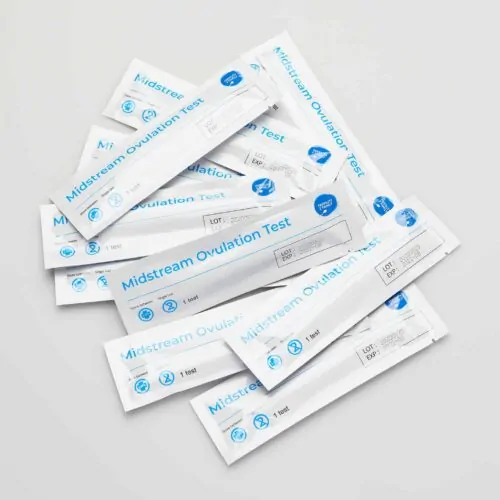
17 min read
May 2, 2026
Ovulation Test Strip Instructions

Written by
Fertility2Family Team

Medically reviewed by
Evan Kurzyp, RN, BSN, Master of Nursing
AHPRA registration: NMW0002424871
Fertility2Family ovulation test strips are made for home urine testing when you want to detect your luteinising hormone surge, often called the LH surge. The LH surge usually happens before ovulation and can help you time intercourse during your fertile window.
They are simple to use, but the result depends on three things: starting on the right cycle day, using a suitable urine sample, and reading the strip within the correct time window.
An ovulation test strip can show whether LH was detected strongly enough in that urine sample at that time. It cannot prove that an egg has been released, confirm pregnancy, diagnose a hormone condition, or be used as contraception.
This page explains how to use Fertility2Family ovulation test strips after purchase, including when to start testing, what time of day to test, how to collect urine, how far to dip the strip, how to read negative, positive and invalid results, and when to speak with a GP in Australia. Always read the label and follow the directions for use. You can also download the official Fertility2Family ovulation test strip instructions PDF if you want a printable copy.

Quick Answers About Ovulation Test Strips
How do you use a Fertility2Family ovulation test strip?
Collect urine in a clean, dry container. Dip the arrow end of the strip into urine without passing the MAX line, remove it after 5 seconds, lay it flat on a clean, dry, non-absorbent surface, then read the result between 5 and 10 minutes.
When should I start using ovulation test strips?
Your start day depends on your usual cycle length. In a 28 day cycle, start around cycle day 11. If your cycle is shorter, start earlier. If your cycle is longer, start later. If your cycle changes often, start based on your shorter recent cycles so you are less likely to miss an earlier surge.
How do I read an ovulation test strip result?
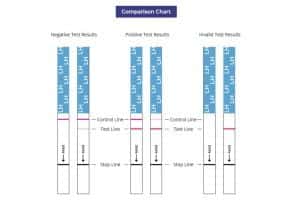
A positive result means the test line is as dark as, or darker than, the control line. A negative result means the test line is lighter than the control line, or only the control line appears. An invalid result means the control line does not appear.
What Fertility2Family Ovulation Test Strips Detect
Fertility2Family ovulation test strips detect luteinising hormone in urine. LH rises before ovulation, and this rise is commonly called the LH surge.
The official Fertility2Family ovulation test strip instructions list sensitivity to LH as 25 mIU/mL. This means the strip is designed to detect LH at that threshold when used correctly. Laboratory analytical testing has shown Fertility2Family ovulation test strips to be greater than 99 percent accurate under test conditions when the instructions are followed. Correct storage, urine collection, dipping depth and reading time all matter.
A positive ovulation test is best used as a timing signal. It can help identify your likely fertile days, but it does not prove that ovulation has happened and does not guarantee pregnancy.
What a Result Can and Cannot Tell You
A positive ovulation test strip means your LH surge has been detected. Ovulation is likely within about 12 to 48 hours after a positive result.
A negative ovulation test strip means an LH surge was not detected at that testing time. This may happen before the surge, after the surge, on a day when no surge is present, or if the urine sample is diluted.
An invalid result means the control line did not appear. Do not rely on that result, even if a test line appears. Retest with a new strip and follow the instructions again.
Ovulation test strips cannot confirm that an egg was released. They also cannot diagnose PCOS, confirm fertility status, confirm pregnancy, or be used for contraception or gender selection.
When to Begin Testing
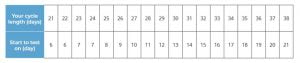
Cycle day one is the first day of proper period bleeding. The day you start testing depends on your usual cycle length. The official Fertility2Family instruction leaflet provides a start-day chart for cycles from 21 to 38 days.
As a quick guide, if your cycle is 21 or 22 days, start on day 6. If your cycle is 23 or 24 days, start on day 7. A 25 day cycle starts on day 8, a 26 day cycle starts on day 9, a 27 day cycle starts on day 10, and a 28 day cycle starts on day 11.
For longer cycles, move the start day forward by one day for each extra cycle day. A 29 day cycle starts on day 12, a 30 day cycle starts on day 13, and this pattern continues through to a 38 day cycle, which starts on day 21.
If your cycle is shorter than 21 days or longer than 38 days, the official instructions advise speaking with your doctor. If you do not know your cycle length, you can begin testing 11 days after the first day of your period because 28 days is often used as an average cycle length. Test once daily over a five day period or until the LH surge has been detected.
If your cycle length changes often, use your shorter recent cycles to choose your start day. This reduces the chance of missing an earlier LH surge.
Best Time of Day to Test
The official Fertility2Family instructions recommend collecting urine between 10 am and 8 pm. Test at about the same time each day so your results are easier to compare.
Do not use first morning urine unless your clinician has given different advice. LH is often made in the body early in the morning, so urine collected later in the day is usually more suitable for detecting the surge.
Try to reduce fluid intake for about two hours before testing. Drinking a large amount of fluid can dilute LH in urine and make the test line lighter.
If you do shift work, test at the same point in your waking routine rather than relying only on the clock. Choose a consistent time after your longest sleep and avoid heavy fluid intake beforehand.
Before You Start Testing
Set up everything before opening the pouch. You need a clean dry urine container, the sealed Fertility2Family ovulation test strip, a flat non-absorbent surface, and a timer. Check the expiry date and make sure the foil pouch is sealed and undamaged.
Allow the sealed test pouch and urine sample to reach room temperature before testing. The official instructions list room temperature as 18 to 30 degrees Celsius.
Open the pouch only when you are ready to test. Use the strip straight away after opening because humidity can affect the test if it is left exposed. Keep the desiccant sachet away from children and pets, and do not ingest it.
How to Collect Urine for Ovulation Test Strips
Use a small, clean, dry container. The container should be free from water, soap, cleaning residue, food residue or anything else that could affect the sample.
If you test often, Fertility2Family urine collection cups can make strip testing easier. A cup gives the strip enough urine contact and helps you avoid dipping past the MAX line.
Collect the sample before opening the foil pouch. This keeps the strip sealed until you are ready to use it.
How to Use Fertility2Family Ovulation Test Strips
Remove the strip from the pouch. Hold it by the handle end and avoid touching the absorbent end. The absorbent end is the part that enters the urine.
Immerse the strip vertically into the urine with the arrow end pointing down. Do not immerse past the MAX line. The MAX line marks the highest point the urine should reach.
Remove the strip after 5 seconds. Lay it flat on a clean, dry, non-absorbent surface. Do not hold it upright while the result develops, and do not place it on tissue, cloth or a wet surface.
Read the result between 5 and 10 minutes. Do not read the result after 10 minutes. Any line, shadow or background change after 10 minutes is not valid.
How to Read Ovulation Test Strip Results
Negative result
A negative result means no LH surge has been detected at that testing time. A result is negative if only the control line appears, or if the test line is lighter than the control line.
A light test line does not mean the strip is faulty. Low levels of LH can appear at different times in the cycle. Keep testing each day until the test line becomes as dark as, or darker than, the control line, or until your expected testing window has passed.
Positive result
A positive result means two coloured lines are visible and the test line is equal to, or darker than, the control line. This suggests your LH surge has been detected.
After a positive result, ovulation is likely within about 12 to 48 hours. If you are trying to conceive, intercourse on the day of the positive result and the following day is a common approach.
Invalid result
An invalid result means the control line does not appear. The result is invalid even if a test line appears. Retest with a new strip. Check the pouch, expiry date, dipping depth, urine contact time and reading time.
Common Mistakes That Affect Ovulation Test Results
Reading the result after 10 minutes can cause confusion. Some negative tests may later show a faint line or background change as the strip dries. Do not use late changes to decide whether the test is positive.
Treating any faint test line as positive is another common mistake. Ovulation tests are different from pregnancy tests. A Fertility2Family ovulation test strip is positive only when the test line is as dark as, or darker than, the control line.
Drinking too much fluid before testing can dilute LH in urine. Testing at very different times each day can also make the pattern harder to read.
Dipping past the MAX line can flood the strip and may cause an invalid or unclear result. Keep urine below the MAX line, then place the strip flat while the result develops.
If your lines are difficult to compare, take a photo within the correct reading window and use similar lighting each day. Do not rely on photos taken hours later. Fertility2Family’s ovulation test line guide explains line changes in more detail.
Using Ovulation Test Strips With Other Tracking Methods
Fertility2Family ovulation test strips predict likely ovulation by detecting LH before the egg is likely to be released. Basal body temperature tracking works differently. A temperature shift usually happens after ovulation, when progesterone rises. This means BBT can help confirm that ovulation likely occurred, but it does not give as much warning as an LH test.
Many people use both methods together. The ovulation test helps identify when ovulation may be approaching. The temperature pattern helps show whether ovulation likely passed. If you want to chart your temperature, a basal body thermometer can measure the small changes needed for cycle tracking.
Cervical mucus can also help you understand your fertile window. In the days before ovulation, mucus may become clear, slippery, wet and stretchy. Combining mucus observations with LH testing can give a clearer pattern than relying on one sign alone. Fertility2Family’s guide to the fertile window and how long ovulation lasts explains timing in more detail.
Timing Intercourse After a Positive Ovulation Test
Once you see a positive ovulation test, ovulation is likely within about 12 to 48 hours. If you are trying to conceive, intercourse on the day of the positive result and the day after is a common approach.
You do not need to wait until the test is positive to begin intercourse. Because sperm can survive for several days in fertile cervical mucus, intercourse in the days before ovulation can also lead to pregnancy.
If timing becomes stressful, simplify the plan. Start intercourse when the test line begins darkening or when fertile cervical mucus appears, then continue every one to two days until the day after the positive result.
Using Ovulation Tests With Irregular Cycles
Irregular cycles can make ovulation testing harder. If your cycle length changes often, start testing based on your shorter recent cycles. This reduces the chance of missing an earlier surge.
PCOS can make LH patterns harder to interpret. Some people with PCOS see several darker lines or more than one LH rise without a clear pattern. If this applies to you, the result needs to be read alongside cycle history, symptoms and medical advice. Fertility2Family’s guide to PCOS and fertility explains this in more detail.
If you have recently stopped the pill or another hormonal contraceptive, your cycle may take time to settle. Start earlier than expected and treat the first few cycles as information gathering rather than proof of your long-term pattern.
If your periods are absent for more than three months, very painful, very heavy, or consistently outside the 21 to 38 day range, speak with your GP. Home tests can support timing, but they do not explain why cycles are irregular.
Using Pregnancy Tests After Ovulation Testing
Ovulation tests and pregnancy tests measure different hormones. Ovulation tests detect LH. Pregnancy tests detect hCG, which rises after implantation. A positive ovulation test does not mean you are pregnant.
If you have timed intercourse after a positive ovulation test, wait until the right testing window before using a pregnancy test. Testing too early can give a negative result even if conception has occurred. For the most reliable home result, test from the day your period is due, or follow the instructions for your chosen test if testing earlier.
Fertility2Family pregnancy tests include strip and midstream options. If you receive a negative result but your period does not arrive, repeat the test after 48 hours or speak with your GP if symptoms or timing do not make sense.
Storage and Stability
Store Fertility2Family ovulation test strips between 4 and 25 degrees Celsius until the expiry date. Keep each strip in the sealed pouch until use. Protect the strips from direct sunlight, moisture and heat. Do not freeze them.
Avoid storing tests in bathrooms, where steam and humidity can damage packaging. A cool dry cupboard is usually more suitable.
Do not use a strip if the pouch is damaged or already open. Do not use the product after the expiry date. Keep tests and desiccant sachets out of reach of children and pets.
Disposal and Safety Precautions
Each strip is single use only. Do not reuse an ovulation test strip. Once the strip has reacted, it cannot be used again.
Treat urine samples and used strips with care. Avoid contact with the used test area, wash your hands after testing, and place the used strip in household waste. Do not flush it.
Some medicines can affect ovulation test results. If you are taking hormone-related medication, fertility medication, or medicines that may affect your cycle, ask your healthcare professional when to test.
When to Speak With a GP in Australia
Speak with your GP if your cycles are shorter than 21 days, longer than 38 days, absent for more than three months, or highly irregular. Also seek advice if you have very heavy bleeding, severe period pain, bleeding between periods, pelvic pain, or symptoms that feel unusual for you.
If you never see a clear positive after testing across more than one cycle, your GP may suggest blood tests or ultrasound. A progesterone blood test about seven days after suspected ovulation can help check whether ovulation occurred.
If you are under 35 and have been trying to conceive for 12 months, or 35 or older and have been trying for 6 months, speak with your GP about fertility assessment. A GP can arrange initial tests and may refer you to a fertility specialist.
Choosing the Right Fertility2Family Testing Product
The main product for this instruction page is Fertility2Family ovulation test strips. If this is the product you already have, stay with the strip instructions on this page because the steps are specific to collected urine and dip-strip testing.
Ovulation test strips can suit repeated daily testing across the fertile window, especially if you are comfortable using a clean urine sample. If you want to test directly in the urine stream instead, the ovulation tests category includes both strip and midstream formats.
The best format is the one you can use correctly. A strip test used exactly as directed is more useful than any test used outside its instructions.
Frequently Asked Questions About Ovulation Test Strips Australia
Can PCOS affect ovulation test strip results?
PCOS can make LH patterns harder to interpret. Some people with PCOS may see repeated darker lines, more than one LH rise, or unclear patterns. If this applies to you, use the results alongside your cycle history and speak with your GP if patterns remain unclear.
Can fertility medicines affect ovulation test strip results?
Yes. Some hormone-related or fertility medicines can affect ovulation test results. If you are using fertility treatment or hormone medication, follow your clinician’s advice on when and how to test.
Can an ovulation test strip confirm that I ovulated?
No. An ovulation test strip detects an LH surge, which suggests ovulation may happen soon. It does not confirm that an egg was released. BBT tracking or a progesterone blood test arranged by your GP may help confirm ovulation.
Should the ovulation test line get darker each day?
The test line may get darker as LH rises, but not everyone sees a smooth day-by-day increase. Some surges are quick. Testing at the same time each day and reducing fluid intake before testing can make the pattern easier to read.
Can I use ovulation test strips to avoid pregnancy?
No. Fertility2Family ovulation test strips are not a contraceptive method. They can help identify likely fertile days, but they cannot safely confirm when pregnancy is impossible.
Can I take a photo of my ovulation test result?
Yes, but take the photo within the correct reading window. A photo taken between 5 and 10 minutes can help you compare results. Do not rely on photos taken after 10 minutes because late changes are not valid.
Next Steps If You Are Using Ovulation Test Strips
Start with your cycle length, choose the right testing day, collect urine between 10 am and 8 pm, dip the strip for 5 seconds without passing the MAX line, and read the result between 5 and 10 minutes. A positive result means the test line is as dark as, or darker than, the control line. If your results are unclear across more than one cycle, or your cycles are irregular, speak with your GP and take your test records with you.
Last reviewed: May 2, 2026
Next scheduled review: Mar 2028
References
Fertility2Family publishes Australia-focused fertility education. Articles are written by our team and medically reviewed by Australian-registered health practitioners. We use Australian consumer medicine information, Australian clinical and public health guidance, and peer-reviewed research consistent with Australian care. We explain what the evidence suggests, what it cannot confirm, and when to see a GP or fertility specialist. Each article lists its author, medical reviewer, and review dates.
https://fertility2family.com.au/wp-content/uploads/2021/05/F2F_Ovulation-Test-Strip-Instructions.pdf
https://www.healthdirect.gov.au/ovulation
https://www.healthdirect.gov.au/fertility-and-infertility
https://www.betterhealth.vic.gov.au/health/conditionsandtreatments/ovulation
https://www.jeanhailes.org.au/health-a-z/fertility
https://www.racgp.org.au/afp/2012/august/infertility
https://ranzcog.edu.au/womens-health/patient-information-resources/planning-for-pregnancy