18 min read
May 25, 2026
PCOS Diet Australia: What to Eat With PMOS Without Restriction

Written by
Fertility2Family Team

Medically reviewed by
Evan Kurzyp, RN, BSN, Master of Nursing
AHPRA registration: NMW0002424871
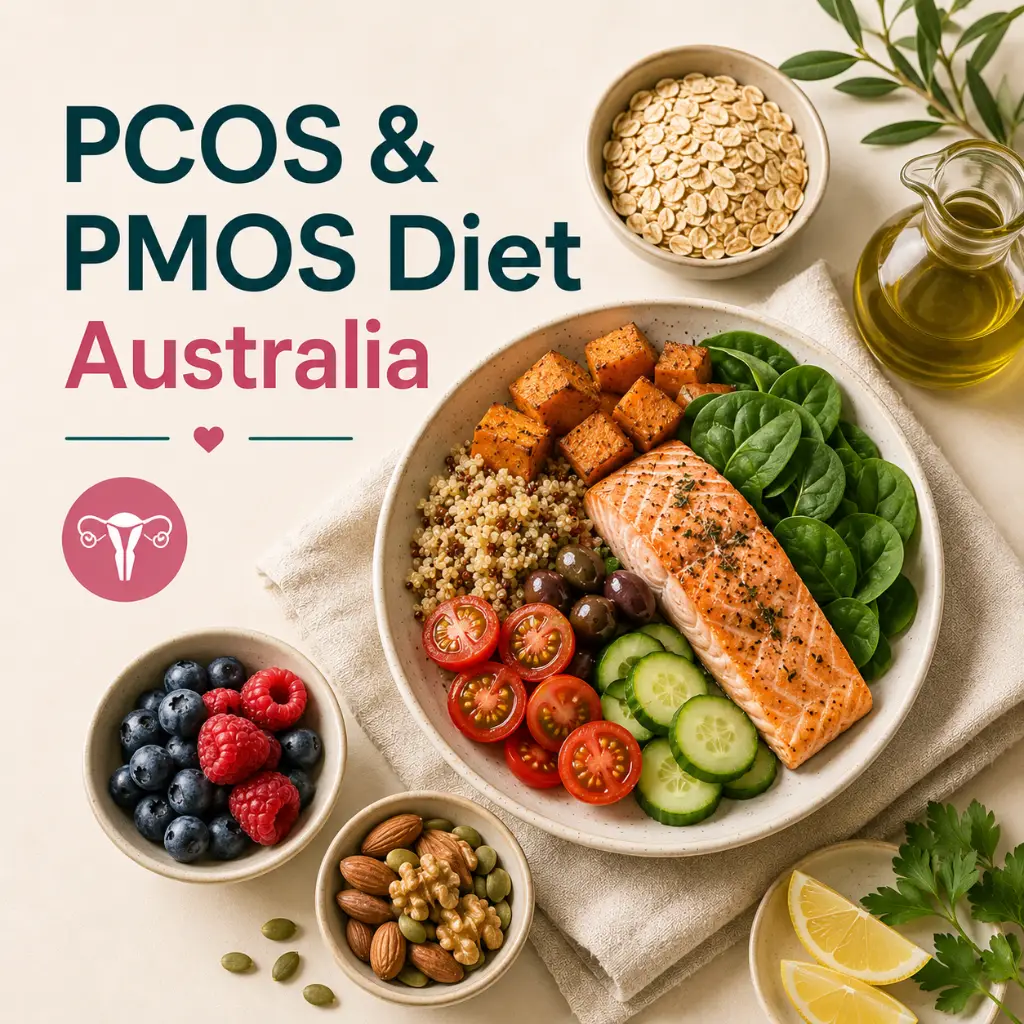
There is no single PCOS diet or PMOS diet that works for everyone. PMOS is the new name for PCOS, and the best-supported nutrition approach is a steady eating pattern, not a strict meal plan, detox, cleanse or list of banned foods.
In Australia, this usually means Mediterranean-style meals, lower-GI carbohydrate choices, enough protein and fibre, and support from a GP or accredited practising dietitian when symptoms, blood results, pregnancy planning or food distress make self-guided changes harder.
Food can support insulin response, energy, cycle health and long-term metabolic care. It cannot cure PCOS or PMOS, prove ovulation, guarantee pregnancy, or replace medical care. If food feels stressful, shame-based or hard to control, that is also part of care.
Quick Answers About PCOS Diet and PMOS Diet in Australia
Is there a PCOS diet?
No. There is no single diet that treats PCOS or PMOS for every person. The evidence supports sustainable eating patterns, such as Mediterranean-style meals, lower-GI choices, enough protein and enough fibre, rather than one fixed food list.
What should you eat with PCOS or PMOS?
Most people do best with meals built around vegetables, legumes, whole grains, fruit, eggs, fish, chicken, tofu, yoghurt, nuts, seeds and olive oil. The pattern should fit your symptoms, culture, budget, appetite and food history.
Should I follow a PCOS meal plan?
A rigid PCOS meal plan is not needed for everyone. If you want a plan, an accredited practising dietitian can tailor it to your health needs, blood results, pregnancy goals and relationship with food.
PCOS was renamed PMOS in May 2026
PMOS stands for polyendocrine metabolic ovarian syndrome. It is the new name for polycystic ovary syndrome, or PCOS. Australian GP notes, referrals, pathology forms and health websites may use PCOS, PMOS or both terms during the transition.
The name has changed, but the nutrition principles have not. For the full rename context, read Fertility2Family’s guide to what PMOS means in Australia. If you are unsure whether your symptoms fit, the guide to how PMOS is diagnosed in Australia explains cycle history, androgen symptoms, blood tests, ultrasound and referral timing.
Why dietary pattern matters more than restriction in PMOS
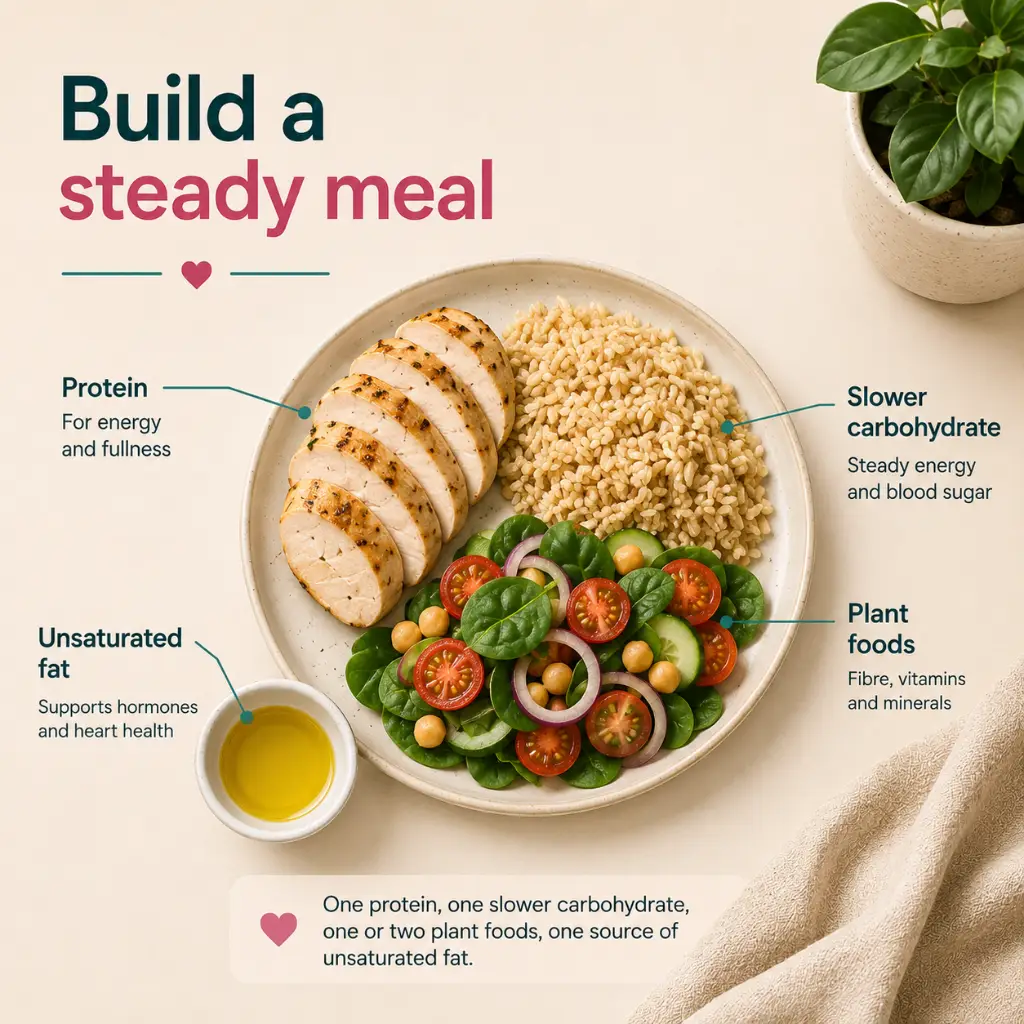
A useful PMOS eating pattern starts with meals you can repeat without food fear. A simple structure is one protein food, one slower carbohydrate, one or two plant foods, and one source of unsaturated fat. This is a guide, not a rule.
Breakfast might be rolled oats with Greek yoghurt and berries. Lunch might be wholegrain bread with eggs and salad. Dinner might be salmon, brown rice and vegetables. A vegetarian meal might use tofu, lentils, chickpeas or beans.
The Australian Dietary Guidelines do not include PMOS-specific guidance. They broadly support vegetables, fruit, whole grains, lean proteins, dairy or alternatives, and unsaturated fats, which can align with Mediterranean-style eating. If you need PMOS-specific advice, an accredited practising dietitian can tailor this to your symptoms, blood results, food history and pregnancy plans.
Build a PMOS plate without restriction
A PMOS plate does not need to be exact. A practical starting point is half the plate as vegetables or salad, one quarter as protein, one quarter as slower carbohydrate, and a small amount of unsaturated fat. This can support steadier energy without turning food into a rule.
Examples include eggs, wholegrain toast, tomato and avocado; salmon with brown rice and vegetables; tofu with noodles, greens and sesame oil; or lentils with yoghurt, salad and olive oil. The same idea can fit family meals, leftovers, work lunches and cultural foods.
If this plate structure makes food feel more stressful, use it less rigidly. PMOS nutrition should reduce decision fatigue, not increase food fear.
PMOS nutrition on a budget in Australia
PMOS-friendly eating does not need specialty foods. Budget staples from Aldi, Coles, Woolworths, local fruit shops and independent grocers can still fit a Mediterranean-style pattern.
Useful low-cost options include rolled oats, eggs, tinned lentils, chickpeas, kidney beans, frozen vegetables, frozen berries, brown rice, wholegrain bread, pasta, tinned tuna, sardines, Greek yoghurt, peanut butter, olive oil, seasonal fruit and carrots. Simple swaps also help: oats instead of sweetened cereal, legumes to stretch mince or curries, and tinned or frozen fish instead of fresh seafood.
The Mediterranean dietary pattern, adapted to Australia
The Mediterranean dietary pattern is well studied for cardiometabolic health. For PMOS, it fits because it is based on whole foods, fibre, unsaturated fats and regular meals rather than restriction.
In Australia, this can mean extra virgin olive oil, vegetables, lentils, chickpeas, kidney beans, oats, wholegrain bread, brown rice, barley, quinoa, salmon, sardines, tuna, eggs, chicken, tofu, yoghurt, nuts, seeds and fruit. Red meat, processed meat and highly processed foods can sit as sometimes foods rather than the centre of most meals.
It can also fit different cultural food patterns, such as Greek yoghurt and legumes, Italian pasta with lentil or seafood sauce, Lebanese tabbouleh and hummus, Indian dahl and vegetable curries, or Asian-style tofu stir-fries, pho, rice, noodles and fish. You do not need to label your diet. The useful part is the pattern.
Low glycaemic index: what it actually means
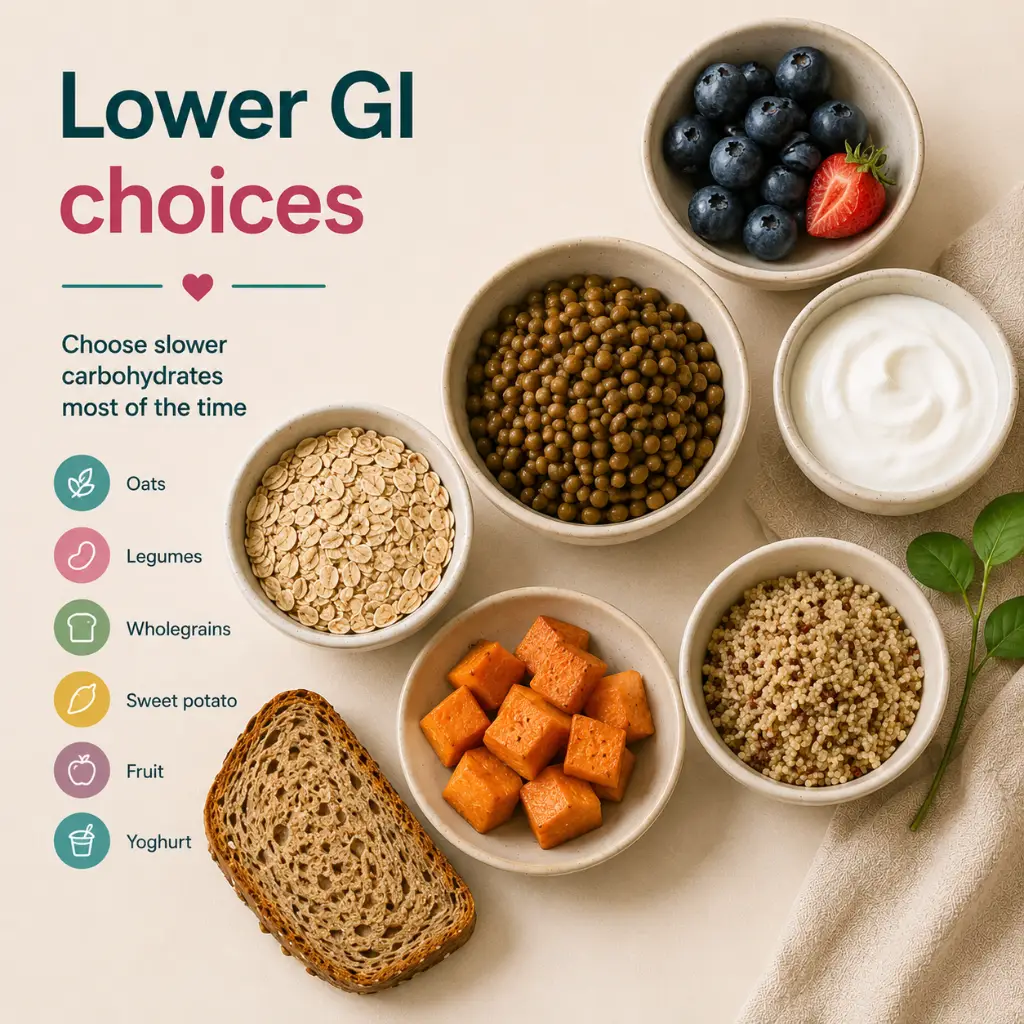
Low glycaemic index, or low GI, describes carbohydrate foods that break down more slowly and tend to raise blood glucose more gradually. In Australian guidance, low GI is usually less than 55, medium GI is 55 to 70, and high GI is greater than 70.
Lower-GI foods include rolled oats, legumes, pasta cooked al dente, most fruit, milk, yoghurt, corn, barley and dense wholegrain bread. Higher-GI foods may include white bread, short-grain rice, rice cakes, fruit juice, sugary drinks and some refined breakfast cereals.
GI is only one guide. Portion size and what you eat with the carbohydrate also matter. Toast with eggs and tomato is steadier than toast alone. Rice with tofu, vegetables and olive oil is steadier than plain rice.
Protein, fibre and PMOS insulin resistance
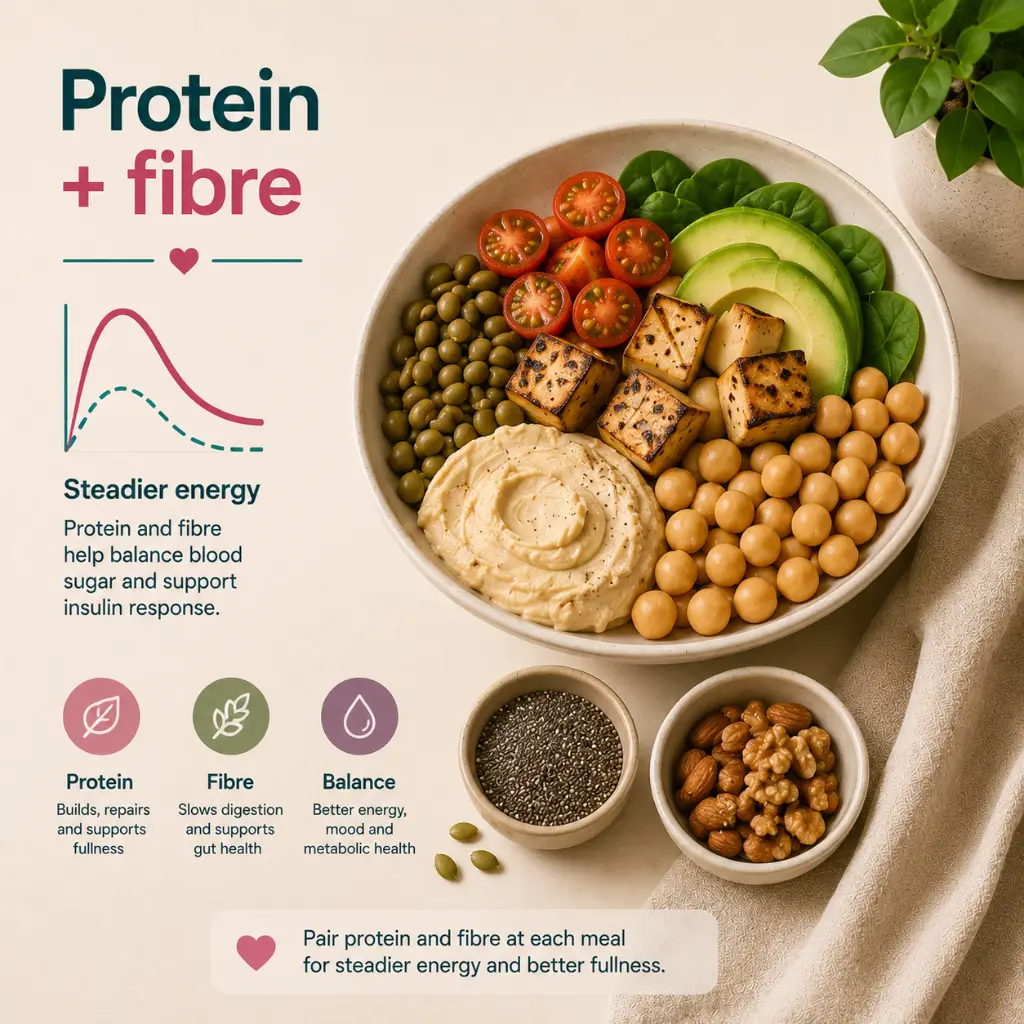
Insulin resistance is common in PMOS. Food choices can affect the size and speed of the glucose rise after meals, especially when meals are high in rapidly absorbed carbohydrate and low in protein or fibre.
Protein options include eggs, chicken, fish, lean meat, tofu, tempeh, lentils, chickpeas, beans, Greek yoghurt, milk, cheese, nuts and seeds. Fibre sources include vegetables, legumes, fruit, oats, barley, wholegrain bread, brown rice, quinoa, nuts and seeds.
The aim is not to avoid carbohydrate. The aim is to choose slower carbohydrate most of the time and pair it with protein and fibre. If breakfast leaves you hungry soon after, add protein or fibre, such as yoghurt with oats, eggs with wholegrain toast, tofu scramble, or fruit with Greek yoghurt and nuts.
Intermittent fasting is sometimes discussed for PMOS, but evidence is still developing and it is not suitable for everyone. It may be risky with binge eating, restrictive eating, diabetes, pregnancy, breastfeeding, fertility treatment, dizziness, or medication timing concerns.
Food is only one part of insulin resistance. Sleep, movement, stress, genetics, medicines, age and other health conditions also matter. Fertility2Family’s PMOS and insulin resistance guide covers HOMA-IR testing, fasting insulin, metformin context and when to speak with a GP.
Should you avoid dairy or gluten with PMOS?
There is no strong evidence that every person with PCOS or PMOS needs to avoid dairy. Milk, yoghurt and cheese can provide protein, calcium, iodine and B12, depending on the product. Some people feel better with less dairy because of lactose intolerance, acne triggers, gut symptoms or preference. If you remove dairy, replace the nutrients, not just the food.
Some people with PMOS anecdotally report better tolerance with A2 milk or goat milk products. Evidence for A2 milk in PMOS specifically is limited, and this is not a clinical recommendation. If you notice a consistent symptom pattern, discuss it with your GP or dietitian.
Gluten-free eating is needed for coeliac disease, and some people avoid gluten because of non-coeliac gluten sensitivity, but that is different from PMOS itself. If you have gut symptoms, iron deficiency, mouth ulcers, fatigue, family history of coeliac disease, or symptoms after wheat, speak with your GP before removing gluten because coeliac testing usually needs gluten still in the diet.
Key nutrients: omega-3, iron, folate, B12, vitamin D and magnesium
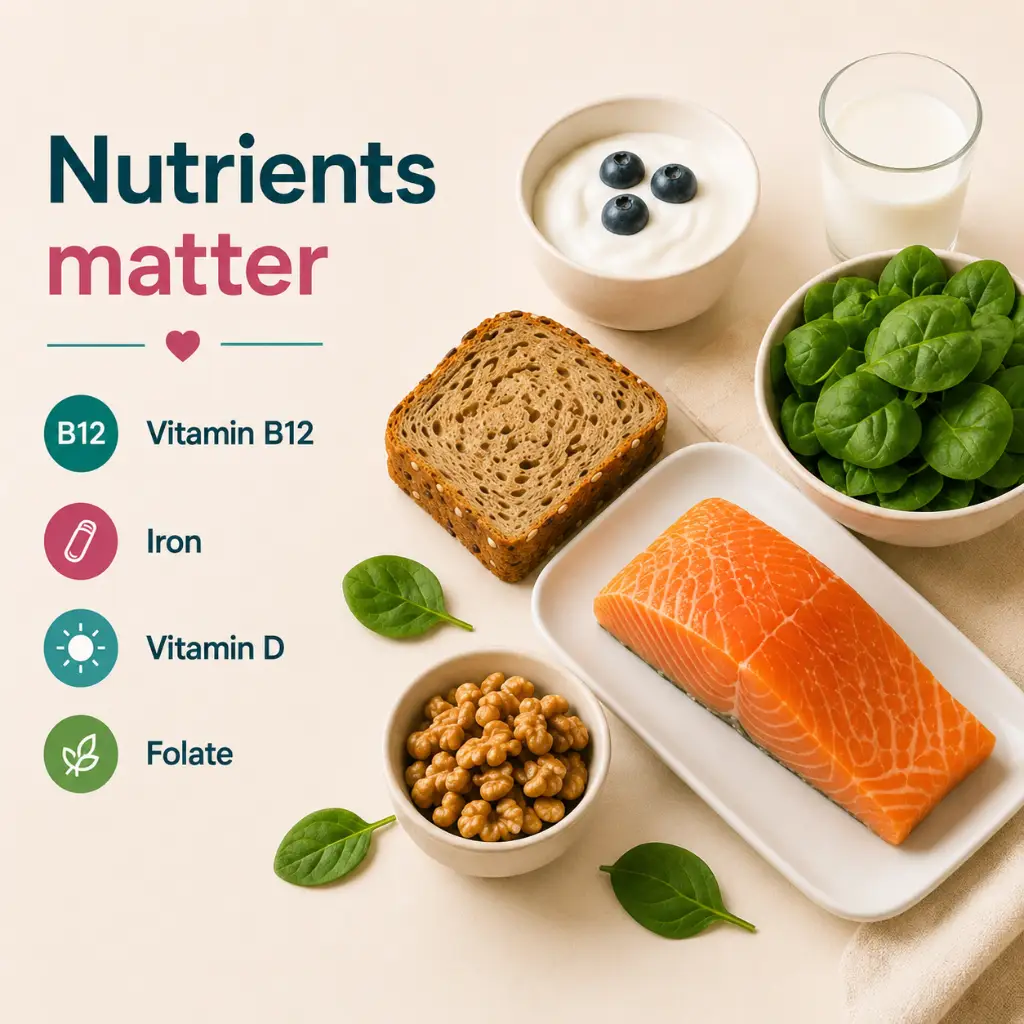
Key PMOS nutrients are best handled through food first, then blood tests or supplements when clinically needed. Omega-3 sources include salmon, sardines, mackerel, tuna, chia seeds, flaxseed, hemp seeds and walnuts.
Iron needs vary because PMOS bleeding patterns vary. Food sources include lean red meat, chicken, fish, eggs, legumes, tofu, spinach, nuts, seeds and fortified cereals. Ask your GP about ferritin testing if you have fatigue, dizziness, restless legs, heavy bleeding, a vegetarian or vegan diet, or pregnancy plans.
Folate matters before pregnancy and in early pregnancy. Food sources include leafy greens, legumes, fortified bread, oranges, avocado, strawberries and yeast spreads. In Australia, many people planning pregnancy are advised to take 400 to 500 micrograms of folic acid daily, while some higher-risk situations need a higher dose under medical guidance.
B12 sources include meat, fish, eggs, milk, yoghurt and cheese. Vegan diets need reliable B12 from fortified foods or supplements. Metformin use can increase the risk of low B12 over time, so ask your GP whether testing is appropriate if you use metformin long term.
Vitamin D deficiency is common in Australia, especially in southern states, including Tasmania and Victoria. Testing and supplementation should be guided by your GP. Magnesium is found in nuts, seeds, legumes, whole grains, spinach and cocoa. High-dose magnesium can cause diarrhoea and may not suit some kidney conditions or medicines.
Detox, cleanse and restrictive PMOS diets
Detoxes and cleanses do not treat PCOS or PMOS. Juice cleanses, laxative teas, extreme fasting and reset diets can cause harm, especially if you have a history of disordered eating, binge eating, purging, anxiety around food, diabetes, pregnancy, breastfeeding, or fertility treatment.
Strict keto, carnivore, very low carbohydrate and rigid fasting plans may change short-term metabolic markers in some settings, but they can be hard to maintain and may increase food fear or binge-restrict cycles. A safer test is this: could you keep the pattern through a busy week, a family meal and a harder mental health day?
Moderate caffeine suits many adults, but it can worsen anxiety, sleep problems, palpitations or reflux. Australian alcohol guidance recommends no more than 10 standard drinks a week and no more than four standard drinks on any one day for healthy adults. Not drinking is safest when pregnant, planning pregnancy or breastfeeding.
PMOS and eating disorder risk in Australia
Eating disorder risk needs a clear place in PCOS diet advice. Research links PCOS with higher rates of binge eating disorder, bulimia nervosa and disordered eating.
PMOS can affect body image through acne, unwanted hair growth, scalp hair thinning, weight changes and fertility stress. Body image distress is a real part of the PMOS experience, and it is a valid reason to seek mental health support alongside medical PMOS care.
PMOS nutrition should not be written as a punishment plan. There is no good food or bad food. There are eating patterns, symptoms, preferences, medical needs and safety limits.
If food rules feel hard to stop, if you binge, purge, skip meals to compensate, fear whole food groups, weigh yourself often, or feel distressed by eating, speak with your GP. The National Eating Disorders Collaboration provides Australian information and resources. Butterfly National Helpline provides free support and referral for eating disorders and body image concerns on 1800 ED HOPE, or 1800 33 4673. If you are in immediate danger, call 000.
When to see an accredited practising dietitian
See an accredited practising dietitian if you want a personal PMOS eating plan, have insulin resistance, diabetes risk, pregnancy plans, gut symptoms, a vegetarian or vegan diet, low iron, low B12, low vitamin D, or feel stuck with food choices.
An accredited practising dietitian can turn broad PCOS diet advice into meals that suit your blood results, medicines, appetite, budget, culture, food preferences and eating-disorder risk. Dietitians Australia’s Find an APD tool can help you check credentials or find a practitioner. If you live in Hobart, regional Tasmania, Melbourne, Sydney, Brisbane, Perth or elsewhere in Australia, telehealth may make APD support easier to access.
Dietitian costs and Medicare rebates in Australia
Private APD fees vary by provider, appointment length, location and telehealth access. Before booking, ask the clinic for the initial fee, follow-up fee, cancellation policy, Medicare rebate, private health fund options and expected gap fee.
If your GP decides you are eligible for a GP chronic condition management plan, Medicare may help cover part of an APD appointment. MBS item 10954 currently lists a schedule fee of $72.65 and a Medicare benefit of $61.80 for eligible dietetics services. This does not mean every appointment is bulk billed. Many people still pay a gap, and the number of subsidised allied health visits is shared across eligible providers.
Some APDs may offer concession rates, telehealth, shorter review appointments or bulk billing for eligible patients, but this varies. Ask before booking so cost does not become a surprise barrier.
PMOS in pregnancy, breastfeeding and later life
If you are trying to conceive with PMOS, the same steady dietary pattern usually applies. The focus is regular meals, enough protein, enough fibre, folate, iodine, iron, B12, vitamin D where needed, and early GP or fertility care if cycles are irregular.
PMOS can be linked with higher risk of gestational diabetes and blood pressure complications in pregnancy. This does not mean those complications will happen. It means early planning with your GP, midwife or obstetric team matters.
PMOS does not prevent breastfeeding, but some people need extra support if insulin resistance, delayed milk supply, thyroid issues, birth complications or early feeding problems are present. Regular meals, fluids, enough energy, protein, iron, iodine, calcium, B12 and vitamin D where needed are more useful than strict rules.
PMOS also remains relevant in perimenopause and menopause because metabolic risk, insulin resistance, cholesterol, blood pressure, sleep, mood and weight-change concerns can persist. If menopause symptoms, bleeding changes or metabolic markers are changing, book a GP review.
Fertility2Family’s PMOS fertility guide for Australia explains when to seek GP review, how ovulation tracking fits, and where fertility treatment may sit. The PMOS pregnancy and fertility pathway for Australia covers the broader preconception and pregnancy care pathway.
Supplements briefly
Supplements do not replace an eating pattern. Inositol, vitamin D, omega-3, magnesium and prenatal vitamins are often discussed in PMOS content, but the right choice depends on your diet, blood test results, medicines, pregnancy plans and symptoms.
Fertility2Family’s PMOS and PCOS supplements guide explains where common options may fit. The inositol guide for PCOS and PMOS explains what to know before choosing an inositol product. Fertility2Family’s PMOS supplements range covers Australian product options.
Frequently Asked Questions About PCOS Diet and PMOS Diet in Australia
Do the Australian Dietary Guidelines include a PMOS diet?
No. The Australian Dietary Guidelines do not provide a PMOS-specific diet. They support broad healthy eating patterns that can align with PMOS nutrition, but an accredited practising dietitian can tailor advice to your symptoms and blood results.
Can I eat carbs with PCOS or PMOS?
Yes. You do not need to cut carbohydrates. Choose slower carbohydrate sources most of the time, such as oats, legumes, whole grains, sweet potato, fruit and yoghurt, and pair them with protein and fibre.
Can restrictive dieting make PMOS eating harder?
Yes. Rigid food rules, detoxes, extreme fasting and strict low-carb plans can increase food fear or binge-restrict cycles for some people. A safer PMOS eating pattern should be repeatable on busy days and harder mental health days.
Can a dietitian help if I already know what to eat?
Yes. A dietitian can help you apply nutrition advice to your blood results, budget, culture, food preferences, pregnancy goals, gut symptoms, supplement use and relationship with food.
Can Medicare help cover a PMOS dietitian appointment?
Sometimes. If your GP decides you meet the criteria for a chronic condition management plan, Medicare may help cover part of an APD appointment. MBS item 10954 currently lists a $61.80 Medicare benefit, but gap fees may still apply.
What should I do if PCOS diet advice makes me feel worse about food?
Stop using advice that increases shame, fear or loss of control around food. Speak with your GP, an accredited practising dietitian or an eating-disorder-informed clinician. Body image distress and disordered eating are valid reasons to seek support.
Next Steps in Australia
If you want to change how you eat with PCOS or PMOS, start with one repeatable meal rather than a full diet overhaul. If your cycles are irregular, symptoms are changing, food feels distressing, or you are trying to conceive, book a GP review and ask whether an accredited practising dietitian referral is appropriate.
Ovulation tests, cervical mucus notes, basal body temperature and pregnancy tests can help you collect cycle information, but they should support clinical review rather than replace it.
Last reviewed: May 20, 2026
Next scheduled review: May 2027
References and source method
Fertility2Family publishes Australia-focused fertility education. Articles are written by our team and medically reviewed by Australian-registered health practitioners.
We use Australian consumer medicine information, Australian clinical and public health guidance, Australian dietetic guidance and peer-reviewed research consistent with Australian care.
We explain what the evidence suggests, what it cannot confirm, and when to see a GP, accredited practising dietitian or fertility specialist. Each article lists its author, medical reviewer and review dates.
Australian PCOS, PMOS and nutrition guidance
- RACGP. PCOS officially renamed polyendocrine metabolic ovarian syndrome.
Australian GP summary of the PCOS to PMOS rename and updated condition framing. - RANZCOG. RANZCOG welcomes Polycystic Ovarian Syndrome renaming to Polyendocrine Metabolic Ovarian Syndrome.
Specialist college statement on PMOS, endocrine-metabolic features and reproductive health. - Monash Centre for Health Research and Implementation. PCOS Guideline.
Australian-led evidence-based PCOS guideline covering lifestyle, metabolic health and fertility care. - Medical Journal of Australia. Summary of the 2023 international evidence-based guideline for PCOS: an Australian perspective.
Australian clinical summary of PCOS assessment, management and guideline-based care. - healthdirect Australia. Polycystic ovarian syndrome.
Australian consumer guide to PCOS symptoms, diagnosis, treatment and PMOS terminology. - Better Health Channel. Polycystic ovary syndrome.
Victorian public-health guide to PCOS, insulin resistance, fertility and long-term health. - Dietitians Australia. Polycystic ovary syndrome.
Australian dietitian guidance on PCOS diet, low-GI foods, fibre and APD care.
Australian healthy eating, low GI and meal-pattern sources
- Eat for Health. Australian dietary guidelines 1 to 5.
Australian healthy-eating guidance for vegetables, whole grains, lean proteins and unsaturated fats. - Eat for Health. The five food groups.
Australian food-group guide for balanced meals, nutrient variety and everyday eating. - healthdirect Australia. Glycaemic index.
Australian explanation of low-GI foods, slower carbohydrates and blood glucose response. - Better Health Channel. Carbohydrates and the glycaemic index.
Public-health guide to GI ranges, glycaemic load, portions and carbohydrate quality. - AskPCOS. PCOS and diet.
Consumer PCOS diet guidance on Mediterranean-style eating, low GI and flexible nutrition.
Dairy, gluten and nutrient considerations
- healthdirect Australia. Coeliac disease.
Australian guide to coeliac symptoms, testing and gluten-free diet timing. - Coeliac Australia. Diagnosis.
Australian coeliac diagnosis guidance on gluten intake before blood tests and biopsy. - healthdirect Australia. Lactose intolerance.
Australian guide to lactose intolerance, dairy tolerance and nutrient replacement. - Dietitians Australia. Plant-based milks.
Australian dietitian guide to dairy alternatives, calcium, iodine, B12 and vitamin D. - Pregnancy Birth and Baby. Folate and pregnancy.
Australian pregnancy guidance on folic acid before conception and early pregnancy. - healthdirect Australia. Folate.
Australian folate guide covering food sources, deficiency and pregnancy needs. - Better Health Channel. Vitamin D.
Victorian public-health guide to vitamin D deficiency, testing and supplements. - Australian Prescriber. Vitamin B12 deficiency: testing and treatment.
Australian clinical review of B12 testing, deficiency risk and long-term metformin use. - National Health and Medical Research Council. Alcohol.
Australian alcohol guidance for healthy adults, pregnancy planning and risk reduction.
Eating-disorder risk and food-distress safety
- Advances in Nutrition. Prevalence and etiology of eating disorders in polycystic ovary syndrome: A scoping review.
Peer-reviewed review on PCOS, eating-disorder prevalence and screening needs. - Journal of Clinical Endocrinology & Metabolism. Increased prevalence of binge eating disorder and bulimia nervosa in women with polycystic ovary syndrome.
Systematic review on PCOS, binge eating disorder, bulimia and disordered eating. - National Eating Disorders Collaboration. General practitioners.
Australian GP guidance for eating-disorder identification, referral and shared care. - Butterfly Foundation. Butterfly National Helpline.
Australian eating-disorder and body-image support, information and referral service.
Dietitian access, Medicare costs and PMOS nutrition support in Australia
- Dietitians Australia. Help with costs.
Australian APD cost guidance covering Medicare, private health, payment options and access to dietitian care. - Dietitians Australia. Find a dietitian.
Australian directory for finding an accredited practising dietitian, local APD care or telehealth nutrition support. - Services Australia. Allied health and other primary health care referrals for GP chronic condition management plans.
Australian Medicare guidance on allied-health referrals, chronic condition management plans and eligible providers. - MBS Online. Medicare Benefits Schedule item 10954.
Official MBS dietetics item listing with service criteria, schedule fee and Medicare benefit details. - The Dietologist. Nutrition for PMOS.
Australian dietitian commentary on PMOS nutrition, low-GI carbohydrates, Mediterranean-style meals and supplements.