
How many days past ovulation am I?
Count from the day after ovulation. Today is your DPO, shown as a range when ovulation was estimated from an LH test or BBT rise rather than confirmed.

DPO Calculator
Your estimated DPO
Your estimated DPO
Likely days past ovulation
What this means:
Recommended next step
DPO is timing, not a diagnosis
Symptoms cannot confirm pregnancy, implantation, pregnancy location or viability. A positive LH result and a BBT shift also do not identify one exact ovulation moment.
Use this calculator to place today, or any date, on your post-ovulation timeline.
Everything behind the result
 How this tool worksWhy one day of uncertainty changes what a result means
How this tool works
Why one day of uncertainty changes what a result means
DPO counts the days since ovulation, starting the day after. Every later decision, from testing to expected period, hangs on that count.
The calculator places today, or any date you choose, on that timeline and shows it as a range when ovulation was estimated rather than confirmed.
The full data tableEvery row this tool reads from.

Days past ovulation and expected period, by luteal phase length
What this calculator returns for each luteal length it offers. DPO is counted from ovulation day, which is 0 DPO.
| Usual luteal length | Period expected | At 7 DPO your period is | At 12 DPO your period is | At 14 DPO your period is |
|---|---|---|---|---|
| 10 days | 10 days after ovulation | 3 days away | 2 days late | 4 days late |
| 11 days | 11 days after ovulation | 4 days away | 1 day late | 3 days late |
| 12 days | 12 days after ovulation | 5 days away | due today | 2 days late |
| 13 days | 13 days after ovulation | 6 days away | 1 day away | 1 day late |
| 14 days | 14 days after ovulation | 7 days away | 2 days away | due today |
| 15 days | 15 days after ovulation | 8 days away | 3 days away | 1 day away |
| 16 days | 16 days after ovulation | 9 days away | 4 days away | 2 days away |
| 17 days | 17 days after ovulation | 10 days away | 5 days away | 3 days away |
Choose 14 days if you do not know your usual luteal length. A positive LH test or a temperature rise gives a range rather than one exact ovulation moment, so the calculator returns a DPO range, not a single day.
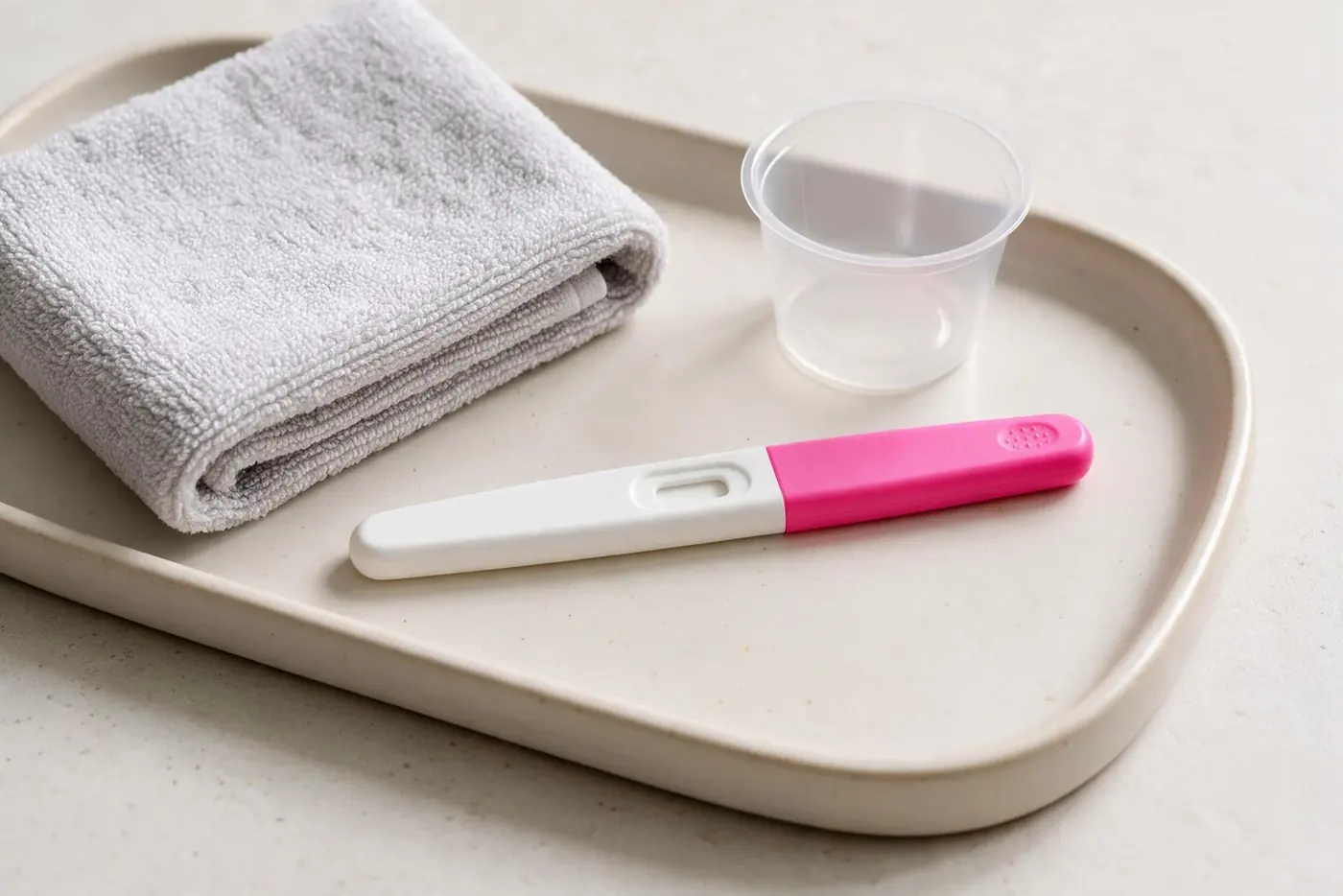
Test instructionsFertility2Family, or the instructions with your own pack.

Test instructions
Timing and reading rules come from the instructions supplied with the test you are using.
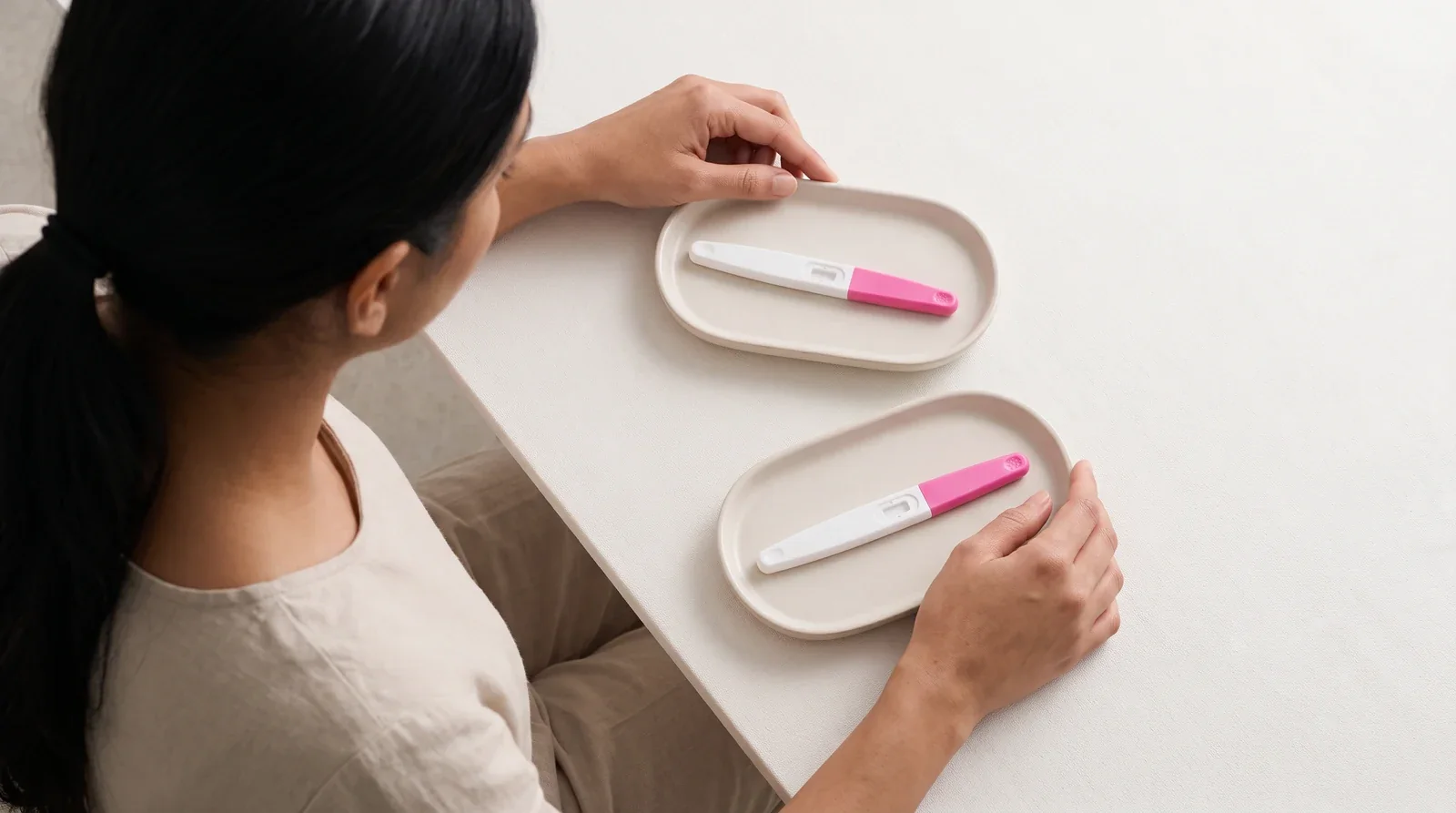
- Read the result at 5 minutes.
- A mark appearing after 10 minutes does not count.
- Follow the instruction sheet supplied with the pack.
- Read the result at 5 minutes.
- A mark appearing after 10 minutes does not count.
- Follow the instruction sheet supplied with the pack.
Use the instruction sheet that came with that product. Reading times differ between brands, so the timings above do not apply.
The full referenceEverything this tool draws on, in detail.Show the detail
A clearer two-week-wait timeline
See where a date sits after estimated ovulation
The calculator preserves uncertainty as a range, shows your expected-period estimate and directs you to the most useful next tool or DPO guide.
Quick answers
How to read a DPO estimate correctly
Counting rule
Ovulation day is 0 DPO
The day after estimated ovulation is 1 DPO.
LH pathway
A positive LH test gives a range
The interval from an LH rise to ovulation varies, so one exact DPO would be false precision.
BBT pathway
A sustained rise is retrospective
Temperature helps identify that ovulation may already have occurred.
Testing decision
DPO is only one input
Use the pregnancy-test timing calculator when the real question is when to test or retest.
Understanding the calculation
How DPO is counted from different cycle clues
DPO means days past ovulation. Ovulation day is 0 DPO, the following day is 1 DPO and each later calendar day adds one. The arithmetic is simple when ovulation was confirmed, but most home tracking clues identify a range rather than one exact moment.
Why LH, BBT and expected-period estimates differ
A positive LH test is generally seen before ovulation, but the interval varies. A sustained BBT rise is usually recognised after ovulation. An expected period works backwards using the luteal length entered, which makes it the broadest pathway when cycle timing has shifted.
Use DPO to navigate, not to diagnose
DPO can help you choose the right article, estimate where you are in the two-week wait and decide which calculator to use next. It cannot confirm implantation or pregnancy, and symptoms at a given DPO overlap with normal luteal-phase changes.
Use the tool that matches the next decision
From ovulation evidence to a DPO estimate
Continue with the right resource
DPO guides and calculators for the stage you are in

Related tool
Pregnancy Test Timing Calculator
Turn a DPO estimate into one useful pregnancy test or retest date.
Plan pregnancy testing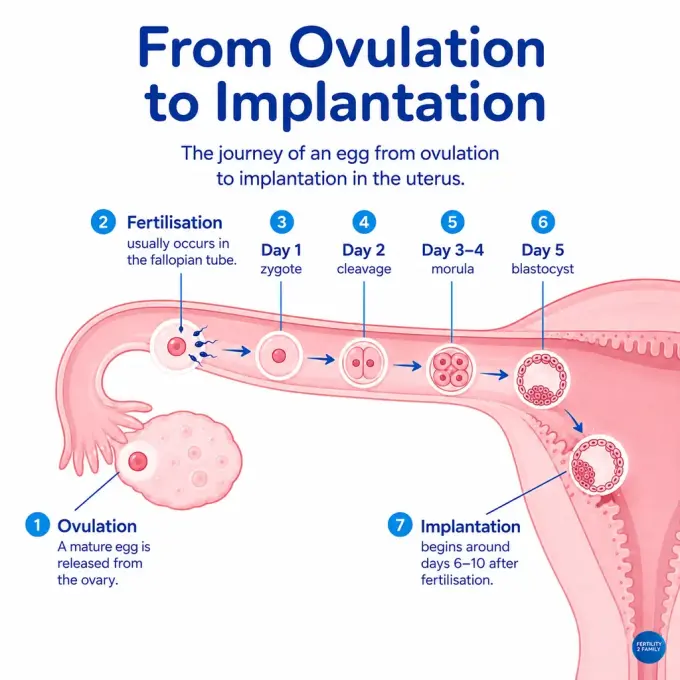
Related tool
Implantation Calculator
View a broad possible window without treating it as confirmation.
Estimate the possible window
Cycle guide
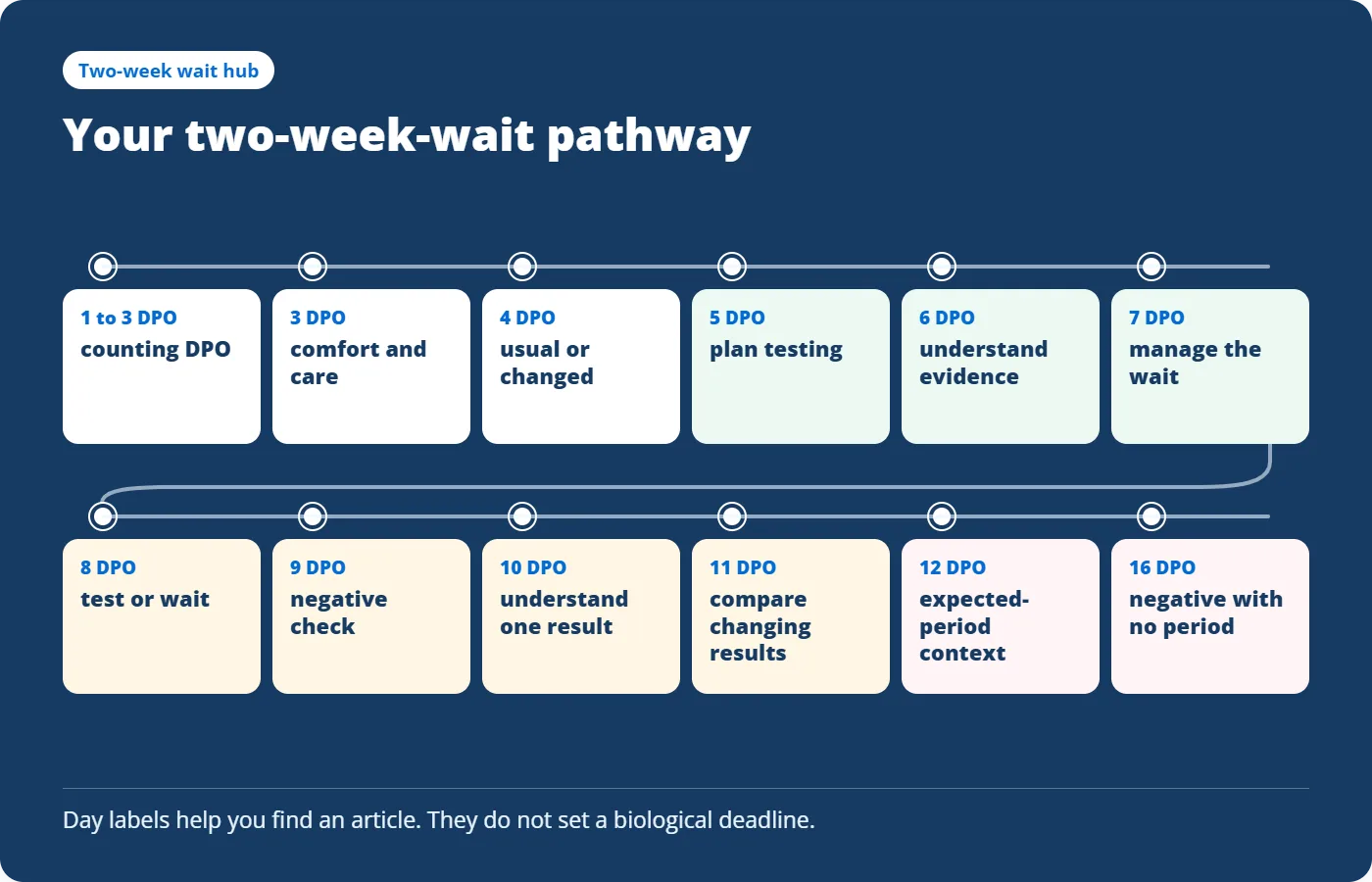
Two-week wait and DPO guide
Understand the post-ovulation timeline without diagnosing pregnancy from symptoms.
Read the two-week-wait guide
Timing guide
Luteal phase length
Learn how the period-to-ovulation interval affects expected-period calculations.
Read the luteal phase guideAustralian evidence and resources
These sources provide general Australian or product context. They do not replace advice from a qualified clinician.
- hCG test
Healthdirect Australia Urine and blood hCG testing, early testing, sample dilution and following the exact test instructions.
- hCG levels
Healthdirect Australia The timing limits of hCG detection and why an early result may not settle a pregnancy question.
- Fertility awareness and natural family planning
Healthdirect Australia The limits of cycle, temperature and cervical-mucus observations, including disturbance factors.
- Implantation timing research
PubMed / NEJM Primary research on implantation timing; not an Australian guideline and not proof of implantation in an individual.
Frequently asked questions
- How do I count DPO?
- The day after ovulation is 1 DPO. Ovulation day itself is 0.
- Why is my DPO shown as a range?
- Because an LH test or BBT rise estimates ovulation rather than confirming it.
- Can I have symptoms at 3 DPO?
- Not from pregnancy; implantation has not happened. Progesterone causes most early symptoms.
- When does DPO stop mattering?
- Once your period arrives or a positive test is confirmed. Then your GP dates the pregnancy differently.


Australian evidence and resourcesShow sources
This is an educational timing aid, not a diagnosis.
Sources: Healthdirect Australia · Therapeutic Goods Administration · Fertility2Family
Early testing, sample dilution and following the exact test instructions.healthdirect.gov.au ↗
The timing limits of detection and why an early result may not settle the question.healthdirect.gov.au ↗
Warning symptoms and when urgent assessment or triple zero is needed.healthdirect.gov.au ↗
hCG cross-reactivity and treatment-cycle interpretation limits.tga.gov.au ↗
Collection, reading window and product limits for strips.PDF ↗
Collection, reading window and product limits for midstream tests.PDF ↗