
When should I start ovulation testing?
Start LH testing a few days before your earliest likely ovulation day, based on your shortest recent cycle. Starting late is the most common reason a surge is missed.

Ovulation Test Start Day Calculator
Your LH testing plan
Your LH testing start plan
Your recommended start
What to do next:
Your first seven testing days
Turn the start date into a simple daily routine
Ticking these boxes is optional and stays only on this page. Continue testing if your instructions or cycle pattern require more days.
When a calendar start day is less reliable
Cycles shorter than 21 days, longer than 38 days, absent cycles or large unexpected changes need individual guidance rather than a fixed chart day.
Ovulation tests detect an LH rise. They do not confirm egg release and must not be used as contraception.
Use this calculator to choose the day to open your first ovulation test.
Everything behind the result
 How this tool worksWhy starting late is the most common way to miss a surge
How this tool works
Why starting late is the most common way to miss a surge
LH rises 24 to 36 hours before ovulation. Tests need to be running before that rise, not after it.
The calculator takes your shortest recent cycle, estimates the earliest likely ovulation day, and sets a start day with a margin so a short cycle cannot slip past you.
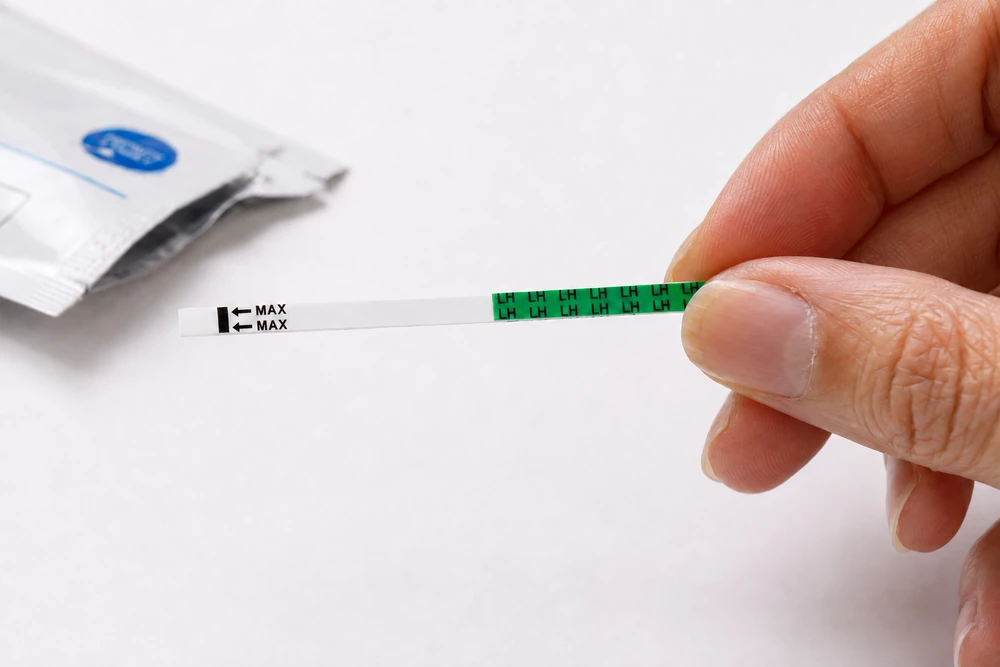
The full data tableEvery row this tool reads from.
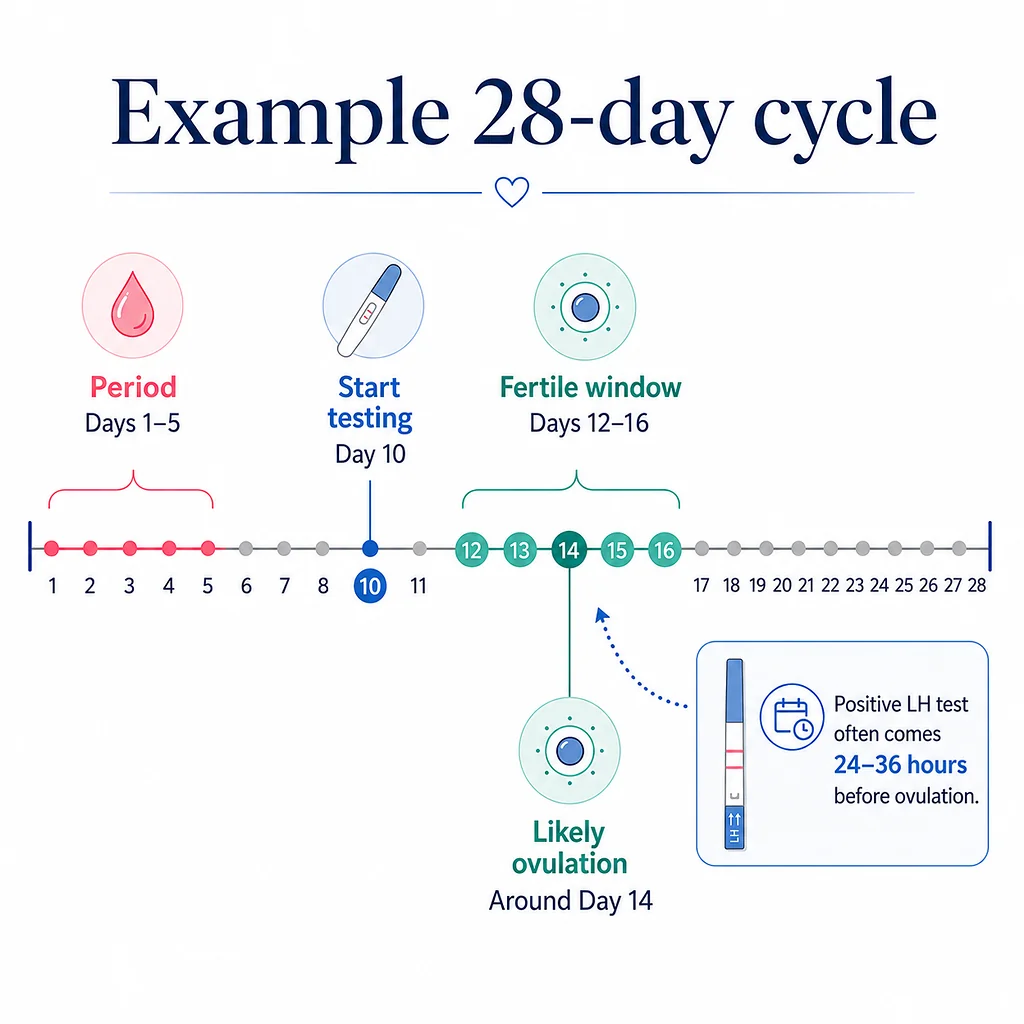
Ovulation test start day by cycle length
The day this calculator tells you to begin LH testing, for every cycle length the Fertility2Family chart covers. Cycle day 1 is the first day of full bleeding.
| Usual cycle length | Start testing on cycle day | Estimated ovulation around cycle day | Suggested testing days |
|---|---|---|---|
| 21 days | Day 6 | Day 7 | At least 7 days from day 6 (around 10 if your cycles vary) |
| 22 days | Day 6 | Day 8 | At least 7 days from day 6 (around 10 if your cycles vary) |
| 23 days | Day 7 | Day 9 | At least 7 days from day 7 (around 10 if your cycles vary) |
| 24 days | Day 7 | Day 10 | At least 7 days from day 7 (around 10 if your cycles vary) |
| 25 days | Day 8 | Day 11 | At least 7 days from day 8 (around 10 if your cycles vary) |
| 26 days | Day 9 | Day 12 | At least 7 days from day 9 (around 10 if your cycles vary) |
| 27 days | Day 10 | Day 13 | At least 7 days from day 10 (around 10 if your cycles vary) |
| 28 days | Day 11 | Day 14 | At least 7 days from day 11 (around 10 if your cycles vary) |
| 29 days | Day 12 | Day 15 | At least 7 days from day 12 (around 10 if your cycles vary) |
| 30 days | Day 13 | Day 16 | At least 7 days from day 13 (around 10 if your cycles vary) |
| 31 days | Day 14 | Day 17 | At least 7 days from day 14 (around 10 if your cycles vary) |
| 32 days | Day 15 | Day 18 | At least 7 days from day 15 (around 10 if your cycles vary) |
| 33 days | Day 16 | Day 19 | At least 7 days from day 16 (around 10 if your cycles vary) |
| 34 days | Day 17 | Day 20 | At least 7 days from day 17 (around 10 if your cycles vary) |
| 35 days | Day 18 | Day 21 | At least 7 days from day 18 (around 10 if your cycles vary) |
| 36 days | Day 19 | Day 22 | At least 7 days from day 19 (around 10 if your cycles vary) |
| 37 days | Day 20 | Day 23 | At least 7 days from day 20 (around 10 if your cycles vary) |
| 38 days | Day 21 | Day 24 | At least 7 days from day 21 (around 10 if your cycles vary) |
Cycles shorter than 21 days or longer than 38 days are outside this chart. A fixed calendar start day is less reliable there, so use individual advice from your GP or fertility clinician. A positive LH result indicates a hormone rise; it does not confirm that an egg was released.
Test instructionsFertility2Family, or the instructions with your own pack.
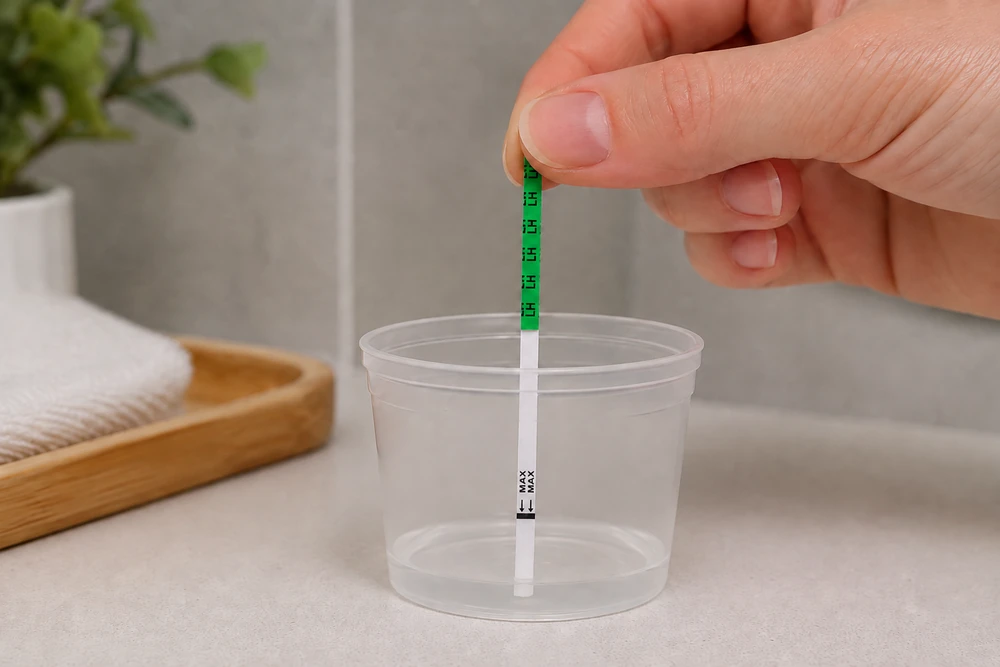
Test instructions
Timing and reading rules come from the instructions supplied with the test you are using.

- Read the result at 5 minutes.
- A mark appearing after 10 minutes does not count.
- Follow the instruction sheet supplied with the pack.
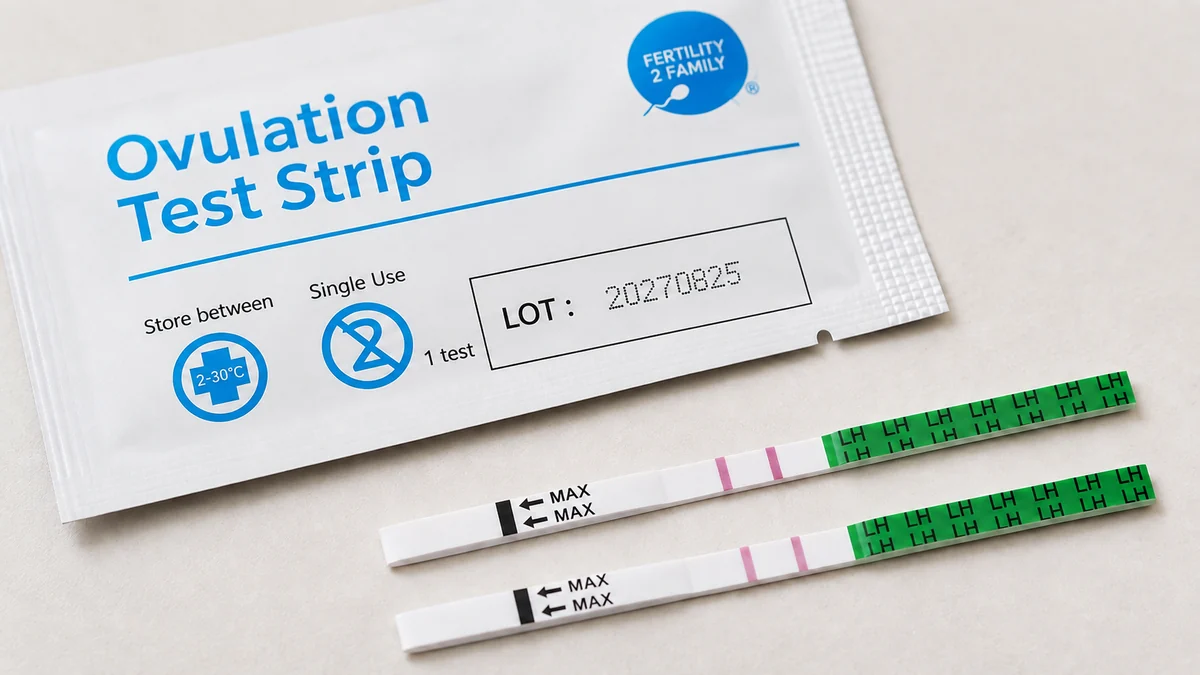
- Read the result at 5 minutes.
- A mark appearing after 10 minutes does not count.
- Follow the instruction sheet supplied with the pack.
Use the instruction sheet that came with that product. Reading times differ between brands, so the timings above do not apply.
The full referenceEverything this tool draws on, in detail.Show the detail
A practical LH testing plan
Start early enough without testing at random
Use the Fertility2Family cycle-length chart to calculate your start date, see how many tests to have ready and follow a simple daily routine.
Quick answers
What to know before you begin LH testing
Cycle day 1
Use the first day of proper bleeding
Light spotting before full menstrual flow is not cycle day 1 for this calculation.
28-day cycle
For a 28-day cycle: start on day 11
Other cycle lengths use the start-day chart, so the calculator adjusts this result rather than applying day 11 to everyone.
Daily routine
Test between 10 am and 8 pm
Use a similar time each day and reduce fluids for about 2 hours beforehand.
Positive result
An LH surge is a timing clue
It suggests ovulation may follow, but it does not confirm that an egg was released.
Using the result
How to use the recommended LH testing start day
Cycle day 1 is the first day of proper menstrual bleeding. The calculator applies the current Fertility2Family start-day chart for cycles from 21 to 38 days. When cycles are irregular and a shortest recent cycle is supplied, the calculator uses that shorter cycle to create an earlier planning start.
Build a repeatable daily routine
Test at about the same time each day between 10 am and 8 pm. Reduce fluids for about 2 hours beforehand. First morning urine is not recommended for Fertility2Family LH tests unless a clinician advises otherwise. Record the result rather than trying to remember several days of line changes.
What to do if no clear positive appears
Continue according to the product instructions and your cycle pattern. A missed surge, a brief surge, diluted urine or an anovulatory cycle can all affect what you see. Persistent absent, very irregular or markedly changed cycles warrant discussion with your GP or fertility clinician.
Use the tool that matches the next decision
From cycle day one to your LH testing window
Australian evidence and resources
These sources provide general Australian or product context. They do not replace advice from a qualified clinician.
- Fertility awareness and natural family planning
Healthdirect Australia The limits of cycle, temperature and cervical-mucus observations, including disturbance factors.
- Ovulation-test cross-reactivity safety update
Therapeutic Goods Administration A device-safety context for possible hCG cross-reactivity and treatment-related interpretation limits.
- Lactational amenorrhoea
Healthdirect Australia Why absent bleeding alone cannot establish contraception or ovulation status.
- Ovulation strip instructions (PDF)
Fertility2Family product instructions Use the supplied instructions for the exact strip collection, reading window and product limitations.
- Ovulation midstream instructions (PDF)
Fertility2Family product instructions Use the supplied instructions for the exact midstream collection, reading window and product limitations.
Frequently asked questions
- What time of day should I test for LH?
- Between 10am and 8pm, with 2 to 4 hours since you last urinated. Not first-morning urine.
- How many days should I keep testing?
- Until you see a clear positive or your expected ovulation window has passed. Most people need 5 to 10 tests a cycle.
- My cycles are irregular. When do I start?
- Start from your shortest cycle in the last six months and keep testing until a positive. More tests, but no missed surge.
- Do I test once or twice a day?
- Once a day until the test line begins to darken, then twice a day so the peak is not missed.


Australian evidence and resourcesShow sources
This is an educational timing aid, not a diagnosis.
Sources: Healthdirect Australia · Therapeutic Goods Administration · Jean Hailes for Women's Health
How LH, oestrogen and progesterone move across a cycle.healthdirect.gov.au ↗
The limits of cycle, temperature and cervical-mucus observations.healthdirect.gov.au ↗
Why hCG medicines can affect an LH test.tga.gov.au ↗
Why baseline LH can sit high and blur a surge.jeanhailes.org.au ↗
Testing window, reading time and how to read the test line.PDF ↗
Testing window, reading time and how to read the test line.PDF ↗