
CoQ10 for Fertility: What the Evidence Shows for Eggs and Sperm
Considering CoQ10 for fertility? Understand the evidence for eggs, sperm and IVF, research doses, ubiquinol and what to check before taking it.

By Fertility2Family Editorial Team · Updated · 13 min read · First published
On this page
- What is CoQ10, and why is it studied for fertility?
- Which CoQ10 research is relevant to your situation?
- Does CoQ10 help egg quality or IVF success?
- CoQ10 for male fertility and sperm motility
- CoQ10 fertility dosage and duration: what have studies used?
- Ubiquinol or ubiquinone: is one better for fertility?
- Side effects, interactions and pregnancy
- How to compare a CoQ10 product in Australia
CoQ10 may improve some egg, embryo or sperm measurements in selected fertility-treatment groups. Whether it increases the chance of a baby is less certain: pregnancy and live-birth findings differ, and treatment studies do not establish a benefit for everyone trying to conceive.
Someone preparing for IVF after a low response has a different question from a couple trying naturally or a man reviewing a semen result. Start with that situation, then compare what the studies measured, the formulation used and the next decision the result would change.
Quick answers about CoQ10 and fertility
Does CoQ10 improve fertility?
Some studies report better ovarian response or semen measurements, while pregnancy and live-birth results are less consistent. Evidence from a specific IVF or male-infertility group does not show that everyone trying naturally should take CoQ10. Start with the problem being assessed and the outcome a supplement is intended to change.
How much CoQ10 should I take for fertility?
No single fertility dose has been established for everyone. The research examples below used 600 mg daily before IVF and 200 mg daily in a male-infertility trial, in different populations. They are not personal dose recommendations. Your clinician or pharmacist should review the exact formulation, other ingredients and medicines before you use either regimen.
How long does CoQ10 take to work?
There is no proven timeframe that guarantees a fertility benefit. The two trial examples below assessed 60 days before IVF and six months of treatment for men with poor sperm movement. These were study periods, not deadlines for conceiving. Do not postpone an indicated assessment or treatment just to complete a supplement course.
What is CoQ10, and why is it studied for fertility?
Coenzyme Q10, usually shortened to CoQ10, is made naturally in the body. It helps cells produce energy and has antioxidant activity. Eggs and sperm need energy to function, which provides a reason to investigate it in reproductive medicine. That biological role does not mean that taking extra CoQ10 will improve fertility, or that infertility proves a deficiency.
Research often concerns IVF, or in vitro fertilisation, and ICSI, an IVF technique in which one sperm is injected into an egg. Those treatment settings allow researchers to measure eggs and embryos directly. They differ from taking a supplement while trying without fertility treatment.
Which CoQ10 research is relevant to your situation?
Two terms are worth separating. Low ovarian reserve concerns estimates of the remaining egg supply and likely response to stimulation. Poor ovarian response describes a lower response to fertility medicines in the relevant clinical setting. They are related, but neither is a direct measurement of egg quality.
Studies may count eggs collected, fertilisation, embryos available for transfer, pregnancies or births. An early positive hCG test, a pregnancy seen on ultrasound and a live birth are different outcomes. Our guide to interpreting IVF success rates explains the broader counting questions; here, the focus is what changed in the CoQ10 studies.
| Your situation | What the research can inform | Useful question to ask |
|---|---|---|
| IVF planned after low reserve results or a poor response | Selected studies report better egg or embryo measurements; live-birth findings differ. | Does the study population resemble my situation, and would this change my treatment plan? |
| Infertility with abnormal semen results | Some studies report improved movement or concentration. Pregnancy evidence is harder to attribute to CoQ10 alone. | What cause is being assessed, and what would repeat testing help us decide? |
| Trying naturally without a diagnosed fertility problem | The treatment studies above do not establish routine benefit in this group. | Is there a specific reason to add CoQ10, or is another assessment or preconception step more useful? |
Does CoQ10 help egg quality or IVF success?

The evidence is most useful when the age, diagnosis and treatment context match. A supplement offered after a low response to ovarian stimulation is a different decision from routinely recommending it to everyone planning pregnancy.
What individual trials found
A 2018 randomised trial studied women under 35 with low ovarian-reserve markers before IVF or ICSI. Ovarian-response and embryo measures improved in the CoQ10 group. Pregnancy and live-birth rates tended to be higher, but the gap was small enough to be down to chance. It was open-label, and participants who missed too many doses were excluded from the analysis. Those features limit confidence in the comparison.
A 2026 randomised trial enrolled 100 poor ovarian responders. It compared CoQ10 plus folic acid with folic acid alone, starting before ICSI. The main outcome was the number of eggs obtained. Some egg and embryo measurements improved, but chemical and clinical pregnancy rates were similar in both groups.
Why reviews do not all reach the same conclusion
A review in a 2026 journal issue reported a live-birth benefit in a poor-ovarian-response subgroup. Its clinical evidence involved 326 women across three studies. It also included laboratory studies that exposed immature eggs to CoQ10 or resveratrol. Those experiments are not evidence that taking oral CoQ10 corrects chromosome abnormalities in a person’s eggs.
A 2025 umbrella review did not establish a live-birth improvement for CoQ10. More recent observational work also needs caution: a 949-patient study compared control, CoQ10, vitamin E and combined-treatment groups. It reported differences in embryo counts but no clear differences in pregnancy, live birth or early miscarriage. Treatment was not randomly assigned, so other differences between the groups may matter.
The practical takeaway is that CoQ10 may be discussed as an optional addition in selected treatment settings, not as a reliable way to improve every person’s IVF result. Ask your clinic which finding supports its recommendation and how much uncertainty remains for your circumstances.
CoQ10 for male fertility and sperm motility
CoQ10 has been studied in men with infertility and abnormal semen measurements. Some trials report better sperm movement, called motility, or a higher concentration. Those changes do not tell us everything about the chance of conception or live birth.
A recent review reported improvements in semen measures and pregnancy outcomes. However, the two studies contributing pregnancy results used multi-ingredient formulations containing CoQ10. Their results cannot isolate CoQ10’s contribution, and the included studies varied in methods and risk of bias.
The Australian male-infertility guidelines say that, without well-designed randomised trials, specific recommendations on routine use of antioxidants cannot be made. A semen analysis and assessment of possible causes should not be replaced by a supplement trial. Our sperm-motility guide explains the results and assessment questions separately.
When a study reports better sperm movement, check whether it also followed pregnancy outcomes, how long treatment lasted and whether other ingredients were used. A repeat semen result is useful clinical information, but it cannot by itself show which part of a treatment or lifestyle change caused the difference.
CoQ10 fertility dosage and duration: what have studies used?
The regimens below are research examples, not recommended doses for you. These trials were not a comparison of which dose works best. They involved different people, treatment settings and outcomes.
| Study population | Regimen studied | What that example establishes |
|---|---|---|
| Women under 35 with low ovarian-reserve markers before IVF/ICSI | 200 mg three times daily, totalling 600 mg daily, for 60 days. | The 2018 trial reported better ovarian/embryo measures, without a clear difference in pregnancy or live birth. |
| Men with unexplained poor sperm movement | 200 mg daily for six months. | A 2009 placebo-controlled trial of 60 men assessed semen and biochemical measures; it was not proof of a universal fertility regimen. |
A clinician may use a different plan for a particular reason. Ask how it relates to the evidence, the proposed treatment and your medicine list. More capsules are not necessarily more useful, especially when a fertility blend contains other active ingredients.
Agree on a review date before starting. The plan should say what happens at egg retrieval, embryo transfer or a positive pregnancy test, and who to contact if side effects occur. A course length quoted in a study is not a requirement to delay IVF or assessment of irregular periods, a known sperm problem or another fertility concern.
Ubiquinol or ubiquinone: is one better for fertility?
Ubiquinol is the reduced form of CoQ10; ubiquinone is the oxidised form. Products also differ in carrier oils and formulation. A crossover study of seven preparations in 14 healthy participants found that formulation affected absorption, with both forms represented among the better-absorbed products.
That study measured blood concentrations, not pregnancies. The evidence reviewed here does not establish that paying more for ubiquinol produces more pregnancies or live births than ubiquinone. Check the exact ingredient, daily amount and formulation used in the relevant research rather than judging by an “active form” label alone.
Side effects, interactions and pregnancy
CoQ10 can cause mild side effects such as digestive upset and trouble sleeping. If symptoms start after a product or dose change, record the timing and ask a pharmacist or clinician for advice. Persistent symptoms need review; being sold without a prescription does not remove the possibility of side effects.
Important interaction checks include warfarin, insulin and some cancer treatments. CoQ10 may interact with warfarin. Do not change prescribed medicines yourself; show the treating team every supplement and medicine you use.
Preconception use and use during pregnancy or breastfeeding are different decisions. Agree on the plan with your clinician rather than automatically continuing the same regimen.
How to compare a CoQ10 product in Australia

Find the CoQ10 entry in the active-ingredient panel, rather than relying on the name of a fertility blend. Check whether the quantity is per capsule or per directed daily serving, and which form is listed. A large number on the front of a pack may describe several ingredients together rather than the amount of CoQ10.
For example, a label stating 100 mg per capsule with directions for two capsules daily supplies 200 mg daily. That arithmetic does not establish an appropriate fertility dose or permission to take extra capsules. Record any CoQ10 in another product too, so a pharmacist can assess the total rather than each bottle in isolation.
An AUST L number identifies a listed medicine. The TGA says listed medicines are not individually assessed before supply and can only make low-level health claims. It is not a promise that a particular product will improve your individual chance of pregnancy.
Match any proposed claim to the whole formulation: a trial of CoQ10 alone does not establish the effect of a different blend. Always read the label and follow the directions for use.
Make the decision useful at your next appointment
Take the product label, your medicine list and a specific question. For example: “My last IVF cycle produced few eggs. Was the research in people with a similar response, was it CoQ10 alone or a blend, and did it change egg numbers or the chance of a baby?” The answer helps explain whether the evidence fits the decision in front of you.
Write down the purpose, proposed daily quantity and review date, including who to contact about side effects or a positive pregnancy test. Include the cost and the option not to add a supplement. Choosing fewer products can be a reasonable decision when the expected benefit is uncertain.
Frequently Asked Questions about CoQ10 and Fertility in Australia
Can CoQ10 raise low AMH or restore ovarian reserve?
CoQ10 has not been established as a way to replenish the egg supply or reverse reproductive ageing. A changed AMH result is not proof that egg quality improved. AMH mainly helps estimate ovarian response to stimulation; it is not a personal natural-conception score. The AMH and ovarian-reserve guide explains that separate testing question.
Can I take CoQ10 with a prenatal vitamin?
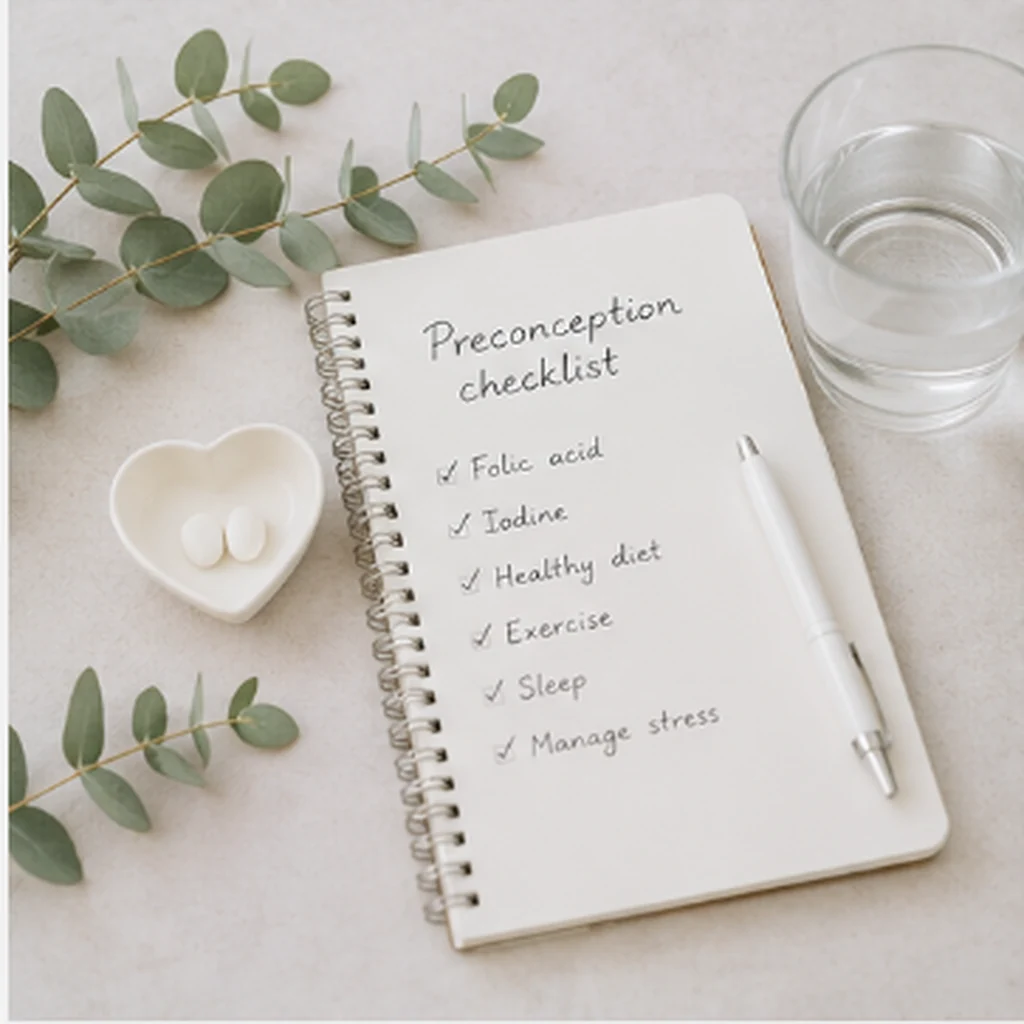
They may be part of the same reviewed plan, but the exact labels matter. CoQ10 does not replace folic acid or other indicated preconception nutrients. Australian guidance recommends discussing folic acid and iodine, with individual advice where needed. Our prenatal-vitamin guide addresses those priorities. Check for overlapping ingredients before adding another product.
Should both partners take CoQ10?
Not automatically. Research involving eggs and research involving sperm concern different groups and interventions. Each partner needs an appropriate assessment and medicine review. A couple pack does not establish that both people need all its ingredients, and taking matching doses is not a treatment goal. Ask what the proposed product is intended to change for each person.
Can ovulation tests show whether CoQ10 is working?
No. Urinary LH tests cannot measure egg quality, sperm function or a response to CoQ10. For conception timing, you can compare ovulation tests or review our ovulation test strips. Follow the sampling and reading instructions; do not interpret darker lines as a supplement benefit. Always read the label and follow the directions for use.
When should I stop CoQ10 if I become pregnant?
Do not automatically continue a fertility regimen into pregnancy or breastfeeding without your clinician’s approval. Contact the team that recommended it, or your GP or pharmacist, with the product and dose. Taking it before realising you were pregnant does not itself establish that harm occurred. The exposure and any further use need individual review.
Next Steps in Australia
Take the exact formulation and the outcome you hope to change to your GP, pharmacist or fertility clinic. Use the Australian fertility-assessment pathway when you need help deciding whether review is due. Known concerns, irregular or absent periods and time already spent trying should not be put on hold while you complete a supplement course.
General information: This article is for Australian consumer education. It does not recommend a supplement, dose or treatment and does not replace individual medical advice, diagnosis or treatment.
✓ Medically reviewed by Evan Kurzyp, RNLast reviewed Next review November 2027
References16 sources
Fertility2Family articles are researched using Australian Government health guidance, professional clinical recommendations and peer-reviewed medical literature. The references below were used to research and medically review this article and provide additional reading for readers who want to explore the evidence in more detail.
You can read how we research, write and check our health information in our editorial and medical review policy, and see who reviews our articles and their clinical credentials.
- National Center for Complementary and Integrative Health. Coenzyme Q10
US government overview of CoQ10, including reported side effects and medicine interactions. - Xu and colleagues, Reproductive Biology and Endocrinology (2018). Pretreatment with coenzyme Q10 improves ovarian response and embryo quality in low-prognosis young women with decreased ovarian reserve: a randomized controlled trial
Open-label randomised trial of 600 mg daily for 60 days before IVF or ICSI in women under 35 with low ovarian reserve. - Abdelrahman and colleagues, Drug Design, Development and Therapy (2026). Coenzyme Q10 impact on ovarian reserve measures and the intra-cytoplasmic sperm injection (ICSI) outcomes in women with poor ovarian response: a randomized controlled study
Randomised trial of 100 poor ovarian responders given CoQ10 with folic acid, or folic acid alone, before ICSI. - Schütz and colleagues, Reproductive BioMedicine Online (2026). Effect of micronutrients on fertility and aneuploidy rates in human conceptions: a systematic review and meta-analysis
Review of micronutrients in fertility treatment, including three clinical CoQ10 studies and laboratory studies on immature eggs. - Nutrients (2025). Nutrient supplements in female infertility: umbrella review
Umbrella review of nutrient supplements in female infertility, with the certainty of the evidence rated for each outcome. - Bakri and colleagues, World Journal of Men’s Health. CoQ10 in idiopathic male infertility: systematic review of randomised trials
Systematic review of randomised trials of CoQ10 in idiopathic male infertility. - Medical Journal of Australia (2025). The first Australian evidence-based guidelines on male infertility
Australian male-infertility guidelines, including Guideline Statement 70 on routine antioxidant use. - Balercia and colleagues, Fertility and Sterility (2009). Coenzyme Q10 treatment in infertile men with idiopathic asthenozoospermia: a placebo-controlled, double-blind randomized trial
Placebo-controlled trial of 200 mg daily for six months in 60 men with idiopathic poor sperm motility. - López-Lluch and colleagues, Nutrition (2019). Bioavailability of coenzyme Q10 supplements depends on carrier lipids and solubilization
Crossover study of seven CoQ10 formulations in 14 healthy adults, comparing how well each was absorbed. - Therapeutic Goods Administration. How medicines are regulated in Australia
The Australian regulator’s guide to how medicines are regulated, including listed medicines and ARTG numbers. - Healthdirect Australia. Planning for your pregnancy
Australian guidance on folic acid, iodine and other steps when planning a pregnancy. - American Society for Reproductive Medicine (2020). Testing and interpreting measures of ovarian reserve: a committee opinion
Professional guidance on what AMH and antral follicle count can and cannot tell you about egg supply and pregnancy chances. - Wang and colleagues, Frontiers in Endocrinology (2026). Association of vitamin E and coenzyme Q10 pretreatment with embryological and pregnancy outcomes in women with diminished ovarian reserve: a retrospective study
Retrospective study of 949 women comparing CoQ10, vitamin E, both and neither before IVF or ICSI. - Fertility2Family. Ovulation Test Strip Instructions
Our instructions for collecting a sample, reading a result and understanding the limits of Fertility2Family LH test strips. - American Society for Reproductive Medicine. Fertility evaluation of infertile women: a committee opinion (2021)
Professional guidance on assessing fertility, including history, selected tests, age, time trying and the limits of home cycle observations. - Therapeutic Goods Administration. Listed medicines
The Australian regulator’s page explaining that listed medicines are not individually assessed before supply and can only make low-level claims.