
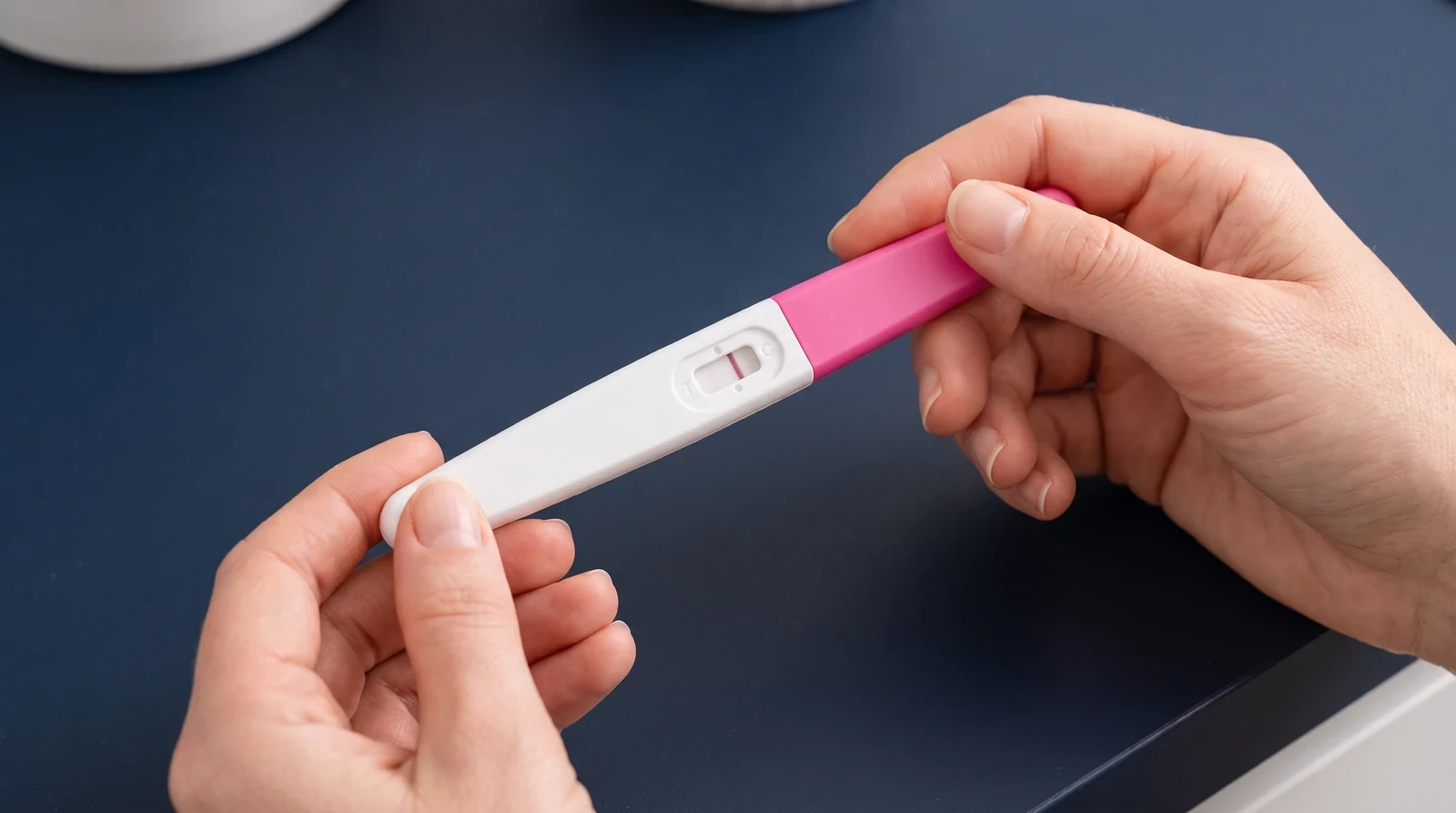
Negative pregnancy test but no period. Why?
You may have tested too early, ovulated later than you think, or your period is late for another reason. Retest in 48 hours with first-morning urine, and see your GP if the second test is negative and your period still has not come.

Negative Test Troubleshooter
Your answers do not appear in the page URL.
Use this troubleshooter when a test is negative and your period has not come.
Everything behind the result
 How this tool worksWhy a negative before a missed period settles very little
How this tool works
Why a negative before a missed period settles very little
A negative with no period usually means one of three things: the test was too early, ovulation was later than assumed, or the period is late for a reason unrelated to pregnancy.
The troubleshooter asks about timing, urine, test type and cycle history, then gives one retest date and one point at which to see your GP.

The full data tableEvery row this tool reads from.

Reasons a pregnancy test can read negative
Each cause this troubleshooter checks, what it points to, and the next step it returns.
| Cause | How it shows up | What the tool returns |
|---|---|---|
| Tested too early | Testing before implantation plus 3 to 4 days | Repeat with first-morning urine, usually 48 hours later |
| Ovulation later than assumed | Cycle longer or more variable than expected | Recount from the strongest timing evidence, not the calendar |
| Dilute urine | Large fluid intake before testing | Retest with first-morning urine |
| Read outside the window | Result checked too early or too late | Repeat with a timer and read only within the stated window |
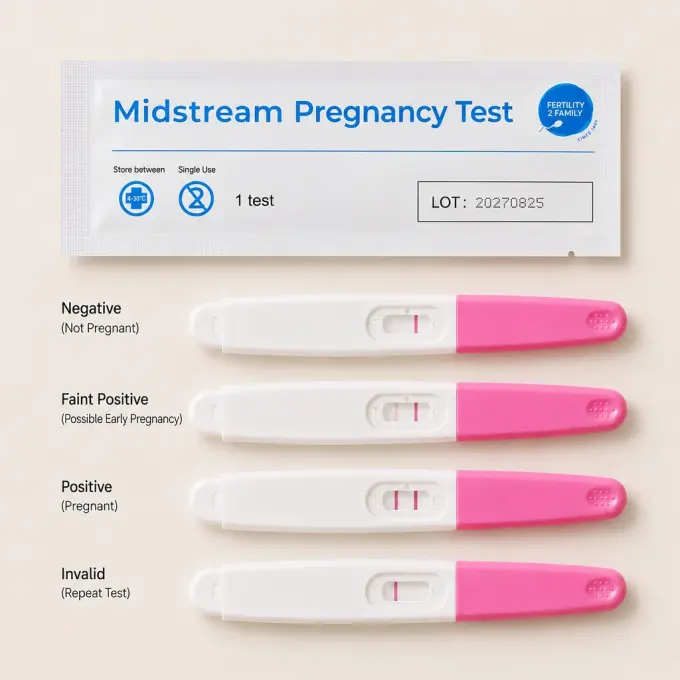
| No control indicator | The validity check did not appear | The test is invalid. Repeat with a new sealed device |
| Device condition | Expired, damaged, opened early or stored badly | Repeat with a new in-date test |
| Wrong device rules applied | Another brand or a digital display | Use that product instructions, not Fertility2Family thresholds |
| Period still absent | Repeated negatives with no period | See a GP rather than continuing to retest at home |
Around 90% of pregnancies have implanted by the first day of the expected period, but even then roughly one in four can still test negative with a real kit. A negative result never rules out pregnancy on its own, and it never explains pain, heavy bleeding or feeling acutely unwell, which need assessment on their own terms.
Test instructionsFertility2Family, or the instructions with your own pack.
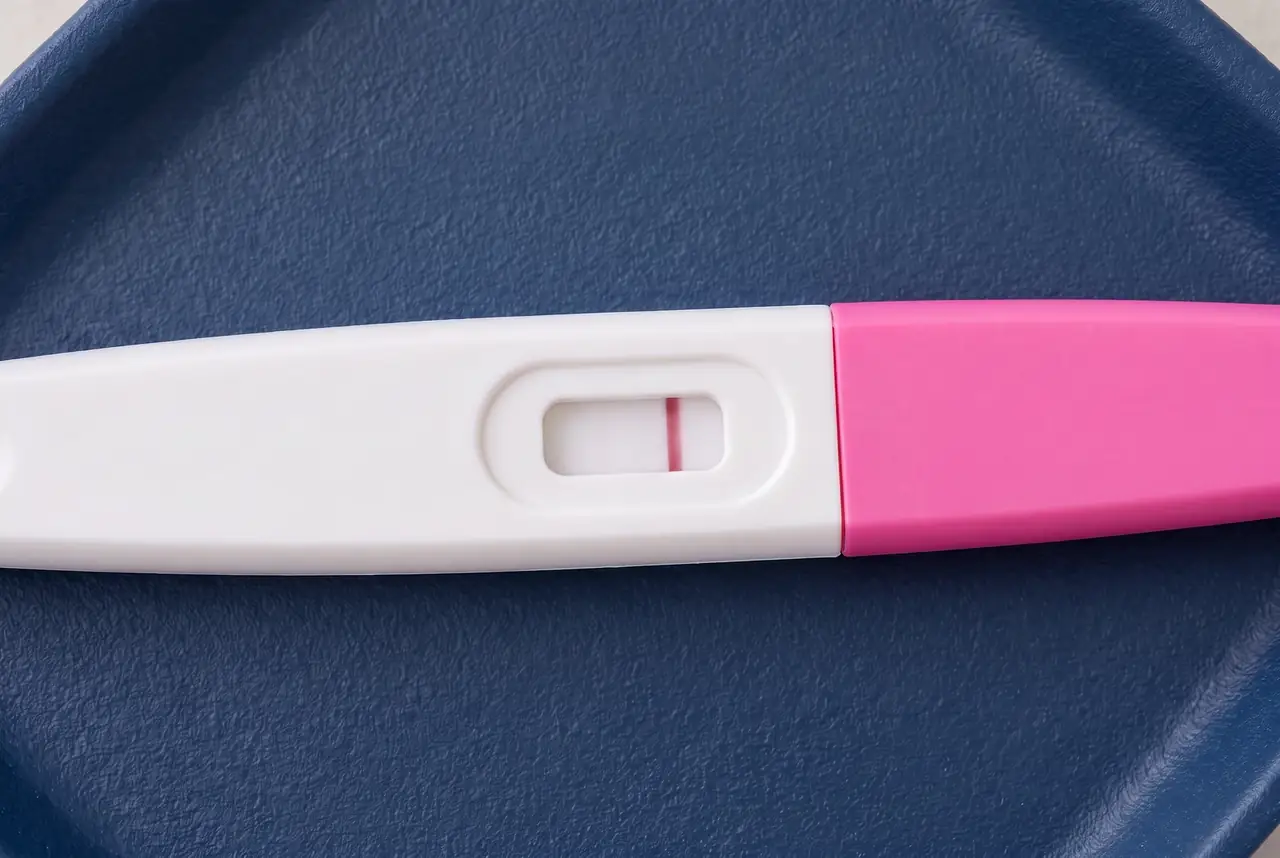
Test instructions
Timing and reading rules come from the instructions supplied with the test you are using.
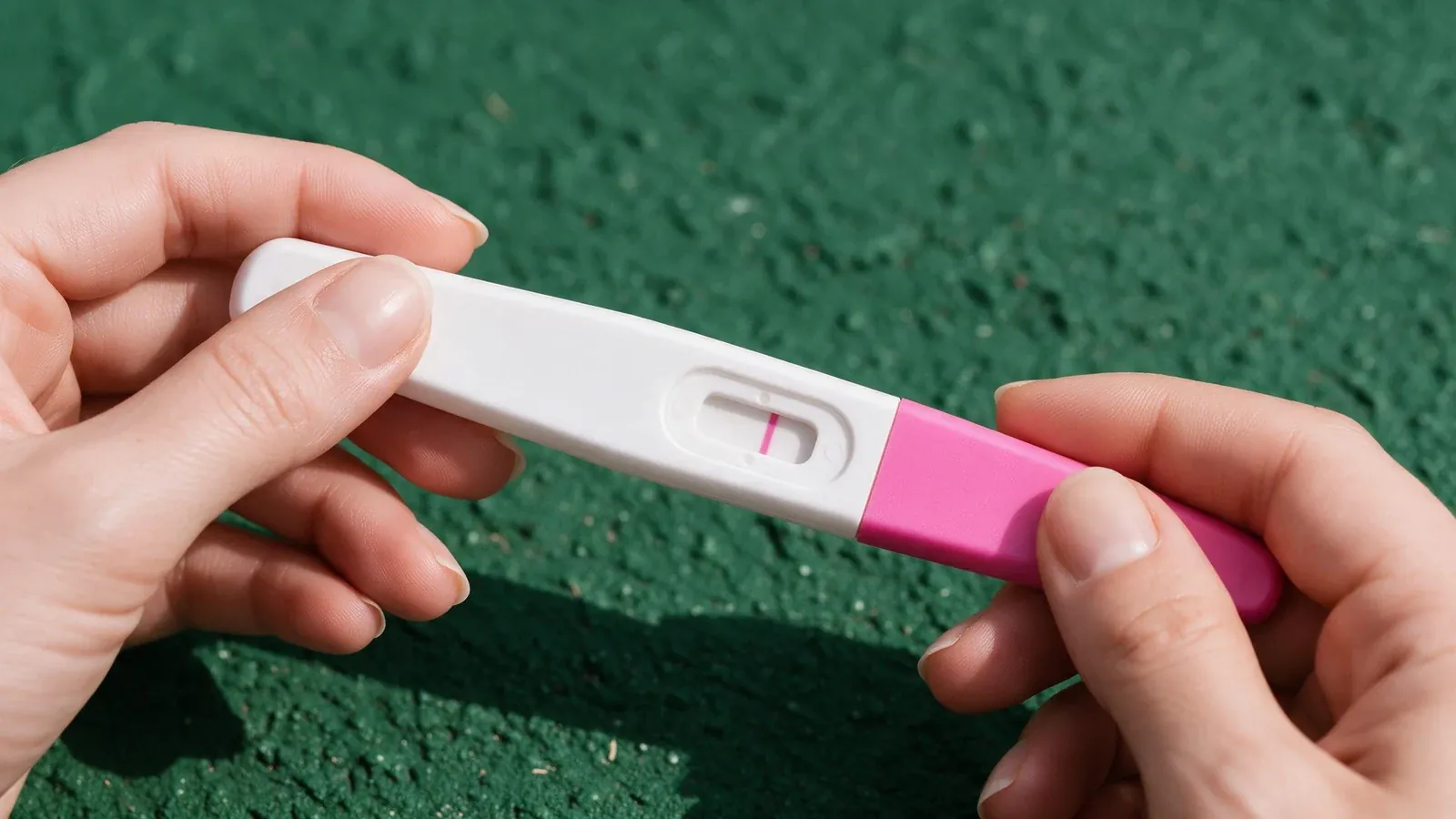
- Read the result at 5 minutes.
- A mark appearing after 10 minutes does not count.
- Follow the instruction sheet supplied with the pack.

- Read the result at 5 minutes.
- A mark appearing after 10 minutes does not count.
- Follow the instruction sheet supplied with the pack.
Use the instruction sheet that came with that product. Reading times differ between brands, so the timings above do not apply.
The full referenceEverything this tool draws on, in detail.Show the detail
A result at one point in time
A negative test does not always mean the same thing
The most useful next step depends on control validity, the reading window, urine concentration, cycle timing, fertility treatment and symptoms. This tool separates those factors before it suggests another test or clinical review.
First
Check the device
No control, an expired test, incorrect exposure or a late reading means the result should not be treated as a dependable negative.
Then
Check the timing
A correctly used test can still be negative before urine hCG reaches the device threshold.
Always
Check symptoms
Severe or one-sided pain, shoulder-tip pain, fainting, heavy bleeding or marked illness needs urgent assessment regardless of the urine result.
Transparent result pathways
Why a negative pregnancy test can need another step
The result must be valid before timing matters
A home test only answers the question reliably when the required control or valid-test indicator appears, the device is in date and undamaged, the sample is applied exactly as instructed and the result is read inside the stated window. A dried device or a result first noticed later should not be reinterpreted.
Testing early can miss a pregnancy
Urine hCG may still be below the test threshold before or around the expected period. The tool therefore distinguishes testing more than five days early, one to five days early, around the expected period and at least seven days late. It does not convert an uncertain cycle into a false exact date.
Urine concentration changes the comparison
Large fluid intake or frequent urination can dilute a sample. When testing early, first urine after waking or following the current device instructions can give a more useful repeat comparison.
Repeated negatives change the objective
Once several well-timed tests are negative and the period remains absent, more frequent home testing may add little. A GP can review cycle variation, medicines, breastfeeding, perimenopause, recent pregnancy events and other causes of an absent or irregular period.
Fertility treatment has its own timetable
An hCG trigger, embryo transfer, progesterone support or a clinic-scheduled blood test requires the treating clinic’s dates and medicine instructions. A generic home test plan should not replace them.
The four main result pathways
Invalid or uncertain test
Use a fresh, in-date device and the exact packed instructions before interpreting timing.
Tested before the expected period
Repeat on the expected date or according to the instructions rather than testing repeatedly on the same day.
Expected period has passed
Use a correctly timed repeat and move to clinical review when the period remains absent.
Symptoms or treatment change the plan
Urgent symptoms and clinic instructions take priority over a generic retest schedule.
Choose the right next tool
Continue with the question you actually need answered
Related Fertility2Family resources
Use the next resource without repeating the same question

Australian evidence and resources
These sources provide general Australian or product context. They do not replace advice from a qualified clinician.
- hCG test
Healthdirect Australia Urine and blood hCG testing, early testing, sample dilution and following the exact test instructions.
- Ectopic pregnancy
Healthdirect Australia Pregnancy-related warning symptoms and when urgent assessment or triple zero (000) is needed.
- hCG levels
Healthdirect Australia The timing limits of hCG detection and why an early result may not settle a pregnancy question.
Frequently asked questions
- How late can a period be before I worry?
- Test again 48 hours after the first negative. If still negative and a week late, see your GP.
- Can I be pregnant with two negatives?
- Rarely, if ovulation was very late. A blood test settles it.
- What else delays a period?
- Stress, illness, travel, weight change, thyroid problems, PCOS and approaching menopause.
- Should I use a more sensitive test?
- A 10 mIU/mL test detects a day or two earlier. It does not change what a negative at 16 DPO means.

Australian evidence and resourcesShow sources
This is an educational timing aid, not a diagnosis.
Sources: Healthdirect Australia · Fertility2Family
Why early or diluted samples can test negative.healthdirect.gov.au ↗
Causes of a late period other than pregnancy.healthdirect.gov.au ↗
Irregular ovulation and delayed periods.healthdirect.gov.au ↗
Retest timing after a negative.PDF ↗
Retest timing after a negative.PDF ↗