
Is this spotting, implantation bleeding or my period?
Colour and flow cannot tell you. Timing can narrow it, and a pregnancy test at the right day settles it. Heavy bleeding with pain or dizziness needs same-day care.

Early Bleeding Next Step Planner
Your result
Next step:
Record to take to a GP, maternity service or clinic
- Start:
- Timing:
- Flow:
- Duration:
- Pain:
- Context:
- Additional details:
Use this planner when bleeding has started before your period was due.
Everything behind the result
 How this tool worksWhy bleeding colour is not diagnostic
How this tool works
Why bleeding colour is not diagnostic
Light bleeding between 10 and 14 days past ovulation happens in cycles that end in a period and in cycles that end in a pregnancy. Its colour cannot tell you which.
The planner uses the bleeding day, flow and your cycle dates to set one test day and one review day, and flags the symptoms that need same-day care.
Test instructionsFertility2Family, or the instructions with your own pack.
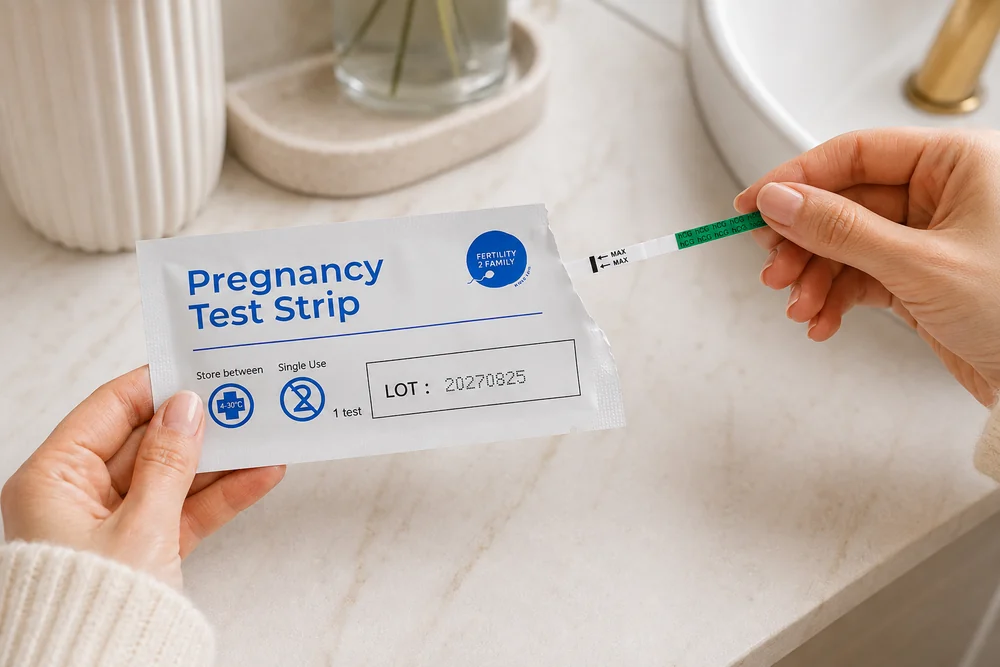
Test instructions
Timing and reading rules come from the instructions supplied with the test you are using.

- Read the result at 5 minutes.
- A mark appearing after 10 minutes does not count.
- Follow the instruction sheet supplied with the pack.

- Read the result at 5 minutes.
- A mark appearing after 10 minutes does not count.
- Follow the instruction sheet supplied with the pack.
Use the instruction sheet that came with that product. Reading times differ between brands, so the timings above do not apply.
The full referenceEverything this tool draws on, in detail.Show the detail
A useful answer before more reading
Turn a confusing bleeding episode into an organised care plan
Safety symptoms are checked first. The result then routes pregnancy, post-birth, post-procedure, fertility-treatment and recurring-cycle patterns to the appropriate next action.
Safety-first decision order
The planner checks urgency before trying to place the episode in a cycle
Heavy increasing flow, strong pain, fainting or breathing difficulty.
Known or possible pregnancy and the six weeks after birth.
Recent treatment, fever, worsening pain or offensive discharge.
Between periods, after sex, prolonged or recurrent change.
Clinic test dates and prescribed support take priority.
Use dates, amount and symptoms rather than colour alone.
Why the planner will not label implantation bleeding
Bleeding appearance and cycle timing overlap across different situations. The useful task is to identify care priority and record details that help a clinician assess the cause.
A record that can shorten the appointment
The generated summary includes timing, flow, duration, pain, clots or suspected tissue, pregnancy-test context, treatment factors and blood-thinner or bleeding-disorder context. It can be downloaded as text or formula-safe CSV without saving the answers to the website.
Four care timeframes, with symptoms always allowed to override
| Timeframe | Typical trigger in this planner | Practical action |
|---|---|---|
| Emergency now | Rapidly increasing bleeding, strong or one-sided pain, shoulder-tip pain, fainting, collapse, breathing difficulty or severe unwellness | Emergency department or triple zero (000) |
| Contact care today | Bleeding in a possible pregnancy, fever or offensive discharge, concerning post-birth or post-procedure change, or blood-thinner context | GP, midwife, maternity service, fertility clinic or emergency department according to severity |
| Book a GP review | Bleeding after sex, between periods, after menopause, or a heavy, clot-associated, longer than 8 days or recurring change | Take the generated episode record |
| Record and monitor | No warning signs and a one-off change near the expected period | Track duration and symptoms, test at an appropriate time and seek review if it persists or repeats |
Continue with the right resource
Keep each question with its correct page

Related tool
Pregnancy test timing calculator
Find a useful testing or retesting date when pregnancy remains possible.
Open resource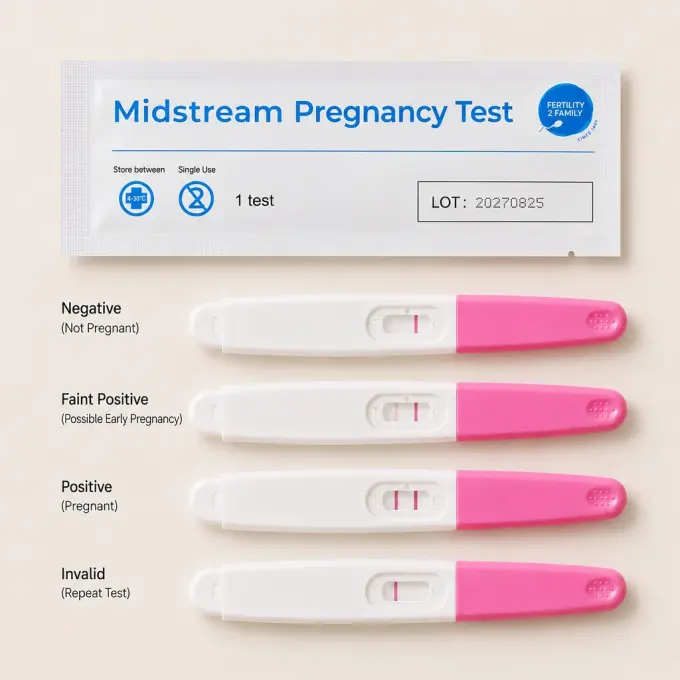
Related tool
Pregnancy test line result guide
Check whether a fresh home test is valid and interpretable.
Open resource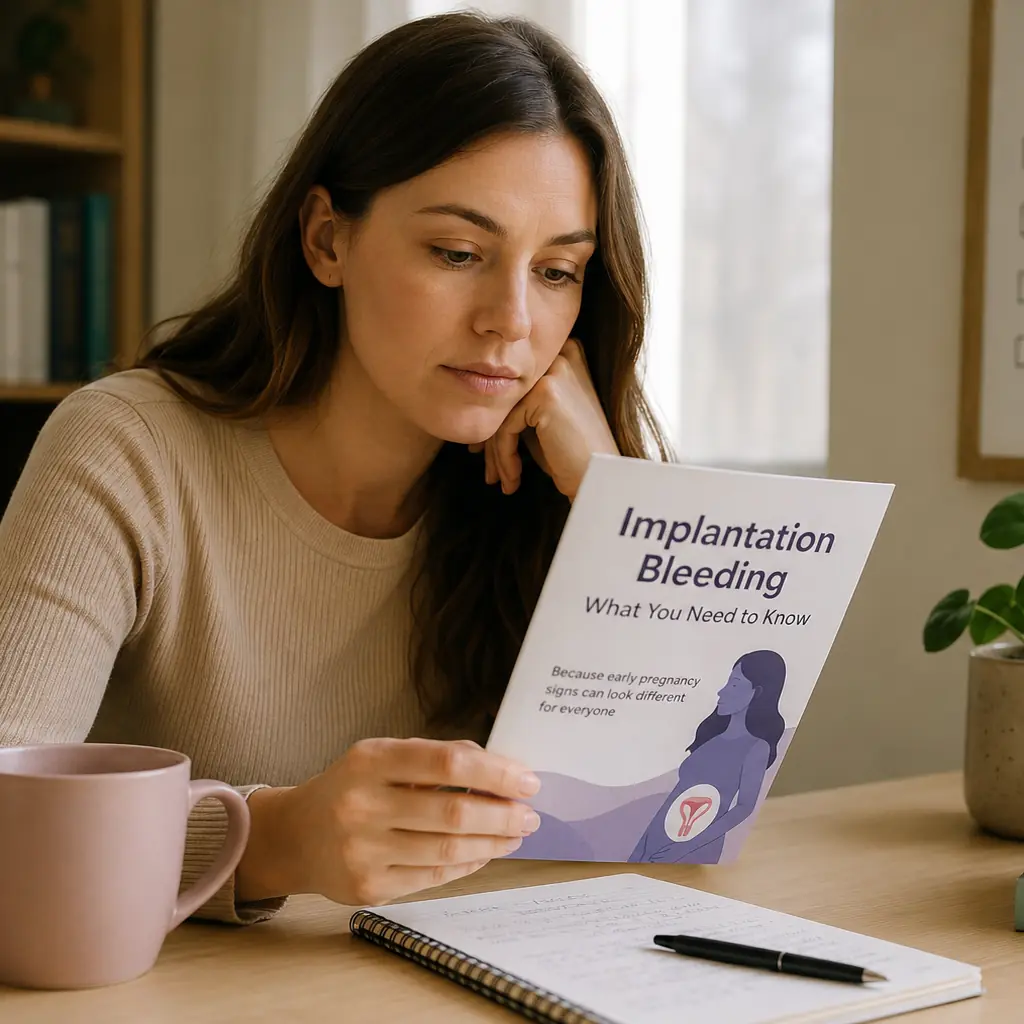
Australian guide
Implantation bleeding information
Read why timing and colour alone cannot confirm implantation.
Open resourceContinue with the right question
Move through the related tools without mixing their purposes
Australian evidence and resources
These sources provide general Australian or product context. They do not replace advice from a qualified clinician.
- Ectopic pregnancy
Healthdirect Australia Pregnancy-related warning symptoms and when urgent assessment or triple zero (000) is needed.
- Endometriosis and pelvic-pain information
Healthdirect Australia The non-specific nature of pelvic pain and why pregnancy, infection and other causes require clinical assessment.
- hCG test
Healthdirect Australia Urine and blood hCG testing, early testing, sample dilution and following the exact test instructions.
Frequently asked questions
- How can I tell implantation bleeding from my period?
- Only by what happens next: implantation spotting stays light and stops; a period builds.
- Should I test while bleeding?
- Wait until spotting has stopped for two to three days, then test with first-morning urine.
- Is brown blood a bad sign?
- Brown means older blood. It is common and not a warning sign on its own.
- When is early bleeding an emergency?
- Soaking a pad an hour, severe one-sided pain, shoulder-tip pain, dizziness or fainting. Call 000.


Australian evidence and resourcesShow sources
This is an educational timing aid, not a diagnosis.
Sources: Healthdirect Australia · Pregnancy, Birth and Baby
Causes of early bleeding and when to seek care.healthdirect.gov.au ↗
Warning symptoms and when to call 000.healthdirect.gov.au ↗
What it is and why colour is not diagnostic.healthdirect.gov.au ↗
When to contact your GP or midwife.pregnancybirthbaby.org.au ↗