
I got a positive pregnancy test. What now?
Book a GP appointment in the next week or two, start or continue a pregnancy supplement with folate and iodine, and know the warning signs that need same-day care.

Positive Test Action Plan
Your answers do not appear in the page URL.
Use this plan in the days after a positive home pregnancy test.
Everything behind the result
 How this tool worksWhy you do not need to keep testing to confirm
How this tool works
Why you do not need to keep testing to confirm
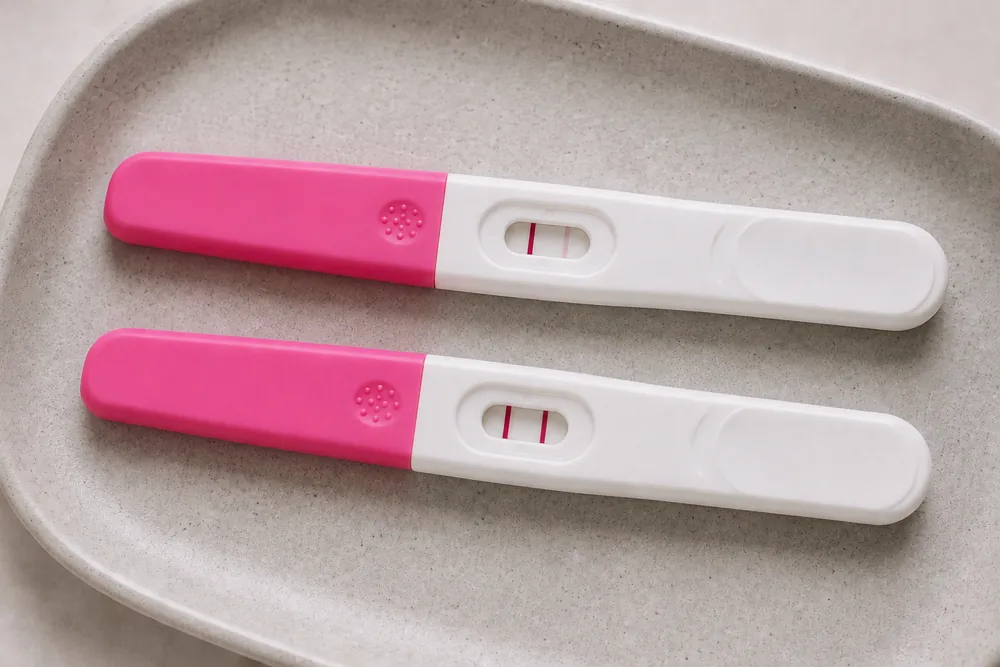
A positive home test is reliable. What comes next is a short list: a GP appointment, a supplement check and knowing which symptoms should not wait.
Enter your test date and the plan sets a GP window, a dating-scan window and your estimated due date, and lists the warning signs on one card.
The full data tableEvery row this tool reads from.

What changes the first step after a positive test
Every factor this action plan takes into account before returning a next step.
| Factor | How it changes the plan |
|---|---|
| Urgent symptoms | Severe or one-sided pain, shoulder-tip pain, heavy bleeding or fainting takes priority over everything else |
| Result type | A home urine test, a blood hCG result and a clinic-monitored result carry different certainty |
| Control indicator and timing | An invalid display or a late reading means the result is repeated before acting on it |
| hCG trigger medicine | Can produce a positive that is not from a pregnancy. The clinic interprets it, not this tool |
| Recent pregnancy event | hCG can persist after birth, miscarriage or abortion, so follow-up belongs with the treating clinician |
| Bleeding | Spotting, heavy bleeding and rapidly increasing bleeding lead to different care timeframes |
| What you want to do next | Continuing, considering options, or not continuing routes to different Australian services |
| Current medicines | Prescription, non-prescription and complementary products are reviewed with a clinician or pharmacist |
A home test cannot establish where a pregnancy is or whether it is progressing. Severe or one-sided pain, shoulder-tip pain, fainting or heavy bleeding needs urgent assessment regardless of what you plan to do about the pregnancy.
Test instructionsFertility2Family, or the instructions with your own pack.

Test instructions
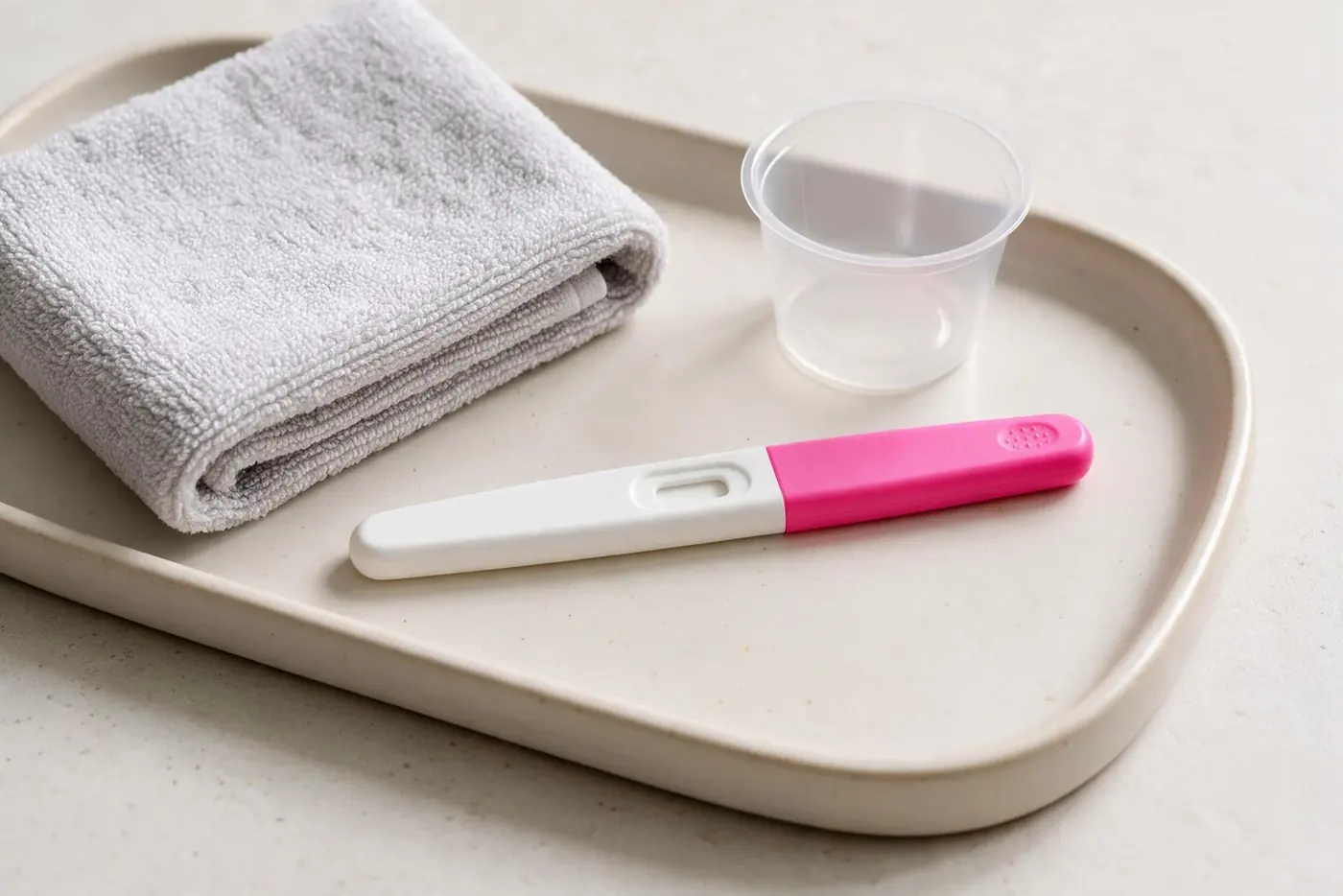
Timing and reading rules come from the instructions supplied with the test you are using.

- Read the result at 5 minutes.
- A mark appearing after 10 minutes does not count.
- Follow the instruction sheet supplied with the pack.

- Read the result at 5 minutes.
- A mark appearing after 10 minutes does not count.
- Follow the instruction sheet supplied with the pack.
Use the instruction sheet that came with that product. Reading times differ between brands, so the timings above do not apply.
The full referenceEverything this tool draws on, in detail.Show the detail
The immediate priorities
A positive result begins a care pathway, not a complete diagnosis
The first actions are to check urgent symptoms, follow any fertility-clinic plan, arrange antenatal or confidential options care and review medicines and supplements without stopping prescribed treatment on your own.
Check pain, bleeding and faintness
Severe or one-sided pain, shoulder-tip pain, heavy bleeding, fainting or feeling acutely unwell needs urgent assessment.
Contact the right care pathway
For uncomplicated pregnancy, arrange a first antenatal visit ideally around 6 to 8 weeks and before 10 weeks. Contact a fertility clinic sooner when it supplied the testing plan.
Stop prescribed medicine without advice
Prepare a complete list of prescriptions, over-the-counter medicines, vitamins, herbs and complementary products for review.
A first-day and first-week plan
What a useful positive-test planner should organise
Confirm that the home result was valid
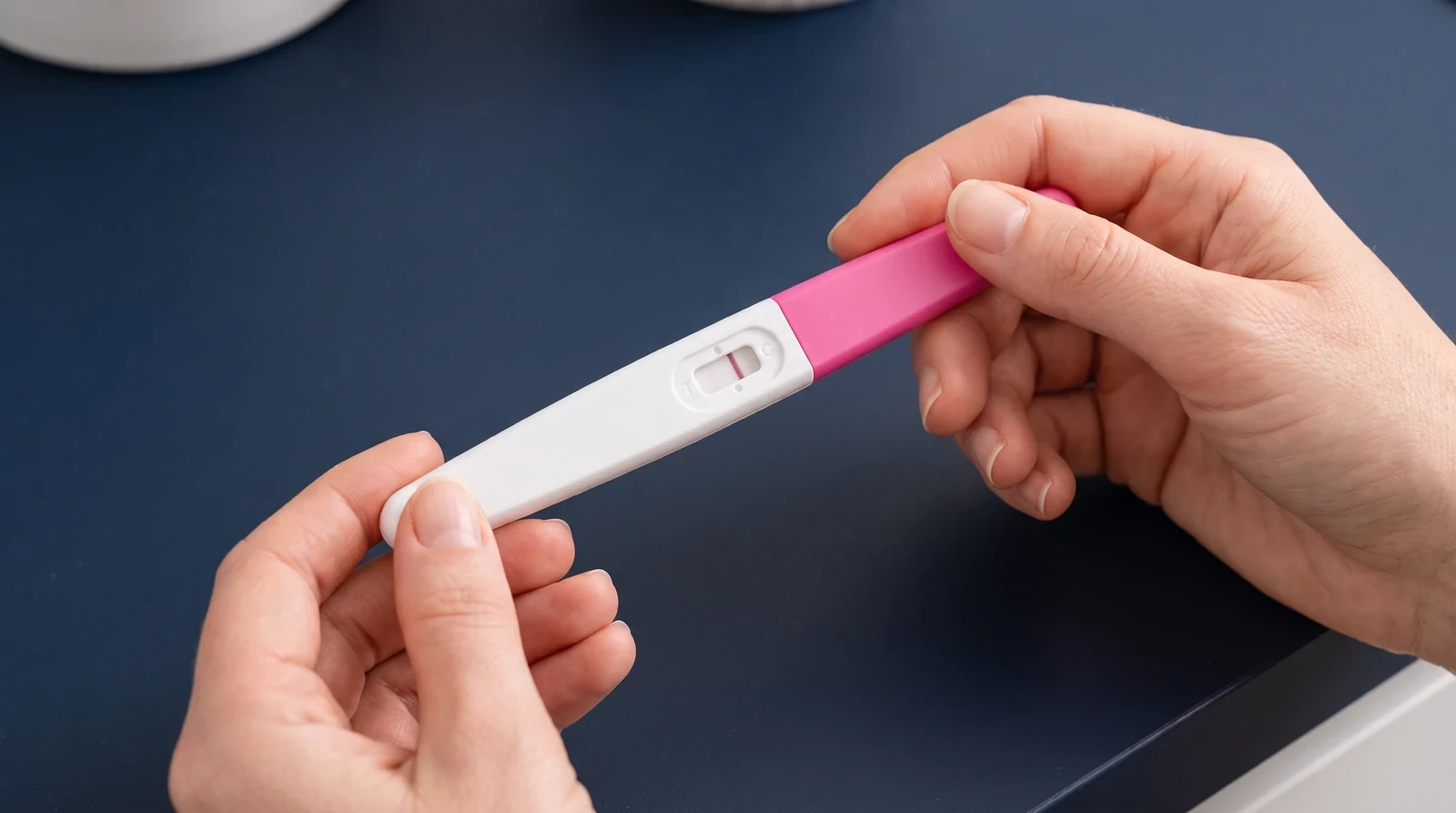
A control or valid-test indicator and a result read inside the device window are required before a home result is used to build the plan. An invalid display, late mark or uncertain device should be repeated or discussed with a clinician.
Symptoms come before routine planning
A positive urine result cannot establish pregnancy location or viability. Severe or one-sided pelvic pain, shoulder-tip pain, heavy bleeding, fainting or marked illness can be warning signs requiring urgent assessment.
Use the correct care pathway
Spontaneous conception, IUI, IVF, donor conception and a recent pregnancy event can require different dates and follow-up. Clinic instructions take priority after fertility treatment. For uncomplicated pregnancy, Australian guidance supports arranging the first antenatal visit around 6 to 8 weeks and before 10 weeks.
Review medicines rather than abruptly stopping them
Prescribed, over-the-counter, herbal and complementary products can all matter. The action plan creates a structured review list while clearly warning against stopping a prescribed medicine without advice.
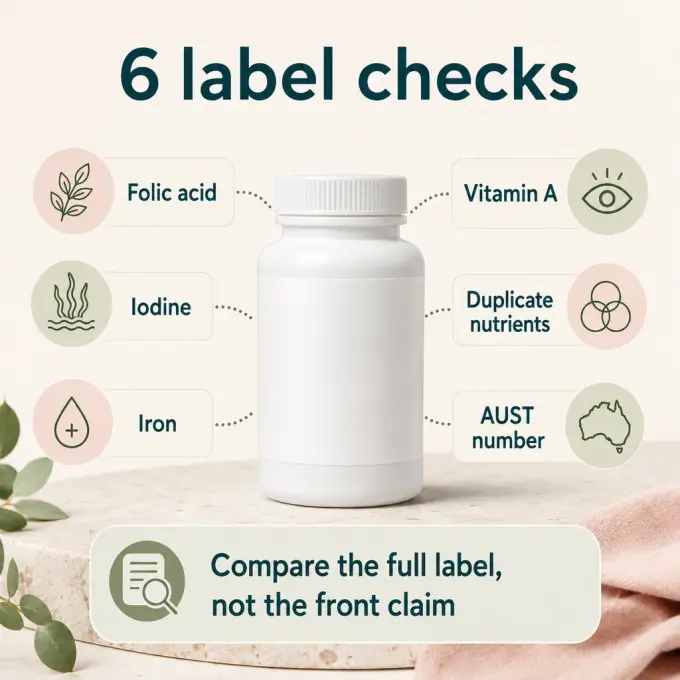
Check folic acid, iodine and duplicated supplements
Australian guidance generally recommends folic acid in early pregnancy and iodine during pregnancy, with individual advice for higher-risk folic-acid situations and thyroid conditions. The planner routes a complex label routine to the full prenatal label audit.
Keep options support non-judgemental
A person who is unsure or does not plan to continue the pregnancy can seek confidential options care without being required to decide before the conversation. Safety symptoms still take priority.
The result separates four priorities
Immediate safety
Symptoms determine whether routine planning is appropriate.
Care and dating
The plan distinguishes last-period estimates from treatment-based dating.
Health checklist
Medicines, supplements, alcohol, smoking or vaping, food safety, vaccination and mental health remain visible.
Confidential support
The pathway supports continuing, uncertain and not-continuing intentions without judgement.
Choose the right next tool
Continue with the question you actually need answered
Related Fertility2Family resources
Continue into the right early-pregnancy resource

Australian evidence and resources
These sources provide general Australian or product context. They do not replace advice from a qualified clinician.
- Vitamins and supplements during pregnancy
Pregnancy, Birth and Baby Australian guidance on folate, iodine, vitamin A, thyroid history and professional supplement advice.
- Folate and pregnancy
Pregnancy, Birth and Baby General folic-acid guidance and situations where a clinician may prescribe a different dose.
- Your first antenatal visit
Pregnancy, Birth and Baby Australian timing and planning context for first antenatal care.
- Iodine and pregnancy
Food Standards Australia New Zealand Australian and New Zealand iodine guidance and the need for individual thyroid review.
- Ectopic pregnancy
Healthdirect Australia Pregnancy-related warning symptoms and when urgent assessment or triple zero (000) is needed.
- Poisoning and the Poisons Information Centre
Healthdirect Australia Australian poisoning advice, 13 11 26 and immediate-emergency escalation to 000.
Frequently asked questions
- Do I need a blood test to confirm?
- Not usually. Your GP may order one to date the pregnancy or check hCG if there are concerns.
- How soon should I see a GP?
- Within one to two weeks of the positive, sooner if you have symptoms or a history of ectopic pregnancy.
- Which supplement should I take?
- One containing at least 400 µg folic acid and 150 µg iodine. Our label checker reads the fine print.
- What can I stop worrying about?
- Line darkness, retesting daily and mild cramping. All three are normal.

Australian evidence and resourcesShow sources
This is an educational timing aid, not a diagnosis.
Sources: Pregnancy, Birth and Baby · Food Standards Australia New Zealand · Healthdirect Australia
Timing and planning for first antenatal care.pregnancybirthbaby.org.au ↗
Folic acid guidance before and during pregnancy.pregnancybirthbaby.org.au ↗
Iodine guidance and thyroid review.foodstandards.gov.au ↗
Warning symptoms that need urgent care.healthdirect.gov.au ↗