Signs of Ovulation After Stopping the Pill: Timing and Testing
Stopped the pill? Ovulation can return before your first period. Learn 3 signs to track and when to start LH tests or take a pregnancy test in Australia.

By Fertility2Family Editorial Team · Updated · 12 min read · First published
On this page
The most useful signs of ovulation after stopping the pill are changes in cervical mucus, a positive luteinising hormone (LH) test and a sustained rise in waking temperature. They tell you different things: mucus and LH can help with timing, while temperature is mainly useful afterwards. Ovulation can return before your first natural period.
If you do not know your cycle length yet, start with what you can actually record rather than an app’s predicted date. This guide explains the signs, the first bleed and the next steps for testing. Still taking contraception? Our separate guide explains ovulation while taking the pill.
Quick answers about ovulation after stopping the pill
How soon can you ovulate after stopping the pill?
Fertility can return quickly after either the combined or progestogen-only pill, but there is no fixed day that applies to everyone. The return of fertility and a predictable bleeding pattern are different things. Your last tablet date is worth recording, but it is not a countdown to a guaranteed ovulation day.
Can you get pregnant before your first period?
Yes. Ovulation happens before the period that would follow if pregnancy did not occur. You do not need to see a natural period before conception becomes possible. When the next period date is uncertain, use an appropriate pregnancy-test date rather than waiting indefinitely for bleeding to tell you what is happening.
When should you start ovulation tests if your cycle length is unknown?
Follow the starting instructions supplied with your exact test. A pill-packet schedule does not establish your natural cycle length. If the only bleed occurred soon after stopping the combined pill, clarify which date to use before applying a period-based starting rule. You can still keep records and try to conceive without relying on a predicted ovulation date.

Which signs of ovulation are useful after stopping the pill?
Look for changes across several days rather than one ideal symptom. You do not need to track every sign, and your record does not need to resemble someone else’s chart. These observations are clues for timing, not a home diagnosis of whether your fertility has returned.
Wetter, clearer or more slippery cervical mucus
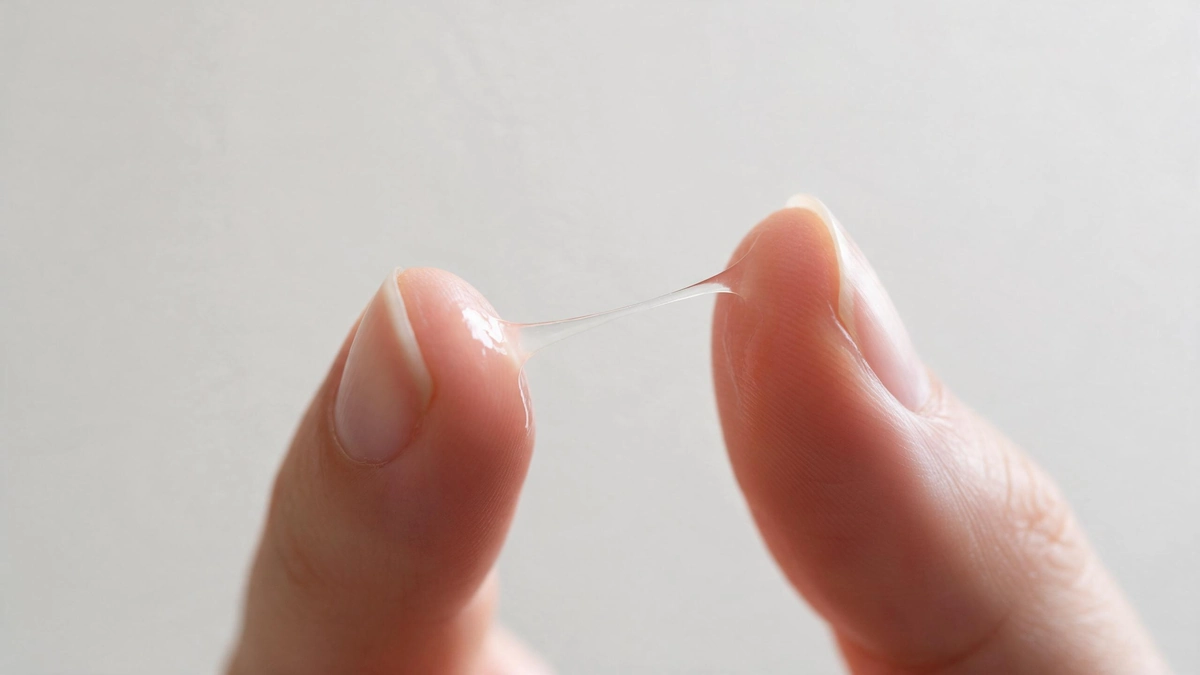
Before ovulation, cervical mucus may become wetter, clearer, slippery or stretchy. Some people notice an egg-white-like appearance; others mainly notice a change in sensation. This can help identify days when pregnancy may be more likely, even before an LH test becomes positive.
Write down the change in your own words, such as “dry”, “creamy” or “slippery”. Do not wait for a perfect-looking sample before recording it. If mucus changes and test results disagree, the mucus and negative-ovulation-test guide explains what those combinations can and cannot tell you.
A positive urine LH test
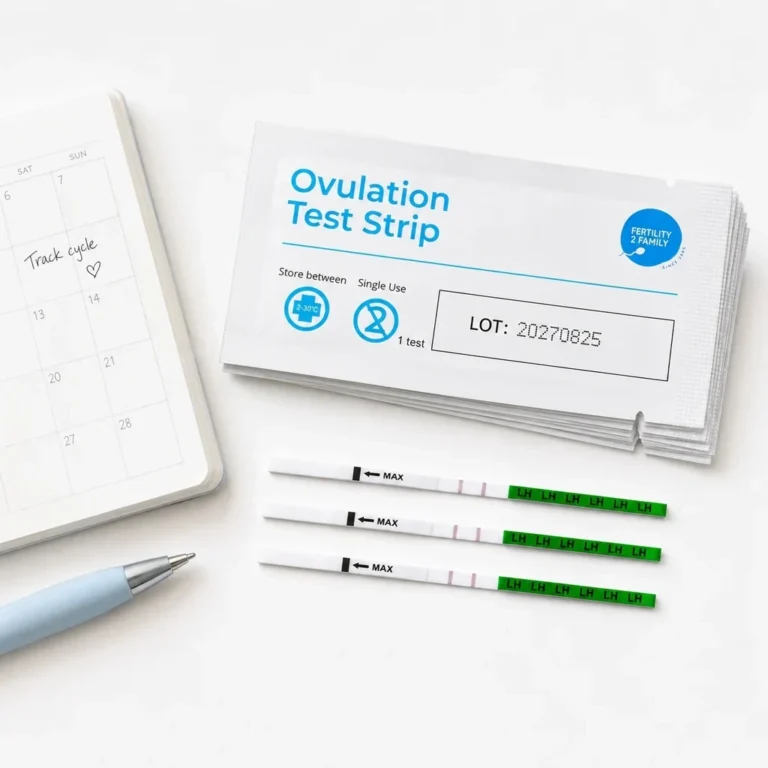
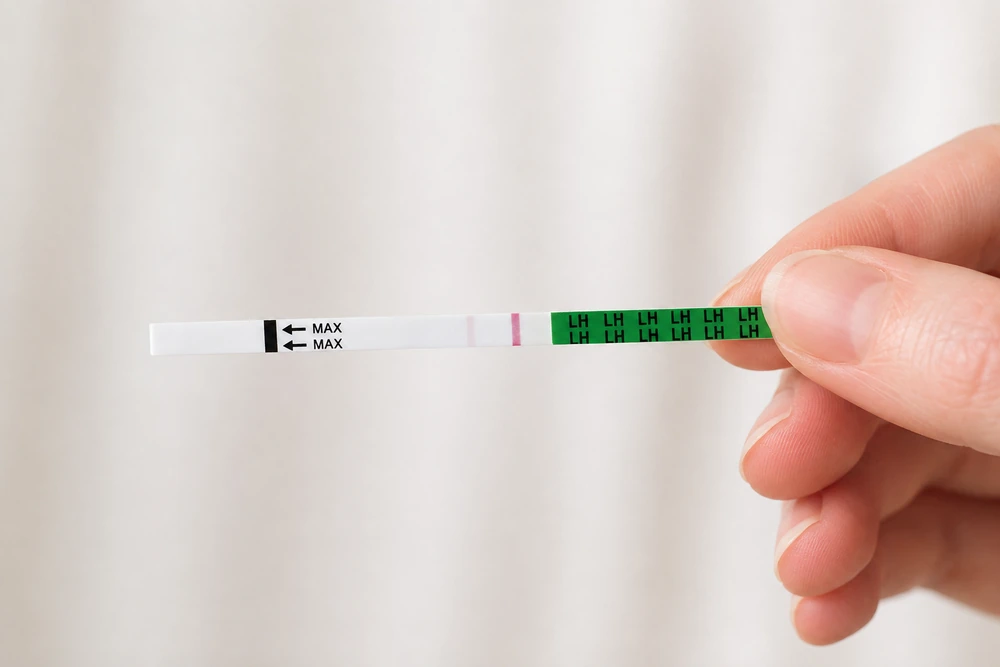
Ovulation tests detect LH, a hormone that rises before ovulation. A positive result can help with intercourse timing, but it is not direct evidence that an egg has been released. False results are possible; follow the instructions for your device.
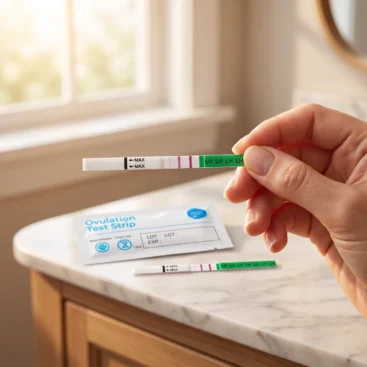
For F2F line-based strips, the test line must be as dark as or darker than the control line to be positive. A lighter test line is negative. That lighter line does not tell you whether a surge is still ahead or has already passed. Read the result only within the product’s stated window.
A sustained rise in basal body temperature
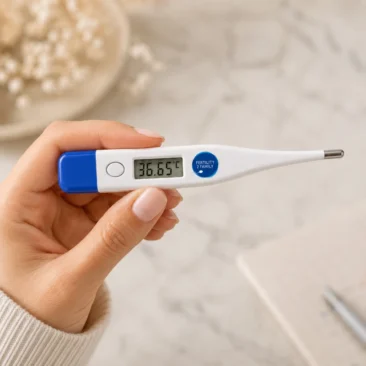
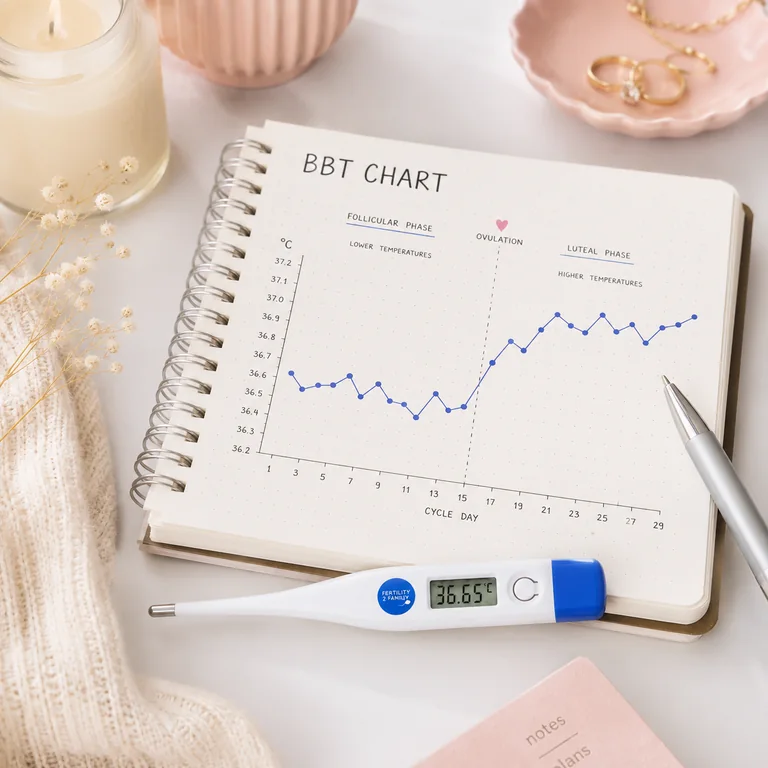
Basal body temperature, or BBT, is your temperature at rest. A small sustained rise compared with earlier readings can fit a post-ovulation pattern. It is mainly a way of looking back, rather than choosing the best days before ovulation. One unusually high reading is not the same as a sustained change.
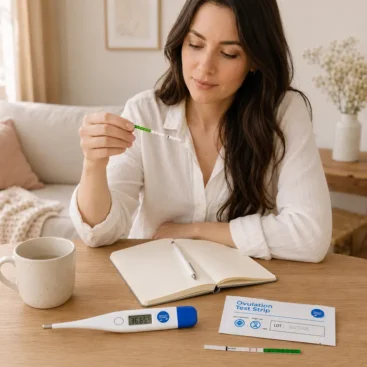
Take readings according to your thermometer’s instructions and note illness or disrupted sleep. You can skip temperature tracking if it is not practical for you. Our BBT charting guide explains the recording routine without relying on one reading or a perfect chart.
Your first-cycle plan: start with dates you know
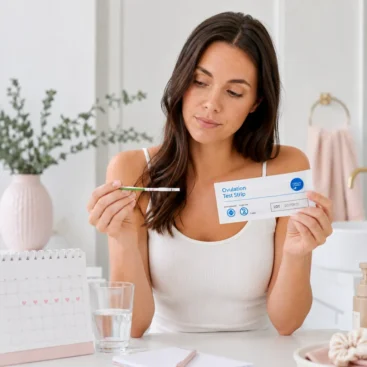
Keep the pill name, last active-tablet date and any bleeding dates together. Record spotting separately from period-like flow. You do not have to decide what every bleed means before keeping a useful record.
A bleed soon after the last active combined pill may be a withdrawal bleed caused by the change in hormone exposure. It can look like a period, but it does not show that natural ovulation has happened. Its appearance alone cannot settle which date should anchor a test-starting rule.
| What you know | What to do next |
|---|---|
| No bleeding since stopping | Record the last active-tablet date. Check pregnancy-test timing from intercourse dates rather than an assumed missed period. Do not invent cycle day one. |
| Bleeding started soon after the last active combined pill | Label it as bleeding after stopping the pill. Keep the date and flow details. Before using it to choose an LH-testing start day, clarify how your test’s instructions apply. |
| A later bleed has occurred, but there is no reliable cycle-length record | Record the first day of flow and keep spotting separate. Use the test’s unknown-cycle instructions only when you can identify the starting bleed they require; otherwise choose one of the uncertain-date options below. |
| Two later period start dates have been recorded | Count from the first start date to the day before the next. Use the product’s cycle-length chart. If the pattern is irregular, ask which starting rule fits it. |
For example, periods starting on 6 May and 4 June give a recorded interval of 29 days: the first cycle ends on 3 June. This is a counting example, not an ovulation prediction. Keep unscheduled or uncertain bleeding labelled separately.
You do not need a perfect chart to time intercourse
When ovulation dates are difficult to work out, having sex every two to three days is an alternative to trying to identify one precise day. The fertile window includes days before ovulation, so intercourse need not wait for a positive test. Choose an approach that is manageable for you.
When to start ovulation tests after stopping the pill
For a known cycle length, F2F’s starting chart gives the cycle day on which to begin testing. A 28-day natural-cycle example starts on day 11. That example is not a direction to count 11 days from the final pill.
If your dates are uncertain, you have two practical choices: use regular intercourse without an LH schedule, or clarify a suitable testing plan. Give a pharmacist or GP your pill name, last active-tablet date and bleeding dates. Ask which bleed, if any, should be used with the instructions. F2F support can explain the printed directions, but cannot identify the cause of bleeding.
The F2F instructions include an unknown-cycle option after a period. Use the leaflet supplied with your pack, because starting and sample-collection instructions differ between products. Advice about waiting to establish cycle length for one brand should not become a rule that everyone must wait before trying to conceive.
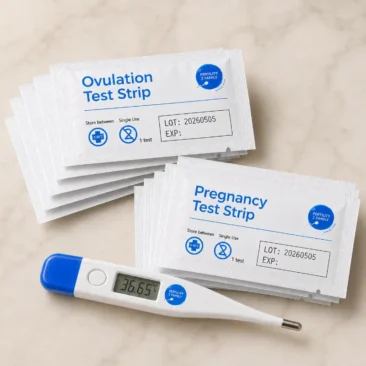
Fertility2Family ovulation test strips use a collected urine sample. A midstream format offers a no-cup option. Choose the format you can use consistently and follow its collection and result-reading instructions. Always read the label and follow the directions for use.
What if your signs and test results do not agree?
A short record can make a disagreement easier to understand. Keep the actual observation and result rather than changing an entry to match the app’s prediction.
Slippery mucus but a negative LH test: mucus changes can appear before the detectable LH rise. A negative sample does not establish that the fertile window has not begun. Follow the testing plan for your device rather than treating the negative as a reason to avoid intercourse.
A positive LH result but no clear temperature shift: first check whether sleep, illness or a changed measurement routine could affect the chart. An unclear pattern does not diagnose an ovulation problem. Bring recurrent uncertainty to your GP, especially if your periods are also irregular.
Repeated negative results: check the starting date, expiry, control line and reading window. Keep to the preparation advice rather than restricting more and more fluid to darken the result. The negative ovulation-test guide covers further checks without assuming that every negative means ovulation is absent.
When to take a pregnancy test without a predictable period
Most pregnancy tests can be used from the first day of a missed period. Without a reliable expected date, NHS guidance recommends testing at least 21 days after your last unprotected sex.
With ongoing intercourse, a negative result cannot exclude a pregnancy from more recent sex. For example, testing 21 days after one episode does not answer the question about intercourse five days earlier. Repeat as appropriate under the test instructions; seek GP advice if another test is negative and your period still has not arrived.
The pregnancy-test timing calculator can help organise dates. When using it, choose information you know rather than entering an app’s unconfirmed ovulation estimate as a fact.
When to seek care in Australia
Book a GP review if you have not had a period for three months, including when pregnancy tests are negative. Seek advice sooner for persistent irregular bleeding, bleeding after sex, new symptoms or a known reproductive-health condition. You do not need to finish several charts before asking for help.
Bring your pill name, bleeding dates, test dates and any previous cycle history. A clinician can decide whether assessment or investigations are needed. Returning fertility is not the same as immediately having regular cycles, but that should not be used to dismiss an ongoing change.

For otherwise regular cycles without known concerns, fertility assessment is generally recommended after 12 months of trying when under 35, or six months from age 35. Earlier assessment may be appropriate over 40. These timeframes do not mean waiting to seek care for absent periods or other symptoms.
Seek urgent medical help for severe or worsening pelvic pain, shoulder-tip pain, fainting or heavy bleeding, especially if pregnancy is possible. Do not wait for a positive home test before seeking care. Call 000 for an emergency.
Frequently asked questions about ovulation after stopping the pill
Can pill hormones affect a pregnancy-test result?
Contraceptive-pill hormones do not stop a pregnancy test working. The test detects hCG, not the hormones in the pill. You do not need to wait for a hormone washout before testing, but you do need an appropriate testing date. Follow the collection and reading instructions and interpret a negative result in relation to when sex occurred.
Has taking the pill for years reduced my fertility?
A large prospective study found no evidence that longer lifetime use of hormonal contraception reduced the subsequent chance of conception. That does not promise immediate pregnancy. Age, health and other fertility factors can change during the years of pill use. Short-term differences in time to pregnancy also do not identify an individual’s first ovulation date.
What if I do not notice any ovulation signs?
Not noticing a clear mucus change or temperature pattern does not establish that ovulation is absent. You may prefer regular intercourse to detailed monitoring, especially while dates are uncertain. If cycles remain irregular, periods are absent or test results are repeatedly confusing, discuss the pattern with your GP rather than trying to diagnose it from missing signs.
What if my periods were irregular before I started the pill?
Tell your GP about that history when planning pregnancy. Predictable bleeding on the pill does not establish that the earlier reason for irregularity has resolved. Bring any previous diagnosis, the dates you remember and your current medicines. An assessment may be appropriate sooner, rather than assuming that several more months of home testing will explain the pattern.
Do I need a post-pill detox or hormone-balancing supplement?
A detox is not part of standard Australian preconception guidance. Useful preparation includes reviewing medicines, vaccinations, folic acid and any individual health needs with a suitable clinician. A product marketed for hormone balance is not a substitute for assessing absent periods. Check before adding supplements, particularly if you already take a prenatal or use prescription medicines.
Can I use these signs to avoid pregnancy after stopping the pill?
No. This guide is written for people trying to conceive, not as a contraceptive method. Ovulation tests do not establish safe days for unprotected sex, and an uncertain post-pill cycle makes calendar assumptions particularly unreliable. If pregnancy is not wanted, arrange an appropriate contraceptive method rather than relying on a negative LH result, one temperature or an app prediction.
✓ Medically reviewed by Evan Kurzyp, RNLast reviewed Next review November 2027
References16 sources
Fertility2Family articles are researched using Australian Government health guidance, professional clinical recommendations and peer-reviewed medical literature. The references below were used to research and medically review this article and provide additional reading for readers who want to explore the evidence in more detail.
You can read how we research, write and check our health information in our editorial and medical review policy, and see who reviews our articles and their clinical credentials.
Source checks for this revision: 12 November 2026. The sources support the statements identified in the article; the organisations have not reviewed or endorsed it.
- Sexual Health Victoria The combined contraceptive pill
Return of fertility after the combined pill. - Sexual Health Victoria Progestogen-only pills
Pill formulations and return of fertility. - Your Fertility Timing intercourse and understanding ovulation
Mucus changes, cycle records and intercourse when timing is uncertain. - American Society for Reproductive Medicine Optimizing natural fertility: a committee opinion (2022)
Fertile-window timing and limits of calendar prediction. The URL contains 2021; the publication is 2022. - American Society for Reproductive Medicine Fertility evaluation of infertile women: a committee opinion (2021)
Urinary LH interpretation and clinical assessment timing. - Mayo Clinic Basal body temperature for natural family planning
Retrospective temperature patterns and readings affected by sleep, illness or measurement conditions. - Fertility2Family Ovulation Test Strip Instructions
Start-day planning, test collection and positive, negative and invalid results. Follow the instructions supplied with the actual product. - Fertility2Family Do You Ovulate on the Pill?
Withdrawal bleeding and the separate role of the existing on-pill guide. - Clearblue Australia Digital Ovulation Test
An example of manufacturer-specific starting and sampling instructions; not a general rule for all kits. - NHS Doing a pregnancy test
Testing after a missed period or when the next-period date is unknown; pill hormones and hCG tests. - Healthdirect Australia Irregular periods
When to seek assessment and which bleeding records help. - Healthdirect Australia Ectopic pregnancy
Symptoms requiring urgent assessment. - BMJ Pregravid contraceptive use and fecundability: prospective cohort study (2020;371:m3966)
Observational evidence on contraceptive history and time to pregnancy. - Healthdirect Australia Planning for your pregnancy
Preconception care and individual nutrient discussions. - Fertility2Family Ovulation Tests Australia
Comparison of the strip and midstream formats sold by F2F. - Fertility2Family Ovulation Test Strips
Collected-sample strip format and product limitations.