
Nausea During Ovulation: Possible Causes and When to Get Help
Feeling sick around ovulation? Learn possible causes, ways to ease mild nausea, when to take a pregnancy test and when to seek medical care.

By Fertility2Family Editorial Team · Updated · 11 min read · First published

On this page
- Why might you feel sick around ovulation?
- Mid-cycle nausea: what should you do next?
- What helps mild nausea while trying to conceive?
- Nausea before or after ovulation: how useful is the timing?
- Could nausea around ovulation be pregnancy instead?
- What to record if nausea keeps returning
- Next Steps in Australia
Feeling sick near your expected ovulation date can be unsettling, especially when it happens more than once. Nausea alone cannot confirm ovulation or pregnancy. The more useful clues are whether you are vomiting, can keep fluids down, have pain or a headache, and recently changed a medicine or supplement.
Sudden severe abdominal or pelvic pain with nausea or vomiting needs emergency assessment. Do not delay care for an ovulation or pregnancy test. The care table below also covers persistent pain, fluid loss and other reasons to seek help.
Quick answers about nausea during ovulation
Can ovulation cause nausea?
Some people notice nausea near their estimated ovulation date. Research on digestive symptoms across the cycle is mixed and does not establish nausea as a reliable sign of egg release. Record a recurring pattern, but also consider accompanying pain, headache, digestive symptoms or medicine changes rather than assuming that hormones explain it.
Does nausea during ovulation mean I am pregnant?
Not by itself. Nausea cannot distinguish pregnancy from another cause, and pregnancy-related sickness would not be expected from conception happening that same day. A predicted ovulation date may nevertheless be wrong. Use a pregnancy test at the appropriate time, especially if a recent bleed was unusual or your cycle dates are uncertain.
How long does ovulation nausea last?
There is no established duration that identifies nausea as ovulation-related. Seek advice if it is not improving within a few days or keeps coming back. Seek help sooner if vomiting stops you keeping fluids down, you pass little or no urine or you develop concerning pain. Do not use a presumed cycle pattern to postpone care.
Why might you feel sick around ovulation?
Nausea is a symptom, not a diagnosis. It may mean queasiness, an urge to vomit or difficulty facing food, with or without actual vomiting. When it happens around mid-cycle, a cycle association is one possibility, but the same symptom can have several other explanations.
Hormonal changes and digestive symptoms
A recurring monthly pattern is worth discussing, but it does not identify the hormone or event responsible. Research has looked at broader digestive symptoms across menstrual phases and has produced different findings. It does not provide a test, fixed duration or symptom pattern that can confirm “ovulation nausea” in an individual.
Digestive illness, meals and reflux
Nausea with diarrhoea, vomiting or an illness affecting other people in your household may suggest a digestive infection. Burning discomfort or symptoms after meals can point towards a different digestive problem, such as reflux. These are clues to discuss, not enough to choose a diagnosis yourself.
If loose stools or abdominal fullness are the main concern, the guides to diarrhoea during ovulation and ovulation bloating explain those symptoms in more detail.
Headache or migraine
Migraine may include nausea, vomiting and sensitivity to light or sound. Hormonal changes can be a trigger, but missed meals, stress and disrupted sleep can also contribute. Note whether a headache resembles your usual migraine. Seek urgent assessment for a sudden severe headache or new neurological symptoms.
Medicines, supplements and dose changes
Write down when a medicine or supplement was taken and when nausea began, especially after a new product or dose change. Include non-prescription products. This can help a pharmacist or prescriber review the timing without assuming a connection proves the cause. Do not alter prescribed treatment on your own.
Pelvic pain and other conditions
A brief pelvic twinge can occur near ovulation, but do not assume that nausea with ongoing or new pelvic pain is the same thing. Pain can cause nausea, and ovarian or other conditions may need assessment. Our endometriosis and ovulation-pain guide addresses recurring pain; use the care table below for a new or concerning episode.
Mid-cycle nausea: what should you do next?
Use how unwell you feel to choose the next step. A positive LH result, a familiar cycle date or a previous similar episode does not make new severe symptoms safe to manage at home.
| What you notice | What to do |
|---|---|
| Sudden severe abdominal or pelvic pain, fainting, or pain with shoulder-tip pain or heavy bleeding | Seek emergency care. Call 000 if you are severely unwell, collapse or need an ambulance. Do not wait for a home test. |
| Ongoing tummy or pelvic pain that does not settle; mild pain with nausea and vomiting; or new pain with a known ovarian cyst or possible pregnancy | Go to an emergency department. Do not wait for the pain to become severe or for a positive home test. Call 000 if you collapse, are severely unwell or need an ambulance. |
| You cannot keep fluids down, pass little or no urine, have a fever with vomiting, or vomiting keeps recurring | Seek medical assessment promptly through a doctor or emergency department. Get help sooner if you are becoming unwell; do not wait for a fixed number of hours when fluid intolerance or dehydration is already present. |
| Nausea keeps returning, does not improve within a few days, or disrupts meals, work or sleep | Book a GP review. Bring a short symptom record and your medicine or supplement list. |
| Mild nausea, no warning symptoms, and you can drink normally | Try the comfort measures below. Seek advice sooner if you become more unwell. |
The table follows Australian guidance on vomiting, ovarian emergencies and ectopic pregnancy. Blood or green vomit, chest pain, confusion or a severe headache also need emergency assessment. If you are unsure where to seek care, healthdirect on 1800 022 222 can help.
What helps mild nausea while trying to conceive?

Try small sips of fluid and smaller, more frequent meals. Plain food may be easier to tolerate for a short time. Eat slowly, avoid strong smells that worsen the nausea and stay upright after eating. Fresh air or rest may help. There is no need to force a large meal while you feel sick.
If vomiting or diarrhoea is causing fluid loss, ask a pharmacist about an oral rehydration solution. If you cannot keep fluids down, seek medical assessment promptly.
Tell a pharmacist or GP that you are trying to conceive, or that pregnancy may be possible, before taking medicine for nausea or pain. Treatment depends on the cause, your other medicines and your health history. Do not combine several remedies or take someone else’s prescription.
Nausea before or after ovulation: how useful is the timing?
First note how the ovulation date was estimated. An app forecast, a positive urine LH result and a sustained waking-temperature rise are different observations. LH testing can suggest ovulation is approaching; temperature patterns are mainly useful afterwards. None identifies why you feel sick.
Keep the date the nausea occurred, even if an app later moves its ovulation estimate. You do not have to turn every symptom into a DPO calculation. If you are asking about a specific day after ovulation, the 3 DPO symptom guide covers that task separately. This page is about the nausea itself and the appropriate next step.
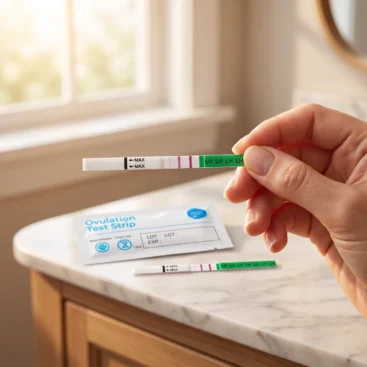
If you already want LH tracking for conception timing, compare our ovulation tests by format. Ovulation test strips use a collected urine sample; follow their sampling and reading instructions. They detect LH, not the cause of nausea, and are not pregnancy tests or contraception. Always read the label and follow the directions for use.
Could nausea around ovulation be pregnancy instead?
Nausea from a new pregnancy would not be expected on the day of conception. However, an app may have the ovulation date wrong, particularly if your cycles are irregular or a recent bleed was unusual. Our guide to pregnancy-symptom timing after sex explains the early timeline.
Follow your pregnancy test’s instructions. Pregnancy, Birth and Baby advises that most home tests can detect pregnancy on the day your period is due. With ongoing intercourse, a negative result may not exclude pregnancy from more recent dates.
Use the pregnancy-test timing calculator to organise known dates. Speak with your GP if a repeat test is negative and your period still has not arrived. Urgent symptoms need care regardless of the result.
What to record if nausea keeps returning

Record the episode while the details are fresh: when it started, how long it lasted, whether you vomited and what you could drink. Add pain, headache, bowel changes, relevant meals, illness contacts and medicines. It is particularly useful to note what happened first, rather than reconstructing a cycle explanation afterwards.
Keep observations separate from explanations. For example: Tuesday, cycle day 13. Nausea after breakfast, no vomiting, able to drink. Headache with light sensitivity. App predicts ovulation tomorrow; no LH test taken. This illustrative record does not diagnose migraine or ovulation. It preserves the details a clinician can assess.
At the next episode, compare those features rather than the cycle day alone. Nausea after a dose, nausea with a familiar headache and nausea with new pelvic pain raise different questions. The record is there to help assessment, not to choose a diagnosis or a hormone treatment yourself.
You do not need to wait through several more cycles before asking for help. If a symptom changes in severity, lasts longer than usual or starts occurring outside the familiar pattern, record that change too.
Frequently Asked Questions about Nausea During Ovulation in Australia
Can nausea or vomiting affect an ovulation-test result?
An LH strip measures a hormone in urine, not nausea. Fluid loss and changes in drinking can affect the concentration of a sample. Follow the product instructions and prioritise hydration rather than restricting fluids to obtain a darker line. If a result is unclear, check the instructions for repeating the test instead of guessing.
What if I feel nauseous and dizzy around ovulation?
Dizziness does not identify ovulation as the cause. It may accompany migraine, fluid loss or another illness, so note whether it feels like spinning, light-headedness or being close to fainting. Seek prompt advice if you have difficulty drinking or signs of dehydration. Fainting or severe pelvic pain needs emergency care, even if the date fits your usual cycle pattern.
Do I need a hormone blood test for mid-cycle nausea?
A GP starts with the symptom history, associated pain or headache, medicines and the possibility of pregnancy, then decides which investigations would help. Testing may address something other than reproductive hormones. There is no single hormone result that identifies why you feel nauseous. Ask what a proposed test would answer and whether its timing matters before buying a panel yourself.
Should I change my prenatal vitamin if it makes me feel sick?
Ask a pharmacist or prescriber to check the product, dose and timing, including anything else you take. The prenatal-vitamin guide covers label checks and possible side effects. Keep the timing of nausea in your notes, but do not automatically stop prescribed treatment or required preconception nutrients because symptoms followed a dose.
Can ginger or hormone-balancing supplements treat ovulation nausea?
Ginger-containing foods may help some people with nausea, but that does not establish an ovulation-specific treatment. Concentrated supplements have different doses and ingredients. Check with a pharmacist before adding herbal or hormone-balancing products, particularly if pregnancy is possible or you take other medicines. Symptom relief does not identify the cause, and a supplement is not a substitute for assessing persistent or worsening symptoms.
What if nausea starts during fertility treatment?
Tell the prescribing clinic about new or worsening nausea during treatment. If you use clomifene, the Clomid side-effect guide explains its specific warnings; it does not replace your clinic’s advice. Severe pain, collapse or breathing difficulty requires emergency care, not a wait for a callback.
Next Steps in Australia
Book a GP review if nausea persists, repeatedly returns, affects eating or daily activities, or comes with unexplained weight loss. Bring the observations and medicine details you have, even if the cycle dates are incomplete. A recurring monthly symptom is worth discussing rather than something you must tolerate.
For help deciding where to seek care, call healthdirect on 1800 022 222. Call 000 for an emergency. You can seek care without a positive LH result, a complete chart or a confirmed pregnancy.
General information: This article is for Australian consumer education and does not diagnose the cause of nausea, ovulation or pregnancy. It does not replace individual medical advice, diagnosis or treatment.
✓ Medically reviewed by Evan Kurzyp, RNLast reviewed Next review November 2027
References15 sources
Fertility2Family articles are researched using Australian Government health guidance, professional clinical recommendations and peer-reviewed medical literature. The references below were used to research and medically review this article and provide additional reading for readers who want to explore the evidence in more detail.
You can read how we research, write and check our health information in our editorial and medical review policy, and see who reviews our articles and their clinical credentials.
- Healthdirect Australia. Nausea
Australian guidance on possible causes of nausea, self-care and when to see a doctor. - Healthdirect Australia. Ovarian torsion
Australian guidance on sudden severe pelvic or abdominal pain, especially with nausea or vomiting, and why it needs emergency care. - Mendelson and colleagues, BMC Gastroenterology (2023). Gastrointestinal functioning and menstrual cycle phase in emerging young adult women: a cross-sectional study
Survey of 603 young women grouped by cycle phase, which found no overall difference in digestive symptom scores between phases. - Hannan and colleagues, Hormones and Behavior (2024). Mood symptoms and gut function across the menstrual cycle in individuals with premenstrual syndrome
App-based observational study in which digestive symptoms were reported more often in the luteal than the follicular phase. - Pregnancy, Birth and Baby. Morning sickness
Australian guidance on morning sickness, including when it is more likely and ways to ease it. - NHS (UK). Feeling sick (nausea)
UK self-care advice for nausea and when to see a doctor if it keeps returning. - Healthdirect Australia. Vomiting
Australian guidance on vomiting, dehydration, oral rehydration solutions and symptoms that need urgent care. - Healthdirect Australia. Gastroenteritis
Australian guidance on gastroenteritis and the symptoms that can come with it. - Healthdirect Australia. Migraine
Australian guidance on migraine symptoms, including nausea and vomiting, and when a headache needs urgent care. - Healthdirect Australia. Side effects of medicines
Australian guidance on medicine side effects and how to review them with a pharmacist or doctor. - Better Health Channel, Victorian Government. Ovulation pain
Victorian Government guidance on ovulation pain and when to see a doctor. - Healthdirect Australia. Ectopic pregnancy
Australian guidance on ectopic pregnancy warning signs that need urgent care. - Healthdirect Australia. Dietary supplements
Australian guidance on possible risks of dietary supplements, including interactions with medicines. - American Society for Reproductive Medicine. Fertility evaluation of infertile women: a committee opinion (2021)
Professional guidance on assessing fertility, including history, selected tests, age, time trying and the limits of home cycle observations. - Fertility2Family. Ovulation Test Strip Instructions
Our instructions for collecting a sample, reading a result and understanding the limits of Fertility2Family LH test strips.